How to Write a Self-Appraisal That Gets You Promoted
Most self-appraisals get forgotten because they're generic. Using the BKT Tyres story, here's the three-part formula that makes your work stick in a boss's memory.
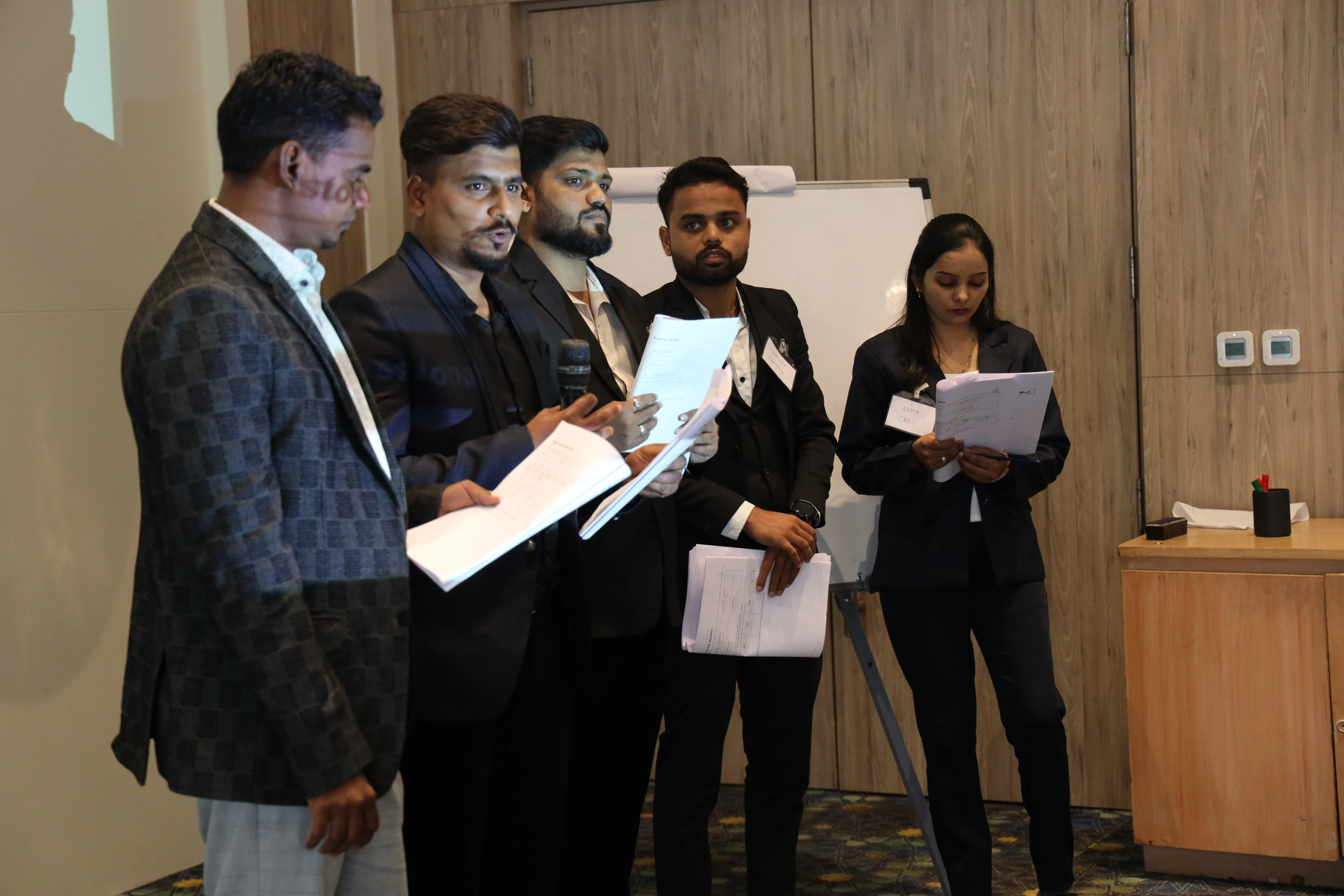
Your self-appraisal probably reads like everyone else's — and that's why it gets forgotten. If you want your boss to remember what you did, stop listing tasks and give three things: what existed before, what you changed, and what improved. In India, 65% of firms now invest in soft-skill training, because how you communicate your work matters as much as the work itself.
TL;DR- Generic lines like "I worked hard" get forgotten; specific, numbered updates stick
- BKT Tyres became world-famous not by making better tyres quietly, but by becoming Monster Jam's official partner
- Use the three-part update: what existed before, what you changed, what improved
- Numbers make your work stick in your boss's memory the same way BKT stuck in ours
- This works beyond appraisal season — in interviews, promotions, and client updates too
Why Most Self-Appraisals Get Forgotten
Every appraisal season, most people write the same three lines: work was good, targets were met, team supported well. None of that survives past the meeting. Your manager reads twenty of these back to back, and vague effort blurs into vague effort. What actually gets remembered is specific, concrete proof — a number, a name, a before-and-after. If your appraisal reads like a job description instead of a result, it's not that you didn't work hard. It's that nothing in it is built to stick.
The BKT Tyres Story: How an Invisible Product Became Unmissable
I talk about this often using BKT Tyres — Balkrishna Industries, an Indian company that has been the official tyre partner of America's Monster Jam, the show with four-tonne trucks flying through the air, since 2014. BKT started in 1985, but by 1994 it chose an unexplored market: tyres for tractors, construction equipment and mining machinery instead of cars and bikes. Today it runs five to six manufacturing plants in India and ships to 160 countries. The tyres alone weren't the breakthrough — becoming Monster Jam's visible, official partner is what made an industrial product globally memorable.
The "Made to Stick" Principle Behind Every Appraisal That Works
This is exactly what Chip and Dan Heath describe in their book Made to Stick — ideas survive in memory when they're concrete, not general. In offices, I see the same pattern in how people report to their boss. As I put it on camera: "जो बंदा स्पेसिफिक बात करता है, जो नंबर्स के साथ बात करता है, उसके प्रमोशन होने के ज्यादा आसार होते हैं" — the person who speaks specifically, who talks in numbers, has a far better chance of getting promoted. Vague statements evaporate. Specific, numbered ones stick exactly the way BKT Tyres stuck in our minds through Monster Jam.
The Three-Part Update: Before, Change, Result
The fix is a three-part update: what existed before, what you specifically changed, and what improved as a result — ideally with a number attached. "Customer load was high, and work was heavy" becomes "In the last six months, I resolved complaints for 11 customers, which brought the company a 30% benefit." One sentence disappears into a stack of appraisals; the other gets remembered and discussed. This is also exactly the communication habit I build with teams through corporate communication and leadership training programs — it's a trainable skill, not a personality trait.
Self-Appraisal Examples: Generic vs Specific
Here's what that shift looks like side by side. The left column is what most appraisals actually say. The right column is the same work, described the way a manager actually remembers it.
| Generic Statement | Specific Version | Why It Sticks |
|---|---|---|
| Customer load was high | Resolved complaints for 11 customers in 6 months, cutting escalations by 30% | Boss remembers exact impact |
| I worked on process improvement | Reduced report turnaround from 3 days to 1 day for the finance team | Before/after is concrete |
| Team performance was good this quarter | Team hit 94% SLA compliance, up from 78% last quarter | Numbers compare directly |
| I handled many client calls | Closed 6 of 8 stalled client accounts worth ₹40 lakh in Q2 | Ties effort to business value |
Where Else This Trick Works (Not Just Appraisal Season)
This isn't only for appraisal forms. The same before-change-result structure works in interview answers, client status calls, and promotion conversations — anywhere someone is deciding, in a few seconds, whether your work mattered. I've written more on building this habit year-round in self-evaluation for career growth, which goes deeper into turning routine work into a record someone else can act on.
Common Appraisal Mistakes That Keep Good Work Invisible
The three mistakes I see most often: writing what you did instead of what changed, skipping the number because it feels like bragging, and saving all of this for appraisal week instead of noting it down monthly. Fix those three and your appraisal stops reading like a diary entry and starts reading like proof. Nobody remembers effort. They remember impact stated specifically enough to picture.
Book Avinash Chate for Your Next Event
TEDx speaker. 11+ yrs training Army, BRO, RBI, BARC, JSW. Available for keynotes, leadership training, team building & manager development at your office or event venue.
✅ Thanks! Avinash team will reach out within 24 hours.'}).catch(function(e){f.outerHTML='Something went wrong. WhatsApp +91 8793630001
'});return false;">Select ServiceKeynote / Motivational SpeakingLeadership Development TrainingTeam Building WorkshopManager DevelopmentEmployee TrainingOutbound TrainingBook Avinash Now →Or WhatsApp directly: +91 87936 30001
Related Articles by Avinash Chate
- Dravid's 233 in Adelaide 2003: Lessons in Self-Belief and Persistence
- Rohit Shetty Firing Case This Is the Real Cost of Success
- Success Skills for Teachers: The PQ-RQ Triangle Explained
Work with Avinash Chate
- Best Motivational Speaker in Pune →
- Motivational Speaking for Corporate Events →
- Best Motivational Speaker in Maharashtra →
Avinash Chate TEDx Speaker · Founder, The Future Corporate · 11+ yrs experience Avinash has trained Indian Army, BRO, RBI, BARC, JSW Steel and 1000+ corporate leaders across India. His work focuses on leadership development, communication skills, and behavioural training rooted in Indian values and modern business needs. |
Frequently Asked Questions
How do I make my self-appraisal sound less generic?
Replace every activity sentence with the three-part update — what existed before, what specifically you changed, and what improved as a result, backed by a number wherever you have one. "Customer load was high" becomes "resolved complaints for 11 customers in 6 months, cutting escalations by 30%."
What is the "Made to Stick" principle and how does it apply to appraisals?
It's from Chip and Dan Heath's book Made to Stick — ideas are remembered when they're concrete and specific, not vague. BKT Tyres used this by becoming Monster Jam's official partner instead of just listing specifications in a catalogue; you can use the same principle by giving your boss one sharp, numbered update instead of a general summary.
What should I do if I genuinely don't have big numbers to show?
Even without a big number, you can still be specific — name the exact task, the exact stakeholder, and the exact outcome instead of a vague summary. "I improved the onboarding process" becomes "I cut new-hire onboarding from 5 days to 3 days for the Pune office."
Does this three-part update work outside of appraisal season?
Yes — the same before-change-result format works in interview answers, client status updates, and promotion conversations. Anyone evaluating your work remembers specific proof, not general effort.
Avinash Chate services
Corporate Trainer in Maharashtra · Top Corporate Trainers in Maharashtra · Leadership Trainer in Maharashtra · Top Leadership Trainers in Maharashtra · Team Building Trainer in Maharashtra · Top Team Building Trainers in Maharashtra · Motivational Speaker in Maharashtra · Top Motivational Speakers in Maharashtra · All service locations
← Back to all articles · Book Avinash Chate
By Avinash Chate — Maharashtra’s #1 Corporate Trainer & Motivational Speaker. .