Human Psychology: The Foundation of Real Leadership in India 2026
Just as all engineers study the same basics first, real leaders must master human psychology—because you can't lead people you don't understand. People-first thinking equals long-term results in India 2026.
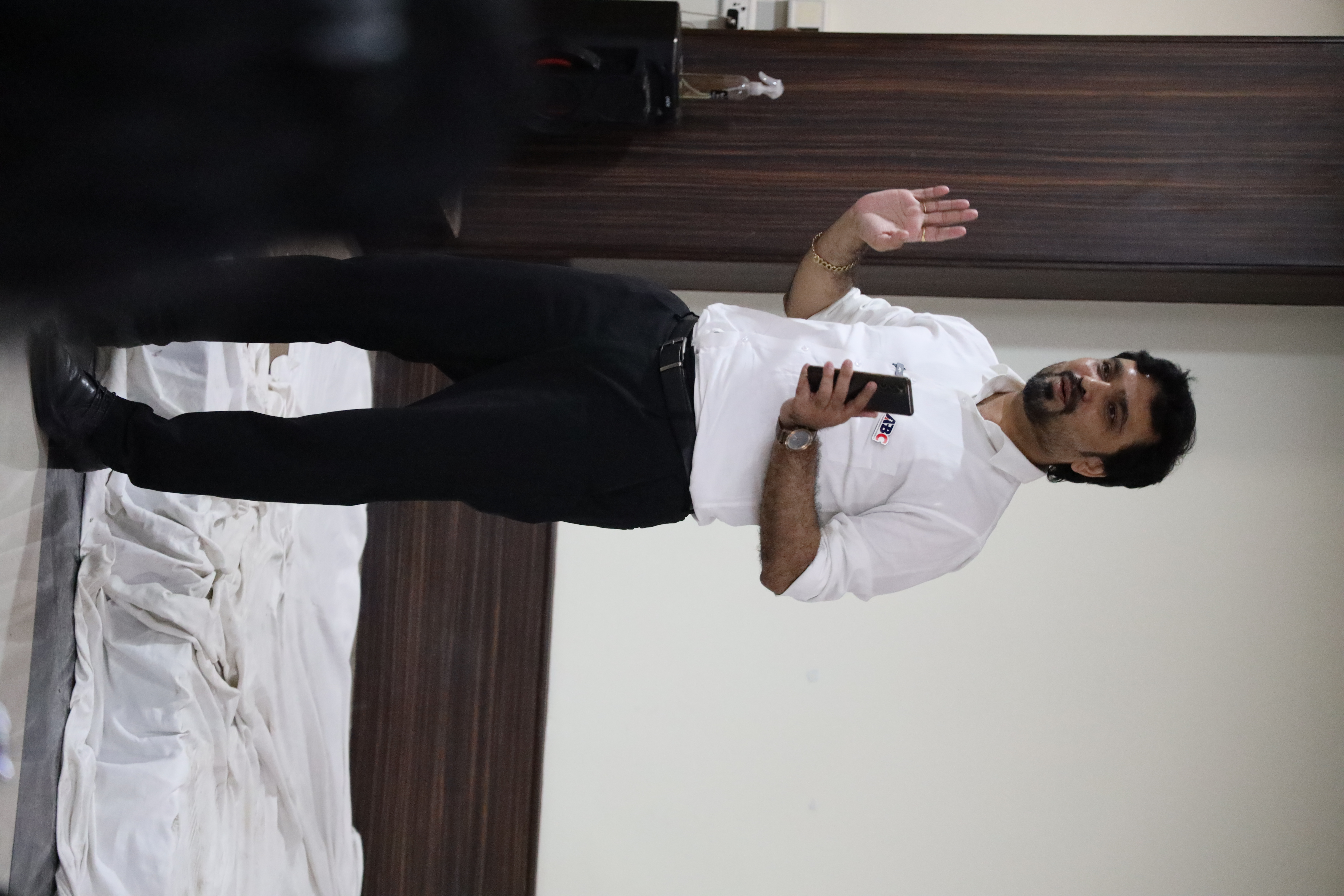
In engineering, every student masters the same fundamentals in year one—regardless of specialty—because you can't build solutions without understanding systems. Leadership is identical: you can't lead people without understanding how they think, feel, and behave. LinkedIn India 2026 confirms leadership skills are the #1 career priority—and the first fundamental every leader must master is human psychology.
TL;DR- Just like engineers study the same first-year basics regardless of specialty, every leader must first understand human psychology—you can't build people-solutions without understanding the people-system
- You cannot lead people you don't understand—how they think, feel, and behave determines how they respond to your leadership
- People-first thinking equals long-term results: leaders who master human psychology outperform those who rely on process alone
- Human psychology covers emotion regulation, cognitive biases, motivation, and social dynamics—all trainable through deliberate practice
- Indian organizations that invest in psychology-based leadership development report stronger team cohesion and faster decision-making
Why Every Engineer Studies the Same Basics First: The Leadership Lesson Hidden in Year One
Here's the analogy from the video that I use in almost every leadership session I run: in engineering, whether you go on to build bridges, write code, or design circuits, your first year of study is identical to everyone else's. You study mathematics, physics, materials science—the systems that underpin all of engineering's applications. You can't build solutions without understanding the underlying system. Leadership is the same. Whether you lead a sales team, an engineering team, or a military unit, the first-year fundamentals don't change. Human psychology—how people think, feel, and behave—is the system you're always working with. Master the system before you try to lead it.
You Can't Lead People You Don't Understand: Human Psychology as Leadership's Core System
What I've seen in leadership audits at Mahindra, Tata Tech, and L&T is that most leadership failures aren't strategic—they're psychological. The leader who gives clear direction but doesn't understand that their team member is in a stress response can't figure out why the direction isn't being followed. The manager who gives feedback but doesn't understand that their team member interprets criticism as rejection will keep having the same frustrating conversation. You cannot lead people you don't understand. Human psychology isn't a nice-to-have module at the end of a leadership program—it's the first-year fundamental that determines whether everything else works.
| Leadership Approach | Psychology-Blind | People-First |
|---|---|---|
| Response to team conflict | Addresses task, ignores emotional state | Addresses emotion first, then task |
| Communication design | Assumes rational receiver | Accounts for psychological state of audience |
| Feedback approach | Information transfer | Designed for psychological safety & growth |
| Team performance | Peaks under supervision | Sustains through autonomy & trust |
| Long-term outcome | Burnout, attrition, friction | Cohesion, retention, high delivery |
People-First Thinking Equals Long-Term Results: The Principle That Separates Great Leaders from Good Managers
People-first thinking isn't sentiment—it's strategy. The leaders who consistently produce long-term results design their teams, systems, and communication around how human beings actually function—not how they should function in an ideal organizational model. McKinsey India research shows managers spend 21 hours a week in meetings—35% more than US peers. Most of those hours are consumed by friction that human psychology could prevent: miscommunications born from unmanaged emotion, decisions delayed by unaddressed fear, conflicts escalated by unrecognized ego. People-first thinking sees these patterns before they compound into organizational problems.
How Human Psychology Explains Why Teams Underperform Despite High Technical Skill
Teams underperform despite high technical skill for three consistent psychological reasons. First, unmanaged stress shifts the brain from creative problem-solving to threat response—technically brilliant people in high-pressure environments make technically poor decisions. Second, unclear belonging signals make individuals protect their position rather than contribute their best thinking—psychologically unsafe teams produce individual performance, not team performance. Third, misaligned values create disengagement that no incentive structure can fix—people who don't connect their work to something meaningful deliver minimum viable effort regardless of technical capability.
The Core Human Psychology Principles Every Indian Leader Must Master in 2026
The human psychology principles every Indian leader must master in 2026 are practical and trainable: recognizing cognitive biases that distort decision-making under pressure, reading emotional signals that tell you what your team won't say in a meeting, designing communication for your audience's actual psychological state rather than an assumed one, and building psychological safety environments where contribution rates are high and defensive behavior is low. These aren't abstract academic concepts—every one has a direct behavioral application that I teach in workshops at Infosys, Bosch, and JSW Steel.
How I Use Human Psychology Frameworks at RBI, BARC, and the Indian Army
At RBI, BARC, and the Indian Army, the leaders I work with understand something civilian corporate India is only beginning to internalize: people management under pressure requires understanding psychology under pressure. An Army officer who doesn't understand how stress affects decision-making puts people in dangerous situations based on flawed assumptions. A banking leader at RBI who doesn't understand how loss aversion shapes colleague behavior makes risk decisions that look rational on paper but fail in practice. Human psychology isn't the soft-skills module you rush through at the end—it's the foundation every other leadership capability rests on.
From Psychology-Blind to People-First: Transforming Leadership Culture in Indian Organizations
Transforming from psychology-blind to people-first leadership is a developmental journey, not a training-day event. It begins with self-awareness: understanding your own psychological patterns—your triggers, cognitive shortcuts, and emotional defaults under pressure. It continues with relational awareness: learning to read how others are experiencing reality in any given moment. And it matures into systemic awareness: designing teams, structures, and communication systems around how human beings actually work rather than expecting people to adapt to systems that ignore their nature. Organizations that commit to this journey—at Ferrero India, Siemens, and JSW Steel—consistently see measurable improvements in team cohesion, decision quality, and leadership pipeline strength.
Book Avinash Chate for Your Next Event
TEDx speaker. 11+ yrs training Army, BRO, RBI, BARC, JSW. Available for keynotes, leadership training, team building & manager development at your office or event venue.
✅ Thanks! Avinash team will reach out within 24 hours.'}).catch(function(e){f.outerHTML='Something went wrong. WhatsApp +91 8793630001
'});return false;">Select ServiceKeynote / Motivational SpeakingLeadership Development TrainingTeam Building WorkshopManager DevelopmentEmployee TrainingOutbound TrainingBook Avinash Now →Or WhatsApp directly: +91 87936 30001
Related Articles by Avinash Chate
- Initiative Isn't Dead—It's Killed: Why Indian Teams Stop Stepping Up
- How CEO Jorgen Vig Knudstorp Saved LEGO: 3 Workplace Lessons for India 2026
- Polite Smiles, Hidden Problems: The Fake Harmony Trap in India 2026
Avinash Chate TEDx Speaker · Founder, The Future Corporate · 11+ yrs experience Avinash has trained Indian Army, BRO, RBI, BARC, JSW Steel and 1000+ corporate leaders across India. His work focuses on leadership development, communication skills, and behavioural training rooted in Indian values and modern business needs. |
Frequently Asked Questions
What is people-first thinking and how does it apply to Indian leaders?
People-first thinking means designing your leadership approach around how human beings actually function—how they process stress, build trust, respond to feedback, and find meaning in work—rather than assuming people will adapt to organizational systems that ignore their psychology. For Indian leaders in 2026, people-first thinking translates to measurably higher team engagement, faster conflict resolution, and stronger retention of high-potential employees who feel genuinely understood by their leaders.
How does understanding human psychology make you a better leader in India?
Understanding human psychology makes you a better leader by giving you the ability to see what's actually happening in your team—beyond what's visible in performance data or stated in meetings. You can recognize when a team member is in a stress response and adjust your communication accordingly. You can design feedback that lands without triggering defensiveness. You can build trust systematically rather than hoping it develops naturally. These capabilities don't require clinical psychology training—they require deliberate practice of the core principles.
What are the core human psychology principles every manager should know?
The core human psychology principles every manager should know include: stress response physiology (how pressure changes cognitive and behavioral patterns), cognitive biases that affect decision-making (confirmation bias, loss aversion, attribution error), psychological safety dynamics (what creates and destroys willingness to speak up), motivation theory (intrinsic vs. extrinsic drivers), and social identity dynamics (how team belonging affects individual performance). Each of these has direct application to daily leadership decisions in Indian organizational contexts.
Why do technically skilled managers sometimes fail as people leaders?
Technically skilled managers fail as people leaders because the cognitive skills that produce technical mastery—analytical precision, systematic optimization, pattern recognition in data—are different from the skills that produce people mastery: emotional attunement, communication flexibility, conflict navigation, and motivational understanding. The transition from individual contributor to people leader requires a completely different primary skill set. Without deliberate investment in that skill set, high-technical managers plateau at team lead level regardless of their domain expertise.
Avinash Chate services
Corporate Trainer in Maharashtra · Top Corporate Trainers in Maharashtra · Leadership Trainer in Maharashtra · Top Leadership Trainers in Maharashtra · Team Building Trainer in Maharashtra · Top Team Building Trainers in Maharashtra · Motivational Speaker in Maharashtra · Top Motivational Speakers in Maharashtra · All service locations
← Back to all articles · Book Avinash Chate
By Avinash Chate — Maharashtra’s #1 Corporate Trainer & Motivational Speaker. .