Krishna – Pune College Friend / Software Developer: Why Active Listening Made Him Everyone's Favourite
During my college days in Pune, I couldn't figure out why everyone loved my friend Krishna—until I became a corporate trainer and realised his secret was active listening. Today he's a senior software developer who builds trust with clients and colleagues effortlessly.
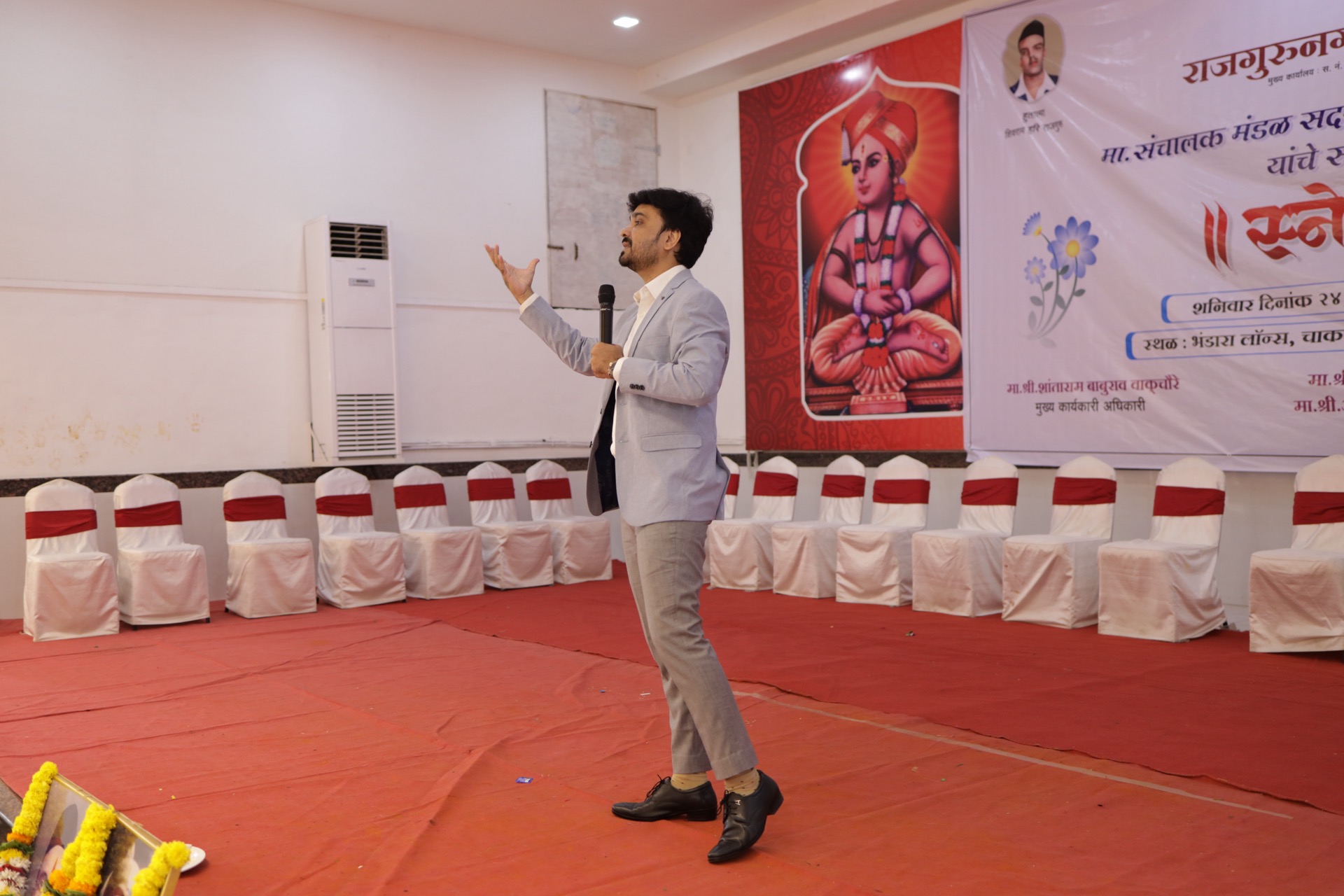
During my college days in Pune, I often wondered why my friend Krishna was loved by everyone. Teachers loved him. Classmates loved him. Even the strictest professors softened around him. It wasn't until I began my career as a corporate trainer, years later, that I finally understood his charm. Krishna listened with absolute attention and genuine interest—like someone deeply in love. Today, he is a senior software developer at an IT firm in Pune, and that same gift still works for him, effortlessly building strong connections with clients and colleagues alike.
In short- Krishna, a friend from my Pune college days, was loved by everyone for one simple reason: he listened with total, undivided attention.
- Years later, as a senior software developer, that same active listening turned into his professional superpower—building trust with clients and colleagues without effort.
- Most professionals unknowingly sabotage relationships with four habits: interrupting, rushing to respond, adding unnecessary value, and missing the point.
- Active listening is not silence—it's full engagement, empathy and thoughtful, timely response, guided by the 80/20 rule: listen 80%, speak 20%.
- Active Listening is Tool #2 on the Relationship Intelligence (RQ) side of the Winning Kite (KITE Leadership Framework)—and it is a skill anyone can build with practice.
Where This Sits on Your Winning Kite
Active Listening is Tool #2 on the Relationship Intelligence—RQ, the right side—of your Winning Kite (KITE Leadership Framework). The kite has four sides: EQ on the left (how you manage yourself), RQ on the right (how you connect with others), PQ at the bottom (how you get things done), all lifting you toward Success at the top. You don't rise on any one side alone—you rise on balance. Krishna's story is proof that RQ, built almost entirely on how well you listen, can carry a career as far as raw technical skill can.
The Friend Everyone Wanted to Talk To
I met Krishna during my college days in Pune. He wasn't the loudest person in our group. He wasn't the topper, and he wasn't the one cracking the best jokes at the canteen table. And yet, somehow, he was the one everyone gravitated toward. If you had a problem, you went to Krishna. If you had good news, you told Krishna first. If you were nervous before an exam, sitting next to Krishna calmed you down.
At the time, I couldn't explain it. I assumed it was just his personality—some people are simply likeable, I thought, the way some people are simply tall. It took me years, and a whole new career as a corporate trainer studying human behaviour for a living, to go back and understand what Krishna was actually doing differently.
He was listening. Not politely waiting for his turn to speak. Not nodding along while planning his next sentence. He was listening with absolute attention and genuine interest—the way someone listens when they are deeply in love and hanging on every word the other person says. That is the only comparison that does it justice. When Krishna was in a conversation with you, you were, for those minutes, the most important person in the room.
From College Charm to Career Currency
Today, Krishna is a senior software developer at an IT firm in Pune. On paper, his career looks like any other technically strong engineer's: he writes code, ships features, sits in stand-ups, manages sprints. But talk to the people who work with him—his clients, his colleagues, his reporting managers—and a different picture emerges. They don't only talk about his technical skill. They talk about how easy he is to work with. How he 'gets' what they actually need, even when they struggle to explain it. How disagreements with him rarely turn into conflict.
That is not a coincidence. It is the same trait I watched in the Pune college canteen, now doing professional work. In software development, requirements are almost never stated perfectly the first time. A client says one thing and means something slightly different. A colleague raises a concern that's really about something else entirely. The engineers who succeed long-term aren't only the ones who write the cleanest code—they're the ones who hear what's actually being said, including what's left unsaid. Krishna built that ability without ever calling it a 'skill.' He just listened, the same way he always had.
Why Most of Us Don't Listen the Way Krishna Does
In any Indian workplace, active listening skills can significantly shape your career and relationships. Sadly, most professionals unknowingly develop habits that damage their listening ability. These habits look small in the moment, but their cumulative cost on trust and relationships is enormous.
Interrupting Others
Imagine a teacher in a Pune school explaining a crucial topic, and a student repeatedly interrupts. Frustrating, isn't it? When you interrupt a colleague or a client mid-sentence, you send the same signal: what I have to say matters more than what you're saying. It's disrespectful even when unintentional, and it steadily erodes trust.
Being Too Eager to Respond
At a popular restaurant in Mumbai, Manisha, a customer service executive, often jumped in with a response before customers had finished expressing their grievance. She thought she was being efficient. Instead, she was creating misunderstandings and lowering customer satisfaction, because she was solving the problem she assumed they had, not the one they actually had.
Adding Too Much Value
In a government office in Lucknow, Rajesh, a senior clerk, constantly inserted his own inputs into every discussion, convinced this demonstrated his expertise. His coworkers experienced it differently—they felt interrupted, talked over, and annoyed. Relations strained over time, not because Rajesh lacked knowledge, but because he never let anyone finish a thought.
Missing the Point
Nisha, an operations manager at a hospitality chain in Jaipur, often multitasked through team meetings—checking messages, half-listening. She repeatedly missed key instructions, and the resulting operational chaos frustrated her entire team. Partial attention is, functionally, no attention at all.
What Active Listening Is NOT
It's worth being precise here, because people often get this wrong. Active listening does not mean silently nodding without involvement. It is not passively hearing words go by, and it is definitely not staying completely silent or refusing to participate in a conversation. Krishna was never a silent presence—he asked questions, reacted, engaged. Active listening involves genuine engagement, empathy, and thoughtful, timely responses. The goal isn't to disappear from the conversation; it's to be fully present in it, focused on the other person rather than on your own next line.
My Friend Shailesh — A Second Proof Point
Krishna isn't the only example I carry with me. My friend Shailesh, who manages a school in Beed, Maharashtra, always impresses me the same way. Whenever we meet, he eagerly asks about my professional achievements and genuinely listens to the answers—not out of politeness, but out of real interest. That habit has earned him immense trust and respect from his staff and students. Two very different men, in two very different fields—IT and education—both built the same currency of trust using the same tool.
The Three Golden Rules of Exceptional Listening
Over years of training corporate teams, I've distilled what Krishna does naturally into three rules anyone can practise deliberately:
- Think before speaking. Pause before responding, especially in emotional conversations. Influential leaders across Indian workplaces build this pause into every difficult conversation.
- Listen with complete respect. Treat the speaker as the most important person at that moment. This was Krishna's entire method—undivided attention, every time.
- Ask yourself, 'Is it worth it?' Before offering feedback or criticism, weigh its impact. Constructive criticism delivered with empathy helps; harsh feedback damages morale and relationships.
Remember the 80/20 listening rule: listen 80%, speak 20%. And remember how communication actually lands—tone carries 38%, body language 55%, and words themselves only 7%. Your emotional and vocal presence say far more than your sentences do. That's precisely why Krishna's listening felt like being loved: his attention, not his words, did the work.
Proof From Other Indian Workplaces
Krishna's story isn't an isolated case—I've seen the same pattern repeat across very different industries. Kavita and Namita, counselors at an educational institution in Maharashtra, were puzzled by low student satisfaction despite their deep knowledge. When they recorded their sessions, they discovered they were dominating 75% of every conversation. Once they consciously let students speak more, satisfaction and admissions improved significantly. In a rehabilitation centre in Maharashtra, Mr. Nagargoje patiently listened to a recovering patient, Kumar, without interruption or judgment—Kumar felt genuinely heard for the first time, and it became a turning point in his recovery. And Rakesh, a senior manufacturing manager in Chennai facing falling productivity, didn't impose solutions—he held individual meetings and simply listened to grievances. Trust rebuilt itself, and productivity followed.
How to Build Krishna's Skill Deliberately
Not everyone is born with Krishna's natural gift, and that's fine—active listening is trainable. A few practical steps:
- Maintain eye contact. Show your interest physically. Put the phone away during conversations that matter.
- Avoid interrupting. Let the speaker finish completely before you respond.
- Listen to understand, not just to respond. Don't mentally draft your reply while the other person is still talking.
- Clarify and summarise. Repeat back what you heard. It confirms understanding and signals genuine engagement.
- Practise intentional silence. Make a conscious effort to stay attentive and quiet when someone else is speaking.
- Reflect daily. Each evening, ask yourself: did I actively listen today, or did I interrupt and rush?
- Ask for honest feedback. Request an honest read on your listening habits from colleagues and friends, and act on it.
Psychologist Daniel Goleman's research on emotional intelligence has long pointed out that empathic listening is one of the strongest predictors of leadership effectiveness—Krishna simply lived that truth before I ever read it in a book.
Bring This Into Your Team
When I run corporate training programs on communication and relationship intelligence, I always start with Krishna's story, because it makes the abstract concrete. Active listening isn't a soft skill reserved for HR teams—it is a hard business asset. It reduces rework because requirements get understood correctly the first time. It reduces attrition because people feel heard by their managers. It wins repeat clients because clients feel understood, not just served. If you want to see how this fits into a complete leadership development approach, explore our Signature Programs, or read about how Active Listening connects to the other tools on the RQ side of the Winning Kite.
Bring These Ideas to Your Team
Avinash Chate turns the traits in Stars at India Inc. into live leadership & emotional-intelligence workshops. TEDx speaker · 11+ yrs training Army, BRO, RBI, BARC, JSW & 1000+ leaders.
✅ Thanks! Avinash team will reach out within 24 hours.'}).catch(function(e){f.outerHTML='Something went wrong. WhatsApp +91 8793630001
'});return false;">Select ServiceKeynote / Motivational SpeakingLeadership Development TrainingTeam Building WorkshopManager DevelopmentEmployee TrainingBook Avinash Now →Or WhatsApp directly: +91 87936 30001
Work with Avinash Chate
- Signature Corporate Training Programs →
- The Winning Kite (KITE Leadership Framework) →
- All Corporate Training Topics →
Avinash Chate TEDx Speaker · Founder, The Future Corporate · Author of Stars at India Inc. Avinash has trained the Indian Army, BRO, RBI, BARC, JSW Steel and 1000+ corporate leaders across India. His work focuses on leadership, emotional intelligence and behavioural training rooted in Indian values and modern business needs. |
Frequently Asked Questions
What made Krishna different from everyone else in college?
Krishna listened with absolute attention and genuine interest, almost like someone deeply in love. He didn't perform listening for effect—he was fully present, which made everyone around him feel valued and understood.
What is active listening in the workplace?
Active listening means fully focusing on, understanding and responding thoughtfully to what someone says, instead of interrupting, rushing to reply, or mentally preparing your answer while the other person is still speaking. It shows respect and builds trust.
Why is active listening important for IT professionals and client-facing roles?
In client and stakeholder conversations, requirements are rarely stated perfectly the first time. A software developer who listens actively catches the unspoken concern behind a client's words, avoids costly misunderstandings, and builds the kind of trust that keeps clients coming back.
Where does active listening sit on the Winning Kite framework?
Active listening is Tool #2 on the Relationship Intelligence (RQ) side—the right side—of the Winning Kite. It works alongside EQ and PQ to lift you toward Success, the top of the kite.
Related Articles by Avinash Chate
- Jayasuriya & Kaluwitharana – aggressive openers
- Team Motivation Strategies That Energize and Inspire Corporate Teams India 2026
- Change Catalyst: Leading People Through Transformation
Avinash Chate services
Corporate Trainer in Pune · Top Corporate Trainers in Pune · Leadership Trainer in Pune · Top Leadership Trainers in Pune · Team Building Trainer in Pune · Top Team Building Trainers in Pune · Motivational Speaker in Pune · Top Motivational Speakers in Maharashtra · All service locations
← Back to all articles · Book Avinash Chate
By Avinash Chate — Maharashtra’s #1 Corporate Trainer & Motivational Speaker. .