The 'Maan Ki Baat' Office Program: How I Built a Culture Where My Team Could Say Anything
Inside 'Maan Ki Baat', the three-step open-communication ritual I built for my own office — and the difference between a leader who listens and one who only hears.
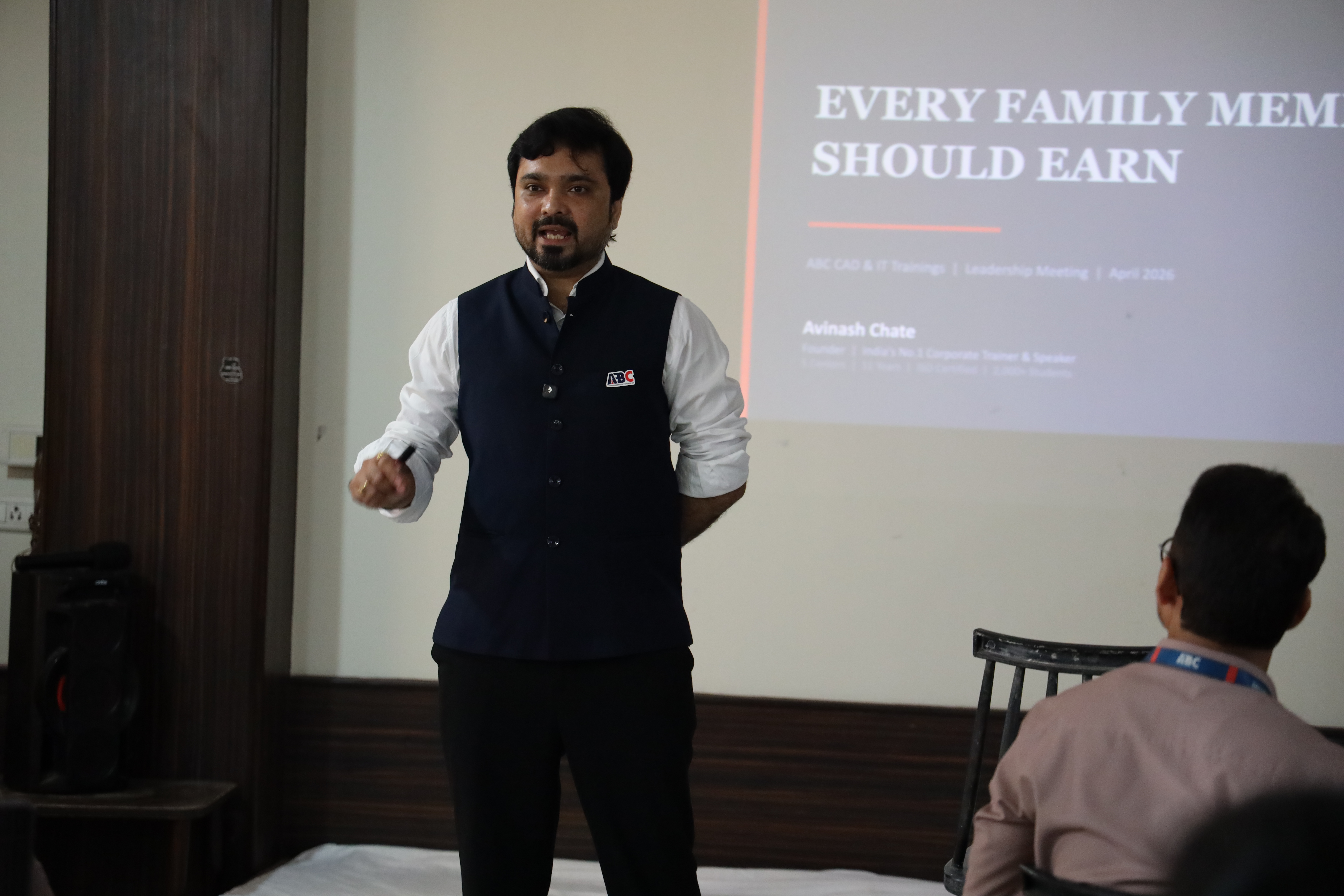
A few years ago, I sat down with my own team and asked a question most leaders are afraid to ask out loud: what are you not telling me? The silence in that room taught me more than any leadership book ever had. Out of that silence, I built 'Maan Ki Baat' — a program that has since become one of the most quietly powerful things we do in my office.
In short- 'Maan Ki Baat' is my own office's open-communication ritual — the name literally means "say what's on your mind."
- It runs in three deliberate steps: an anonymous pre-discussion form, an open discussion meeting, and a solution meeting.
- The format only works when leadership is genuinely open-minded, receptive, and bias-free — the structure alone is not enough.
- It sits inside Trait #19, Communication, on the EQ side of the Winning Kite — and it strengthens the RQ and PQ sides too.
- Leaders like Ratan Tata's confidential mailbox, Adi Godrej's open-door policy, and Sundar Pichai's TGIF meetings all solve the same problem in their own way.
Where this sits on your Winning Kite
Communication is Trait #19 on the EQ — left — side of your Winning Kite (KITE Leadership Framework). It's not just a soft skill you tick off in a performance review. It's the wire that carries current between the four sides of the kite. Say something honestly on the EQ side, and it improves how you relate to people on the RQ side. Build the right rhythm of listening, and your PQ — productivity — side stops leaking energy into misunderstandings, guesswork, and quiet resentment. Communication is the trait that touches every other trait. Get it wrong, and the whole kite wobbles. Get it right, and it lifts everything else with it.
Why I built 'Maan Ki Baat' in the first place
Effective communication is not only about the words we use. It is about how we deliver them, when we deliver them, and to whom we deliver them. Without good communication, misunderstandings pile up, small fights turn into big ones, work slips, and opportunities get missed quietly in the background. This is true whether you are running a five-person startup or a thousand-person plant floor — and it is true regardless of which language your team speaks. Communication competence is not about vocabulary. It is about making yourself understood and making it safe for someone else to be understood by you.
One part of this competence that most leaders underestimate is listening with an open mind and reading the emotional cues underneath the words. People who are strong communicators do not just transmit information — they receive it, adjust their message to the person in front of them, and create a two-way exchange instead of a one-way announcement. The other part — the harder part — is being willing to deal with difficult issues in a straightforward manner. Good communicators are good listeners who share information fully, even when that information is uncomfortable. They build an environment where people feel safe bringing both good news and bad news to the table. That environment does not happen by accident. It has to be designed.
That is exactly why I initiated 'Maan Ki Baat' in my own office — team members meet in a structured setting to promote a culture of frankness. The premise is simple: when employees feel like they can say what they think and how they feel, without fear, they work together better, they get more done, and they are genuinely happier in their jobs. The name itself does the explaining — Maan Ki Baat, "what's on your mind" — because that is precisely what the program is built to surface.
The three-step process, exactly as we run it
'Maan Ki Baat' is not a free-for-all venting session. It works because it follows a disciplined, three-step structure that gives honesty a container to live in.
Step 1 — The pre-discussion phase
A coordinator sends out a Google Form to every team member, asking for their thoughts on specific work-related or company-policy-related topics. Team members can respond anonymously or openly, whichever feels safer to them. This step matters enormously — it means that by the time the room gets together, people have already had a private, pressure-free moment to think and say what they actually believe, instead of scrambling to form an opinion live in front of colleagues and managers.
Step 2 — The discussion meeting
Everyone gathers to go through the feedback collected in step one. In this meeting, team members can ask anything, and share their thoughts, ideas, or concerns without fear of being judged or reprimanded. This is the heart of the program. The pre-discussion form surfaces the raw material; the discussion meeting is where it gets spoken out loud, in the room, in front of the people it concerns — including, often, me.
Step 3 — The solution meeting
Feedback without follow-through breeds more cynicism than silence ever did. So the final step is a dedicated solution meeting, where the team comes together specifically to work out solutions to the issues or concerns raised in step two. Nothing is allowed to just hang in the air. Every concern that was voiced gets a decision, an owner, or an honest explanation of why it cannot be actioned right now.
What changed after we started
The 'Maan Ki Baat' initiative has proven to be a genuine success for our team. By giving people a channel that is open and honest, they feel more comfortable sharing their ideas and concerns — and that comfort compounds. Better teamwork followed. A more productive workplace followed. Higher employee satisfaction followed. None of these were the direct goal of the program; they were the by-product of people finally being heard.
But I want to be honest about the condition that makes this work, because it is the part most organizations skip. The success of an initiative like this is heavily dependent on the leadership of the organization. Leaders need to be open-minded, receptive, and willing to listen to their employees' feedback and concerns without any biases. If a leader runs the same format but flinches, gets defensive, or quietly punishes candour later, the program becomes theatre — everyone will smile through the discussion meeting and say nothing that matters. Genuine openness from the top is what turns three structured steps into a real culture of transparency, where employees feel heard and valued. And a workforce that feels heard is a workforce that engages — which, in the end, is what drives an organization forward.
I'm not the only one who has done this
Once you start looking, you see this same instinct — build an intentional channel for honesty — running through some of India's and the world's strongest leaders. Ratan Tata, the former Chairman of Tata Sons, is known for his "Tata confidential" mailbox, where employees could submit suggestions and feedback directly. Adi Godrej, Chairman of the Godrej Group, is known for an open-door policy where employees can walk in and share their thoughts with him personally, regardless of rank. And Sundar Pichai, CEO of Google, hosts weekly "TGIF" meetings where employees can ask him anything — sessions broadcast to every Google office worldwide, deliberately building a culture of transparency at global scale.
Closer to the shop floor, I think often of Mr. Rajendra Gupta, Plant Head of Kesardeep Pressings, whom I've had the privilege of training and observing up close over several employee sessions. Mr. Gupta runs an open-door policy where a high-level executive and a blue-collar worker are equally welcome to walk into his cabin. He is a great listener — he takes the time to understand his employees' perspectives, actively seeks their feedback, and incorporates their ideas into decisions wherever possible. He also shares updates on the company's progress, goals, and challenges regularly, and invites questions rather than deflecting them. That combination — approachability, listening, and transparency — is what has made him, in my eyes, a true leader.
What ties Ratan Tata's mailbox, Adi Godrej's open door, Sundar Pichai's TGIFs, Mr. Gupta's cabin, and my own 'Maan Ki Baat' together is not the format. It's the underlying discipline: each is a deliberate, repeatable channel that makes it structurally easier for the truth to travel upward, instead of leaving it to chance or courage alone. Daniel Goleman's research on emotional intelligence makes a similar point — self-aware, socially aware leaders consistently build these structures because they understand that information only flows freely where trust already exists. My experience across corporate India confirms it, session after session: trust is not requested, it is engineered.
How to build your own version of Maan Ki Baat
You do not need my exact form, my exact three steps, or even the name. What you need is the underlying discipline: a private channel for honesty, a public forum for discussion without fear, and a closing loop that turns talk into action. Start small — one team, one monthly cycle. Send the form. Hold the meeting. Show up to the solution meeting having actually changed something, even something minor. That last part is what earns you the right to run the cycle again next month, and the one after that.
If you are building this as a manager or a founder, this is also exactly the kind of behavioural shift I work on with leadership teams inside Signature Corporate Training Programs — because the format is easy to copy, but the open-mindedness underneath it has to be trained and practised. Explore the full library of Corporate Training Topics if you want to go deeper on Communication specifically, or start at The Winning Kite (KITE Leadership Framework) to see how Communication connects to the other 24 traits.
Bring These Ideas to Your Team
Avinash Chate turns the traits in Stars at India Inc. into live leadership & emotional-intelligence workshops. TEDx speaker · 11+ yrs training Army, BRO, RBI, BARC, JSW & 1000+ leaders.
✅ Thanks! Avinash team will reach out within 24 hours.'}).catch(function(e){f.outerHTML='Something went wrong. WhatsApp +91 8793630001
'});return false;">Select ServiceKeynote / Motivational SpeakingLeadership Development TrainingTeam Building WorkshopManager DevelopmentEmployee TrainingBook Avinash Now →Or WhatsApp directly: +91 87936 30001
Work with Avinash Chate
- Signature Corporate Training Programs →
- The Winning Kite (KITE Leadership Framework) →
- All Corporate Training Topics →
Avinash Chate TEDx Speaker · Founder, The Future Corporate · Author of Stars at India Inc. Avinash has trained the Indian Army, BRO, RBI, BARC, JSW Steel and 1000+ corporate leaders across India. His work focuses on leadership, emotional intelligence and behavioural training rooted in Indian values and modern business needs. |
Frequently Asked Questions
What is the 'Maan Ki Baat' office program?
'Maan Ki Baat' is an open-communication ritual Avinash Chate built inside his own office, where team members meet regularly in a structured, judgment-free format to say what they genuinely think and feel about work and company decisions.
What are the three steps of the Maan Ki Baat process?
Step one is the pre-discussion phase, where a coordinator circulates a Google Form for anonymous or open input on work topics. Step two is the discussion meeting, where the team openly talks through that feedback without fear of being judged. Step three is the solution meeting, where the team converts concerns into concrete action.
Why do open-communication programs like this often fail?
They fail when leadership is not genuinely open-minded and receptive. If employees sense that honesty will be punished or ignored, they stop speaking up, and the format becomes a hollow ritual rather than a trust-building one.
How does Maan Ki Baat connect to the Winning Kite framework?
Maan Ki Baat is a practical expression of Communication, Trait #19 on the EQ (left) side of the Winning Kite. Strong communication on the EQ side directly strengthens the RQ (relationships) and PQ (productivity) sides, lifting the whole kite toward Success.
Related Articles by Avinash Chate
- Chanakya on Enthusiasm: Leadership's Most Contagious Power India 2026
- Khashaba Jadhav: India's First Olympic Medal Won in Village Mud Pits 1952
- Chanakya's Arthashastra: The Four Energies Every Leader in India Needs
Avinash Chate services
Corporate Training · Leadership Development · Team Building · Motivational Speaking · All service locations
← Back to all articles · Book Avinash Chate
By Avinash Chate — Maharashtra’s #1 Corporate Trainer & Motivational Speaker. .