Social Entrepreneurship in India Book Review: Lessons from HNIMR Students
An HNIMR Pune team reviewed Madhukar Shukla's Social Entrepreneurship in India with Amul, Aravind and Lijjat. Lessons for young Indian founders.
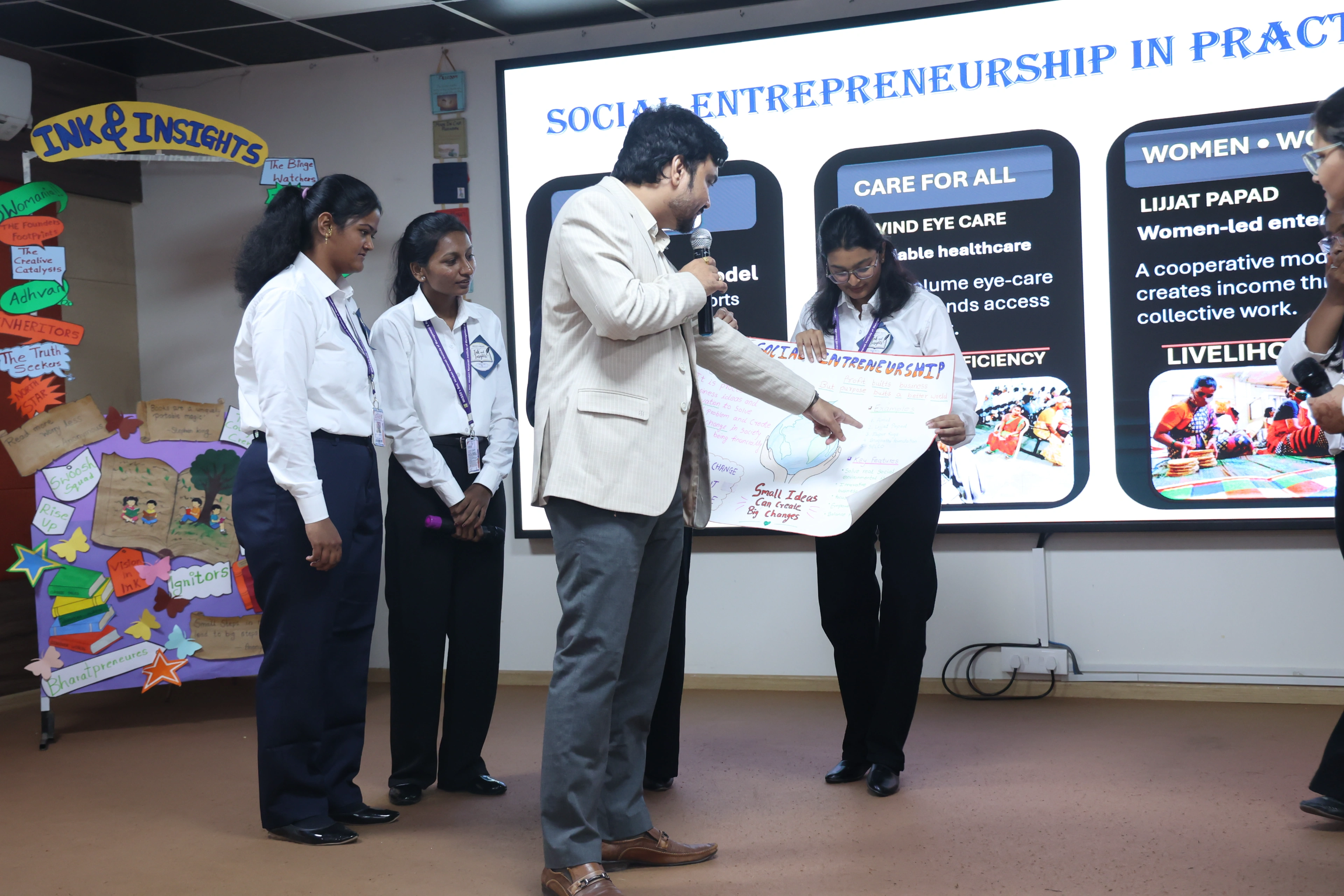
At "Ink and Insights", the book review competition I judged at MKSSS's Smt. Hiraben Nanavati Institute of Management and Research for Women (HNIMR), Karvenagar, Pune, on 29 October 2026, twenty-one MBA teams each brought one business book to life. The theme was "Entrepreneurship: From Vision to Venture: Learning Through Books", and I questioned and guided every one of the 21 groups after their presentation.
One team chose a book that fits India better than almost any other on the list: Social Entrepreneurship in India: Quarter Idealism and a Pound of Pragmatism by Madhukar Shukla, a professor at XLRI, published by SAGE in 2020. The subtitle says it all. A little idealism, and a lot of practical sense. This part of the day was not recorded, so I am writing from the team's poster, cards and slides, and from what the book itself teaches.
What the book is about
Shukla's book explains how to build ventures that solve social problems and still stand on their own feet. Across nine chapters, with frameworks and case studies drawn from around 120 organisations, he shows how social entrepreneurs differ from NGOs and other change makers. The central message is simple: a social venture must be sustainable, not just well-meaning. Good intentions that run out of money help nobody for long.
My own one-line summary for students is this: do good, and make it pay, so you can keep doing good.
Why does this matter for an MBA student? Because India has no shortage of problems or of people who care. What is short is ventures that last. An NGO usually depends on grants and donations each year. A social enterprise tries to earn its own way, by selling a product or a service, so that the good it does can grow with its revenue. The book asks you to keep both feet on the ground: love the cause, but run the numbers.
How the team presented it
The team's hand-drawn poster was full of heart. At its centre were two hands holding the earth with a small plant growing from it, and below it the line "Small ideas can create big changes". In one corner, in a cloud, was "Be the change you want to see".
The poster also gave a clear definition: social entrepreneurship is the process of using business ideas and innovation to solve social problems and create positive change in society, while also being financially sustainable. That last phrase is the heart of Shukla's book, and I was glad the team put it in writing.
Their key features were practical too: solve a real social or environmental issue, build an innovative and sustainable business model, focus on long-term impact, empower communities, and balance profit with purpose. Their list of examples named Amul, Lijjat Papad, Jaipur Rugs, the Bhagirathi Foundation and SELCO.
Social entrepreneurship in practice: Amul, Aravind and Lijjat
Their slide, titled "Social Entrepreneurship in Practice", picked three Indian stories that every student should know.
- Amul, the cooperative model. Lakhs of small dairy farmers pool their milk, and the cooperative handles processing and selling, so the farmer gets a fair share of the final price.
- Aravind Eye Care, care for all. A high-volume model of eye surgery that keeps costs low, so that paying patients help support those who cannot pay.
- Lijjat Papad, women and work. A women-led cooperative, started in Mumbai in 1959, that creates income through collective work.
Two cards the team held up said it even more sharply. One read: "Sources are there, but where's the solution? Real change needs action, not just awareness." The other read: "Profit builds business, but purpose builds better society." Put those two cards together and you have the book's subtitle in student language.
Five practical lessons for Indian students and young founders
1. Start with a problem you can see from your home
Water, waste, safe transport for girls, jobs for women in your colony. Social ventures begin close to home, where you understand the people and their daily life.
2. Decide early who will pay
Users, companies, CSR funds or the government. A social idea without a clear answer to this question becomes a charity that depends on the next donation. Amul works because the customer pays for milk, every single day.
3. Design for volume, not just kindness
Aravind shows that doing a simple thing very well, many times, can bring the cost down so far that you can serve the poor and still run a healthy organisation.
4. Let the community own it
Amul and Lijjat are both owned by the people they serve. When the community owns the venture, it lasts longer than any one founder.
5. Measure your impact honestly
Count lives changed, incomes raised, children in school. If you cannot measure the good you do, you cannot prove it to a funder, a customer, or yourself.
A note to the team
You chose a book that asks a hard question, how to do good and still survive, and you answered it with Indian examples that have stood the test of decades. "Small ideas can create big changes" is true. Now add the book's quarter of idealism to its pound of pragmatism, and pick one small problem near you to start on.
If you run a college or company: I run book-review competitions, entrepreneurship sessions and leadership workshops for MBA students and working teams across India. If you would like a session like this for your students or your people, write to me here and we can plan it together.
With thanks to HNIMR
My thanks to Dr. Priyanka Singh, Director of HNIMR; Mrs. Manjushree K. Nawale, Librarian, and her library team, who organised Ink & Insights 2026; Mr. Vishwajeet Deshmukh, Placement Officer; Mr. Devadatta Sant; and Ms. Minal Kotwal, for hosting me so warmly and making the day run so smoothly. And to every student who stood on that stage with a book in hand: thank you for the courage and the creativity.
Related Articles by Avinash Chate
- Creative Confidence Book Review: What Stops Students From Being Creative
- Best Motivational Speaker for Insurance and BFSI Companies in India | Mumbai
- Sales Mindset: From Average to Exceptional
Work with Avinash Chate
- Team Building Trainer in Pune →
- Motivational Speaking for Corporate Events →
- Best Motivational Speaker in Mumbai →
| AC | Avinash ChateIndia's Leading Corporate Trainer | TEDx Speaker | Author With 1000+ organizations trained including RBI, JSW Steels, and Ferrero, Avinash Chate delivers high-impact corporate training across India. Creator of the KITE Leadership Framework and bestselling author of "The Winning Edge." Website YouTube |
Avinash Chate services
Corporate Trainer in Pune · Top Corporate Trainers in Pune · Leadership Trainer in Pune · Top Leadership Trainers in Pune · Team Building Trainer in Pune · Top Team Building Trainers in Pune · Motivational Speaker in Pune · Top Motivational Speakers in Maharashtra · All service locations
← Back to all articles · Book Avinash Chate
By Avinash Chate — Maharashtra’s #1 Corporate Trainer & Motivational Speaker. .