Creative Confidence Book Review: What Stops Students From Being Creative
Team The Creative Catalysts opened Creative Confidence at HNIMR Pune with a 60-second drawing game. What fear, ideas and action mean for founders.
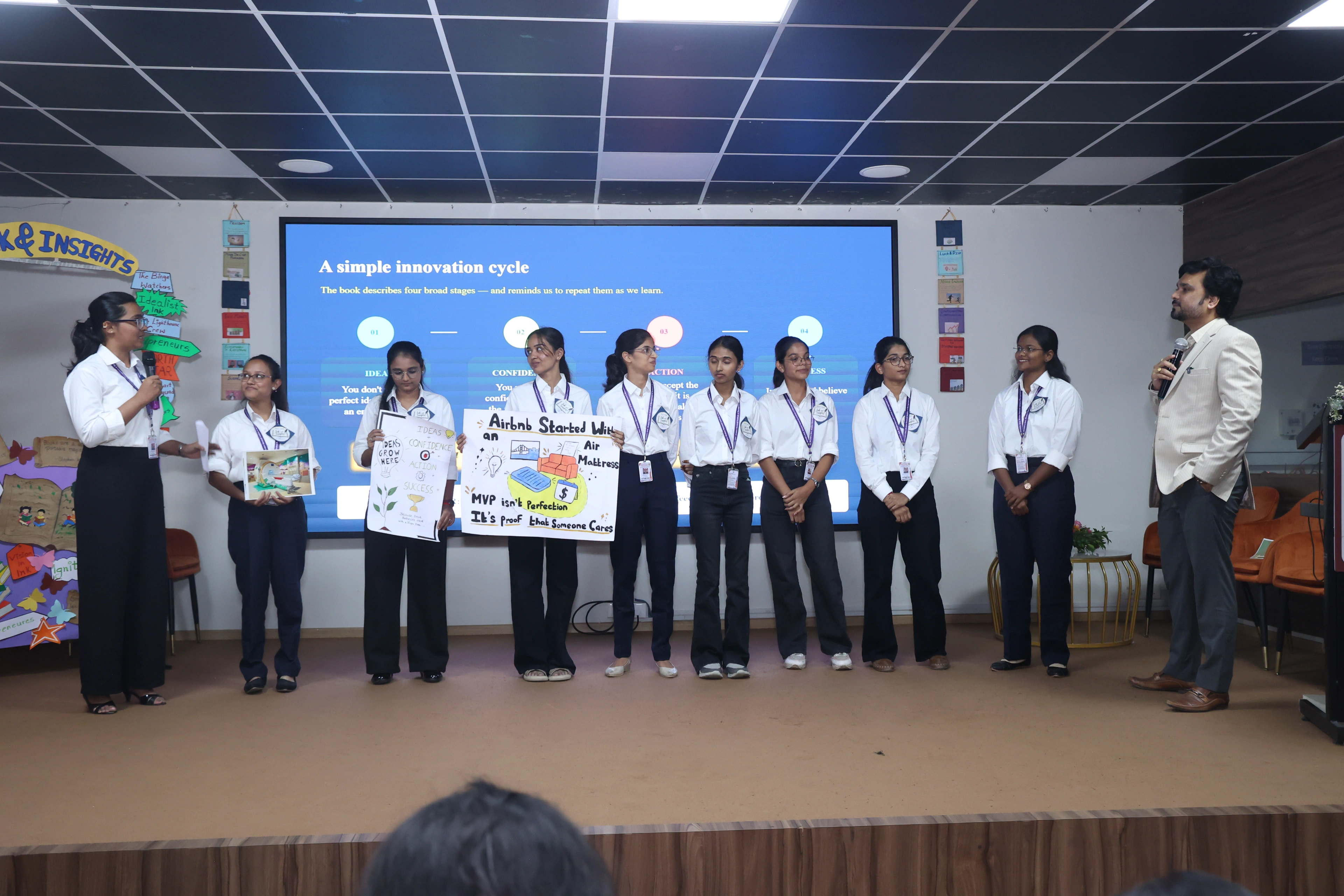
On 29 October 2026 I was chief guest and judge at "Ink & Insights", a book review competition at MKSSS's Smt. Hiraben Nanavati Institute of Management and Research for Women (HNIMR), Karvenagar, Pune. The theme was "Entrepreneurship: From Vision to Venture". Twenty-one MBA teams each brought one book to life in seven or eight minutes, and then took my questions.
Team The Creative Catalysts chose Creative Confidence by Tom Kelley and David Kelley. And instead of telling us what creativity is, they made us do it first.
The book in one line
The Kelley brothers founded the design firm IDEO, and David Kelley also founded Stanford's d.school. Their message is simple: creativity is not a gift given to a few designers and artists. Everyone has it. What blocks most of us is the fear of being judged and the fear of failing.
The book's tools are practical. Understand people with empathy. Try many ideas, not just the first one. Build quick, rough prototypes and learn from them. Overcome fear in small steps, an approach the authors borrow from psychologist Albert Bandura's work helping people with a fear of snakes, which he called guided mastery. And have a bias to action: do not wait for the perfect idea. Start.
How Team The Creative Catalysts presented it
The team opened with a question to the hall: does anyone know exactly what creativity is? Then they handed sheets to three volunteers, me included. Each sheet had six empty circles. We had 60 seconds to fill them in any way we liked. When the sheets came back, one person had drawn a clock in one circle, a building in another, and written something in a third. The team's point landed at once: a single person, given one minute, produced six different things. Creativity was already in the room.
They followed it with a short clip from Kung Fu Panda, where Po, who is a master of nothing, wants to "start at level zero". Po practises and practises until he masters one thing. Small steps lead to big ones.
Then they arranged the book into a simple cycle of four stages: idea, confidence, action, success. For the idea stage, they used Airbnb, which started with renting out air mattresses and grew by connecting people who need a place to stay with people who have space to rent. For confidence, they chose an Indian example, Kiran Mazumdar-Shaw, who built Biocon in an industry where women faced real barriers. For action, they used the story in the book of Doug Dietz, a designer at GE Healthcare, who noticed that children were terrified of MRI scans and redesigned the experience as a child-friendly adventure, so that fewer children needed to be sedated.
What I asked them: what stops all of us from being creative?
I told the team that many of us believe creativity is a natural gift from God. It is not like that. It is practising something unique every day, and then you become creative. So I asked just one question, and wanted an answer from each of them. What stops all of us from being creative?
The answers came one by one, and together they make a very honest list. Fear of failure. Perfectionism. The fear of not being unique. And overthinking, which one student explained beautifully: sometimes we feel that if we take this step and something unusual happens, then what will happen? That "then what" stops us before we start.
I also asked who was the most creative person in their own team. They pointed to the teammate who designed their slides, and when I asked what they learned from her, they said she is very calm, and that calmness lets her think properly and put out creative ideas. I liked that answer. We often imagine creative people as loud. Many are quiet.
Five lessons for an Indian student or young founder
1. Start with empathy, not with your idea
The MRI story is not about clever design. It is about one designer noticing a frightened child. Before you build a product, spend time with the people who will use it. Watch where they struggle. The business idea is usually hiding in that struggle.
2. Give your first idea some competition
The six circles showed that one mind can produce many ideas in a minute. The team listed "explore different options instead of the first idea" as a lesson. Before you fall in love with an idea, write down five more. Then pick.
3. Make it rough, make it fast
Create a simple prototype and test it before investing heavily. That could be a handwritten menu for a canteen idea, a WhatsApp group for a service, or a sample batch for a food product. A rough version shown to ten people beats a perfect version shown to none.
4. Beat fear in small steps
Fear of failure was the first answer every time. The book does not say fear will disappear. It says you shrink it by taking a step small enough to manage, then the next one. Speak to one customer. Then sell to one. Then to ten.
5. Build together
The team's fifth lesson was teamwork. Creative work is rarely a solo act. The calm teammate who made the slides, the volunteers who filled the circles, the team that turned eight chapters into a four-step cycle, all of it was shared work.
What I took home
This team practised what the book preaches. They did not lecture about creativity. They ran a one-minute experiment, used a cartoon to make a point, and brought in an Indian woman founder to show what confidence looks like. My advice to them, and to every student who heard it, is the same: be creative in your upcoming days when you start. Not someday. Daily. Creativity is not a gift. It is courage practised daily.
If you run a college or company
I run book-review and entrepreneurship sessions for colleges and companies, where people do not just read a book, they argue with it, act it out and turn it into a plan they can try on Monday. If you would like one for your students or your team, write to me here.
With thanks to HNIMR
My thanks to Dr. Priyanka Singh, Director of HNIMR; Mrs. Manjushree K. Nawale, Librarian, and her library team, who organised Ink & Insights 2026; Mr. Vishwajeet Deshmukh, Placement Officer; Mr. Devadatta Sant; and Ms. Minal Kotwal, for hosting me so warmly and making the day run so smoothly. And to every student who stood on that stage with a book in hand: thank you for the courage and the creativity.
Related Articles by Avinash Chate
- How to Break a Limiting Belief That Holds You Back
- The Wheel of Change in Action: A Real Operations Head Case Study
- Brad Gilbert's Black Book: How a Struggling Tennis Player Became the World's Best Coach
Work with Avinash Chate
- Team Building Trainer in Pune →
- Signature Corporate Training Programs →
- Best Motivational Speaker in Mumbai →
| AC | Avinash ChateIndia's Leading Corporate Trainer | TEDx Speaker | Author With 1000+ organizations trained including RBI, JSW Steels, and Ferrero, Avinash Chate delivers high-impact corporate training across India. Creator of the KITE Leadership Framework and bestselling author of "The Winning Edge." Website YouTube |
Avinash Chate services
Corporate Trainer in Pune · Top Corporate Trainers in Pune · Leadership Trainer in Pune · Top Leadership Trainers in Pune · Team Building Trainer in Pune · Top Team Building Trainers in Pune · Motivational Speaker in Pune · Top Motivational Speakers in Maharashtra · All service locations
← Back to all articles · Book Avinash Chate
By Avinash Chate — Maharashtra’s #1 Corporate Trainer & Motivational Speaker. .