That Will Never Work Book Review: Netflix Lessons Indian Students Took Away at HNIMR
How Team The Binge Watchers turned Marc Randolph's Netflix story into a live show at HNIMR, and the lessons on failure and testing ideas for young founders.
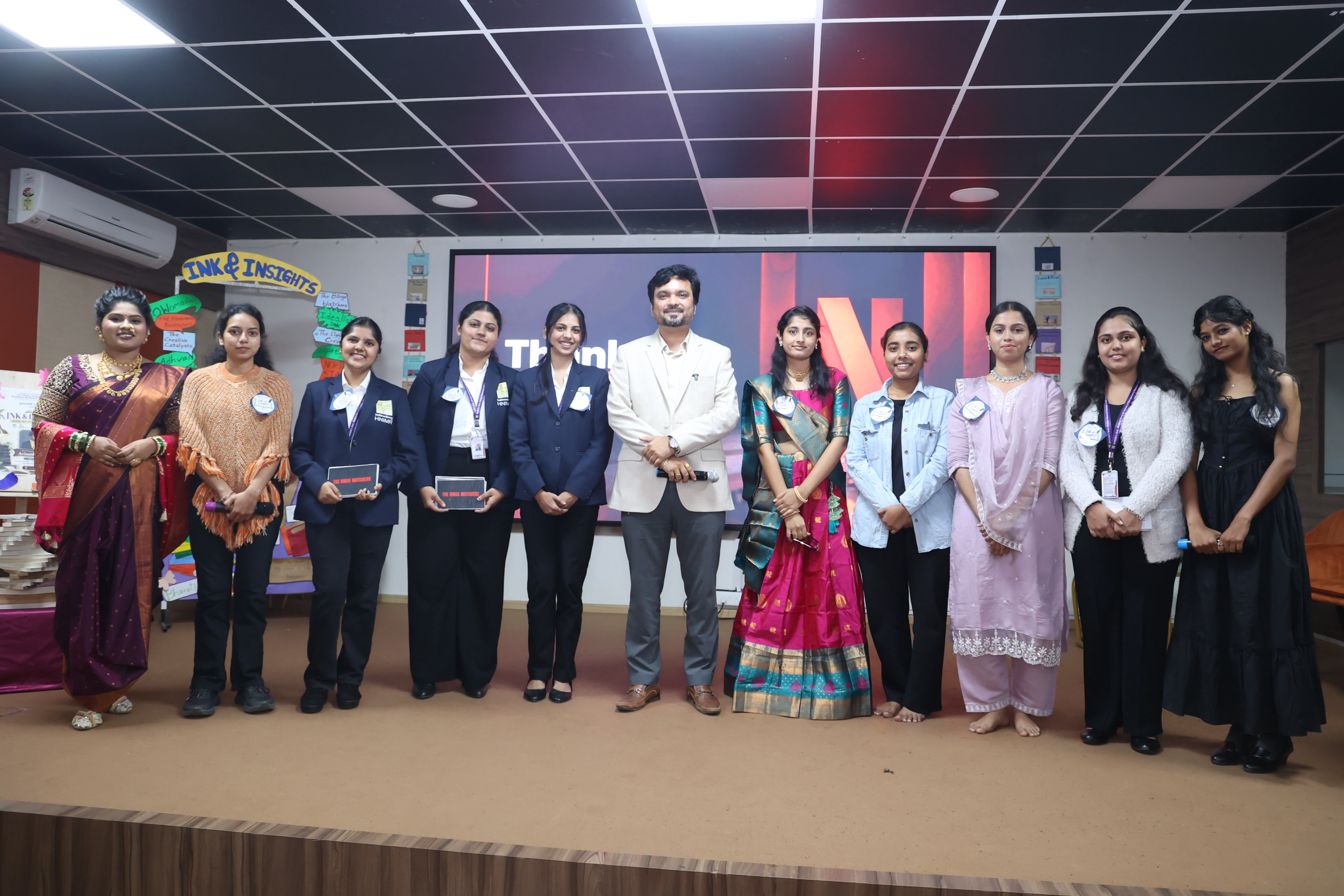
On 29 October 2026 I spent the day at MKSSS's Smt. Hiraben Nanavati Institute of Management and Research for Women (HNIMR) in Karvenagar, Pune, as chief guest and judge of "Ink & Insights", a book review competition on the theme "Entrepreneurship: From Vision to Venture". Twenty-one MBA teams each took one business book and brought it to life in seven or eight minutes, with slides and a skit, and then faced my questions.
The afternoon session opened with Team The Binge Watchers and Marc Randolph's That Will Never Work, the story of how Netflix was born. I expected slides. What I got was a Netflix series on stage.
The book in one line
Marc Randolph was the co-founder and first CEO of Netflix. In the book he tells the honest, messy story of the company's early years. He and Reed Hastings used their daily drive to work to throw business ideas at each other, and most of them died on the spot with the reply that gives the book its title: "That will never work."
One idea survived: renting movies by post. VHS tapes were too bulky and costly to ship, but DVDs were small and light. Before they built anything, they mailed a CD to themselves to see if it would arrive in one piece. It did. Netflix launched in 1998, later moved to a monthly subscription with no late fees, and in 2000, during the dot-com crash, offered to sell itself to Blockbuster for 50 million dollars. Blockbuster said no. Randolph's favourite phrase sums up his whole approach: "Nobody knows anything." So you test, you do not guess.
How Team The Binge Watchers presented it
The team did not explain Netflix. They became Netflix. One student played Marc Randolph, another played Reed Hastings, and a third played Patty McCord, who led people and culture at Netflix and believed in hiring talented people, giving them freedom and expecting honest feedback. Together they walked us through the timeline in the first person: the idea in 1997, the website in 1998, subscriptions in 1999, the Blockbuster rejection in 2000, going public in 2002, Randolph leaving in 2003, streaming in 2007 and original shows like House of Cards in 2013.
They ended by inviting "Netflix characters" onto the stage, with music, as if the show had just started. I told them honestly that this was beyond my expectation. When you present something in a creative way, it goes into people's heads faster. I asked who came up with the idea, and the answer was simple and smart: when they chose a book about Netflix, they felt charts and bullet points did not suit the story, so they borrowed the format of a series. That is exactly the kind of thinking the book itself praises. They told me they had worked on it seriously for about a month.
What I asked them: have you ever failed?
The first lesson the team drew from Netflix was "never give up", and close behind it, "learn from failure". So I asked each of them a personal question. Have you failed in your life, the way Netflix failed again and again before it worked?
The answers were real. One student spoke about low marks in maths, and how practice later brought good marks. Another had been selected in shot put up to the district level, the only one from her new school, but did not go further, and you could still see on her face that it hurt. Another spoke of struggling with maths in her agriculture degree despite studying through the night, and one mentioned a first-year backlog.
I told them what I believe: failure is a good thing to have. The shot put student had in fact succeeded in reaching the district, even if she missed her personal goal. Netflix too failed at many things, kept changing its strategy, and only then succeeded. The question is never whether you fail. It is how you bounce back.
I also asked about their teamwork, since this was their first big project of the MBA. They named each other's strengths without hesitation: one who decorated and made the cards, one who wrote the script and one who improved it, one who built the slides, a leader who pushed everyone forward and gave each person a responsibility, and a group with "a lot of patience" who listened to each other. That is a good start for any founding team.
Five lessons for an Indian student or young founder
1. Test the idea for the price of a courier
Netflix did not raise money to test DVDs by mail. They posted a disc to themselves. Whatever your idea is, a tiffin service, a tuition app, a handmade product, find the cheapest test you can run this week, ideally under Rs 1,000. Ten real customers will teach you more than a hundred-slide plan.
2. "That will never work" is information, not a verdict
Reed Hastings said it to almost every idea, and he was usually right. That is useful. But when everyone says it, and your small test says otherwise, trust the test. A bad idea fails the test. A brave idea passes it while people are still laughing.
3. Failure is tuition fees
The Binge Watchers listed it as a lesson: a failed experiment tells you what to change before you make a bigger mistake. Low marks, a missed selection, a backlog, all of these taught the students something. A founder simply pays these fees more often.
4. Big companies can say no to the future
Blockbuster could have bought Netflix for 50 million dollars and said no. For a big company, the lesson is to stay humble. For a small founder, the lesson is that a big player's rejection does not mean your idea is wrong. It may only mean they cannot see it yet.
5. Know your strength, and step aside when the company needs it
As the team said in Randolph's voice, his strength was starting things and experimenting. Reed Hastings later took over as CEO, and Randolph accepted it for the good of the company. Many Indian family businesses and startups struggle here. Building something does not mean you must run every stage of it.
What I took home
This team showed me that a book review can be a performance, and that a performance can teach. They took a story about a company that changed how the world watches stories, and told it in the language of that company. The lesson I want every student in that hall to keep is the one the team closed with: when someone says "that will never work", it might just be the beginning.
If you run a college or company
I run book-review and entrepreneurship sessions for colleges and companies, where people do not just read a book, they argue with it, act it out and turn it into a plan they can try on Monday. If you would like one for your students or your team, write to me here.
With thanks to HNIMR
My thanks to Dr. Priyanka Singh, Director of HNIMR; Mrs. Manjushree K. Nawale, Librarian, and her library team, who organised Ink & Insights 2026; Mr. Vishwajeet Deshmukh, Placement Officer; Mr. Devadatta Sant; and Ms. Minal Kotwal, for hosting me so warmly and making the day run so smoothly. And to every student who stood on that stage with a book in hand: thank you for the courage and the creativity.
Related Articles by Avinash Chate
- AI Assistant for MSME Owners in Nanded: Telegram and WhatsApp Guide
- The Cadbury India Positioning Secret: Beat Mithai, Not Chocolate
- Motivational Speaker for Engineering Colleges in Maharashtra
Work with Avinash Chate
- Signature Corporate Training Programs →
- Motivational Speaking for Corporate Events →
- Best Motivational Speaker in Mumbai →
| AC | Avinash ChateIndia's Leading Corporate Trainer | TEDx Speaker | Author With 1000+ organizations trained including RBI, JSW Steels, and Ferrero, Avinash Chate delivers high-impact corporate training across India. Creator of the KITE Leadership Framework and bestselling author of "The Winning Edge." Website YouTube |
Avinash Chate services
Corporate Trainer in Maharashtra · Top Corporate Trainers in Maharashtra · Leadership Trainer in Maharashtra · Top Leadership Trainers in Maharashtra · Motivational Speaker in Maharashtra · Top Motivational Speakers in Maharashtra · All service locations
← Back to all articles · Book Avinash Chate
By Avinash Chate — Maharashtra’s #1 Corporate Trainer & Motivational Speaker. .