True Leadership Is Lifting Others: Lessons for Indian Managers 2026
Real leadership means carrying your team with you — the साथ में चने principle. Avinash Chate explains the 5 leadership pillars of awareness, ethics, HR systems, and gratitude for Indian managers.
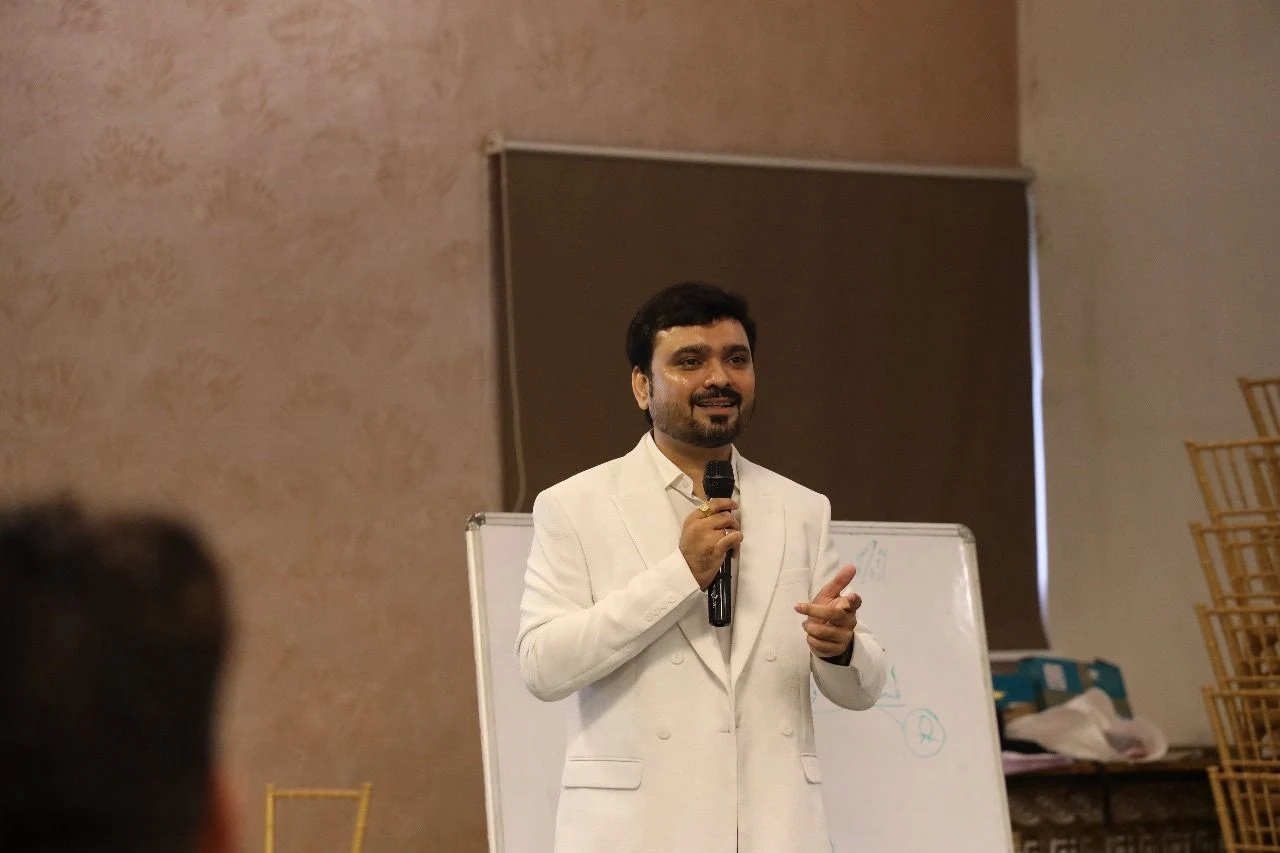
Here's the leadership truth most managers miss — it's not about how far ahead you can go, it's about how many people you bring with you. The साथ में चने principle, which I use in leadership programs across Tata Tech, Bajaj Auto, and the Indian Army, captures this exactly. India's ₹1.5 trillion L&D market confirms: leadership with awareness is the skill companies pay most for.
TL;DR- True leadership means carrying your team forward — the साथ में चने metaphor captures this perfectly
- A leader needs 5 pillars: awareness, self-awareness, ethical goal achievement, HR systems, and gratitude
- Moving ahead without your team is management, not leadership — there is a critical difference
- Proper HR systems, processes, and support motivate employees to grow and perform consistently
- Never forget the mentors who shaped you — gratitude is the root of every great leader's sustained growth
What Is the साथ में चने Leadership Principle and Why Every Indian Leader Needs It
Here's a leadership concept that changed how I run every corporate training I deliver — साथ में चने. Literally, it's the idea of sharing chana along the journey — a leader who walks with their team, nourishing them with energy and care, not running ahead and occasionally looking back. True leadership isn't about position or authority. It's about the consistent act of lifting others, supporting them under pressure, and fueling them through difficulty. This is the metaphor I use at Bajaj Auto and L&T when leaders confuse authority with actual leadership capability.
Leadership With Awareness: What It Means to Carry Your Team With You
Leadership with awareness means knowing where your people are at all times — not just physically, but mentally and emotionally. Aware leaders see the team member who is quietly struggling, the one who has silently checked out, and the one who is ready for more but hasn't been asked. Awareness isn't surveillance — it's genuine presence. In my sessions with RBI and BARC, I ask leaders one question: when did you last have a real conversation with your team member about their goals, not their targets? That question changes the energy in the room instantly because most leaders don't know the answer.
The Role of Self-Awareness in Guiding Teams Effectively in Indian Organizations
Self-awareness is what makes you a guide instead of just a commander. Understanding your role — your strengths, your blind spots, your emotional triggers — helps you lead with clarity rather than ego. A self-aware leader doesn't take the team's setbacks personally, doesn't confuse their opinion with the truth, and doesn't need to be the smartest person in every meeting. In my Indian Army leadership programs, self-awareness is often the single most transformative insight because officers are trained for authority but rarely trained for the vulnerability that is actually the deeper source of lasting team trust.
| Leadership Dimension | Authority-Based Manager | साथ में चने Leader |
|---|---|---|
| Team Visibility | Tracks deliverables only | Knows team's mental and emotional state |
| Goal Pursuit | Results at any cost | Ethical path, right method always |
| Self-Knowledge | Blind spots unexamined | Actively works on self-awareness |
| HR Systems | Relies on personal authority | Builds structures that outlast them |
| Credit Culture | Claims wins, deflects losses | Generous attribution, owns mistakes |
| Mentor Relationship | Transactional, forgotten after promotion | Grateful, pays it forward always |
| Team Longevity | High turnover, dependent culture | High retention, self-sustaining teams |
Why Ethical Goal Achievement Separates Real Leaders From Ambitious Managers
There's always a right way and a wrong way to achieve a goal. Real leaders choose the right path, even when it's harder and slower. What most people don't realize is that ethical goal achievement isn't just a values issue — it's a business performance issue. Teams led by ethical leaders show up more consistently, escalate problems earlier, and cover each other's gaps instinctively. I've seen this contrast repeatedly across Siemens, Infosys, and JSW — where ethical leadership culture correlated directly with team productivity and retention. Leaders who cut corners win one quarter; leaders who lead ethically win the decade.
How HR Systems and Organizational Structure Motivate Employees to Succeed
Great leadership doesn't happen in a vacuum — it needs systems. HR processes, clear structures, defined roles, and support mechanisms are what allow individual leadership to scale across a team or an organization. When I run full-day corporate training programs, I often spend two hours just on this: helping teams map their support infrastructure so that employee motivation has a structural foundation, not just a charismatic leader dependency. The good news is, building these systems isn't complex — it starts with clarity about who owns what, how decisions get made, and how people get recognized for their contributions.
The Gratitude Principle: Why Great Leaders Never Forget Their Mentors
Never forget the mentors and leaders who shaped your journey. Gratitude isn't a soft skill — it's a leadership discipline. Grateful leaders acknowledge the shoulders they stand on, and that acknowledgment creates a culture where credit flows freely and competition stays healthy. In my experience training leaders at Ferrero and Mahindra, the most effective senior leaders are always the most generous with attribution. They say "my mentor taught me this" and "my team made this happen." That language cascades — it teaches everyone around them that greatness is built together, not in isolation, and that teaching is the highest form of leadership.
How to Apply the Five Leadership Pillars in Your Corporate Team Starting Today
Applying the five pillars — awareness, self-awareness, ethical goal achievement, HR systems, and gratitude — isn't a weekend workshop exercise. It's a daily leadership practice. Start with one: in your next team meeting, set aside five minutes to genuinely ask how each person is doing — not their project status but their actual state. Do that for 30 days and watch what changes. The साथ में चने leader doesn't show up once with motivation and disappear — they show up consistently with care and energy. That's the difference between a manager India forgets and a leader India follows for decades.
Book Avinash Chate for Your Next Event
TEDx speaker. 11+ yrs training Army, BRO, RBI, BARC, JSW. Available for keynotes, leadership training, team building & manager development at your office or event venue.
✅ Thanks! Avinash team will reach out within 24 hours.'}).catch(function(e){f.outerHTML='Something went wrong. WhatsApp +91 8793630001
'});return false;">Select ServiceKeynote / Motivational SpeakingLeadership Development TrainingTeam Building WorkshopManager DevelopmentEmployee TrainingOutbound TrainingBook Avinash Now →Or WhatsApp directly: +91 87936 30001
Related Articles by Avinash Chate
- Full-Day Leadership Workshop at Mtech Innovations Hinjewadi Pune 2026
- Avinash Chate: Motivational Speaker for Bhosari MIDC Pune 2026
- Winning Is a Habit: The Success Mindset for Engineering Careers India
Avinash Chate TEDx Speaker · Founder, The Future Corporate · 11+ yrs experience Avinash has trained Indian Army, BRO, RBI, BARC, JSW Steel and 1000+ corporate leaders across India. His work focuses on leadership development, communication skills, and behavioural training rooted in Indian values and modern business needs. |
Frequently Asked Questions
What is the साथ में चने leadership principle taught by Avinash Chate?
The साथ में चने leadership principle is a metaphor Avinash Chate uses to describe leadership as the act of carrying your team with you — sharing energy, offering support, and fueling others with care during the journey toward shared goals. Just as chana shared along the way sustains everyone together, a true leader sustains their team not just through direction but through consistent presence, emotional awareness, and genuine investment in each person's growth. This principle has five underlying pillars: leadership with awareness, self-awareness, ethical goal achievement, HR and organizational structure, and gratitude for mentors and guides who shaped your path.
How does awareness make someone a better corporate leader in India?
Awareness makes a better leader because it enables you to see your team as people, not as resources. Aware leaders notice the quietly struggling team member, the one who has disengaged, and the one ready for more challenge. This awareness allows early intervention before small problems become team-wide crises, and creates a culture of psychological safety where people communicate honestly. In Indian corporate environments — where hierarchy often suppresses upward communication — leaders who cultivate genuine awareness create teams that outperform peers on both productivity metrics and retention, because people stay where they feel truly seen and supported by someone who actually pays attention.
Why is ethical goal achievement important for long-term leadership success?
Ethical goal achievement matters for long-term leadership success because trust is the actual currency of leadership — and trust is built or destroyed by how goals are pursued, not just whether they're achieved. Teams led by ethical leaders show higher consistency, better problem escalation habits, and stronger mutual coverage during pressure periods. Over time, ethical leadership compounds into a reputation that attracts better talent, better clients, and better opportunities. Leaders who cut corners may win short-term metrics but lose the compounding advantages of a trust-based team culture. India's best corporate performers — at Tata, Infosys, and Bajaj — built their dominance on ethical leadership foundations that outlasted individual leaders.
How do proper HR systems and organizational structure improve team motivation?
Proper HR systems and organizational structure motivate employees by removing ambiguity and providing a stable foundation for performance. When roles are clear, decision-making processes are defined, and recognition systems are transparent, employees can focus their energy on contribution rather than navigating internal politics and confusion. Structure provides psychological safety — people perform best when they know what is expected, how they will be evaluated, and that good work will be noticed and rewarded. In my corporate training programs, I consistently find that teams with strong HR infrastructure outperform charisma-dependent teams in sustained performance because structure outlasts any individual leader's tenure, energy level, or personal enthusiasm for the role.
Avinash Chate services
Corporate Trainer in Maharashtra · Top Corporate Trainers in Maharashtra · Leadership Trainer in Maharashtra · Top Leadership Trainers in Maharashtra · Team Building Trainer in Maharashtra · Top Team Building Trainers in Maharashtra · Motivational Speaker in Maharashtra · Top Motivational Speakers in Maharashtra · All service locations
← Back to all articles · Book Avinash Chate
By Avinash Chate — Maharashtra’s #1 Corporate Trainer & Motivational Speaker. .