Why ASML Has No Competition: The Hard Problem Principle for India 2026
Every chip in your phone runs on an ASML machine. Zero rivals, $200M each. They stayed with the impossible problem when Nikon and Canon quit. That's the lesson.
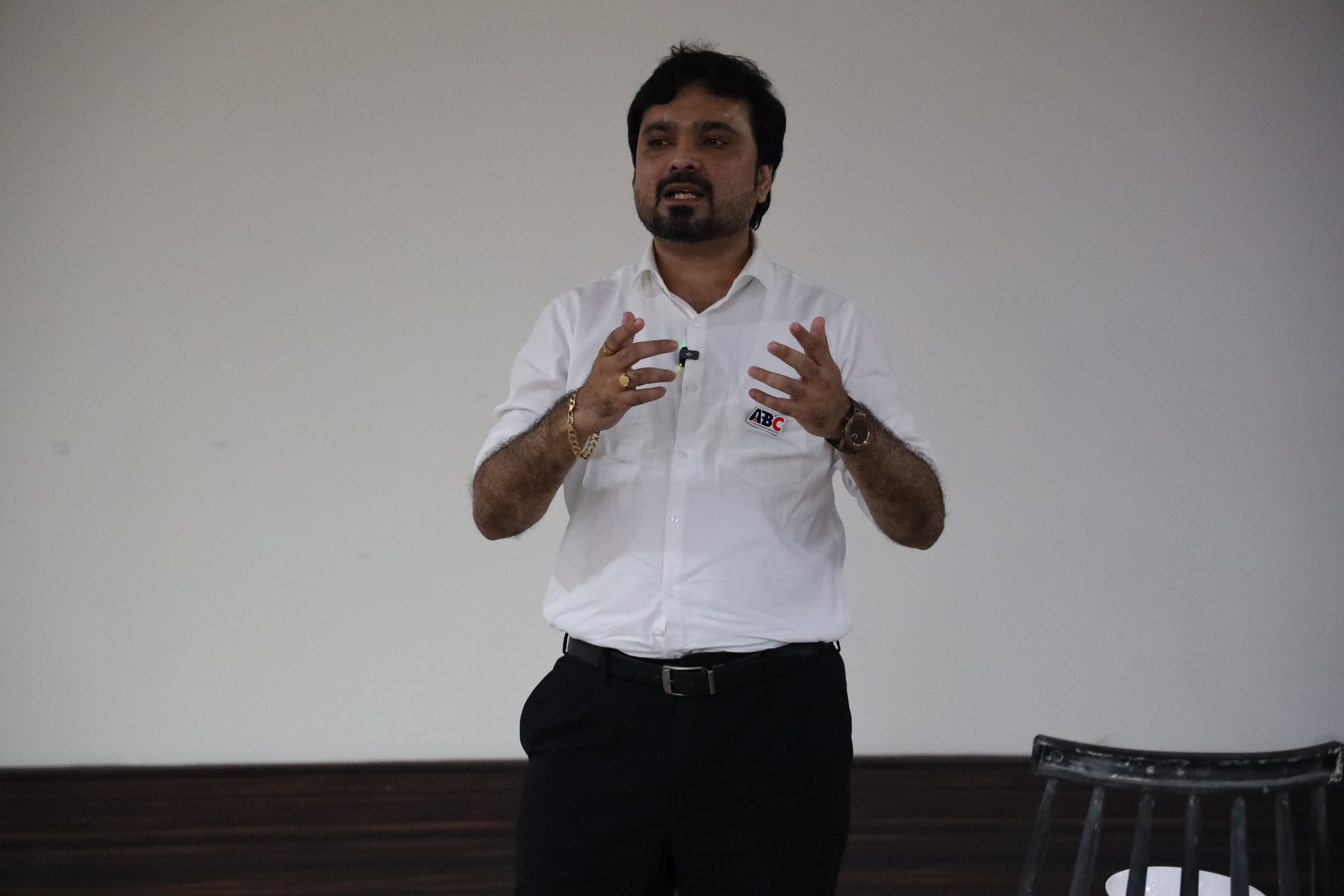
Here's a number every Indian professional should know: LinkedIn India's 2026 data shows problem-solving is the #1 skill gap employers can't fill. ASML — the Dutch company powering every chip on earth — built a zero-competition monopoly by owning the impossible problem Nikon and Canon both walked away from. I call this the Hard Problem Principle.
TL;DR- ASML makes every advanced chip machine on earth — $200M per unit, ~40 a year, zero competitors worldwide
- Nikon and Canon both spent nearly 20 years trying to build the same machine and walked away — ASML stayed and now the world depends on them
- The Hard Problem Principle: your professional value is not in how much work you do, but in how difficult the problems you're willing to own
- Easy tasks make you replaceable; the problem everyone in your office avoids is where your monopoly begins
- Find the most-avoided challenge in your team, own it completely — that's your ASML moment
What Is ASML and Why Has No One Ever Heard of This $200M Chip Machine Company?
ASML is a Dutch company that most people have never heard of — and that's exactly the point. Every advanced chip on earth, the one in your phone, your laptop, and every AI system you use today, was made on a machine built by ASML. Each machine is roughly the size of a bus and costs around $200 million. They make only about 40 per year. Giants like TSMC, Samsung, and Intel wait in line for them. And here's the thing: there is not a single competitor in sight. Zero. That's not a market position — that's a monopoly built on the back of a problem no one else could solve.
How ASML Built a Zero-Competition Monopoly by Refusing to Quit the Impossible Problem
The reason ASML has zero competition comes down to EUV lithography — Extreme Ultraviolet Lithography. This is the technology that lets chipmakers print circuits measured in nanometers, the kind of precision that makes modern AI processing possible. It took ASML over two decades of relentless effort to crack it. The physics was brutal. The engineering was considered borderline impossible. Failure after failure, year after year. But ASML stayed with that one impossible problem. The day they finally cracked it, the entire world started depending on them. That's what twenty years of staying looks like.
Why Nikon and Canon Spent 20 Years on EUV and Still Walked Away — the Lesson for India
Nikon and Canon — two of the most technically advanced companies on the planet — both tried to build the same EUV machine. They spent nearly 20 years attempting it. Then both walked away. Not because they lacked resources. Not because they lacked talent. They walked away because the problem was too hard, too slow, and too uncertain. ASML didn't walk away. Today, Nikon and Canon are permanently out of the advanced chip machine business. That one decision — stay or quit — determined everything. The companies that quit handed ASML a monopoly worth hundreds of billions.
| Factor | Easy-Work Professional | Hard-Problem Professional (ASML Mindset) |
|---|---|---|
| Measures value by | Tasks completed, hours logged | Difficulty and uniqueness of problems owned |
| Replaceability | High — identical work is one job-post away | Near-zero — knowledge is uniquely theirs |
| Career trajectory | Plateaus within 3–5 years | Compounds exponentially as expertise deepens |
| Organisation's dependency | Low — operations continue without them | High — critical decisions wait for their input |
| Salary negotiation leverage | Weak — market rate is easily matched | Strong — their expertise is not on the open market |
| Layoff risk | High — first rationalised in headcount cuts | Low — last the organisation wants to lose |
| Real-world parallel | Nikon and Canon: tried 20 years, walked away | ASML: stayed, zero competitors, $200M per machine |
The Hard Problem Principle: Your Value Is in the Difficulty, Not the Volume of Work
Here's the principle I've been teaching in corporate training for years: your professional value is not in how much work you do. It's in how difficult the problems you're willing to take on are. Easy work can be done by anyone — which is exactly why easy work makes you replaceable. The hard problem that everyone in your office avoids, the one sitting in the backlog for years with three failed attempts behind it, that's the problem that makes you impossible to replace. Trust me — the moment you own that problem, the entire organisation starts depending on you, just like the world depends on ASML.
Why Being Hardworking in India Is No Longer Enough to Stay Irreplaceable
I train teams at Bajaj Auto, Tata Tech, Mahindra, L&T, Bosch, and Infosys — and the most common trap I see is talented professionals measuring their value by how busy they are. Twelve-hour days. Forty completed tasks. Back-to-back deliveries. But being hardworking isn't rare in India. What IS rare is the professional who willingly walks toward the complex, ambiguous, multi-year problem that no one else wants. That person becomes the ASML of their organisation. Being 'hardworking' is table stakes in Indian corporates today. The real differentiator is being the one who takes on the impossible.
How to Find and Own Your Impossible Problem at Work
Here's how I recommend finding your impossible problem. First, pay attention to what gets postponed in every meeting — the challenge someone says 'we really should look at this eventually.' Second, find the problem with a track record of failure: three people tried, all moved on. Third, look for what makes your manager or CXO visibly uncomfortable when it's mentioned. That discomfort signals genuine difficulty. And difficulty, as ASML proved, is where monopolies are built. Don't wait to be assigned that problem. Volunteer for it, document what's been tried, and invest sixty days making yourself the expert.
How I Teach the ASML Story in Corporate Training Across India
When I open corporate training sessions at companies like Siemens, KPIT, JSW, RBI, and the Indian Army, the ASML story is my entry point. Not because it's a tech case study, but because it dismantles a belief that holds most professionals back: that effort alone equals value. It doesn't. The good news is this — once a team understands the Hard Problem Principle, they stop competing over easy wins and start identifying real opportunities. That shift changes a team's culture within one quarter. I've watched it happen at five organisations this year alone. It's one of the fastest mindset pivots I've seen in corporate India.
What Indian Managers and HR Teams Can Learn From ASML's Hiring and Culture
For HR and leadership teams, there's a direct hiring implication here. In interviews, stop asking only what someone has accomplished and start asking: 'Tell me about a problem most people walked away from that you stayed with.' The answer reveals character more than any resume. If you want your organisation to build a moat — the ASML kind — you need people who default toward difficulty, not away from it. Structurally reward them when they stay, even when the problem takes years to crack. Pay raises, recognition, and title changes should track problem difficulty, not just output volume. That's how you build something competitors can't touch.
Book Avinash Chate for Your Next Event
TEDx speaker. 11+ yrs training Army, BRO, RBI, BARC, JSW. Available for keynotes, leadership training, team building & manager development at your office or event venue.
✅ Thanks! Avinash team will reach out within 24 hours.'}).catch(function(e){f.outerHTML='Something went wrong. WhatsApp +91 8793630001
'});return false;">Select ServiceKeynote / Motivational SpeakingLeadership Development TrainingTeam Building WorkshopManager DevelopmentEmployee TrainingOutbound TrainingBook Avinash Now →Or WhatsApp directly: +91 87936 30001
Related Articles by Avinash Chate
- Why Manufacturing Industry is Difficult to Start in India: 5 Key Challenges
- The First 30-Second Rule That Decides Every Sale Before You Even Pitch
- Ajit Agarkar's 21-Ball ODI Fifty Against Zimbabwe: The Silent Performer's Career Blueprint
Avinash Chate TEDx Speaker · Founder, The Future Corporate · 11+ yrs experience Avinash has trained Indian Army, BRO, RBI, BARC, JSW Steel and 1000+ corporate leaders across India. His work focuses on leadership development, communication skills, and behavioural training rooted in Indian values and modern business needs. |
Frequently Asked Questions
What is the Hard Problem Principle and how does it apply to careers in India?
The Hard Problem Principle is this: your professional value is directly proportional to the difficulty of the problems you're willing to own. In India's competitive job market, being hardworking or technically skilled is table stakes. What makes you genuinely irreplaceable is owning the complex, ambiguous, long-term problem that everyone else avoids. Just as ASML became the world's only chip machine maker by solving what Nikon and Canon abandoned after nearly 20 years, you become indispensable by solving what your colleagues walk away from. The difficulty was the barrier — and clearing it was the monopoly.
Why does ASML have no competitors in chip-making machinery?
ASML has no competitors because they solved EUV lithography — a technological challenge so difficult that Nikon and Canon both attempted it for nearly 20 years before walking away. When ASML finally cracked it, they became the only company capable of producing the machines that power every advanced chip on earth. The extreme difficulty of the problem was the barrier to entry. Once ASML cleared it, no one else has the accumulated knowledge, patents, or experience to catch up. That's a competitive moat that can't be built any other way — only by staying with the impossible problem longer than anyone else.
How can Indian professionals identify and own the impossible problem in their workplace?
Start by identifying what gets repeatedly postponed in team meetings — the challenge that someone promises to 'look at eventually.' Then find the problem with a track record of failure: three attempts, three people who moved on. Finally, look for what visibly makes your manager or CXO uncomfortable when mentioned. Once you find that problem, don't wait for an assignment. Volunteer to audit it, document what's been tried, and invest sixty to ninety days of consistent effort. The knowledge you build in that period will be yours alone — and that is where your professional monopoly begins.
How does Avinash Chate teach the Hard Problem Principle in corporate training sessions across India?
In corporate training sessions at organisations like Bajaj Auto, Mahindra, KPIT, Siemens, and the Indian Army, I open with the ASML case study to shift how teams think about value — from effort equals value to difficulty equals value. We then run an exercise where each participant maps the three most-avoided problems in their function and ranks them by business impact. Most teams are surprised to find these so-called impossible problems are actually solvable — they've just been avoided because the first attempt failed. Assigning ownership and rewarding persistence is the one culture shift that consistently produces irreplaceable teams.
Avinash Chate services
Corporate Trainer in Maharashtra · Top Corporate Trainers in Maharashtra · Leadership Trainer in Maharashtra · Top Leadership Trainers in Maharashtra · Team Building Trainer in Maharashtra · Top Team Building Trainers in Maharashtra · Motivational Speaker in Maharashtra · Top Motivational Speakers in Maharashtra · All service locations
← Back to all articles · Book Avinash Chate
By Avinash Chate — Maharashtra’s #1 Corporate Trainer & Motivational Speaker. .