Why Great Skills Get You Hired—And Poor EQ Gets You Fired in India
Great skills get you hired—poor emotional intelligence gets you fired. EQ, not technical ability, decides who lasts in India's corporate teams. Here's what every HR and leader must know in 2026.
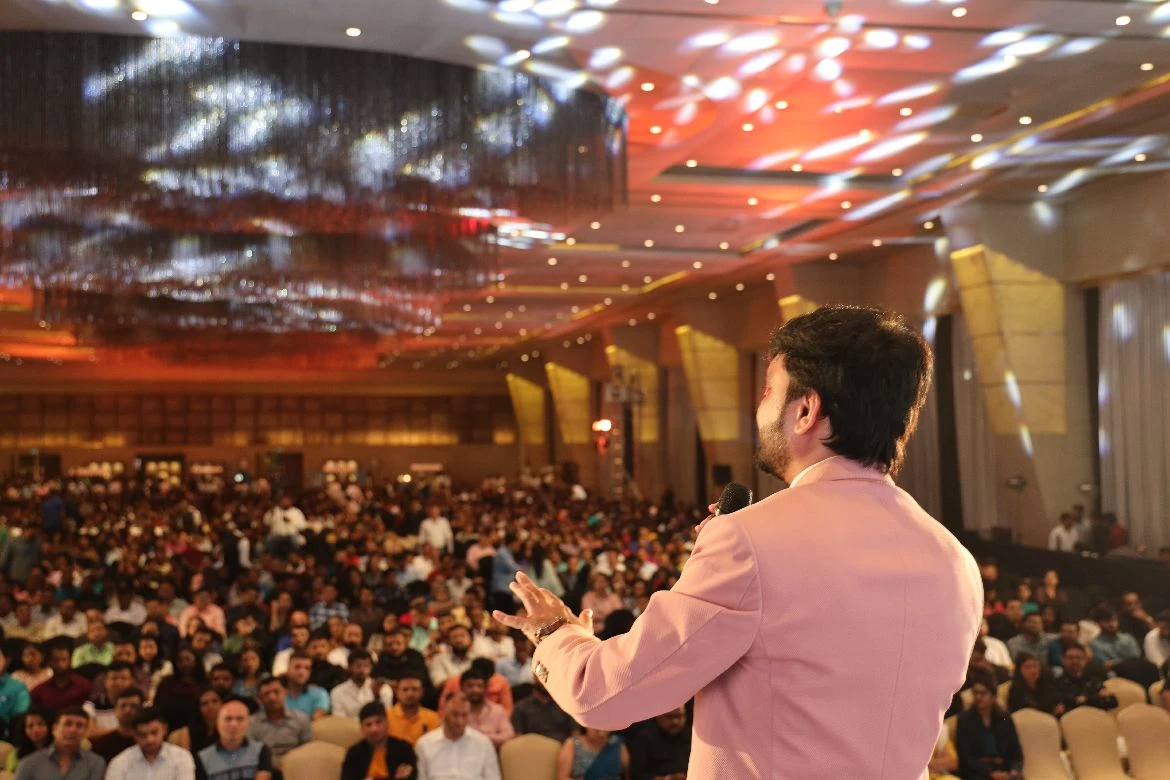
I've seen this pattern in hiring reviews across KPIT, Siemens, and L&T: the strongest resume gets hired, and the weakest EQ gets managed out within a year. Great skills got them hired. Poor behavior got them fired. India's ₹1.5 trillion L&D market is finally catching up to what managers always knew—technical skills get you in the room, emotional intelligence keeps you in the game.
TL;DR- Great skills got them hired—poor emotional intelligence (EQ) got them fired: the core truth from India's corporate training floors
- Teams break down when members can't manage stress, process feedback, or collaborate under pressure—all EQ deficits
- HRs and leaders: hire for IQ, but you must coach for EQ for lasting team performance
- EQ is trainable—India's ₹1.5 trillion L&D market is investing in it as the top priority for 2026
- Emotional intelligence predicts leadership potential better than technical credentials in most Indian corporate environments
Great Skills Got Them Hired. Poor Behavior Got Them Fired: The EQ Truth from India's Corporate Floors
Here's the hiring story I hear again and again: the candidate arrives with the strongest technical profile, clears every interview round, starts well in the first few weeks—and then the cracks appear. They struggle when feedback is critical. They shut down in conflict. They manage upward brilliantly and sideways disastrously. Emotional intelligence isn't the soft skill your HR team tracks on a competency form. It's the operating system beneath every professional skill you've built. Great skills got them hired. Poor behavior—born from low EQ—got them fired. The cycle breaks only when organizations start coaching for EQ deliberately and early.
Why Teams Break Down When People Can't Manage Stress, Feedback, or Collaboration
What most people don't realize is that team breakdowns are almost never caused by skills gaps. In every team performance audit I've done at Mahindra, KPIT, and Tata Tech, the root cause of team friction is consistently one of three EQ failure points: inability to manage stress without it becoming visible aggression, inability to receive feedback without becoming defensive, and inability to collaborate when priorities conflict. These aren't personality defects—they're EQ deficits that structured training can address. But they can't be reversed if leaders keep calling them 'attitude problems' rather than development gaps.
| Dimension | IQ (Technical Intelligence) | EQ (Emotional Intelligence) |
|---|---|---|
| Primary Driver | Problem-solving, technical skill | Relationships, self-regulation, empathy |
| Career Stage Impact | Critical for individual contributor roles | Critical for manager and director roles |
| Hiring Value | Gets you hired (threshold requirement) | Determines how far you rise |
| Trainability | Domain-specific, builds over years | Highly trainable in 60–90 days |
| Team Impact | Individual output quality | Entire team performance & retention |
Hire for IQ, Coach for EQ: What India's Best HRs and Directors Already Know
The smartest HR leaders I've worked with at Bajaj Auto and L&T have internalized this principle: interview for IQ—the problem-solving ability, technical skill, and domain knowledge the role requires. But once someone is hired, invest in coaching for EQ: self-awareness, emotion regulation, empathy, and social skill. Organizations that treat EQ development as a post-hire investment consistently outperform those that treat it as a nice-to-have. India's 65% of firms investing in soft-skill training have EQ at the top of that investment list for 2026.
How Emotional Intelligence Predicts Long-Term Career Success Better Than Technical Ability
Long-term career success is more accurately predicted by EQ than technical qualifications for one simple reason: as you rise in an organization, the job becomes predominantly about people. The individual contributor managing their own output needs strong IQ. The manager leading ten people needs both. The director leading a hundred people needs primarily EQ—because their job is to create conditions where others do their best work. Technical brilliance that can't be communicated, connected, or coached into a team is leadership potential that never compounds into organizational results.
The EQ Behaviours That Get Indian Professionals Promoted—or Managed Out
The EQ behaviours that get Indian professionals promoted are specific and observable. Self-regulation—staying calm when a client escalates or a deadline collapses—signals leadership readiness. Social awareness—reading the room before making a request or delivering critical feedback—signals emotional maturity. Conflict navigation—addressing disagreement directly without personal attack—signals organizational trust. In every 360-degree feedback assessment I've run at Bosch and Siemens, the highest-rated leaders score in the top quartile on exactly these three EQ behaviours—regardless of their technical domain.
How I Train EQ in Corporate Teams at Siemens, Infosys, and the Indian Army
In my EQ leadership workshops at Siemens, Infosys, and the Indian Army, I use a framework I call the EQ Stress Test: I put professionals in simulated high-pressure scenarios—a difficult client call, a missed target, a peer conflict—and observe which EQ competencies hold and which collapse. Most professionals discover they have stronger EQ at baseline than under pressure. That gap is where training matters most. The Indian Army trains for stress conditions, not comfortable ones—because performance under stress is what real leadership requires. Corporate India is learning the same lesson.
Building an Emotionally Intelligent Workplace: What India's ₹1.5 Trillion L&D Market Is Investing In
India's ₹1.5 trillion L&D market is directing increasing investment toward EQ-based leadership programs because the return is measurable. Organizations that invest in EQ coaching report lower attrition, faster conflict resolution, and higher manager effectiveness ratings within six months. At Ferrero India and JSW Steel, the EQ programs I've run produced double-digit improvements in manager trust scores within one quarter. What most people don't realize is that EQ isn't a personality trait you're born with—it's a skill you build, and every rupee invested in building it pays back in retention, productivity, and leadership pipeline strength.
Book Avinash Chate for Your Next Event
TEDx speaker. 11+ yrs training Army, BRO, RBI, BARC, JSW. Available for keynotes, leadership training, team building & manager development at your office or event venue.
✅ Thanks! Avinash team will reach out within 24 hours.'}).catch(function(e){f.outerHTML='Something went wrong. WhatsApp +91 8793630001
'});return false;">Select ServiceKeynote / Motivational SpeakingLeadership Development TrainingTeam Building WorkshopManager DevelopmentEmployee TrainingOutbound TrainingBook Avinash Now →Or WhatsApp directly: +91 87936 30001
Related Articles by Avinash Chate
- Initiative Isn't Dead—It's Killed: Why Indian Teams Stop Stepping Up
- How CEO Jorgen Vig Knudstorp Saved LEGO: 3 Workplace Lessons for India 2026
- Polite Smiles, Hidden Problems: The Fake Harmony Trap in India 2026
Avinash Chate TEDx Speaker · Founder, The Future Corporate · 11+ yrs experience Avinash has trained Indian Army, BRO, RBI, BARC, JSW Steel and 1000+ corporate leaders across India. His work focuses on leadership development, communication skills, and behavioural training rooted in Indian values and modern business needs. |
Frequently Asked Questions
What is emotional intelligence (EQ) and why does it matter at work?
Emotional intelligence is the ability to recognize, understand, manage, and effectively use emotions—your own and others'. In the workplace, EQ enables stress management, feedback processing, empathy, conflict resolution, and collaboration. Research consistently shows EQ predicts leadership success and team performance better than IQ beyond a baseline of technical competence. In India's corporate environment, where cross-functional teams and client relationships are central, EQ is the decisive long-term differentiator.
Why do technically skilled professionals sometimes fail in their careers?
Technically skilled professionals often fail because career progression shifts the primary job from individual technical output to people leadership—which requires EQ, not just IQ. The skills that make someone an excellent analyst or engineer are not the same skills that make them an effective team lead or director. When organizations don't invest in EQ development alongside technical advancement, high-IQ professionals hit a leadership ceiling that credentials alone cannot break through.
How can Indian HRs and managers coach for emotional intelligence?
HRs and managers can coach for EQ through structured programs including self-awareness assessments (like EQ-i 2.0), stress simulation exercises, feedback skills workshops, and conflict navigation role-plays. The key is making EQ development a regular, expected part of the management journey—not a remedial intervention. The most effective programs pair behavioral observation (360-degree feedback) with coaching conversations that connect EQ gaps to specific career outcomes the professional wants.
Is emotional intelligence trainable, or is it a fixed personality trait?
Emotional intelligence is significantly trainable. Neuroscience research confirms that EQ competencies—self-regulation, empathy, social skills—are built through deliberate practice and feedback, not fixed at birth. In my corporate training programs, professionals show measurable EQ improvement within 90 days of structured coaching. Organizations that treat EQ as a developmental skill—not a fixed trait—build dramatically stronger leadership pipelines and retain high-potential employees at higher rates.
Avinash Chate services
Corporate Trainer in Maharashtra · Top Corporate Trainers in Maharashtra · Leadership Trainer in Maharashtra · Top Leadership Trainers in Maharashtra · Team Building Trainer in Maharashtra · Top Team Building Trainers in Maharashtra · Motivational Speaker in Maharashtra · Top Motivational Speakers in Maharashtra · All service locations
← Back to all articles · Book Avinash Chate
By Avinash Chate — Maharashtra’s #1 Corporate Trainer & Motivational Speaker. .