Workshop Approval Stuck? You're Talking to the Wrong Person
A training-center founder waits weeks for a workshop approval that never comes — because he pitched the lecturers, not the principal. A short, sharp lesson in Political Awareness: knowing where power actually sits.
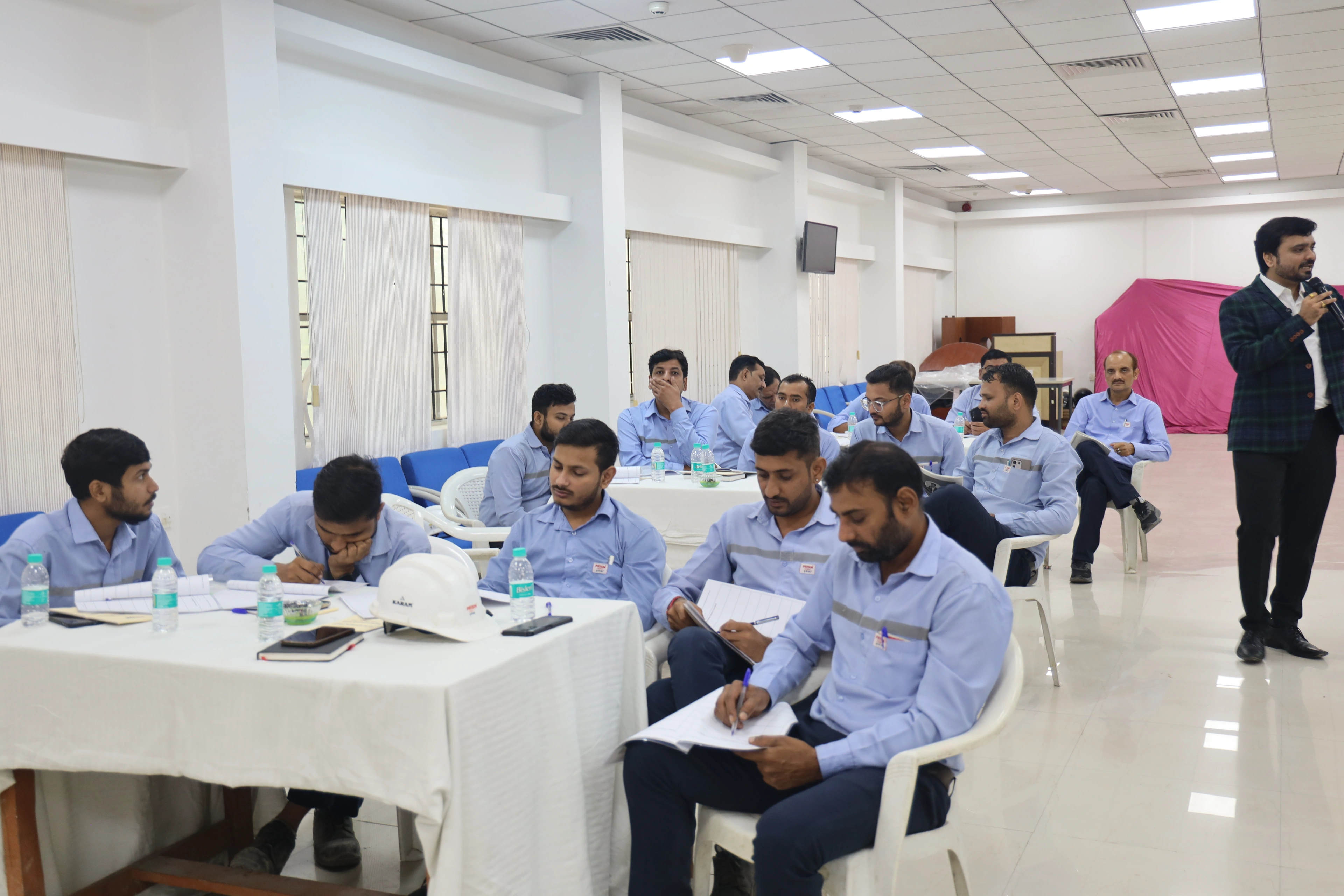
You pitch a great idea. The person across the table nods, says they'll take it up the chain, and then — silence. Weeks pass. No approval, no rejection, just a proposal sitting in someone's inbox because you never actually reached the person who could say yes. This is one of the simplest, most common failures I see in Indian workplaces, and it comes down to one missing trait: Political Awareness.
In short- A training-center founder pitches a workshop to lecturers, waits weeks for an HOD decision that never comes.
- The real decision-maker was never the lecturers or even the HOD — it was the principal or owner of the college.
- Political Awareness means reading the actual power structure of an organization, not just its official-looking layers.
- Going to the real decision-maker isn't disrespectful — it's how you avoid wasted weeks and miscommunication with people who were never authorized to decide.
- This trait sits on the EQ side of the Winning Kite and works alongside Relationship Intelligence to get things actually done.
Where This Sits on Your Winning Kite
Political Awareness is Trait #17 in the Motivating Others cluster of Emotional Intelligence — the left side of your Winning Kite (KITE Leadership Framework). On its own, EQ doesn't get a proposal approved. But without it, even a brilliant proposal can die quietly in the wrong inbox. This example is one of the cleanest, most everyday illustrations in Stars at India Inc. of what happens when you skip this trait — and what changes the moment you don't.
The Workshop That Never Got Approved
Picture this. You run a training center, and you want to organize a workshop for engineering students at a local college. It's a good pitch — relevant, well-timed, useful for the students. You set up a meeting with the regular lecturers, the people responsible for organizing academic activities on campus. They listen carefully. They seem interested. And then they tell you something that sounds completely reasonable: "We need to discuss this with the HOD before we can decide."
So you wait. You've done your part — pitched well, answered questions, left a good impression. Now it's just a matter of time before the HOD signs off and someone calls you back with a date.
Except the call never comes.
You follow up once. Then again. Each time, a polite version of "still under discussion" or "we'll get back to you." Weeks pass. Eventually the opportunity goes cold, or someone else's workshop fills the slot you were hoping for. You're left wondering what went wrong. Your pitch was good. The lecturers seemed genuinely interested. So why did nothing happen?
The Gap: You Pitched Influence, Not Authority
Here is the uncomfortable truth political awareness would have shown you immediately: the lecturers were never going to approve your workshop. Neither, in most cases, was the HOD. In many colleges — especially the privately run, promoter-driven institutions common across India — the real decision-maker for something like an external workshop is the principal or the owner of the college. Not because the lecturers or the HOD are unimportant, but because approvals with budget implications, external vendors, or reputational visibility for the institution typically need sign-off from whoever actually owns that risk.
The lecturers weren't lying to you. They genuinely intended to raise it with the HOD. But you had unknowingly placed your entire proposal's fate in the hands of people who could listen, nod, and even advocate for you — but who could not, on their own, say yes. You mistook access for authority.
This is the trap Political Awareness exists to help you avoid. It's not about being cynical or assuming everyone is a gatekeeper to route around. It's about asking a very specific, very practical question before you invest weeks of follow-up: who actually has the power to decide this — and am I in front of them?
What Political Awareness Actually Looks Like
In Stars at India Inc., I define political awareness as understanding how power works in the workplace — who has it, who influences it, and how cultural differences and social networks shape decisions. Political savvy is the companion skill: using that understanding to build relationships, influence outcomes, and get things done. Awareness without savvy is just observation. Savvy without awareness is guesswork. You need both.
If our training-center founder had walked in with political awareness, the meeting with the lecturers would have looked different — not because he'd have skipped them (that would have been rude and short-sighted), but because he would have used that meeting as a stepping stone, not a finish line. He might have said, warmly and respectfully: "I'd love your guidance on this — and I'd also value a few minutes with the principal, since I know decisions like external workshops usually need that level of sign-off. Could you help me set that up, or would you introduce me?"
That single move changes everything. It keeps the lecturers as allies rather than bypassed contacts. It signals that you understand and respect the institution's actual structure. And most importantly, it gets your proposal in front of someone who can actually say yes — instead of leaving it stranded in a queue of "we'll take it up."
This Isn't Only About Workshops
I've seen the exact same pattern play out in corporate settings, again and again. A young manager wants budget approval and spends three meetings convincing a peer-level colleague, not realizing the actual sign-off sits two levels above with someone they've never even met. A vendor wants a contract renewed and keeps calling the procurement executive, without knowing the real call is made by the business head who reviews the relationship once a year. A new joinee wants a policy exception and pushes it through HR generalists, when the actual authority rests with a specific senior leader who delegated the front-facing conversation but kept the decision.
None of these gatekeepers are villains. Most of them are doing exactly what they were told to do — listen, filter, escalate when appropriate. The problem isn't them. The problem is assuming that because someone listened to you attentively, they also have the power to act on what they heard.
A Related Lesson: Ankit and Brijesh
There's a companion story in the same chapter that makes this even sharper. Ankit works for a company with multiple offices and focuses almost all his energy on delivering results to his local manager, Priyanka. Priyanka genuinely likes his work and passes good input about him to the corporate office. But Ankit never makes the effort to build a relationship with Brijesh — Priyanka's boss, and the actual decision-maker for salary hikes at the corporate level.
Because Ankit has no direct relationship with Brijesh, he stays invisible to the person who controls the outcome he cares about most. His work is good. His local relationship is good. But his career growth stalls, because visibility and trust with your immediate manager alone is not the same as visibility with whoever holds the actual lever you're trying to pull. Building relationships "at a lower level" is good — necessary, even — but it is not sufficient on its own.
How to Apply This at Work This Week
Before your next proposal, approval request, or ask, run this quick check:
- Name the decision, not just the ask. "Get the workshop approved" is vague. "Get sign-off on external vendor use of college premises and student time" tells you exactly what kind of risk someone has to own — and therefore who likely owns it.
- Ask who owns that risk. Budget risk, reputational risk, legal risk — these rarely sit with the first friendly face you meet. They sit with whoever answers for the organization if it goes wrong.
- Use your first contact as a bridge, not a bottleneck. Thank them, involve them, and ask them to help you reach the real decision-maker — rather than waiting indefinitely for them to relay your case on your behalf.
- Build the relationship before you need it. The best time to have met the principal, the business head, or the actual approver is before you have an urgent ask. Political awareness rewards people who read the map early, not just when they're stuck.
This is the same instinct Daniel Goleman describes when he writes about social awareness as a core pillar of emotional intelligence — reading a room, an organization, or a hierarchy accurately before you act in it. Avinash's framing sharpens it for the Indian workplace specifically: hierarchical, relationship-driven, and often quietly different from what the org chart shows on paper.
Political Awareness pairs closely with Relationship Intelligence — the right side of your Winning Kite — because reading power is only half the job; building the right relationships with the right people is the other half. Explore how these traits work together across the full Winning Kite framework, or bring this thinking into your organization through Avinash's Signature Leadership Programs and corporate training topics.
Bring These Ideas to Your Team
Avinash Chate turns the traits in Stars at India Inc. into live leadership & emotional-intelligence workshops. TEDx speaker · 11+ yrs training Army, BRO, RBI, BARC, JSW & 1000+ leaders.
✅ Thanks! Avinash team will reach out within 24 hours.'}).catch(function(e){f.outerHTML='Something went wrong. WhatsApp +91 8793630001
'});return false;">Select ServiceKeynote / Motivational SpeakingLeadership Development TrainingTeam Building WorkshopManager DevelopmentEmployee TrainingBook Avinash Now →Or WhatsApp directly: +91 87936 30001
Work with Avinash Chate
- Signature Corporate Training Programs →
- The Winning Kite (KITE Leadership Framework) →
- All Corporate Training Topics →
Avinash Chate TEDx Speaker · Founder, The Future Corporate · Author of Stars at India Inc. Avinash has trained the Indian Army, BRO, RBI, BARC, JSW Steel and 1000+ corporate leaders across India. His work focuses on leadership, emotional intelligence and behavioural training rooted in Indian values and modern business needs. |
Frequently Asked Questions
How do I find the real decision-maker in an organization?
Look past the person who is easiest to reach. Ask who actually signs off on budget, risk, and reputation for the decision you are proposing — often the owner, principal, promoter, or a specific senior leader, not the staff member who took your meeting.
Is it disrespectful to go above the person who first heard my proposal?
Not if done with courtesy and awareness. You can keep the original contact informed and involved while also making sure your proposal reaches the person with actual authority to approve it. Political awareness is not about bypassing people rudely — it is about not depending solely on someone who cannot say yes.
What is Political Awareness in the Winning Kite framework?
Political Awareness is Trait #17 on the EQ (left) side of Avinash Chate's Winning Kite. It means understanding how power, hierarchy, and relationships actually work in an organization — who decides, who influences, and how to work within that structure ethically and effectively.
How is political awareness different from office politics?
Office politics usually implies manipulation or unfair advantage-seeking. Political awareness is a neutral, necessary skill — reading the real structure of power and relationships in an organization so your good ideas and honest proposals actually reach the person who can act on them.
Related Articles by Avinash Chate
- MS Dhoni – 2019 World Cup Semi-Final Knock: The Optimism That Refused to Fold
- Sourav Ganguly
- Mrs. Shivani Chavan: The HR Star Who Didn't Wait to Be Asked
Avinash Chate services
Corporate Training · Leadership Development · Team Building · Motivational Speaking · All service locations
← Back to all articles · Book Avinash Chate
By Avinash Chate — Maharashtra’s #1 Corporate Trainer & Motivational Speaker. .