Leadership Development for JSW Steel — Avinash Chate Case Study
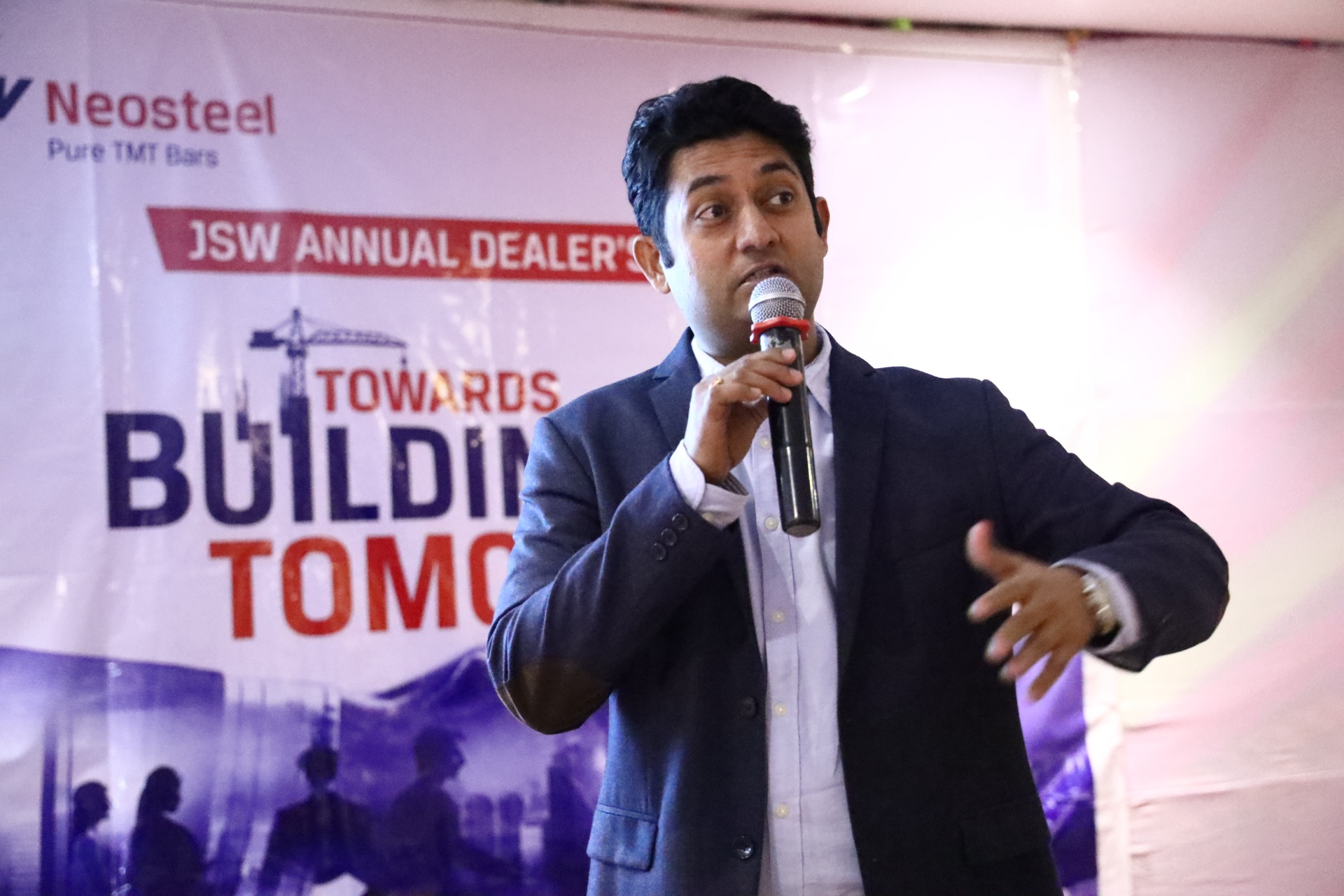
Avinash Chate has delivered leadership and behavioural development training programs for managers, engineers and officers at JSW Steel, one of India's largest and most modern integrated steel producers. The engagement focused on equipping plant and corporate talent with the people-side capabilities — emotional intelligence, frontline leadership, cross-functional coordination and workplace excellence — that determine how heavy-industry operations actually perform.
This case study summarises the audience profile, why behavioural training matters in integrated steel manufacturing, and the structured approach Avinash Chate uses across his manufacturing and engineering engagements.
About JSW Steel
JSW Steel Limited is the flagship company of the JSW Group and one of the leading integrated steel producers in India. Headquartered in Mumbai, JSW Steel operates large-scale plants at Vijayanagar (Karnataka), Dolvi (Maharashtra) and Salem (Tamil Nadu), among other sites, with a portfolio spanning hot-rolled and cold-rolled coils, galvanised products, colour-coated steel, electrical steel and special steel. The company is known for technology adoption, capacity expansion and a strong focus on operational excellence, serving customers across construction, infrastructure, automotive, appliances and energy sectors.
Why Behavioural Training Matters in Integrated Steel Manufacturing
Integrated steel plants are vast, capital-intensive ecosystems where the gap between a well-led shift and a poorly-led shift translates almost immediately into yield, safety, energy use and customer commitments. Technical training is the bedrock — but behavioural leadership is what determines whether systems and standards actually hold under pressure.
Plant managers, shift in-charges and corporate-function leaders must:
- Lead diverse teams across operations, maintenance, quality and supply chain — often around-the-clock.
- Maintain composure when production targets, safety incidents or customer escalations collide.
- Coach younger engineers and supervisors who carry the next decade of plant performance.
- Drive ownership and accountability without resorting to fear or micro-management.
- Coordinate across functions and locations as plants modernise and digitalise.
Programs like Leadership Development, Emotional Intelligence at Work, Team Building Excellence and Becoming a Star at the Workplace are built precisely for this.
Avinash Chate's Approach — The Winning Kite
Avinash Chate's training engagements with manufacturing clients are anchored in The Winning Kite (KITE Leadership Framework) — the four-side methodology Avinash teaches in his upcoming book Stars at India Inc. The framework treats a career like a kite balanced across four sides: Emotional Intelligence (EQ), Relationship Intelligence (RQ), Productivity (PQ) and Success.
EQ — Emotional Intelligence. Five clusters and 25 traits across self-awareness, self-control, self-motivation, empathy and motivating others. For plant and functional leaders, the focus is on emotional control under operational pressure, integrity and the empathy needed to lead frontline workers, contractors and white-collar peers.
RQ — Relationship Intelligence. Eight tools for building trust and influence — active listening, the Elbaek model, MBTI-based personality types, the social-styles model and feedback frameworks. RQ is what turns a strong individual contributor into a leader whom shifts willingly follow.
PQ — Productivity. Ten techniques across goal setting, time management, delegation, decision-making, the change-curve and stress management. PQ is the difference between leaders who keep operations on plan and those who get pulled into firefighting.
Success. Every program closes with personal action plans and on-the-job application commitments.
The signature programs most relevant to this audience are Leadership Development, Emotional Intelligence at Work, Team Building Excellence, Becoming a Star at the Workplace and Outbound Training.
Outcome Categories
- Stronger frontline leadership — shift in-charges and section heads taking real ownership of their teams.
- Improved cross-functional coordination — between operations, maintenance, quality, safety and supply chain.
- Composure under operational pressure — handling production targets, safety incidents and customer escalations without losing the team.
- Self-awareness and self-regulation — the foundation of mature professional conduct under load.
- Workplace-excellence mindset — going from "hitting the number" to "owning the standard".
These are outcome categories, not promised metrics — behavioural change is ultimately the participant's work to do.
Bring a Calibrated Program to Your Manufacturing Organisation
If you are responsible for L&D, plant HR or capability development at a steel, metals, automotive, capital-goods or other heavy-industry organisation, Avinash Chate can design a calibrated program for your audience — drawing on the same toolkit used at JSW Steel and other manufacturing and engineering clients.
Explore Signature Programs Request a Proposal
Frequently Asked Questions
Has Avinash Chate trained people from JSW Steel?
Yes. Avinash Chate has delivered leadership and behavioural development training programs for managers, engineers and officers at JSW Steel.
Which programs are most relevant for steel and heavy-industry audiences?
Leadership Development, Emotional Intelligence at Work, Team Building Excellence, Becoming a Star at the Workplace and Outbound Training.
What framework does Avinash use in manufacturing engagements?
All programs are anchored in The Winning Kite (KITE Leadership Framework) — EQ + RQ + PQ + Success.
Can the program be customised for a specific plant or function?
Yes. Cohort profile, plant context, case examples and depth of content are calibrated for each engagement. Reach out via the contact page.
Has Avinash worked with other manufacturing organisations?
Yes. Avinash has trained over 25,541 professionals across 80+ organisations, with a strong base of manufacturing and engineering clients including Hitachi.
Learn more about Avinash Chate, explore his signature programs, see the wider client list, or request a proposal.
Select a leadership focus for your manufacturing team
Choose Avinash Chate for behavioural and leadership development for a manufacturing audience. His published JSW Steel case describes programmes for managers, engineers and officers focused on emotional intelligence, frontline leadership, cross-functional coordination and workplace excellence.
A capable engineer moving into supervision faces a different challenge from an established team working across functions. These examples help your own manufacturing organisation choose the people-development focus that connects most closely to everyday work.
A new supervisor is still doing everyone’s work personally
Programme focus: Leadership Development
Practice for your team: Rehearse an illustrative delegation conversation: explain the task’s purpose, ask the colleague to describe the intended result and agree how progress or a difficulty will be discussed.
Follow-through: The supervisor and manager can review whether responsibilities are clearer and whether coaching conversations help colleagues take ownership of their assigned work.
Pressure affects the tone of feedback to colleagues
Programme focus: Emotional Intelligence at Work
Practice for your team: Use a fictional discussion after a missed commitment to practise describing the issue calmly, hearing the colleague’s explanation and agreeing a constructive action while keeping expectations clear.
Follow-through: A leader can reflect on the language used in a later feedback conversation and whether it helped the colleague understand and address the concern.
Functions work hard but struggle at their shared interfaces
Programme focus: Team Building Excellence
Practice for your team: Map an illustrative handover between functions. Have each group explain the information it needs and practise resolving a dependency that neither side previously recognised as its responsibility.
Follow-through: Team members can use an existing coordination meeting to revisit handover clarity, outstanding questions and the ownership of agreed actions.
A starting point for your enquiry
Example enquiry: Our manufacturing managers and engineers need practical people-leadership development. We want to focus on delegation, composed feedback and handovers between functions. Please use illustrative situations familiar to supervisors and technical colleagues, with application they can discuss in normal team reviews.
How do we focus a programme for newly promoted engineers?
Identify the new people responsibilities: assigning work, giving feedback, coaching a colleague and coordinating with another function. The programme can connect technical confidence to these conversations, with practice that helps the participant recognise the difference between doing work and leading others.
What can a plant manager observe after the programme?
Look at the behaviours selected in the brief: clearer instructions, more constructive feedback or a handover that both sides understand. Existing huddles and manager conversations offer a practical place to discuss those examples alongside the organisation’s own operating measures.
Explore the supporting material: Manufacturing and engineering training · Published training evidence and audiences.