Attitudinal Skills Training
The instruction was clear. The capability was there. The attitude in the room decided the result anyway.
You have seen the meeting. A change is announced and one person finds the flaw before anyone has understood the purpose. A mistake is discussed and the explanation begins with who else was at fault. Feedback is offered and the room closes. Nothing in the job description covers these moments, yet they drain more energy than the work itself. Managers respond with another reminder to "be positive" or "show ownership", which gives people a judgement but no skill to act on. Behind the visible resistance may be habit, fear, past experience or a genuine concern nobody has heard properly. This programme does not ask people to paste on a smile. It helps them see the pattern, raise legitimate issues honestly, and choose a more constructive response.
Across Maharashtra, pan-India & internationally · English, Hindi & Marathi

The Attitude Problem Everyone Discusses and Almost Nobody Defines
Attitude becomes the label we use when the real behaviour is hard to describe. A supervisor says someone is negative when they mean every proposal meets an objection but never an alternative. A manager says someone lacks ownership when deadlines pass without an early warning. A colleague is called arrogant when questions are treated as attacks. The label feels definitive, but it gives the person nothing workable. They hear a verdict on who they are, not an observation about what happened.
The damage is contagious. One person's reflexive cynicism gives everyone else permission to disengage. Another's blame makes colleagues hide small problems until they become large ones. Teams begin managing moods instead of discussing work. At the same time, organisations can create their own version of the problem by demanding cheerful agreement, dismissing operational concerns or praising ownership while punishing the first person who reports bad news. A serious programme has to address both: the individual's choices and the conditions in which those choices are made.
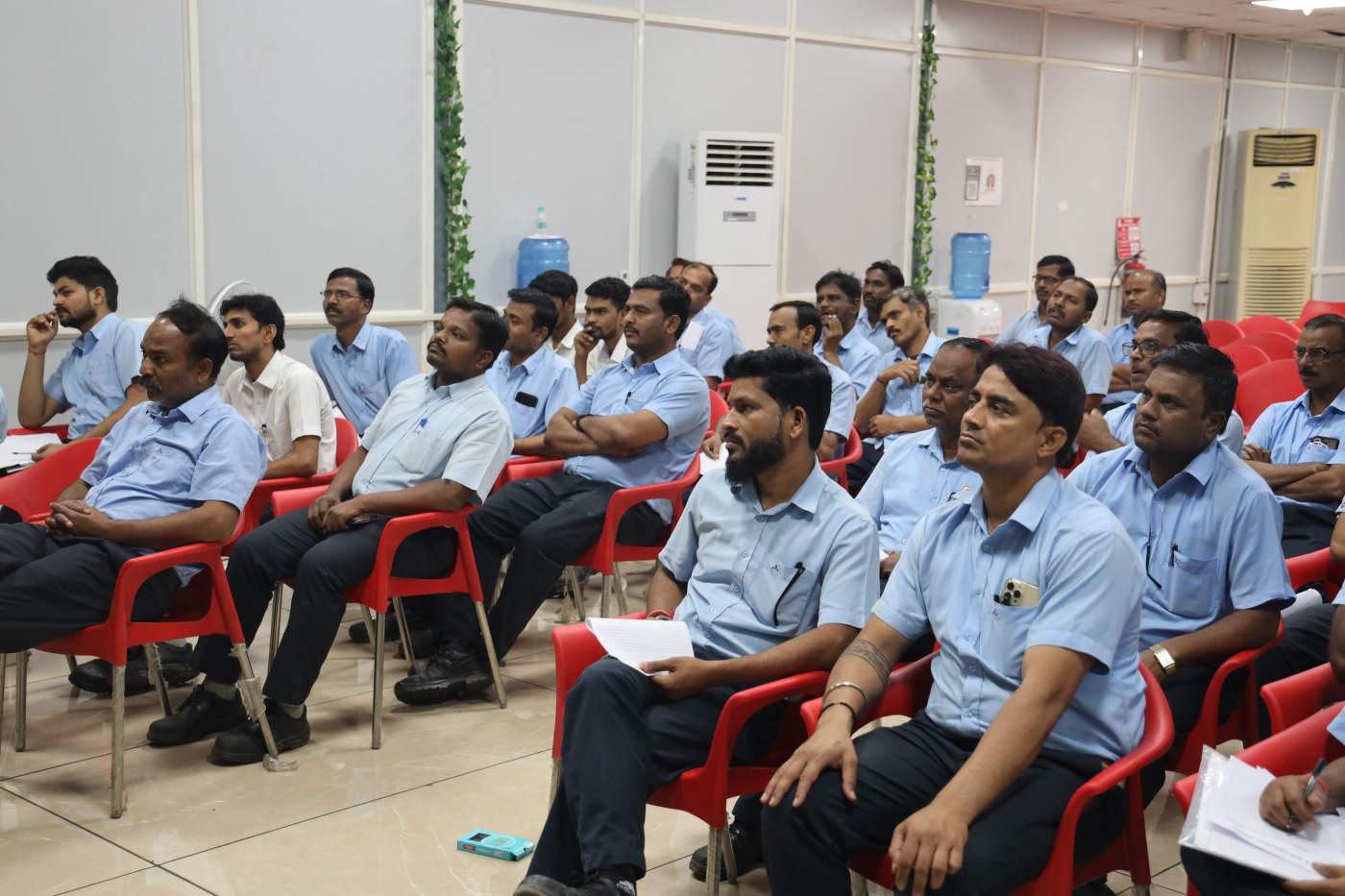
Why Attitude Cannot Be Lectured Away — And What Can Change
The visible behaviour is only the last step. Before the sharp comment or passive withdrawal comes an interpretation: this change will make me look incompetent; my idea was ignored so contribution is pointless; admitting a mistake will cost me respect. If that interpretation remains unexamined, motivational slogans simply go underground. People learn the approved words and keep the same pattern. Real development begins by making the chain visible — event, meaning, emotion, action, consequence — and giving people more than one way to respond.
That does not make every workplace concern an attitude problem. Unsafe work, unfair treatment, impossible workloads and unclear decisions need leadership action, not a positivity workshop. Within a person's genuine area of choice, however, there are learnable skills: separating facts from story, distinguishing responsibility from blame, disagreeing without withdrawing, receiving feedback without collapsing, and acting before perfect certainty arrives. This programme builds those skills through real scenarios, while making it safe to name the organisational issues that training alone cannot fix.
Does This Sound Familiar?
When "attitude" is the only word being used, the real problem stays hidden. These observable patterns separate the symptom from its cause and connect each one to specific practice in the programme.
| The symptom you see | What it is costing you | The real cause | How the programme fixes it |
|---|---|---|---|
| Every new idea is met with why it will fail, but rarely with a workable alternative | Improvement slows and colleagues stop bringing proposals to the group | Critical evaluation has become a reflex, with no discipline for constructive contribution | The Constructive Response module — concern plus contribution, not automatic resistance |
| Problems surface only at the deadline, accompanied by explanations about other people | Managers lose the chance to help and trust falls even when the original issue was solvable | Ownership is confused with sole responsibility, so asking for help feels like failure | The Ownership Without Blame module — early signals, choices and escalation |
| Feedback produces defence, excuses or visible withdrawal | Coaching stops, the same errors repeat and the relationship becomes guarded | Feedback is heard as a verdict on personal worth rather than information about an action | The Receiving Feedback module — listening, clarifying and choosing the next rep |
| People do only what is explicitly assigned, even when the next useful step is obvious | Small gaps accumulate and managers become the source of every decision | Role boundaries, fear of mistakes or past experience have made initiative feel unsafe | The Initiative Within Your Role module — responsible action without overstepping |
| A setback changes the mood of the whole day and spills onto colleagues or customers | One difficult event reduces the quality of every interaction that follows | People have no way to reset, separate the event from their identity or repair the moment | The Recovery and Repair module — returning to constructive action |
| The team agrees in meetings and complains privately afterwards | Leaders hear artificial alignment while unresolved concerns undermine execution | Disagreement is seen as negativity and honest challenge has no acceptable form | The Respectful Disagreement module — candour that supports the final decision |
What Changes When Concern Turns into Constructive Action
Picture the next difficult announcement. The same risks are noticed, but now the person names the concern clearly, asks the missing question and offers what would make the change workable. When a commitment is at risk, the warning arrives while options still exist. Feedback leads to clarification rather than a courtroom defence. A colleague can disagree in the meeting, support the decision afterwards, and return to the issue with evidence instead of corridor commentary.
The atmosphere is not artificially cheerful; it is more adult. Problems become discussable without becoming personal. People take responsibility for their part without accepting blame for everything around them. Managers hear bad news earlier and can distinguish a genuine obstacle from a habitual refusal. The team spends less energy decoding moods and more energy improving the work.
What Your People Will Be Able to Do
- ✓ Translate vague attitude labels into observable behaviour and understand their impact on others
- ✓ Notice the interpretation and emotional trigger behind an automatic negative or defensive response
- ✓ Take ownership of controllable actions while raising genuine constraints clearly and early
- ✓ Disagree, question and report problems constructively without withdrawing or attacking
- ✓ Receive feedback with curiosity, clarify what is useful and convert it into a practical next step
- ✓ Take initiative within agreed role boundaries and recover constructively after mistakes or setbacks
- ✓ Make a specific personal commitment to behaviour that strengthens trust and team contribution
What the Programme Covers
Seven modules replace the vague instruction to "improve your attitude" with observable choices people can practise. The programme balances personal ownership with honest discussion of real workplace constraints, and uses scenarios drawn from your teams rather than abstract motivational stories.
These are building blocks, not a fixed-length course. A two-hour session goes deep on the two or three that matter most to you; a half or full day covers more; a multi-day intensive — or an ongoing monthly, quarterly or half-yearly rhythm — works through them all, with far more practice. We shape which ones, in what order and how deep, with you.
Beyond the Label — What Attitude Looks Like at Work
What we cover: Turning words such as negative, lazy, arrogant and disengaged into specific behaviours that can be discussed fairly. Distinguishing intention from impact and a one-off bad day from a recurring pattern. Mapping how blame, withdrawal, sarcasm, passive compliance and reliability affect colleagues. Recognising that legitimate dissent is not a bad attitude. Establishing a respectful language for the rest of the workshop.
What changes: People stop defending a label and start examining choices and consequences they can actually change.
The Trigger Behind the Reaction
What we cover: Following the chain from event to interpretation, emotion, action and impact. Noticing common workplace stories such as "I am being disrespected" or "any mistake will finish me". Separating observable facts from assumptions without dismissing feelings. Identifying personal hot spots around authority, competence, fairness and change. Creating a pause long enough to choose a more useful response.
What changes: Participants gain access to the moment before the reaction, where a different workplace behaviour becomes possible.
Ownership Without Blame or Helplessness
What we cover: Distinguishing ownership from fault, solo heroics and accepting responsibility for things outside one's control. Mapping what can be controlled, influenced and clearly escalated. Making commitments realistic and reporting risk before it becomes failure. Replacing "not my job" and "what can I do?" with a useful next action. Learning from a mistake while still addressing its impact on others.
What changes: People become earlier, clearer and more dependable in how they handle commitments and obstacles.
Constructive Response to Change, Feedback and Disagreement
What we cover: Asking questions before drawing conclusions about a change. Raising a concern with evidence, impact and a possible way forward. Listening to feedback without preparing the defence, clarifying examples and deciding what to test. Disagreeing with an idea without diminishing the person. Supporting a final decision honestly while retaining the right to revisit it with new evidence.
What changes: Challenge stays in the room and contributes to the decision instead of turning into defence or private resistance.
Initiative, Service and Team Contribution
What we cover: Seeing the next useful action without waiting for a detailed instruction. Understanding role boundaries and checking before overstepping them. Treating colleagues and customers as people affected by one's choices, not obstacles to completing a task. Sharing credit, offering help and making small commitments reliable. Replacing passive compliance with active contribution to the team's purpose.
What changes: Participants become easier to rely on and more willing to contribute beyond the minimum wording of a task.
Recovery, Resilience and Relationship Repair
What we cover: Preventing one setback from setting the tone for the rest of the day. Noticing when frustration is about to spill onto the next person. Resetting before responding and choosing a constructive action after disappointment. Repairing a sharp comment, missed commitment or withdrawn interaction rather than hoping time will erase it. Knowing when a persistent issue needs managerial or organisational attention.
What changes: People recover faster from difficult moments and take responsibility for repairing the impact they leave behind.
Practice — Real Moments, Honest Feedback and Personal Commitments
What we cover: Working through real scenarios: the change announcement, the late warning, the feedback conversation, the idea that meets instant resistance and the mistake that needs repair. Practising alternative responses with observer feedback on exact words, tone and impact. Separating individual commitments from issues that leaders must address. Writing a personal behavioural commitment and a way to review it at work.
What changes: Participants leave having rehearsed a better response to their own real moments, with commitments specific enough for colleagues to notice.
How It Is Delivered
The session is candid without being shaming. Participants examine anonymised and self-chosen situations, map the interpretation behind a reaction, role-play alternative responses and receive precise feedback on what others experience. Concerns about workload, fairness, systems or leadership are captured honestly rather than reframed as personal negativity. Individual ownership and managerial responsibility are kept in the same conversation.
Formats range from a focused reset to a full workshop, a multi-day behavioural intensive or spaced modules with real experiments between sessions. Mixed-level groups can work on shared standards, while leader sessions examine the conditions that reward or punish constructive behaviour. The exact emphasis, participant group and cadence are designed with you; no fixed script or artificial positivity exercise is imposed.
Formats That Fit Your Calendar
Half-day or full-day workshop
Create a shared language for ownership, constructive disagreement and professional response using the team's current workplace situations.
Multi-day behavioural intensive
Allow deeper self-awareness, repeated role-play and individual feedback for a cohort where ingrained patterns need more than a short reset.
Spaced modules with workplace practice
Let participants test specific responses between sessions and return with evidence, setbacks and situations for further coaching.
Leader and team development rhythm
Combine individual skill-building with periodic review of the team norms and managerial signals that sustain constructive behaviour.

Planning this for your people?
Share your name and WhatsApp number and you will get a reply within one business day — usually the same day. Or call directly, most dates are settled on a phone call.
Prefer to talk now? ☎ +91 87936 30001 · WhatsApp · Email
The Thinking Behind It
The programme uses established ideas about interpretation, ownership, behaviour and feedback without publishing a book or model catalogue. Its practical distinction is that it neither labels people nor excuses every reaction: legitimate concerns are surfaced, controllable choices are practised, and both are kept visible.
Built on frameworks you will not find anywhere else
Avinash's KITE Leadership Framework and the principles in The Winning Edge shape the focus on ownership, self-belief and constructive action. They connect personal attitude to the example leaders set and the trust a team builds, while the actual exercises and diagnostic instruments stay inside the programme.
What is deliberately not published here is the method itself. The diagnostics, the scoring instruments and the individual components are worked through in the room, with your people.
Who It Is For
Mixed professional teams, frontline employees and supervisors, campus-to-corporate cohorts, customer-facing groups, high-performing specialists whose reactions create friction, and managers who need a better language than "fix your attitude". It is useful during change, after recurring blame or disengagement, or when a team wants shared standards for raising concerns and taking ownership. It is not a substitute for addressing unsafe conditions, unfair systems, harassment, health concerns or structural workload problems.
Real Behavioural Work with Working Teams
Avinash Chate leads a 100-plus member organisation and works with the everyday reality of commitment, mistakes, feedback and team morale. Through his personal training practice, he has worked with teams at 80-plus organisations and 25,541-plus professionals across manufacturing, technology, sales and services. That operating context keeps the programme away from slogans: people need language for real concerns, practical alternatives to automatic reactions, and leaders willing to examine the environment their own behaviour creates.

Why Avinash Chate
Avinash Chate is the owner of the personal speaking and training practice represented on this website, an entrepreneur, TEDx speaker and published author. He also owns and operates ABC Trainings and The Future Corporate as separate businesses with their own brands and course catalogues. The programmes on this page are Avinash Chate's personal corporate-training offerings; through his personal practice, he has trained teams at 80-plus organisations and 25,541-plus professionals.
He teaches these skills not from a manual, but because he practises them himself — leading a 100-plus member team of his own. That is the difference working leaders feel in the room.
Attitudinal Skills Training — FAQ
What is Attitudinal Skills Training?
It is a practical programme that turns vague attitude feedback into observable workplace choices. Participants examine the interpretations and triggers behind blame, resistance, defence or withdrawal, then practise ownership, constructive disagreement, feedback receptiveness, initiative, recovery and relationship repair. It is not a lecture on being cheerful; it is about responding honestly and constructively to real work.
How is this different from Behavioural Skills Training?
The programmes overlap but start at different points. Behavioural Skills focuses broadly on how everyday behaviour lands and how habits change. Attitudinal Skills looks specifically at the meanings and beliefs behind responses such as blame, cynicism, passive compliance or defensiveness, and builds constructive alternatives. Organisations can use either alone or combine them depending on the patterns they see.
Are you asking people to be positive all the time?
No. Artificial positivity hides risk and makes honest discussion harder. Participants are encouraged to raise concerns, disagree and report bad news clearly. The skill is to do it with evidence, respect and a willingness to contribute to the next step, rather than through attack, withdrawal or automatic refusal. Genuine organisational problems still require leadership action.
Who should attend?
Frontline and professional teams, new joiners, supervisors, customer-facing employees, specialists whose reactions are affecting collaboration, and managers seeking a shared language for ownership and constructive challenge. It is particularly useful during change or when a team has fallen into blame and private complaint. Individual health or serious workplace issues should not be treated as an attitude problem.
What does the programme cover?
Seven modules cover observable attitude behaviours, triggers and interpretations, ownership without blame, constructive responses to change and feedback, initiative and team contribution, recovery and relationship repair, and live practice on real scenarios. Each person leaves with a specific behavioural commitment rather than a general promise to be more positive.
Can training fix attitude if the real issue is workload or management?
Training cannot and should not be used to explain away structural problems. The workshop creates space to distinguish personal response patterns from constraints that managers or the organisation must address. Participants work on what they can control or influence, while genuine concerns are surfaced for appropriate action. This distinction is essential to credibility and trust.
How is it delivered and how long does it take?
Delivery uses scenario mapping, guided reflection, role-play, observer feedback and personal commitments, with minimal lecture. It can run as a half-day, full-day, multi-day intensive or spaced modules with workplace practice, and can include a manager track. We shape depth and cadence around your people and the situations they actually face.
Is the content customised to our teams?
Yes. Scenarios are developed around your context, whether that involves shift handovers, customer pressure, cross-functional deadlines, new joiners or organisational change. The facilitation protects dignity and avoids forcing personal disclosure. Sessions are available in English, Hindi and Marathi, using the language mix that allows participants to discuss real moments honestly.
Where can the programme be delivered?
Most engagements are on-site across Maharashtra, including Pune, Mumbai, Chhatrapati Sambhajinagar, Nashik, Nagpur and surrounding MIDC belts, with pan-India and international delivery on request. The same flexible programme can be adapted for frontline, office, technical and leadership cohorts.
Why Avinash Chate for this programme?
Avinash combines corporate-training experience with the practical responsibility of leading a 100-plus member organisation. He is a TEDx speaker, author of The Winning Edge and creator of the KITE leadership framework, and has trained teams across 80-plus organisations. His approach is candid but respectful: no labels, no forced positivity, and no pretending that real organisational concerns disappear with motivation.
Related Training Topics
Replace blame and resistance with honest, constructive action
Give your people the skills to own their choices, raise concerns well, receive feedback and recover after setbacks — without demanding artificial positivity. On-site across Maharashtra, pan-India and internationally, in English, Hindi or Marathi.
Request a Proposal →