Sales Prospecting Training
A full contact list is not a pipeline. It is only a list of people who have not yet had a reason to respond.
The team knows prospecting matters, yet it is the first activity pushed aside when existing deals need attention. Then the end of the period approaches and the calls begin in a rush: a generic introduction, a product summary, a request for a meeting, and a follow-up that says little more than "just checking in". Most prospects do not reply. The salesperson starts to dread the rejection, managers respond by asking for more activity, and the CRM fills with contacts nobody has genuinely engaged. Sales Prospecting Training addresses the quality and discipline behind that cycle. It helps salespeople choose whom to approach, find a relevant reason, earn a first conversation and decide honestly whether an opportunity deserves to move forward.
Across Maharashtra, pan-India & internationally · English, Hindi & Marathi

Programme outline at a glance
It is practical training in creating and qualifying new sales opportunities. Participants learn to select better-fit prospects, research a reason for contact, open calls and messages with relevance, coordinate outreach, ask qualification questions, handle brush-offs and maintain a sustainable rhythm. It focuses on the beginning of the sales cycle rather than presentation, negotiation or closing alone.
| Trainer | Avinash Chate |
|---|---|
| Formats |
|
| Duration | Flexible, according to the format and modules selected. The options below explain the depth and practice in each format. |
| Languages | English, Hindi and Marathi |
The Prospecting Avoidance Everyone Disguises as Being Busy
Prospecting is emotionally exposed work. A customer delivery problem feels concrete and solvable; calling someone who may dismiss you feels optional until tomorrow. Salespeople therefore become very busy around the need to prospect. They polish presentations, service friendly accounts, research without making contact and revisit old opportunities that have not moved. None of these activities is inherently wrong. The problem is that they provide comfortable reasons to avoid the uncertain work that creates future choice.
When pressure finally forces action, the outreach is often centred on the seller's anxiety. The salesperson tries to compress the whole sale into the first message: who we are, what we offer, all our strengths and a request for time. The prospect hears another pitch competing with their real priorities. Rejection then confirms the belief that prospecting does not work, when what actually failed was relevance, timing, targeting or the ability to open a useful dialogue.

Why It Happens — And Why Prospecting Can Become a Repeatable Craft
Many salespeople are taught product knowledge and closing technique but not how to build a prospecting hypothesis. They cannot say which situations make their offer particularly relevant, what change might create a reason to talk, or why one contact is more promising than another. Activity targets then measure motion without improving aim. A weak list produces weak conversations, and generic scripts make the salesperson sound interchangeable with every other supplier.
Better prospecting combines empathy with operational discipline. Before contact, the seller forms a plausible reason the conversation could matter. During contact, they earn attention with relevance rather than trickery, ask enough to understand whether a real opportunity exists, and respect a clear no. After contact, they record what was learned and choose the next action deliberately. These behaviours can be practised. The result is not a magical script; it is a more thoughtful and consistent way to create and qualify demand.
Does This Sound Familiar?
Low response is only the outer symptom. The underlying issue may be targeting, relevance, conversation design or follow-through — and each needs a different correction.
| The symptom you see | What it is costing you | The real cause | How the programme fixes it |
|---|---|---|---|
| The team prospects hardest only when the pipeline is already thin | Outreach becomes rushed, rejection rises and future revenue depends on last-minute bursts | Prospecting is treated as an emergency activity rather than a continuing discipline | A Sustainable Prospecting Rhythm (Module 07) |
| A large contact database produces very few worthwhile conversations | Effort is spent on poor-fit accounts while better opportunities receive little attention | The list is built around availability rather than fit, need and likely relevance | Choose Prospects Worth Pursuing (Module 01) |
| Calls and emails begin with a long introduction to the seller and product | Prospects disengage before the salesperson reaches anything connected to their situation | The opening is organised around what the seller wants to say, not why the buyer might listen | Open with Relevance, Not a Company Brochure (Module 03) |
| "Send me details" leads to a brochure and weeks of checking in | The CRM appears active but there is no real need, stakeholder engagement or next commitment | Polite deflection is mistaken for qualification and interest | Qualify the Conversation and the Next Step (Module 05) |
| Not-interested responses disappear into a dead-lead bucket without learning | The team repeats the same approach and loses prospects whose timing may later change | There is no distinction between poor fit, poor timing and an unresolved concern | Handle Brush-Offs, Objections and Nurture (Module 06) |
What Changes When Prospecting Creates Useful Conversations
A salesperson approaches a smaller, better-chosen set of prospects with a clear hypothesis about why the conversation might matter. The first call sounds like an informed professional opening a business discussion, not a person reading a company introduction at a stranger. A reply of "send details" prompts a clarifying question and an appropriate next step rather than another brochure disappearing into an inbox.
The pipeline becomes more honest as well as more active. Poor-fit prospects are released, future-timing contacts are nurtured with a reason, and genuine opportunities carry evidence of need and stakeholder engagement. Prospecting still includes rejection, but it no longer feels random or personally degrading. Salespeople can see what they are testing, learn from the response and keep future demand creation moving alongside current deal work.
What Your Salespeople Will Be Able to Do
- ✓ Define prospect fit using relevant customer situations, needs and commercial potential
- ✓ Research an account efficiently and identify a credible reason to make contact
- ✓ Plan coordinated call, email, message and referral approaches without generic repetition
- ✓ Open a prospecting conversation succinctly and earn permission to explore further
- ✓ Ask focused questions that distinguish genuine opportunity from polite interest
- ✓ Respond to common brush-offs and objections without pressure or scripted argument
- ✓ Maintain a sustainable prospecting rhythm with clear next actions and useful pipeline records
What the Programme Covers
Seven modules connect the complete prospecting craft: choose, research, approach, converse, qualify, respond and repeat. Participants work with their own market realities and practise enough to move beyond the theory of a good opening.
These are building blocks, not a fixed-length course. A two-hour session goes deep on the two or three that matter most to you; a half or full day covers more; a multi-day intensive — or an ongoing monthly, quarterly or half-yearly rhythm — works through them all, with far more practice. We shape which ones, in what order and how deep, with you.
Choose Prospects Worth Pursuing
What we cover: Describing strong-fit customers through situations and needs rather than industry labels alone. Identifying observable signs that an account may value the offer. Distinguishing total addressable contacts from a practical priority list. Considering potential, access, timing and strategic fit. Segmenting prospects so the reason for contact can change by group. Removing or deprioritising poor-fit names instead of allowing database size to create false confidence.
What changes: Salespeople direct effort toward prospects where a relevant business conversation is more plausible.
Research with a Purpose and Find the Trigger
What we cover: Researching enough to form a useful hypothesis without disappearing into hours of preparation. Reading company priorities, role responsibilities, public changes and operational context. Identifying events that may make a conversation timely. Separating a verified fact from an assumption to test. Locating relevant stakeholders without pretending one title always holds the decision. Turning research into a concise point of relevance for outreach.
What changes: Preparation produces a credible reason to talk rather than trivia or an excuse to postpone contact.
Open with Relevance, Not a Company Brochure
What we cover: Structuring a concise call opening that identifies the person, establishes relevance and earns permission to continue. Replacing long capability statements with a prospect-centred observation or question. Writing email and message openings that are specific without fake familiarity. Using referrals honestly and avoiding manipulative pattern interrupts. Adapting tone for senior, technical and operational contacts. Recovering when the first few seconds do not go to plan.
What changes: The prospect can quickly understand why this conversation might be worth a few moments of attention.
Plan Multi-Channel Outreach Without Chasing
What we cover: Coordinating calls, email, professional messages, referrals and in-person contact around one coherent reason to engage. Varying each touch so it adds context or value rather than repeating "following up". Choosing a sensible sequence and interval for the sales context. Respecting consent, organisational policies and professional boundaries. Knowing when to pause or close the approach. Recording contact so the next action is informed rather than accidental.
What changes: Outreach becomes persistent and professional without turning into indiscriminate pressure.
Qualify the Conversation and the Next Step
What we cover: Moving from initial attention into a focused business discussion. Exploring the prospect's current situation, desired change, consequences and existing approach. Asking enough to assess fit without turning a first call into an interrogation. Distinguishing curiosity, a general problem and an opportunity worth progressing. Identifying other stakeholders and uncertainties. Agreeing a next step that has meaning for both sides instead of accepting vague interest.
What changes: Salespeople can make an early, evidence-based judgement about whether and how to continue.
Handle Brush-Offs, Objections and Nurture
What we cover: Distinguishing a reflex brush-off from a genuine lack of fit. Responding to "send details", "we already have a supplier", "not now" and price-first deflection without arguing. Asking a respectful clarifying question where appropriate. Accepting a clear no professionally. Designing nurture around new relevance and timing rather than empty checking in. Capturing patterns from rejection so targeting and messaging improve.
What changes: Salespeople stay composed, learn from resistance and avoid both premature abandonment and endless chasing.
A Sustainable Prospecting Rhythm and Practice Lab
What we cover: Balancing new-business creation with active opportunities and account responsibilities. Choosing prospecting measures that reveal quality as well as activity. Reviewing list fit, messaging, conversations and next steps to locate the real bottleneck. Planning prospecting time realistically. Practising openings, qualification and brush-off responses in repeated role plays using the team's market. Building a personal prospecting experiment to run after the workshop.
What changes: Participants leave with rehearsed skills and a workable rhythm for continuing prospecting under normal sales pressure.
How It Is Delivered
The workshop is built around live skill practice. Participants examine real prospect profiles, write and deliver openings, respond to brush-offs and decide whether a conversation is qualified enough to progress. Facilitator demonstrations are brief; most learning comes from attempts, feedback and another attempt. Call, email and message examples are adapted to the team's buyers, sales cycle and ethical standards rather than presented as universal scripts.
Customisation can include the organisation's target segments, approved communication channels, typical rejection patterns and CRM next-step expectations. Spaced delivery allows salespeople to test an approach in the field and bring responses back for review. Managers can also be included where the organisation wants coaching and pipeline language to reinforce the same prospecting discipline after the workshop.
Formats That Fit Your Calendar
Half-day prospecting intensive
Focus on targeting and relevant openings when the immediate need is to improve the quality of first contact.
Full-day call and outreach workshop
Cover the full prospecting flow with repeated practice in openings, qualification, objections and next steps.
Spaced field-application series
Practise, prospect in the real market and return with responses to refine targeting, messaging and conversation skill.
Ongoing pipeline-development rhythm
Use recurring skill clinics and prospect reviews to prevent prospecting from becoming an end-of-period emergency.

Planning this for your salespeople?
Share your name and WhatsApp number and you will get a reply within one business day — usually the same day. Or call directly, most dates are settled on a phone call.
Prefer to talk now? ☎ +91 87936 30001 · WhatsApp · Email
The Thinking Behind It
The programme protects its practical sales instruments and rehearsal design rather than publishing a public catalogue of books or models. What matters here is the participant's ability to create a relevant conversation and judge the opportunity honestly in the conditions of their own market.
Built on frameworks you will not find anywhere else
Avinash's KITE Leadership Framework and the principles behind The Winning Edge support the ownership, resilience and disciplined action required from salespeople. They reinforce purposeful prospecting without disclosing the programme's proprietary exercises or internal method.
What is deliberately not published here is the method itself. The diagnostics, the scoring instruments and the individual components are worked through in the room, with your salespeople.
Who It Is For
Business-development executives, inside and field sales teams, account managers with new-business targets, founders who sell, technical specialists moving into commercial roles and dealer or channel teams responsible for creating demand. It is especially relevant when activity rises only under pipeline pressure, outreach sounds generic, or "send details" is producing follow-up without real opportunity. Scenarios can be adapted for complex B2B prospecting and other high-consideration sales environments where thoughtful first contact matters.
Prospecting Taught by Someone Who Understands Commercial Ownership
Avinash Chate brings the lived perspective of building business in entrepreneurial organisations alongside his corporate training work. That keeps the discussion grounded in relevance, resilience and honest opportunity creation rather than motivational slogans about making more calls. The site's live client wall identifies organisational associations; this page adds no fabricated prospecting claims, conversion figures or testimonials.
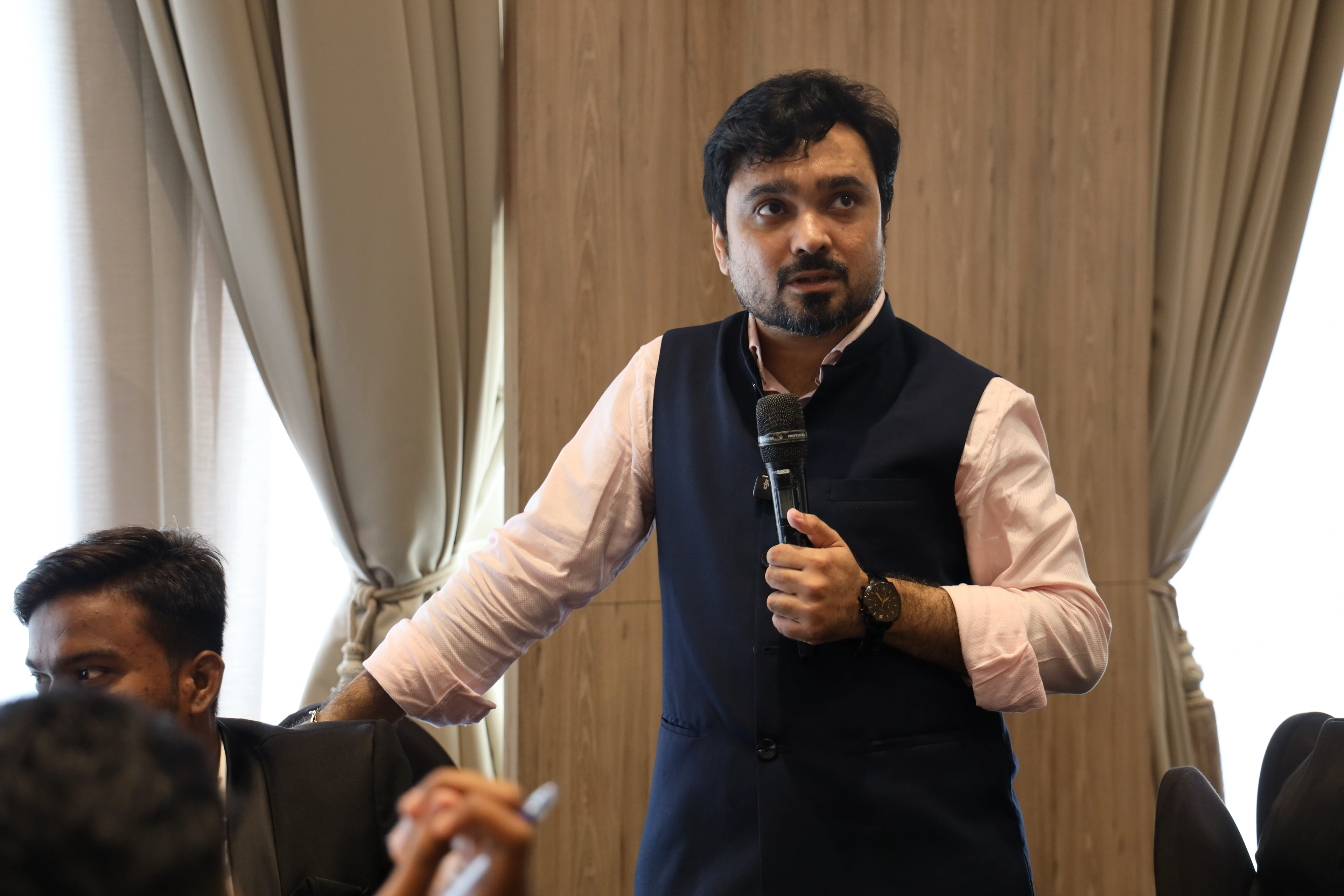
Why Avinash Chate
Avinash Chate is the owner of the personal speaking and training practice represented on this website, an entrepreneur, TEDx speaker and published author. He also owns and operates ABC Trainings and The Future Corporate as separate businesses with their own brands and course catalogues. The programmes on this page are Avinash Chate's personal corporate-training offerings; through his personal practice, he has trained teams at 88-plus organisations and 25,673-plus professionals.
He teaches these skills not from a manual, but because he practises them himself — leading a 100-plus member team of his own. That is the difference working leaders feel in the room.
Sales Prospecting Training — FAQ
What is Sales Prospecting Training?
It is practical training in creating and qualifying new sales opportunities. Participants learn to select better-fit prospects, research a reason for contact, open calls and messages with relevance, coordinate outreach, ask qualification questions, handle brush-offs and maintain a sustainable rhythm. It focuses on the beginning of the sales cycle rather than presentation, negotiation or closing alone.
Who should attend Sales Prospecting Training?
Business-development professionals, field and inside salespeople, account managers with acquisition goals, founders, technical sellers and dealer or channel teams can all benefit. It suits people new to prospecting as well as experienced sellers whose outreach has become generic or inconsistent. Sales managers may also join when they want to reinforce the same practices through coaching.
Is this mainly cold-calling training?
Cold or warm calling is an important practice area, but the programme is broader. It includes prospect selection, research, email and professional messages, referrals, outreach sequencing, qualification and nurture. The channel mix is adapted to your market and policies. Better targeting and relevance are treated as seriously as what the salesperson says on a call.
Will participants receive a universal prospecting script?
No single script is presented as universally effective. Participants learn structures and practise wording for their own prospects, roles and reasons for contact. A script can provide a safe starting point, but the goal is thoughtful adaptation: sounding relevant, listening to the response and asking a useful next question rather than delivering every line regardless of the buyer.
Does the programme cover email and social outreach?
Yes, where those channels fit your sales environment. Participants work on concise, relevant messages and coordinated touches that add something instead of repeatedly checking in. Professional boundaries, consent and organisational policies are respected. The programme does not promise a platform-specific growth hack or automated lead-generation system.
How does the training define a qualified prospect?
Qualification is treated as an evidence-based judgement, not a cheerful conversation. Depending on your sale, participants may explore fit, current situation, desired change, impact, stakeholders, timing and a meaningful next step. The exact criteria are adapted to your business. Polite interest or a request for a brochure is not automatically treated as a real opportunity.
Can the role plays use our actual prospects and objections?
Yes. Realistic prospect profiles, common brush-offs and market situations make the practice much more useful. Sensitive information can be removed or disguised. The facilitator can also create equivalent scenarios when live accounts are unsuitable for group work. Customisation includes the language, stakeholders and buying context your team actually encounters.
What format and duration work best?
A half-day can focus on targeting and openings; a full day can cover the complete flow with more practice. Spaced sessions are valuable when salespeople can test approaches in the field and review real responses. An ongoing rhythm supports continuing pipeline development. The choice depends on the gap you need to close rather than a fixed course duration.
Where is delivery available, and in which languages?
The programme can be delivered on-site across Maharashtra, including Pune, Mumbai, Chhatrapati Sambhajinagar, Nashik, Nagpur and industrial locations, as well as pan-India and internationally by arrangement. English, Hindi and Marathi are available, with a natural mix possible where it helps field and dealer teams practise authentically.
What results should we expect?
Participants should leave better able to select prospects, explain a relevant reason for contact, conduct an opening conversation, qualify interest and respond professionally to resistance. Teams can also establish clearer prospecting and next-step disciplines. Market response and revenue depend on many factors beyond training, so no conversion guarantee is made; the programme develops the controllable skills and habits behind better prospecting.
Related Training Topics
Replace anxious chasing with relevant, disciplined prospecting
Help your sales team choose better prospects, earn first conversations and qualify opportunities honestly. Delivered across Maharashtra, pan-India and internationally in English, Hindi or Marathi.
Request a Proposal →Build the learning focus
Match the sales programme to the people and the bottleneck
Build your discussion with Avinash Chate around the work your people need to do. Choose the participants and the sticking point to connect relevant published modules, clarify shared and separate role work, and carry a practical learning focus into your enquiry.
Starting point: Salespeople — Create relevant first conversations.
Open any path below to compare its learning focus and role responsibilities.
Salespeople · Create relevant first conversationsFrom a prospect list to a conversation worth progressing
Why this sequence
Start with a credible reason to contact the prospect, then make the opening relevant, then decide what the conversation has established. This sequence suits a team whose activity is high but whose first conversations remain generic: the learning focus moves from preparation to opening to qualification.
Modules to discuss, in order
Sales Prospecting · Published module 02
Research with a Purpose and Find the Trigger
Establish the reason this prospect may care before shaping the message.
Read the published module scope
Researching enough to form a useful hypothesis without disappearing into hours of preparation. Reading company priorities, role responsibilities, public changes and operational context. Identifying events that may make a conversation timely. Separating a verified fact from an assumption to test. Locating relevant stakeholders without pretending one title always holds the decision. Turning research into a concise point of relevance for outreach.
Published learning outcomePreparation produces a credible reason to talk rather than trivia or an excuse to postpone contact.
Sales Prospecting · Published module 03
Open with Relevance, Not a Company Brochure
Turn that customer context into a concise, relevant first conversation.
Read the published module scope
Structuring a concise call opening that identifies the person, establishes relevance and earns permission to continue. Replacing long capability statements with a prospect-centred observation or question. Writing email and message openings that are specific without fake familiarity. Using referrals honestly and avoiding manipulative pattern interrupts. Adapting tone for senior, technical and operational contacts. Recovering when the first few seconds do not go to plan.
Published learning outcomeThe prospect can quickly understand why this conversation might be worth a few moments of attention.
Sales Prospecting · Published module 05
Qualify the Conversation and the Next Step
Use the conversation to judge fit and agree how to continue.
Read the published module scope
Moving from initial attention into a focused business discussion. Exploring the prospect's current situation, desired change, consequences and existing approach. Asking enough to assess fit without turning a first call into an interrogation. Distinguishing curiosity, a general problem and an opportunity worth progressing. Identifying other stakeholders and uncertainties. Agreeing a next step that has meaning for both sides instead of accepting vague interest.
Published learning outcomeSalespeople can make an early, evidence-based judgement about whether and how to continue.
Who contributes what
- Salespeople
- Describe the customer roles they approach, the reasons they currently give for contact and where a first conversation usually stalls.
- Sales manager
- Explain the intended customer fit and the handover expected when a conversation becomes an opportunity.
- Marketing or lead owner
- Contribute the source of the enquiry and the promise the prospect has already seen, so the opening matches that context.
Shared work
Salespeople, the manager and the lead owner need a common view of who is worth approaching and what makes the approach relevant. Use the same customer context when discussing an opening and the next step.
Separate role focus
Keep research, call openings and early qualification with the people making first contact. Managers and lead owners separately clarify fit, routing and the handover expected from the rep.
What to observe at the usual follow-up
At the next normal pipeline conversation, the manager can look for a specific reason for contact, a recorded customer need and a clear next action. Discuss unanswered questions as well as meetings booked.
Practice focus
A prospect has shown interest but has only asked for a company brochure. The learning focus is the relevance of the opening and what needs to be understood before advancing the opportunity.
Learning focus to carry into your enquiry
Participants: Salespeople. Priority: Create relevant first conversations. Learning focus: Relevant research, first-contact openings and early qualification. We want the first conversation to establish customer fit and a meaningful next action. Modules to discuss, in order: Research with a Purpose and Find the Trigger → Open with Relevance, Not a Company Brochure → Qualify the Conversation and the Next Step. Shared focus: Salespeople, the manager and the lead owner need a common view of who is worth approaching and what makes the approach relevant. Use the same customer context when discussing an opening and the next step. Role-specific focus: Keep research, call openings and early qualification with the people making first contact. Managers and lead owners separately clarify fit, routing and the handover expected from the rep. Follow-up observation: At the next normal pipeline conversation, the manager can look for a specific reason for contact, a recorded customer need and a clear next action. Discuss unanswered questions as well as meetings booked.
Salespeople · Connect customer need to a next stepFrom a product presentation to a buyer-owned next action
Why this sequence
Begin with the customer problem, connect the recommendation to that problem, then agree the next action. This sequence suits salespeople who reach the meeting or proposal stage but hear repeated requests for a lower price or a later follow-up.
Modules to discuss, in order
Consultative Selling · Published module 03
Questioning — Uncovering the Real Need
Make the customer need clear enough to guide the recommendation.
Read the published module scope
The engine of consultative selling: a questioning discipline that moves from the customer's situation, to the problem, to the full impact of that problem, to the value of solving it. Reaching the pain beneath the stated pain — the operational problem that is really an executive problem in disguise. The discipline of listening more than talking, of silence, of the follow-up question. Distinguishing a latent problem the buyer has rationalised away from an active one, and helping them see the cost of the gap.
Published learning outcomeThe rep runs discovery that makes the buyer feel genuinely understood — and surfaces the real problem the solution will be built around.
Consultative Selling · Published module 04
Connecting Solution to Problem — Value, Not Features
Connect the recommendation to the problem the customer has described.
Read the published module scope
Turning discovery into a recommendation the buyer sees as their own: mapping specific capabilities to the specific problems the customer named, in the customer's language, never a feature dump. Building the value case — quantifying the cost of the problem and the worth of solving it in rupees, time saved and risk removed. Why "features tell, value sells," and how to make the price land as an investment against a number the buyer already agreed is real. Tailoring the story to each stakeholder's stake.
Published learning outcomeThe rep presents a solution the buyer recognises as the answer to their own problem — so price becomes a case to make, not a war to fight.
Consultative Selling · Published module 06
Earning Trust as an Advisor — and Closing
Carry that value conversation into a credible, agreed next action.
Read the published module scope
Becoming the person the buyer wants to think out loud with: the behaviours that build credibility, candour and genuine intent to help the customer succeed. The confidence to walk away from a bad-fit deal, and why that willingness is what earns trust. Closing as the natural next step of a well-run diagnosis, not a high-pressure event — agreeing next actions, confirming the value, and helping the buyer decide. Building the relationship beyond the single deal into the reason they call you first next time.
Published learning outcomeThe rep closes on trust and value rather than pressure and discount — and leaves the buyer wanting them in the room for the next decision too.
Who contributes what
- Salespeople
- Describe where discovery, the value discussion or the buying decision becomes unclear in their current sales conversations.
- Sales manager
- Name the behaviours they need to hear in a customer discussion and the opportunity context they need in a review.
- Product or service colleague
- Clarify the capabilities and delivery context that support an accurate customer recommendation.
Shared work
Reps and product or service colleagues should share the same understanding of the customer problem and the value being discussed. The manager can connect that understanding to what is reviewed afterward.
Separate role focus
Give reps the customer-conversation focus. Product or service colleagues contribute accurate capability context; managers own the subsequent opportunity review and coaching priorities.
What to observe at the usual follow-up
During an existing deal review, the manager can ask what the customer said mattered, how the recommendation connects to it and which next action both sides agreed. A proposal sent is useful context alongside that buyer decision.
Practice focus
A buyer asks for a proposal before explaining the business problem. The learning focus is understanding the need, making the value relevant and clarifying the decision that follows.
Learning focus to carry into your enquiry
Participants: Salespeople. Priority: Connect customer need to a next step. Learning focus: Customer discovery, value-based recommendations and agreed next actions. We want managers to see the customer need and the reason for the proposed next step in normal deal reviews. Modules to discuss, in order: Questioning — Uncovering the Real Need → Connecting Solution to Problem — Value, Not Features → Earning Trust as an Advisor — and Closing. Shared focus: Reps and product or service colleagues should share the same understanding of the customer problem and the value being discussed. The manager can connect that understanding to what is reviewed afterward. Role-specific focus: Give reps the customer-conversation focus. Product or service colleagues contribute accurate capability context; managers own the subsequent opportunity review and coaching priorities. Follow-up observation: During an existing deal review, the manager can ask what the customer said mattered, how the recommendation connects to it and which next action both sides agreed. A proposal sent is useful context alongside that buyer decision.
Company channel managers · Build a plan the partner ownsFrom a company target to a shared partner growth plan
Why this sequence
Understand the partner business before discussing mutual goals, then bring those goals into a practical partner plan. This sequence suits company field teams whose reviews keep returning to the target while the dealer or distributor has different concerns about stock, margin or effort.
Modules to discuss, in order
Channel Partner Management · Published module 02
Inside the Partner's Business — Economics and Motivation
Understand the partner priorities that a workable plan must address.
Read the published module scope
How a distributor or dealer actually makes money — margins, rotation, return on investment, working capital and the real cost of carrying your stock. Why a partner's incentives are often different from yours, and how to align them. Reading the partner's own P&L pressures, their other brands, and where you sit in their priorities. Learning to argue your case in the partner's numbers, not just your own.
Published learning outcomeThe team can see the channel through the partner's eyes and the partner's economics — the foundation for every conversation that follows.
Channel Partner Management · Published module 05
Joint Business Planning and Mutual Goals
Turn company and partner priorities into shared goals and responsibilities.
Read the published module scope
Moving from pushing your target onto the partner to building a plan the partner owns with you. Setting shared growth goals, agreeing who does what, and reviewing against it like partners rather than adversaries. The "what's in it for we" conversation — designing the deal so both sides genuinely win. Structured business reviews that build the relationship instead of turning into a monthly interrogation.
Published learning outcomeThe partner has a real stake in a plan you built together — which is exactly what makes a competitor's better margin stop working.
Channel Partner Management · Published module 07
Practice — Build a Real Partner Growth Plan
Connect those responsibilities in a plan for an actual partner context.
Read the published module scope
A working session where each participant builds a concrete growth plan for a real partner from their own territory — reading that partner's economics, defining shared goals, designing the enablement and the mutual win, and pre-empting the likely conflicts. Peer challenge on the plan, plus role plays on the toughest live conversations: the price-war partner, the loyalty pitch, the joint-plan negotiation.
Published learning outcomeThe team leaves with a real, usable partner growth plan in hand and the hardest conversations already rehearsed — not a set of notes to forget.
Who contributes what
- Company channel manager
- Describe the territory priorities, current field conversations and support the company can coordinate.
- Dealer or distributor owner
- Contribute the outlet priorities, stock and working-capital context, and the actions their own team can own.
- Regional manager
- Clarify responsibility for company support and how partner plans will be discussed in the existing review rhythm.
Shared work
Company and partner need to agree the growth priority and who owns each contribution. A joint planning discussion is most useful when both sides can explain what a workable plan means for their business.
Separate role focus
Channel managers need the partner-management focus: understanding economics, enabling the relationship and coordinating company support. Partner owners need room to consider their own outlet decisions and staff responsibilities.
What to observe at the usual follow-up
At the next partner review, the regional manager can look for an agreed priority, named actions on both sides and a discussion of what has moved or stalled. The partner should be able to explain the plan in their own words.
Practice focus
A distributor is asked to take more stock while raising concerns about slow rotation. The learning focus is the partner context, mutual goals and ownership of the next actions.
Learning focus to carry into your enquiry
Participants: Company channel managers. Priority: Build a plan the partner owns. Learning focus: Partner economics, joint business planning and a usable partner growth plan. We want company managers and partner owners to leave clear about their respective actions and review responsibilities. Modules to discuss, in order: Inside the Partner's Business — Economics and Motivation → Joint Business Planning and Mutual Goals → Practice — Build a Real Partner Growth Plan. Shared focus: Company and partner need to agree the growth priority and who owns each contribution. A joint planning discussion is most useful when both sides can explain what a workable plan means for their business. Role-specific focus: Channel managers need the partner-management focus: understanding economics, enabling the relationship and coordinating company support. Partner owners need room to consider their own outlet decisions and staff responsibilities. Follow-up observation: At the next partner review, the regional manager can look for an agreed priority, named actions on both sides and a discussion of what has moved or stalled. The partner should be able to explain the plan in their own words.
Company channel managers · Improve support and difficult partner reviewsFrom repeated chasing to useful partner support and review
Why this sequence
Start with the capability the partner needs, address the difficult relationship conversation, then connect support to a regular review. This sequence suits field managers whose visits are dominated by stock, collections or unresolved complaints while selling capability receives little attention.
Modules to discuss, in order
Channel Partner Management · Published module 04
Enabling Partners to Sell You — Training, Tools and Motivation
Identify the selling capability and support the partner team needs.
Read the published module scope
Why a partner who does not know how to sell your product simply sells someone else's. Equipping the partner's own people with product knowledge, selling skills and confidence. The tools, schemes and support that actually move a partner's effort versus the ones that just cost you margin. Motivating a partner and their team without buying loyalty you cannot sustain. Turning your field visits from stock-and-collect into genuine business development.
Published learning outcomePartners become genuinely better at selling you — so your share of their shelf, their effort and their customer grows.
Channel Partner Management · Published module 06
Managing Channel Conflict and Difficult Partners
Address the relationship issue that is blocking joint action.
Read the published module scope
The predictable flashpoints — territory overlap, price undercutting, online-versus-offline leakage, and partners who feel someone else got a better deal. Managing conflict early and fairly before it poisons trust. Handling the underperforming partner, the entitled large partner, and the one who has quietly stopped growing. Having the hard conversation — including exit — with firmness and respect intact.
Published learning outcomeConflict gets managed rather than avoided, so the channel stays healthy and your best partners never feel cheated.
Sales & Marketing Transformation · Published module 10
Motivation, Marketing Foundations and the Review Rhythm That Sticks
Connect the agreed action and support to the sales review rhythm.
Read the published module scope
Sustaining the change after the workshop ends. The motivation matrix and performance rituals that keep a sales team driven through the grind. Strategic marketing foundations so activity connects to the funnel, not to noise. A cadence calendar and KPI review model that surfaces problems early and builds a real review culture. The habits, dashboards and rhythms that turn a one-time shift into a permanent lift. Live planning on your own team's numbers and calendar.
Published learning outcomeThe team walks out with the motivation, the marketing clarity and the review rhythm to keep performing — turning a two-day shift into a durable change in how they sell.
Who contributes what
- Company channel manager
- Identify where partner staff need product or selling support and which recurring concerns interrupt field visits.
- Partner owner or outlet lead
- Describe what their team can apply locally and where a company decision or support response is needed.
- Regional sales leader
- Clarify who can resolve company issues and how the team will review support, ownership and follow-through.
Shared work
The company manager and partner owner should agree the selling support needed and the action each side owns. Bring the regional leader into issues requiring a company-level decision.
Separate role focus
Company managers need the difficult-partner and channel-conflict discussion. Outlet teams need the relevant selling support. Regional leaders separately own company decisions and the review cadence.
What to observe at the usual follow-up
In a normal field-team review, the leader can look for a specific capability need, a clear response to the partner concern and evidence that the agreed support was followed through. Record the next responsible person when an issue needs escalation.
Practice focus
A field visit repeatedly ends with a complaint about support and no agreed action for the outlet team. The learning focus is enablement, a constructive difficult conversation and review ownership.
Learning focus to carry into your enquiry
Participants: Company channel managers. Priority: Improve support and difficult partner reviews. Learning focus: Partner enablement, difficult channel conversations and review discipline. We want field visits to identify practical support, resolve ownership and carry agreed actions into the next normal review. Modules to discuss, in order: Enabling Partners to Sell You — Training, Tools and Motivation → Managing Channel Conflict and Difficult Partners → Motivation, Marketing Foundations and the Review Rhythm That Sticks. Shared focus: The company manager and partner owner should agree the selling support needed and the action each side owns. Bring the regional leader into issues requiring a company-level decision. Role-specific focus: Company managers need the difficult-partner and channel-conflict discussion. Outlet teams need the relevant selling support. Regional leaders separately own company decisions and the review cadence. Follow-up observation: In a normal field-team review, the leader can look for a specific capability need, a clear response to the partner concern and evidence that the agreed support was followed through. Record the next responsible person when an issue needs escalation.
Dealer and distributor owners · Improve enquiry follow-through and serviceFrom outlet enquiries to consistent sales and service ownership
Why this sequence
Start with the value the outlet team explains, follow the enquiry through the outlet sales conversation, then connect it to the service experience. This sequence suits dealer or distributor owners who want their sales and service teams to handle the same customer with clearer ownership.
Modules to discuss, in order
Channel Partner Empowerment · Published module 02
Value-Based Selling — Winning Without Discounting
Give the outlet team a clear value conversation to carry into the sale.
Read the published module scope
Why reflexive discounting is the most expensive habit in the network, and where the margin really goes. Articulating the brand's value so price stops being the whole conversation. Positioning the product against the competition on worth, not just rate. Equipping the partner's own salespeople with a value story they can repeat. Handling the "your competitor is cheaper" objection with confidence. Protecting margin while still closing the sale.
Published learning outcomeThe partner and their team hold price because they can finally explain why the brand is worth it — margin stops bleeding away at every negotiation.
Channel Partner Empowerment · Published module 03
The Dealer Sales Funnel — Converting the Footfall You Already Have
Connect that conversation to enquiry ownership and follow-through.
Read the published module scope
A simple sales funnel any outlet can run — from enquiry to follow-up to close to repeat. Why most partners lose easy revenue by never following up on the leads and walk-ins they already get. Capturing every enquiry instead of letting it walk out. A practised, structured pitch instead of an improvised one. Following up on old customers and dead leads as a growth engine. Practice on the real conversations that happen at the counter and on the phone.
Published learning outcomeThe partner converts far more of the demand they already have — turning wasted footfall and leads into revenue without spending a rupee more on marketing.
Channel Partner Empowerment · Published module 05
Customer Service and SOPs — A Consistent Experience, Every Time
Carry the customer commitment into consistent service and recovery.
Read the published module scope
Why service that swings with the owner's mood is quietly killing repeat business. Building a simple service standard and SOPs any staff member can follow. Customer orientation at every touchpoint — greeting, handling, after-sales. Service recovery when things go wrong — turning a complaint into loyalty instead of a lost customer. Role-play on real complaints and difficult counter moments. Making the outlet a place customers come back to and recommend.
Published learning outcomeThe partner delivers a consistent, caring experience that no longer depends on who is at the counter — so customers return and the brand's reputation rises at the last mile.
Who contributes what
- Dealer or distributor owner
- Describe the customer journey through the outlet and where responsibility becomes unclear between people or departments.
- Outlet salespeople
- Contribute the customer questions, value discussions and follow-up situations they regularly encounter.
- Service or delivery lead
- Explain how customer commitments pass into service or delivery and which concerns return to the counter.
Shared work
Sales, service and the owner need a shared understanding of the customer commitment and who owns the next response. The value explained during the sale should connect to the experience that follows.
Separate role focus
Salespeople need the value conversation and enquiry follow-through. Service or delivery colleagues need the handover and service focus. Owners clarify responsibility and review how the customer moves between them.
What to observe at the usual follow-up
In an ordinary outlet review, the owner can trace an enquiry to a named next action and check who owns a service concern. Listen for consistency between the commitment made at the counter and the handover received by the next colleague.
Practice focus
A customer returns to ask about a promise made during the sale and is passed between the sales and service teams. The learning focus is the value conversation, follow-through and customer ownership.
Learning focus to carry into your enquiry
Participants: Dealer and distributor owners. Priority: Improve enquiry follow-through and service. Learning focus: Value selling, outlet enquiry follow-through and consistent service. We want the owner, salespeople and service colleagues clear about customer commitments and the next responsible person. Modules to discuss, in order: Value-Based Selling — Winning Without Discounting → The Dealer Sales Funnel — Converting the Footfall You Already Have → Customer Service and SOPs — A Consistent Experience, Every Time. Shared focus: Sales, service and the owner need a shared understanding of the customer commitment and who owns the next response. The value explained during the sale should connect to the experience that follows. Role-specific focus: Salespeople need the value conversation and enquiry follow-through. Service or delivery colleagues need the handover and service focus. Owners clarify responsibility and review how the customer moves between them. Follow-up observation: In an ordinary outlet review, the owner can trace an enquiry to a named next action and check who owns a service concern. Listen for consistency between the commitment made at the counter and the handover received by the next colleague.
Dealer and distributor owners · Turn outlet priorities into owned actionFrom waiting for company support to an owned outlet growth plan
Why this sequence
Begin with the outlet performance and stock context, identify the support that helps the team sell, then connect the priorities in a growth plan. This sequence suits owners who want to distinguish the actions they can lead locally from the support they need from the company.
Modules to discuss, in order
Channel Partner Empowerment · Published module 06
Inventory, KPIs and the Numbers — Running the Outlet on Data
Ground the outlet priority in the measures and stock context the owner uses.
Read the published module scope
The handful of numbers every partner should know cold — and why most run their business on gut instead. Simple inventory planning and reorder discipline to end stock-outs and dead stock. Tracking conversion, footfall, average ticket and repeat rate without a finance degree. Reading the outlet's own performance and spotting where the money is. Using simple KPIs to set goals and hold the team to them. Turning data from a chore into a decision-making tool.
Published learning outcomeThe partner runs the outlet on numbers instead of guesswork — planning stock, spotting leaks, and making confident decisions without calling the company.
Sales & Marketing Transformation · Published module 08
Channel Partner and Dealer Enablement — Making Your Network Sell
Identify the company enablement that supports the partner team.
Read the published module scope
Why franchisees, dealers and channel partners underperform when handed a target but no capability. Equipping partners with the training, tools and talk-tracks to actually sell your brand. Building genuine brand connect and motivation across the network. Gamification and incentives that drive the right selling behaviour. Enabling partners to sell you rather than merely stock you. Managing the partner relationship for long-term performance.
Published learning outcomeThe distribution layer starts converting the reach it was always supposed to — partners sell with capability and conviction instead of just carrying stock.
Channel Partner Empowerment · Published module 08
The Partner Growth Plan — A Deliberate Plan to Own the Territory
Bring local action and company support into the owner’s growth plan.
Read the published module scope
Turning insight into a concrete, personal plan for the outlet. Setting a clear growth target and the few moves that will get there. Choosing the two or three areas — value selling, local marketing, service, stock — to fix first for the biggest gain. Decision templates and an operating rhythm so the partner runs the business proactively, not reactively. Deciding exactly where the partner needs the company and where they will drive alone. Habits and review points that keep the change alive after the session.
Published learning outcomeThe partner walks out with a deliberate growth plan for their territory and the confidence to run it — turning a one-day shift into a lasting change in how the outlet is run.
Who contributes what
- Dealer or distributor owner
- Describe the outlet priorities and the stock, enquiry or service patterns that need attention.
- Outlet team lead
- Explain the daily selling and service responsibilities, including where staff need clarity or support.
- Company channel manager
- Clarify the available product or selling support and the company action needed for the agreed priority.
Shared work
The owner and company manager should agree where company enablement helps the outlet plan. The outlet lead connects that support to the work the team will own locally.
Separate role focus
Owners need the outlet numbers and growth-planning focus. Staff need clear selling and service responsibilities. Company managers coordinate their support while the owner leads outlet decisions.
What to observe at the usual follow-up
At the next usual outlet review, the owner can explain which priority was chosen, what the team acted on and where company support is still needed. Compare the action with the outlet measures already used in the business.
Practice focus
An owner wants another company scheme while enquiries, stock and staff follow-up all need attention. The learning focus is choosing the outlet priority and separating local action from company support.
Learning focus to carry into your enquiry
Participants: Dealer and distributor owners. Priority: Turn outlet priorities into owned action. Learning focus: Outlet measures, partner enablement and an owned growth plan. We want owners to connect their local priorities to staff responsibilities and a clear request for company support. Modules to discuss, in order: Inventory, KPIs and the Numbers — Running the Outlet on Data → Channel Partner and Dealer Enablement — Making Your Network Sell → The Partner Growth Plan — A Deliberate Plan to Own the Territory. Shared focus: The owner and company manager should agree where company enablement helps the outlet plan. The outlet lead connects that support to the work the team will own locally. Role-specific focus: Owners need the outlet numbers and growth-planning focus. Staff need clear selling and service responsibilities. Company managers coordinate their support while the owner leads outlet decisions. Follow-up observation: At the next usual outlet review, the owner can explain which priority was chosen, what the team acted on and where company support is still needed. Compare the action with the outlet measures already used in the business.
Shape your enquiry around the work
Add your team context, city and timing, then copy the useful parts into the existing enquiry above. Changing the selection keeps your edits; “Use selected path in brief” replaces this text with the selected learning focus.