Leadership Trainer in Nashik for MIDC and Education Teams | Avinash Chate
Nashik leadership has to bridge a quiet legacy economy — Satpur and Ambad MIDC plants, Sinnar industrial estate, the wine cluster and a strong education ecosystem — with the new pressure of OEM expectations and digital-first hiring. Avinash Chate, TEDx speaker, Marathi author of The Winning Edge and creator of The Winning Kite (KITE) framework, runs the Leadership Development Program for Nashik plant heads, education leaders and family-business successors. Sessions are anchored in real Nashik scenarios: shift hand-overs in Satpur, vendor quality reviews in Ambad, principal-faculty conversations on campus, and family-business transition planning. With 700+ educators and 25,541+ professionals trained, the program is one of the few leadership offerings in Nashik delivered fluently in Marathi — essential for shop-floor and education leaders.
Marathi, Hindi and English
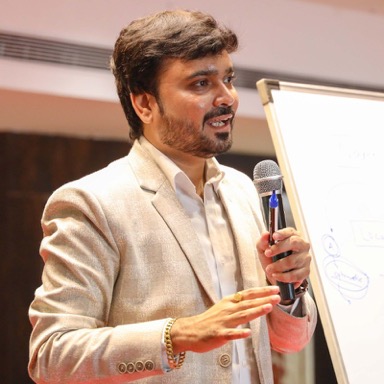
Built for Nashik MIDC, Wine and Education Sectors
Nashik's MIDC clusters need shift-leadership and quality discipline. Education leaders need clarity, faculty engagement and student outcomes. The program runs separate tracks for industrial and education cohorts.
The Winning Kite Framework for Nashik Leaders
KITE — EQ, RQ, PQ and Success — maps to Nashik realities: EQ during shift escalations, RQ across vendor and faculty networks, PQ on quality and admissions targets, Success on a clearly defined quarter or academic year.
Where We Train in Nashik
On-site delivery at Satpur MIDC, Ambad MIDC, Sinnar, Igatpuri and the Nashik-Trimbak corridor. Residential cohorts at Igatpuri and Bhandardara.
Format and Languages
Keynotes, 1-day workshops, 3-day intensives and 8-week cohorts in Marathi, Hindi and English.
Recent Leadership Engagement in Nashik
An auto-component supplier headquartered in Satpur MIDC recently ran a 10-week leadership cohort for 20 newly-promoted shift-supervisors and assistant managers, with extension participants drawn from an Ambad MIDC vendor unit and a Sinnar SEZ tenant. The brief was practical — first-line supervisors were defaulting to instruction-mode during shift hand-overs, and quality-review conversations with OEM customers were stalling on unclear escalation paths. We anchored the engagement in the KITE framework, delivered primarily in Marathi, opening with EQ modules calibrated to shift-floor pressure, then ran RQ rebuilding through Satpur-Ambad cross-unit paired challenges and a structured vendor-stakeholder mapping. PQ converted those insights into three operating rituals — a structured shift-handover script, an OEM escalation matrix, and a weekly review cadence with the plant head. The cohort closed with a 90-day action plan signed by each participant and their reporting manager, with 30-day and 90-day check-ins. Quality and on-time-delivery scorecards both improved over the next quarter.
Nashik briefs read like industrial HR, and that is the point
Nashik is the one city in this belt where training enquiries arrive written in the language of a proper HR department. Satpur and Ambad are two of the larger MIDC estates in Maharashtra, close to two thousand hectares and eleven hundred hectares respectively, and the plants inside them run structured appraisal cycles, annual training calendars, works committees and customer audits. Around them, Sinnar, Gonde and Igatpuri extend the industrial footprint well beyond the city limits, so a single employer's people may be spread across three estates and an hour of highway. When a company here asks for a programme, it usually knows which behaviour it wants changed. It usually knows which line it wants that change measured on.
So a Nashik brief rarely says motivate our people. It says something a great deal sharper. Our first-line supervisors were promoted off the machines they ran and have never been taught to lead. Our young engineers will not escalate bad news until it has already become a customer complaint. Our quality culture lives in documents but not in behaviour between shifts. That last one is the hardest. Those are precise problems, and they deserve sessions designed for them rather than a borrowed motivational keynote with the company logo swapped in.
From Satpur shop floors to the vendor discipline around HAL Ozar
The names on the estate gates set the supervisory standard every local vendor is measured against, and Mahindra, Bosch, CEAT, Siemens, Atlas Copco and Glaxo are among them. A casting or fastener supplier in Ambad gets audited by customers whose own plants run world-class systems, so the gap that hurts is rarely machinery. It is the shift leader. He cannot run a toolbox talk. He cannot hold a contract workforce to a standard without shouting. He cannot tell his plant head an uncomfortable truth in time for anybody to do anything about it. None of that is a machinery problem.
Ozar adds a layer few district cities anywhere in India have. Hindustan Aeronautics' Nashik division has built and overhauled frontline fighter aircraft for decades, and the aerospace vendor ecosystem that has grown around it works to documentation and traceability norms that punish casual habits. Behavioural training for teams in that chain is really about ownership: reporting an error the hour it happens, without fear. An audit checklist cannot force that and completely depends on it. The city's institutional depth runs further than most visitors realise, because the security presses at Nashik Road have printed for the nation for generations, and precision with accountability is simply part of how this city thinks about work.
Wine, onions and the other Nashik economy
The district that machines aerospace components also grew India's wine story. Nashik's vineyards earned it the wine-capital title, and wine tourism has built a genuine hospitality workforce here. An hour away, Lasalgaon trades more onions than any market in Asia. Grape and onion exporters, winery tasting rooms and agro-processing units bring a completely different training need: seasonal teams that swell at harvest, customer-facing staff who must carry a premium brand, founding families professionalising a second generation.
A useful Nashik engagement respects both halves of the city. The morning cohort may be maintenance engineers from Satpur, the afternoon a sales team that spends its week on the roads between Pimpalgaon, Lasalgaon and Sinnar. The examples change entirely. The standard does not.
Mixed-day engagements of that kind are harder to design than they look, because the two cohorts have completely different relationships with the word standard: a maintenance engineer hears it as a specification he can point to, while a tasting-room host hears it as a mood she has to produce on demand for a stranger who has driven ninety minutes to be impressed. The bridge between them is that both jobs are finally judged by somebody who was not present when the work was done, and once a room accepts that, the same practice serves both halves of it. That is also why the diagnostic conversation with a Nashik sponsor covers the whole company even when the enquiry names only one part of it.
On the record: real work connected to Nashik
These are specific, verifiable engagements — named organisations and what was actually delivered — not a generic client wall.
Morbull Solution Pvt. Ltd.
Sales training and business coaching (two-day programme)
Nashik-based financial-services company; the two-day programme ran in April 2025.
Who He Has Trained
Leadership Training FAQ — Nashik
Who is the program designed for — first-time managers or senior leaders?
Both. Nashik cohorts typically split into two tracks — first-time managers from Satpur MIDC plants, Ambad MIDC vendors or Sinnar SEZ tenants stepping up from individual-contributor roles, and seasoned plant heads, principals or family-business successors preparing for cross-function leadership. The KITE framework adapts depth and pace, so a tier-1 supervisor and a unit head can sit in adjacent cohorts without either being under or over-served.
How long is a typical leadership development program?
Most Nashik engagements run as 8–12 week cohorts — three 1-day in-person modules at the client site (Satpur, Ambad or Sinnar), spaced three to four weeks apart, with structured practice and manager check-ins between modules. For education cohorts and family-business successor groups, a 3-day residential at Igatpuri or Bhandardara compresses the same outcomes into a single working week.
Can sessions be delivered in Marathi or Hindi?
Yes. Marathi is the default delivery language for most Nashik cohorts — shift-leadership groups in Satpur, Ambad and Sinnar SEZ, principal-faculty conversations on campus, and family-business successor sessions all run primarily in Marathi with Hindi-English mix as needed. English-led delivery is offered for OEM-facing vendor leadership and select education sessions. Language is locked in the design call, not on session day.
Do you provide post-program reinforcement and coaching?
Every Nashik engagement closes with a signed 90-day action plan tracked against KITE pillars and reviewed jointly by the participant and their reporting manager (or principal for education cohorts). Reinforcement includes 30-day and 90-day check-ins, optional 1:1 coaching for HR-identified high-potentials, and a closing review with the L&D sponsor. Outcomes are measured against committed leadership behaviours, not classroom satisfaction scores.
Our supervisors are strongest in Marathi and the plant runs three shifts. How is that handled?
Marathi-first delivery is standard for supervisory cohorts in Nashik, with Hindi and English mixed in wherever the plant's own vocabulary lives. For shifts, the usual answer is two batches in one day: one before shift handover, one after. No line stops, and no supervisor sits through training at the end of a night shift.
We are a 180-person auto-component vendor in Ambad, not a large corporate. Does the programme change?
The design gets more concrete, not smaller. Vendor plants live under customer audits, so the programme anchors on the behaviours those audits expose: escalation, handovers, holding contract workers to a standard. The owner or plant head is expected in the room. Supervisors change faster when they see the top take the same medicine.
Plan your Nashik leadership program
Leadership development for MIDC, wine and education teams — in Marathi, Hindi and English.
Request a Proposal →Planning this for your team?
Share your name and WhatsApp number and you will get a reply within one business day — usually the same day. Tell us the audience, the objective and rough dates and you get a specific proposal.
Prefer to talk now? ☎ +91 87936 30001 · WhatsApp · Email