Team Building Trainer in Nashik for Plant and Campus Teams | Avinash Chate
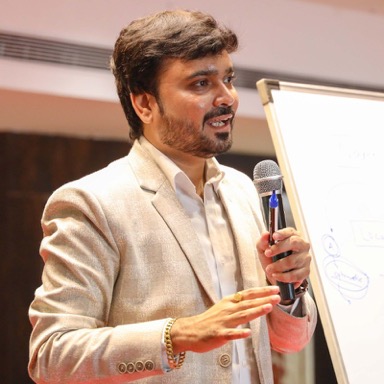
Nashik teams know each other for years — sometimes too well. Familiarity hides slow trust erosion between Satpur production and Ambad maintenance, between principal and faculty rooms, between sales and dispatch. Avinash Chate, TEDx speaker and creator of The Winning Kite (KITE) framework, runs Team Building Excellence offsites that make this invisible friction visible — then rebuild trust with shared rituals teams will keep using. With 80+ organisations and 700+ educators trained, sessions can be plant-floor based, indoor at Nashik hotels, or outbound to Igatpuri and Bhandardara. The Marathi delivery option is critical for shop-floor and education teams that lose half the value when an offsite runs only in English. Designed for cross-functional industrial teams, school and college leadership, and family-business stakeholders.
Marathi, Hindi and English
Built for Nashik MIDC and Education Teams
Industrial offsites focus on shift hand-over, safety leadership and quality ownership. Education offsites focus on student outcomes, faculty alignment and parent communication. Both share the same KITE backbone.
The Winning Kite Framework for Teams
KITE — EQ, RQ, PQ and Success — anchors every offsite. EQ to surface real conversations, RQ to repair cross-function trust, PQ to commit to shared sprints, Success to define a 90-day team scorecard before the bus leaves Igatpuri.
Where We Train in Nashik
Indoor at Nashik city hotels and college auditoriums. Outbound at Igatpuri, Bhandardara, Trimbakeshwar and Vihigaon. On-site at Satpur MIDC, Ambad MIDC and Sinnar.
Format and Languages
Half-day, full-day and 2-night residential offsites in Marathi, Hindi and English.
Recent Team-Building Engagement in Nashik
An auto-component manufacturer with units across Satpur MIDC and Sinnar recently ran a 2-night residential offsite at Igatpuri for 36 plant heads, quality leads and maintenance supervisors. The brief was textbook Nashik — teams that had worked together for fifteen years had stopped having real conversations, and a recent quality escape had exposed how much was being assumed instead of said. We anchored the engagement in the KITE framework, opening with EQ exercises in Marathi to break the polite-with-each-other surface, then ran RQ rebuilding through cross-shift paired challenges around fictional plant scenarios. PQ converted the surfaced friction into three committed rituals — a daily shift-handover note, a weekly cross-function gemba walk, and a monthly retrospective with the plant head present. The debrief on day three produced a signed 90-day action plan owned by the HR partner, with check-ins at the 30 and 90-day marks. Quality escape incidents trended downward into the next quarter — a measurable shift the team itself can point to.
From Satpur shop floors to the vendor discipline around HAL Ozar
The names on the estate gates set the supervisory standard every local vendor is measured against, and Mahindra, Bosch, CEAT, Siemens, Atlas Copco and Glaxo are among them. A casting or fastener supplier in Ambad gets audited by customers whose own plants run world-class systems, so the gap that hurts is rarely machinery. It is the shift leader. He cannot run a toolbox talk. He cannot hold a contract workforce to a standard without shouting. He cannot tell his plant head an uncomfortable truth in time for anybody to do anything about it. None of that is a machinery problem.
Ozar adds a layer few district cities anywhere in India have. Hindustan Aeronautics' Nashik division has built and overhauled frontline fighter aircraft for decades, and the aerospace vendor ecosystem that has grown around it works to documentation and traceability norms that punish casual habits. Behavioural training for teams in that chain is really about ownership: reporting an error the hour it happens, without fear. An audit checklist cannot force that and completely depends on it. The city's institutional depth runs further than most visitors realise, because the security presses at Nashik Road have printed for the nation for generations, and precision with accountability is simply part of how this city thinks about work.
Wine, onions and the other Nashik economy
The district that machines aerospace components also grew India's wine story. Nashik's vineyards earned it the wine-capital title, and wine tourism has built a genuine hospitality workforce here. An hour away, Lasalgaon trades more onions than any market in Asia. Grape and onion exporters, winery tasting rooms and agro-processing units bring a completely different training need: seasonal teams that swell at harvest, customer-facing staff who must carry a premium brand, founding families professionalising a second generation.
A useful Nashik engagement respects both halves of the city. The morning cohort may be maintenance engineers from Satpur, the afternoon a sales team that spends its week on the roads between Pimpalgaon, Lasalgaon and Sinnar. The examples change entirely. The standard does not.
Mixed-day engagements of that kind are harder to design than they look, because the two cohorts have completely different relationships with the word standard: a maintenance engineer hears it as a specification he can point to, while a tasting-room host hears it as a mood she has to produce on demand for a stranger who has driven ninety minutes to be impressed. The bridge between them is that both jobs are finally judged by somebody who was not present when the work was done, and once a room accepts that, the same practice serves both halves of it. That is also why the diagnostic conversation with a Nashik sponsor covers the whole company even when the enquiry names only one part of it.
How an engagement actually runs here
Every serious Nashik programme starts with a sponsor diagnostic, which means sitting with the plant head or HR manager and naming the two or three behaviours that must visibly change on the floor. Then the session itself, built on the KITE leadership framework and the EQ, PQ and RQ lens Avinash writes about in The Winning Edge. Then the part most cities skip: a 30-60-90 day practice arc, with each participant's own manager pulled into the follow-through. A workshop that ends when the banner comes down changes nothing by Monday.
Delivery is trilingual by design. A Nashik supervisory cohort hears Marathi for the emotional truth and Hindi for shop-floor examples, with English carrying the vocabulary their appraisals are written in. That code-switching is not a compromise for weak English. It is what makes the room honest. It also settles the perennial argument between HR, which wants English handouts for the file, and the floor, which wants the real conversation, since a session can honour both without shortchanging either.
There is a moment in most supervisory sessions here when the room changes language on its own, and I have learned to wait for it rather than manage it. The first hour runs in the vocabulary of the appraisal form. Then somebody describes a real incident, and to describe it accurately he has to leave English behind, so the sentence arrives in Marathi and sometimes with more feeling than he intended. That is the point at which a session stops being a course and starts being a conversation. The only useful thing a trainer can do is follow the room instead of pulling it back.
On the record: real work connected to Nashik
These are specific, verifiable engagements — named organisations and what was actually delivered — not a generic client wall.
Morbull Solution Pvt. Ltd.
Sales training and business coaching (two-day programme)
Nashik-based financial-services company; the two-day programme ran in April 2025.
Frequently Asked Questions — Team Building in Nashik
How long is a typical team-building program in Nashik?
Formats range from a focused half-day at a Nashik city hotel, to a full-day onsite at Satpur or Ambad MIDC, to a 2-night residential offsite at Igatpuri or Bhandardara. Most Nashik HR partners pick a full-day for plant supervisors and a 2-night residential for cross-functional leadership cohorts.
Indoor or outbound — which works better for Nashik teams?
Indoor formats work for short executive resets, but Nashik plant cohorts — where colleagues have known each other for a decade — need the change of context that outbound at Igatpuri or Bhandardara provides. The Western Ghats setting accelerates real conversation in a way no boardroom can.
What languages can sessions be delivered in?
Sessions run in Marathi, Hindi and English. Shop-floor and campus cohorts in Satpur, Ambad and Sinnar respond significantly better when Marathi is the primary medium, while corporate-office cohorts can run English-led. Language mix is locked during the design call.
How is success measured after the program?
Every Nashik engagement closes with a 90-day team scorecard signed before the bus leaves Igatpuri. We run a structured debrief, capture committed behaviours, and revisit them via a 30-day and 90-day check-in. Outcomes are tracked against the KITE pillars — EQ, RQ, PQ and Success — not against feedback-form smiley scores.
Plan your Nashik team offsite
Plant-floor, indoor and outbound team building — in Marathi, Hindi and English.
Request a Proposal →Planning this for your team?
Share your name and WhatsApp number and you will get a reply within one business day — usually the same day. Tell us the audience, the objective and rough dates and you get a specific proposal.
Prefer to talk now? ☎ +91 87936 30001 · WhatsApp · Email