Annual Training Calendar for Companies in Pune — How to Plan 12 Months of L&D
Learn how to create an annual training calendar for companies in Pune with a practical 12-month L&D planning approach that aligns business goals, employee capability, and measurable outcomes.
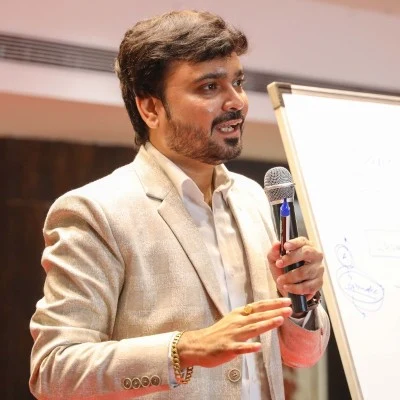
Avinash Chate - Best Corporate Trainer conducting leadership session
Annual Training Calendar for Companies in Pune — How to Plan 12 Months of L&DIf you want learning and development to create real business impact, you cannot treat training as a one-off event. I have seen this repeatedly while working with leaders across industries: the companies that grow consistently are the ones that plan capability building with intention, rhythm, and follow-through. The key takeaway is simple: an annual training calendar turns scattered workshops into a business-driven learning system.
As Avinash Chate, a TEDx speaker and author of The Winning Edge, I believe the best annual training calendar connects business priorities, manager expectations, employee growth, and measurable outcomes. Over 15+ years, I have worked with teams that needed exactly this clarity: what to train, when to train, and how to make training stick.
For companies in Pune, where competition, hiring pressures, and market changes move fast, a well-designed L&D calendar can improve productivity, leadership readiness, retention, and execution quality. If you are planning your next year of learning initiatives, this guide will help you build a practical 12-month roadmap.
Why an Annual Training Calendar Matters
Many organizations conduct training only when a problem becomes visible. A sales dip triggers sales training. A conflict triggers communication training. A promotion triggers leadership training. This reactive approach creates gaps, inconsistency, and wasted budgets.
An annual training calendar helps you move from reaction to strategy. It allows you to map learning interventions across the year based on business cycles, performance reviews, new projects, hiring plans, and leadership pipeline needs.
When I work with organizations, I encourage leaders to see L&D as a capability-building journey, not a checklist. A good calendar creates structure for induction, functional skills, behavioral training, managerial development, and culture-building initiatives. It also helps HR and business heads coordinate schedules better and avoid training fatigue.
If employee retention is part of your concern, I also recommend reading Why Your Best Employees Are Quitting — And It's Not About the Salary, because growth opportunities and learning visibility strongly influence whether top performers stay engaged.
Step 1: Start with Business Goals, Not Training Topics
The biggest mistake I see is starting with a list of popular training topics. Instead, begin with business goals for the next 12 months. Ask: what must improve this year for the company to perform better?
Your answers may include higher sales conversion, stronger first-line managers, better customer service, improved cross-functional collaboration, faster onboarding, safer operations, or succession readiness. Once those priorities are clear, training topics become easier to identify.
I often use the KITE Leadership Framework to help organizations think beyond isolated skill sessions and focus on leadership effectiveness in a structured way. This is especially useful when the annual calendar must include both individual contributor development and leadership capability building.
For example, if your company plans expansion, your annual calendar may need modules on communication, delegation, decision-making, coaching, and accountability. If your challenge is execution quality, the calendar may need problem-solving, ownership mindset, process discipline, and team alignment sessions.
When the calendar is aligned to business outcomes, leadership support becomes easier to secure because training is no longer seen as an HR activity alone. It becomes a performance enabler.
Step 2: Divide the Year into Learning Buckets
Once business priorities are clear, I suggest dividing the year into learning buckets. This creates balance and prevents overloading one quarter with too many programs.
- Quarter 1: induction, goal alignment, manager readiness, communication foundations
- Quarter 2: functional capability, sales effectiveness, customer experience, execution excellence
- Quarter 3: leadership development, collaboration, conflict management, mid-year performance support
- Quarter 4: innovation, strategic thinking, succession planning, annual review and next-year capability planning
This quarterly structure gives HR teams a practical framework to spread interventions across the year. It also helps employees absorb and apply learning more effectively.
In Pune, many companies operate in fast-paced environments where project deadlines and operational demands are intense. A phased annual calendar respects business realities while maintaining learning continuity.
I have seen this work effectively in organizations that wanted consistency without overwhelming teams. Even in companies like Matchwell Engineering, the need for structured capability building becomes more relevant when growth, quality, and people readiness must move together.
Step 3: Build for Different Employee Levels
A strong annual training calendar should not offer the same learning to everyone. Different employee groups need different interventions. I recommend creating separate tracks for new hires, individual contributors, first-time managers, middle managers, and senior leaders.
For new hires, focus on culture, role clarity, communication, and productivity habits. For individual contributors, include ownership, teamwork, customer orientation, and problem-solving. For first-time managers, prioritize delegation, feedback, coaching, and performance conversations. For senior leaders, include strategic thinking, influence, change leadership, and culture shaping.
This layered approach ensures relevance. Relevance is what drives attendance, engagement, and application.
As Avinash Chate, I have often found that companies get better outcomes when they map role-based competencies before scheduling sessions. It avoids generic training and creates sharper alignment between learning design and business expectations.
If your long-term goal is to create a stronger internal ecosystem for continuous development, I recommend exploring How to Build a Learning Culture in Your Organization in Pune — India Guide. A calendar works best when it is part of a broader learning culture.
Step 4: Decide the Right Training Format for Each Month
Not every month needs a full-day workshop. One of the smartest ways to plan 12 months of L&D is to mix formats. This improves participation and reduces disruption.
Your annual calendar can include instructor-led workshops, leadership offsites, monthly microlearning sessions, manager toolkits, coaching circles, reinforcement exercises, and review meetings. Some topics need immersive sessions, while others can be delivered through shorter interventions followed by practice.
I advise companies to think in terms of learning journeys rather than isolated sessions. For instance, a leadership theme can begin with a workshop, continue with manager assignments, and conclude with a review discussion after 30 days. This improves retention and application.
Technology can also support this process. If you are reimagining modern L&D delivery, read The Future of Corporate Training: Embracing Virtual Reality and AI Technologies to understand how digital tools can complement classroom learning.
For companies in Pune, hybrid models are especially useful when teams are spread across functions, plants, offices, or field roles. The best annual calendar is the one people can realistically attend and apply.
Step 5: Measure Outcomes and Review Every Quarter
A training calendar should never be static. I recommend reviewing it every quarter based on business changes, participant feedback, and observed performance shifts. Some priorities will stay the same, while others may need adjustment.
Measure outcomes at multiple levels. Track attendance and feedback, but do not stop there. Look at manager observations, behavior changes, team effectiveness, customer metrics, productivity indicators, and retention trends. If a program is important enough to schedule, it is important enough to evaluate.
Training creates value only when learning becomes visible in day-to-day behavior, decision-making, and results.
This is where leadership involvement matters. Managers should know what their teams are learning, what follow-up is expected, and how to reinforce it. Without reinforcement, even a well-planned annual calendar can become a sequence of disconnected events.
As Avinash Chate, I always emphasize that learning transfer is the real success metric. The annual calendar is the structure, but manager ownership is the multiplier.
A Simple 12-Month L&D Planning Model You Can Use
If you want a starting point, here is a simple model I recommend for companies planning the year ahead.
- January: annual goal alignment and manager communication
- February: new hire integration and culture orientation
- March: communication and collaboration skills
- April: functional excellence or sales capability
- May: customer service and problem-solving
- June: first-time manager development
- July: mid-year review and accountability workshops
- August: conflict management and team effectiveness
- September: leadership development for high potentials
- October: innovation, adaptability, and change readiness
- November: coaching, feedback, and succession readiness
- December: annual reflection, impact review, and next-year planning
This model is not rigid. It is a planning template. Adapt it based on your industry, employee mix, and business cycle. The goal is not to fill the calendar for the sake of activity. The goal is to create momentum, consistency, and measurable capability growth.
If you are serious about building a high-performance learning ecosystem, start with clarity, sequence, and accountability. That is how annual training calendars become strategic assets.
If you want help designing a practical and business-aligned L&D roadmap, I would be glad to support your team. Book a corporate training session in Pune and let us build a 12-month learning plan that delivers real results.
Frequently Asked Questions
How do I create an annual training calendar for a company in Pune?
Start by identifying business goals, role-wise capability gaps, and key performance priorities for the year. Then divide training into quarterly themes, assign programs by employee level, choose suitable formats, and review progress every quarter.
What topics should companies in Pune include in a 12-month L&D plan?
Most companies should include induction, communication, teamwork, functional capability, customer service, first-time manager development, leadership skills, accountability, and succession readiness. The final mix should depend on business goals and workforce needs.
How often should an annual training calendar be reviewed?
I recommend a quarterly review. This helps you align the calendar with changing business priorities, participant feedback, and performance outcomes while keeping the plan practical and relevant.
What is the biggest mistake companies make in L&D planning?
The biggest mistake is planning training topics without linking them to business outcomes. When training is not connected to performance, managers see it as an event rather than a capability-building investment.
Why should companies book a corporate training session in Pune instead of relying only on ad hoc workshops?
A structured annual approach creates continuity, role relevance, stronger manager involvement, and better measurement. It helps companies build capability systematically instead of reacting only when problems appear.
About the Author
Avinash Chate is a TEDx speaker, published author of The Winning Edge and The Unanswered, and founder of The Future Corporate & Business Coaching. With over 15 years of experience training 80+ organizations including Daspati Maratha Charitable Trust Mumbai, JM Aluext Profiles Pvt Ltd, Morbull Solutions, Thyrocare, Avinash is recognized as Maharashtra's leading corporate trainer. He created the KITE Leadership Framework and the 25-Star Competency Framework™, delivering high-impact programs across leadership, team building, sales transformation, and emotional intelligence.
📞 +91 8793630001 | ✉️ connect@avinashchate.com | 🌐 avinashchate.com
Book Avinash Chate for Your Next Event
Maharashtra's #1 Corporate Trainer · India's leading Motivational Speaker & Team Building Expert · 2x TEDx · Available across India in English, Hindi & Marathi.
✅ Thanks! Avinash team will reach out within 24 hours.'}).catch(function(e){f.outerHTML='Something went wrong. WhatsApp +91 8793630001
'});return false;"> Select Service Motivational Speaking / Keynote Team Building Workshop Corporate Training / Leadership Development Manager Development Employee Training Outbound Training Book Avinash Now →Or WhatsApp directly: +91 87936 30001
Related Articles by Avinash Chate
- Future-Proof Your Career From AI: A 25-Year Tech Story
- How to Become a Star at the Office: Lessons from Veritas Corporate Training
- Mumbai Motivational Keynote Speaker: The Complete Booking Guide for Corporate Events
Work with Avinash Chate
- Best Motivational Speaker in Pune →
- Team Building Trainer in Pune →
- Best Motivational Speaker in Maharashtra →
Avinash Chate services
Corporate Trainer in Pune · Top Corporate Trainers in Pune · Leadership Trainer in Pune · Top Leadership Trainers in Pune · Team Building Trainer in Pune · Top Team Building Trainers in Pune · Motivational Speaker in Pune · Top Motivational Speakers in Maharashtra · All service locations
← Back to all articles · Book Avinash Chate
By Avinash Chate — Maharashtra’s #1 Corporate Trainer & Motivational Speaker. .