Are You an Asset or Liability at Work? How to Matter More India 2026
Every professional is either adding value or consuming it. Avinash Chate explains how to genuinely shift from liability to asset in any Indian corporate environment.
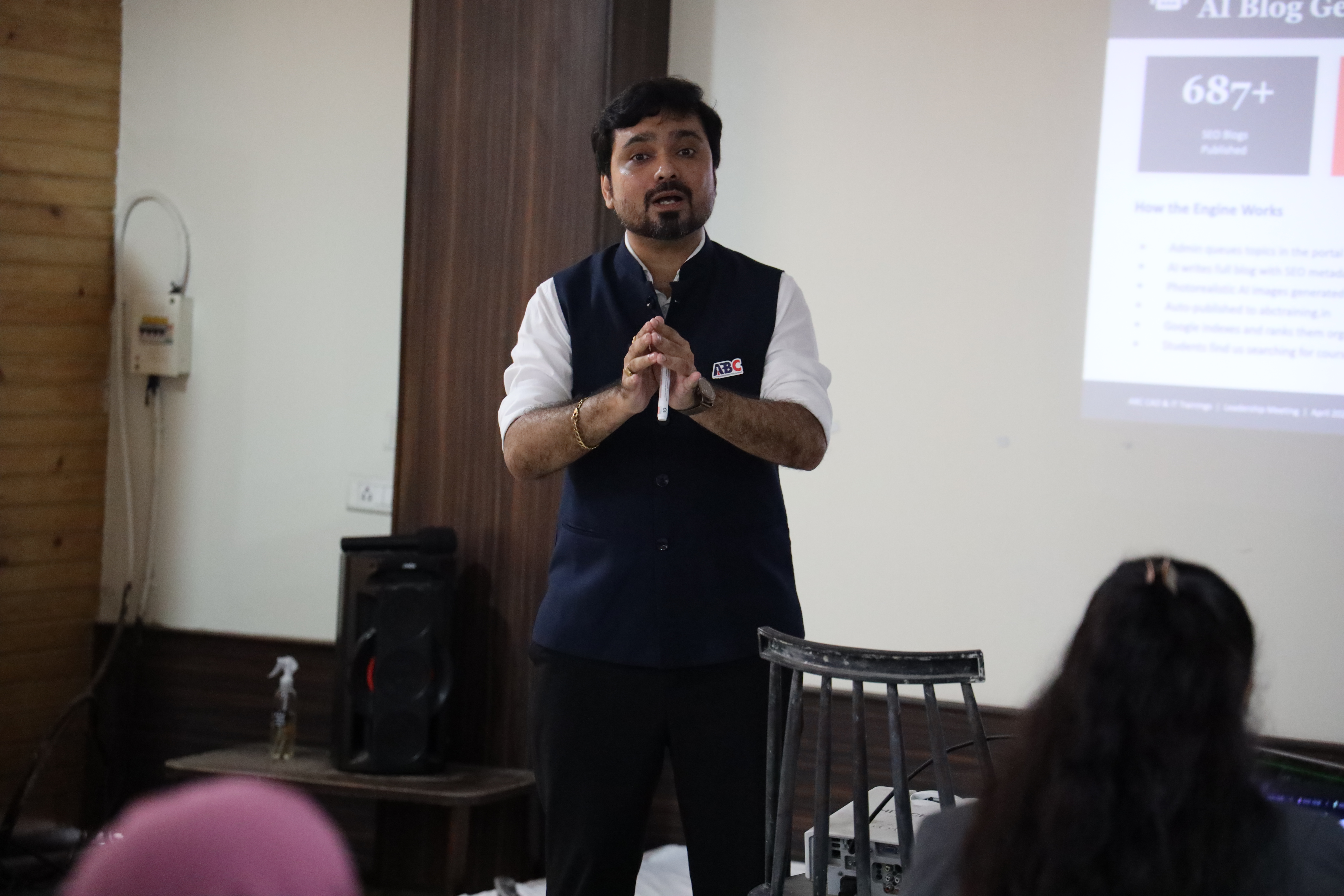
Every professional in every organization is either creating more value than they consume, or consuming more than they create. That's the asset versus liability reality, and most people never stop to assess which side they're on. According to NASSCOM-Deloitte, India needs 1.25 million AI and leadership professionals by 2027 — but the professionals who survive and thrive in that landscape will be those who are undeniably, measurably assets to their organizations. Here's how to make sure you're one of them.
TL;DR- Every professional is either creating more value than they consume or consuming more than they create
- The asset-liability distinction is not about seniority or salary — it is about measurable impact and initiative
- Being a liability is rarely about incompetence; it is usually about low ownership, low initiative, or poor communication
- Shifting from liability to asset requires specific behavioral changes, not just working harder
- The professionals who become truly indispensable solve problems their leaders did not know to ask for
What It Means to Be an Asset Versus a Liability in Indian Corporate Life
In every corporate training session I run — whether at L&T, Bosch, or Siemens — I ask the same question early: in your honest assessment, are you an asset or a liability to your organization right now? The room always gets quieter than people expect. Not because the question is difficult to understand, but because most people have never explicitly asked themselves this. Being an asset means that if you left tomorrow, the organization would feel a genuine gap — not just need to fill a headcount. Being a liability means your absence would, at worst, be a relief. Most professionals have no idea which category they're in.
The Seven Signs That You Might Be a Liability at Your Workplace Without Knowing It
The signs that a professional is operating as a liability are usually visible to everyone except the person themselves. Seven of the most common: waiting to be told what to do rather than identifying what needs doing; consistently explaining why things failed rather than taking ownership of outcomes; communicating problems upward without solutions; being the person whose meetings produce no decisions; doing the minimum required rather than the maximum possible; requiring more management time than the value they produce; and treating company resources — budget, time, attention — as if they were unlimited. Any three of these consistently, and a professional is consuming more than they're creating.
| Dimension | Liability Professional | Asset Professional |
|---|---|---|
| Problem response | Reports problem, waits for solution | Reports problem with proposed solution |
| Initiative level | Waits to be directed | Acts on what needs doing |
| Ownership of outcomes | Explains why things failed | Takes responsibility and fixes it |
| Management time required | High — needs frequent direction | Low — runs independently |
| Impact on team | Neutral to negative | Elevates others around them |
| Work visibility | Good work goes unseen | Communicates outcomes clearly |
What Asset Professionals Do Differently That Liability Professionals Don't
What asset professionals do differently is not mysterious — it just requires deliberate intention that most people never apply. Assets solve problems before they're asked to. They communicate proactively and specifically, not reactively and vaguely. They manage up effectively — giving their leaders the information needed to make good decisions. They take ownership of outcomes, not just tasks. They improve the people around them through knowledge sharing and genuine collaboration. And they consistently make the people above them look good, which is both a generous act and a highly practical career strategy.
How Ownership Mindset Is the Core Distinction Between Assets and Liabilities
Ownership mindset is the single most reliable predictor of whether a professional operates as an asset or a liability, in my experience training thousands of professionals across Tata Tech, Mahindra, JSW, and Ferrero. Ownership means treating the problems in your domain as your problems — not your manager's problems, not HR's problems, not the organization's abstract problems. It means acting on an issue even when you weren't explicitly assigned to it. It means not walking past a problem because it's technically someone else's. And it means measuring your success by the outcome of your work, not the effort of your activity. Effort without outcome is activity. Outcome with ownership is impact.
The Communication Behaviors That Define High-Value Professionals in India
The communication behaviors of high-value professionals in India are distinctive and learnable. Assets communicate problems with context and proposed solutions: here's what's happening, here's why, and here's what I think we should do. Liabilities communicate problems without solutions — and then wait. Assets give feedback constructively and receive it graciously. Assets make their work visible without being self-promotional — they share progress, flag risks early, and report outcomes clearly. Liabilities do good work that nobody hears about, then feel undervalued. The work itself is only half the professional equation; how you communicate about that work is the other half.
How to Audit Your Own Professional Value and Identify Where to Improve
Auditing your own professional value requires asking five honest questions. First: what would change if I didn't come to work for two weeks — and would those changes be mostly negative for the organization? Second: what problems did I identify and solve last month that nobody asked me to? Third: how much management attention do I require versus how much value I generate? Fourth: are the people around me better at their jobs because of me? Fifth: when things go wrong, is my first instinct to explain or to fix? Your answers give you a more accurate picture of your asset-liability status than any performance review, because they measure ownership and initiative rather than just task completion.
The 90-Day Plan to Shift From Liability to Asset in Your Current Role
The 90-day plan for shifting from liability to asset starts with one commitment: identify the most important unsolved problem in your current domain and own it — without being asked. For the first 30 days, do nothing but understand it deeply: talk to the people affected by it, map its root causes, and document what solving it would require. For the next 30 days, propose and begin implementing a solution — even a partial one. For the final 30 days, measure the impact and communicate the outcome clearly to your leadership team. This single act of proactive ownership — applied consistently — is the most reliable way to shift how you're perceived, and more importantly, how you actually contribute.
Why India's Most Valuable Professionals Solve Problems Nobody Asked Them to Solve
India's most valuable professionals — the ones I see at RBI, BARC, and Indian Army programs who consistently get promoted and trusted with more — share one quality above all others: they solve problems their leaders didn't know to ask for. They see around corners. They connect dots across domains. They anticipate needs before they become urgent. This is the highest expression of being an asset: not just executing what's assigned, but expanding the definition of what's possible in your role. And it doesn't require genius — it requires curiosity, ownership, and initiative that any professional can develop with deliberate practice and genuine investment in the organization they're part of.
Book Avinash Chate for Your Next Event
TEDx speaker. 11+ yrs training Army, BRO, RBI, BARC, JSW. Available for keynotes, leadership training, team building & manager development at your office or event venue.
✅ Thanks! Avinash team will reach out within 24 hours.'}).catch(function(e){f.outerHTML='Something went wrong. WhatsApp +91 8793630001
'});return false;">Select ServiceKeynote / Motivational SpeakingLeadership Development TrainingTeam Building WorkshopManager DevelopmentEmployee TrainingOutbound TrainingBook Avinash Now →Or WhatsApp directly: +91 87936 30001
Related Articles by Avinash Chate
- Self-Confidence Competency: What Gets You Promoted in India 2026
- Bridging Generational Gap at Work: Gratitude and Innovation India 2026
- How Recognizing Star Performers Drives Real Company Growth India 2026
Avinash Chate TEDx Speaker · Founder, The Future Corporate · 11+ yrs experience Avinash has trained Indian Army, BRO, RBI, BARC, JSW Steel and 1000+ corporate leaders across India. His work focuses on leadership development, communication skills, and behavioural training rooted in Indian values and modern business needs. |
Frequently Asked Questions
What is the difference between being an asset and a liability at work in India?
Being an asset means that your contribution to the organization creates more value than the resources — salary, management time, infrastructure — you consume. Concretely: if you left tomorrow, the organization would feel a meaningful gap, not just need to fill a headcount. Being a liability means the inverse: your presence consumes organizational resources in ways that aren't proportionally offset by the value you create. The distinction is not about seniority, intelligence, or even effort — it's about impact, initiative, ownership, and the quality of your communication about your work. Most professionals fall somewhere on a spectrum between asset and liability, and consciously shifting toward the asset end is entirely within anyone's control.
How can Indian professionals identify whether they are adding value or consuming it?
Indian professionals can assess their own asset-liability status by asking five diagnostic questions honestly. First: what changed — specifically, measurably — because of my work last quarter? Second: how many problems did I identify and solve without being asked? Third: how much management attention do I require relative to the value I create? Fourth: are the people around me more effective because of my presence? Fifth: when things go wrong, what is my first instinct — to explain or to fix? These questions measure ownership, initiative, and impact — the three dimensions that most reliably distinguish asset professionals from liability ones in Indian corporate environments.
What are the most important behaviors that make a professional indispensable in 2026?
The behaviors that make professionals genuinely indispensable in Indian organizations in 2026 are: proactive problem identification — finding and addressing issues before being asked; solution-oriented communication — always pairing problems with proposed solutions when escalating; visible ownership — making their work and its outcomes clearly visible to decision-makers without being self-promotional; upward management — giving their leaders the information needed to make good decisions without being prompted; and elevating others — making the people around them better through knowledge sharing and constructive challenge. Professionals who combine all five consistently are the ones organizations protect, develop, and promote even in difficult business environments.
How do you shift from being a liability to an asset in your current corporate role?
The most reliable way to shift from liability to asset in a current role is to apply proactive ownership to the most important unsolved problem in your domain — without being asked. Spend the first 30 days understanding the problem deeply: interview stakeholders, map root causes, quantify impact. In the next 30 days, propose and begin a solution — even a partial prototype or pilot. In the final 30 days, measure and communicate the outcome clearly to your leadership. This 90-day cycle of unsolicited problem-solving is the single most reliable way to shift your professional perception, because it demonstrates the three things that define asset professionals: initiative, ownership, and communication — in one continuous act.
Avinash Chate services
Corporate Trainer in Maharashtra · Top Corporate Trainers in Maharashtra · Leadership Trainer in Maharashtra · Top Leadership Trainers in Maharashtra · Team Building Trainer in Maharashtra · Top Team Building Trainers in Maharashtra · Motivational Speaker in Maharashtra · Top Motivational Speakers in Maharashtra · All service locations
← Back to all articles · Book Avinash Chate
By Avinash Chate — Maharashtra’s #1 Corporate Trainer & Motivational Speaker. .