Behavioral Training That Drives Workplace Growth and Respect India 2026
Behavioral skills shape every workplace. Avinash Chate's training builds the growth mindset, respect, and communication habits Indian corporate teams need.
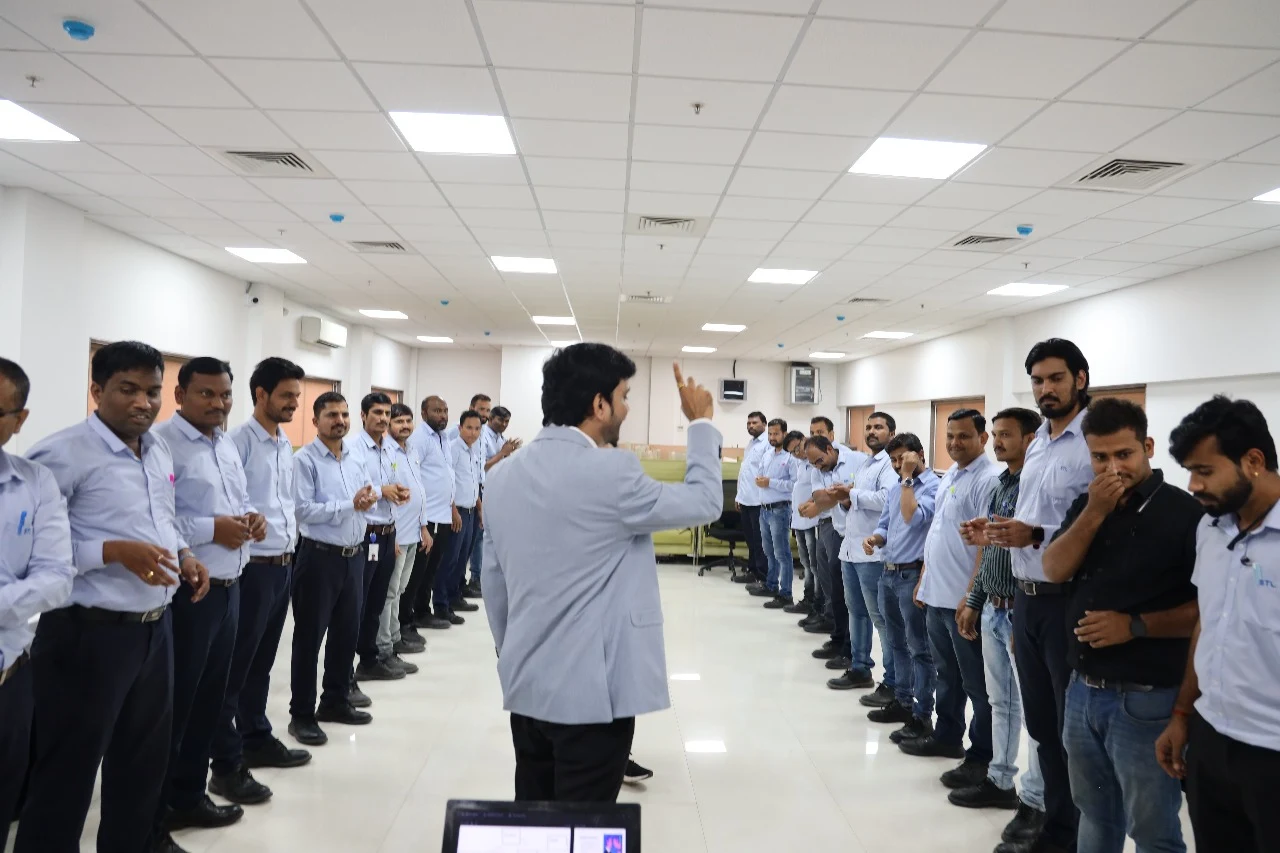
Behavioral skills are the real infrastructure of high-performance workplaces — not the org chart, not the strategy deck. In every corporate training session, whether at Bajaj Auto or Mahindra, teams with strong behavioral skills consistently outperform technically superior teams. 65% of Indian firms invest in soft-skill training for exactly this reason: behavior is what turns individual talent into collective performance.
TL;DR- Behavioral skills are the invisible architecture that determines whether a workplace grows or stagnates
- Growth and respect are not values you post on a wall — they are habits you train into daily interactions
- Teams with strong behavioral skills consistently outperform technically superior but behaviorally weak teams
- Avinash Chate's behavioral training focuses on specific, observable workplace behaviors not generic mindset talks
- Behavioral change happens through structured training, practice, and real-time feedback — not one-day workshops alone
Why Behavioral Skills Are the Real Foundation of High-Performance Indian Workplaces
When I ask leadership teams at L&T, Bosch, and Siemens what their biggest people challenge is, the answer is almost never technical. It's behavioral. It's the manager who gives feedback in a way that demotivates instead of developing. It's the team member who stays silent in meetings because psychological safety hasn't been built. It's the conflict that festers for weeks because nobody knows how to have a direct conversation with respect. Behavioral skills are the invisible architecture that determines whether a workplace grows or slowly erodes, regardless of how good its technical talent is.
How Avinash Chate's Behavioral Training Drives Growth and Respect Simultaneously
In the behavioral training sessions I run, growth and respect are always treated as a pair — not separately. Growth without respect creates a culture of pressure and burnout. Respect without growth creates a culture of comfort and stagnation. What Indian organizations actually need is both — an environment where people are held to high standards AND feel genuinely valued for their contribution. This combination is precisely what behavioral training builds when it's done correctly, moving beyond motivation posters to actual skill development in observable, measurable workplace behaviors.
| Behavioral Competency | Untrained Team | Behaviorally Trained Team |
|---|---|---|
| Feedback culture | Avoided or overly blunt | Regular, specific, growth-focused |
| Accountability | Blame-focused when things fail | Ownership-focused on outcomes |
| Conflict handling | Avoided or escalated to HR | Addressed directly and early |
| Communication across levels | Filtered, formal, guarded | Open, direct, psychologically safe |
| Meeting productivity | Low participation, few decisions | Structured, decisive, action-oriented |
| Team morale | Variable, dependent on outcomes | Consistently high, internally driven |
The Most Common Behavioral Gaps in Indian Corporate Teams That Training Must Fix
After working with thousands of professionals across Tata Tech, Mahindra, JSW, and Ferrero, I can tell you the most common behavioral gaps in Indian corporate teams. First: feedback avoidance — most Indian professionals either give no feedback or feedback so indirect it carries no actionable information. Second: accountability gaps — individuals are quick to explain why something failed rather than own the outcome. Third: communication mismatch — different generations, functions, and seniority levels often speak entirely different organizational languages. Behavioral training addresses all three with specific, practiced techniques rather than abstract concepts.
What Behavioral Training Actually Looks Like in a Real Corporate Session
What behavioral training actually looks like in practice is very different from what most companies expect. It's not a keynote. It's not a motivational talk where everyone feels pumped for 48 hours and then returns to exactly the same patterns. Real behavioral training involves structured role-plays of real workplace scenarios, individual and group feedback on specific observable behaviors, manager coaching sessions that build behavioral reinforcement into day-to-day work, and 30-60 day follow-up assessments to check whether behaviors actually changed. That's the model I use in programs at KPIT, Infosys, and TCS.
Building a Respect Culture: How Behavioral Change Happens at the Team Level
Building a culture of respect is the work of behavioral training at the team level. Respect isn't just about not being rude — it's about how disagreements are handled, how credit is shared, how failure is discussed, and how junior voices get heard in rooms full of senior ones. I've seen entire teams transform their internal dynamics in 90 days through behavioral training that focused specifically on these interaction patterns. The change is visible, measurable, and self-reinforcing: once people experience what respectful, growth-oriented interaction feels like, they find it difficult to go back.
How Behavioral Training Impacts Business Metrics in Indian Organizations
The impact of behavioral training shows up in business metrics faster than most leaders expect. In organizations where I've run structured behavioral programs, the indicators I track include: reduction in escalations typically 20-35% in 90 days, improvement in 360-degree feedback scores, reduction in interpersonal conflict reported to HR, and improvement in employee engagement survey results. These are not soft outcomes — they directly impact productivity, retention, and client satisfaction. Behavioral training is not a feel-good investment; in Indian corporate environments, it's one of the highest-ROI development interventions available.
The Difference Between a One-Day Workshop and Real Behavioral Transformation
The difference between a one-day workshop and real behavioral transformation is the difference between knowing and doing. Most behavioral training in India fails because it stops at awareness. Participants leave knowing what good behavior looks like but lacking the practice reps to actually perform it under pressure. Real transformation happens through spaced repetition: training, then application, then coaching, then reinforcement, then measurement. When I design behavioral programs for companies like RBI, BARC, and Indian Army teams, each cycle includes all five elements — because that's the only sequence that actually sticks.
How to Measure the ROI of Behavioral Training in Indian Corporates
Measuring behavioral training ROI in Indian organizations requires tracking both leading and lagging indicators. Leading indicators measurable within 30 days: quality and frequency of feedback conversations, participation rates in team discussions, reduction in email escalations, and manager coaching session completion. Lagging indicators visible over 3-6 months: attrition reduction, promotion readiness scores, client satisfaction NPS, and project delivery on time and budget. When behavioral training is properly measured — not just felt — it consistently shows returns that justify the investment and make a compelling case for ongoing development budgets.
Book Avinash Chate for Your Next Event
TEDx speaker. 11+ yrs training Army, BRO, RBI, BARC, JSW. Available for keynotes, leadership training, team building & manager development at your office or event venue.
✅ Thanks! Avinash team will reach out within 24 hours.'}).catch(function(e){f.outerHTML='Something went wrong. WhatsApp +91 8793630001
'});return false;">Select ServiceKeynote / Motivational SpeakingLeadership Development TrainingTeam Building WorkshopManager DevelopmentEmployee TrainingOutbound TrainingBook Avinash Now →Or WhatsApp directly: +91 87936 30001
Related Articles by Avinash Chate
- Self-Confidence Competency: What Gets You Promoted in India 2026
- Bridging Generational Gap at Work: Gratitude and Innovation India 2026
- Are You an Asset or Liability at Work? How to Matter More India 2026
Avinash Chate TEDx Speaker · Founder, The Future Corporate · 11+ yrs experience Avinash has trained Indian Army, BRO, RBI, BARC, JSW Steel and 1000+ corporate leaders across India. His work focuses on leadership development, communication skills, and behavioural training rooted in Indian values and modern business needs. |
Frequently Asked Questions
What is behavioral training and why does it matter for Indian corporate teams?
Behavioral training is the process of developing specific, observable workplace behaviors — how team members give feedback, handle conflict, communicate across hierarchy, and take accountability — through structured practice and coaching. It matters for Indian corporate teams because technical skills get people hired, but behavioral skills determine whether they perform, collaborate, and grow over time. 65% of Indian firms now invest in behavioral and soft-skill training precisely because organizations have learned that unaddressed behavioral gaps limit even the most technically capable teams from reaching their potential.
How is Avinash Chate's behavioral training different from a standard corporate workshop?
Avinash Chate's behavioral training programs are different from standard workshops in three ways. First, they are based on observable behaviors — specific, measurable actions — rather than abstract values or motivational concepts. Second, they use structured role-plays of real workplace scenarios so participants practice the actual behaviors they need to perform, not just understand them conceptually. Third, they include follow-up coaching and assessment phases — typically 30 and 60 days after the training — to measure whether behavioral change actually occurred and reinforce what needs further development.
How long does behavioral training take to show results in Indian organizations?
Behavioral training begins showing results at two different time horizons. Within 30 days, you typically see leading indicators: improved feedback frequency and quality, reduced interpersonal conflicts, better meeting participation, and higher team morale scores. Over 3 to 6 months, lagging indicators become visible: reduction in attrition, improvement in client satisfaction, higher project delivery rates, and better performance review outcomes. The critical factor is whether behavioral training is followed by real-time manager coaching and reinforcement — organizations that invest in follow-up see significantly better outcomes than those that run training as a standalone event.
What specific behaviors does corporate behavioral training focus on in India?
Corporate behavioral training in Indian organizations typically focuses on five core competency clusters: feedback and recognition behaviors — giving, receiving, and acting on feedback constructively; accountability behaviors — owning outcomes rather than explaining failures; cross-functional communication — adapting communication style across functions, generations, and seniority levels; conflict resolution — addressing disagreements directly and early before they become HR issues; and growth mindset behaviors — responding to setbacks, taking initiative, and embracing continuous learning as a daily habit rather than an annual performance cycle.
Avinash Chate services
Corporate Trainer in Maharashtra · Top Corporate Trainers in Maharashtra · Leadership Trainer in Maharashtra · Top Leadership Trainers in Maharashtra · Team Building Trainer in Maharashtra · Top Team Building Trainers in Maharashtra · Motivational Speaker in Maharashtra · Top Motivational Speakers in Maharashtra · All service locations
← Back to all articles · Book Avinash Chate
By Avinash Chate — Maharashtra’s #1 Corporate Trainer & Motivational Speaker. .