Boss Shouting at Nandini: What Projective Identification Really Costs a Team
When a small firm's boss screamed at her sales professional Nandini in the middle of a meeting, I watched projective identification in real time. Here is what it is, why it destroys collaboration, and how we fixed it.
I was in the room the day it happened. A boss, mid-meeting, turned on her own sales professional and let loose — not because Nandini had done anything that particular morning, but because the boss's own fear about the business was looking for somewhere to land. That somewhere was Nandini. What I watched unfold that day taught me more about the hidden side of Collaboration and Cooperation than any textbook could have.
In short- A boss at a 20-person firm shouted at her sales professional Nandini during a meeting about falling sales — a textbook case of projective identification.
- Projective identification is when someone unconsciously dumps their own fears and flaws onto another person, then blames that person for them.
- It corrodes the two things every workplace needs most: honest feedback and psychological safety.
- The fix was not punishing Nandini or lecturing the boss — it was building the boss's own self-awareness first.
- Once the boss owned her part, the relationship with Nandini repaired, and sales — and the whole office mood — genuinely improved.
Where this sits on your Winning Kite
Collaboration and Cooperation is Trait #23, one of the twenty-five traits that build the EQ — left — side of the Winning Kite (KITE Leadership Framework). It lives in the Relationship Management cluster: the ability to work well with people while protecting the relationship itself, not just the task. What happened between this boss and Nandini is what Collaboration and Cooperation looks like when it fails — and it fails from the inside, in the boss's own unmanaged emotions, long before it shows up as a shouting match.
The meeting that went wrong
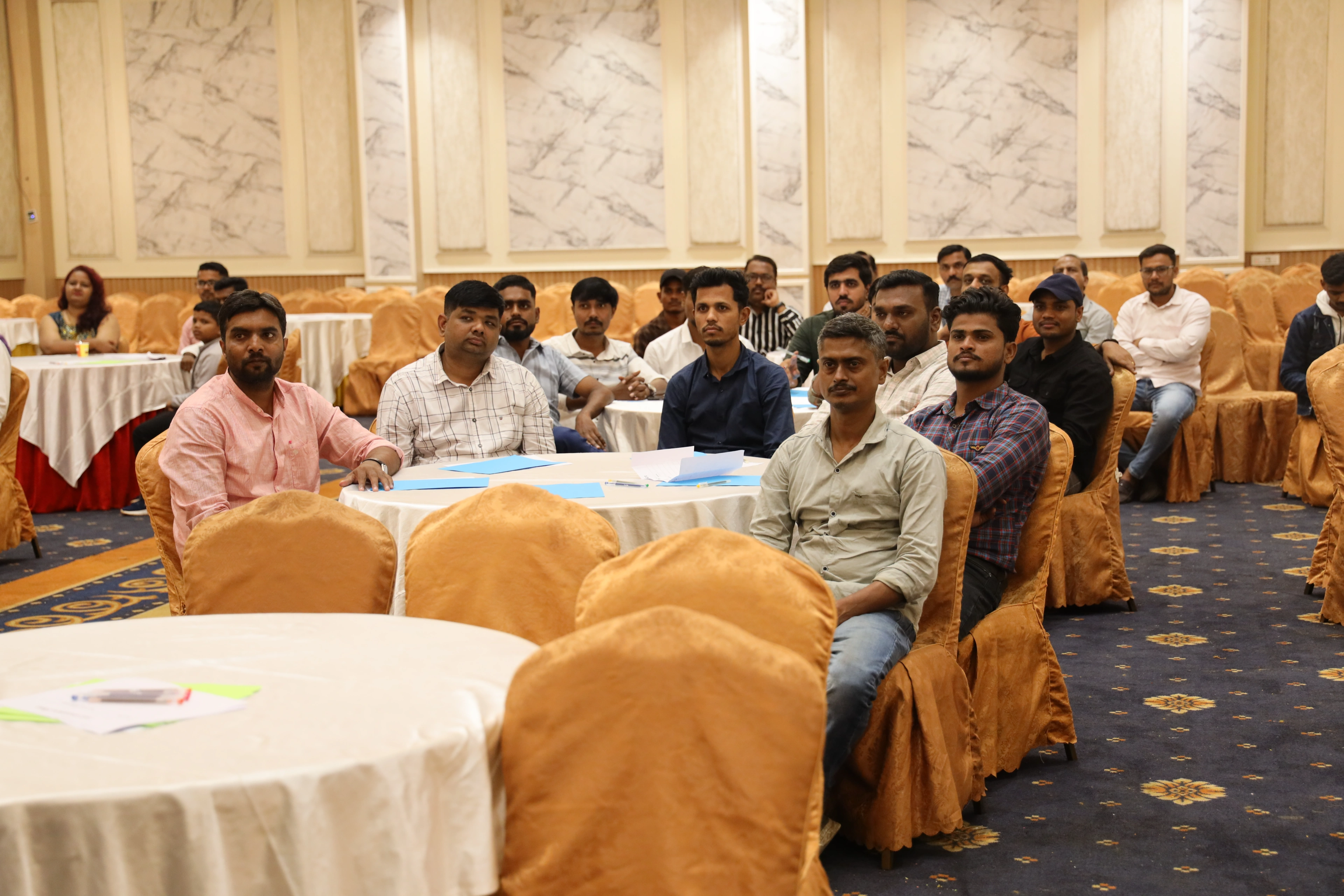
I was doing corporate training for a small firm — twenty people, a tight team, the kind of company where everyone knows everyone's business. My job as their coach was straightforward on paper: help them improve sales and hit their targets. We had called a meeting to talk through the problems the company was facing. Numbers were down. Something needed to change.
Partway through that meeting, without much warning, the boss turned and started shouting at Nandini, one of her sales professionals. It was sudden. It was public. And it was, to anyone watching closely, not really about Nandini at all.
I could see it happening in real time. The boss was not reacting to a specific failure Nandini had just described. She was reacting to her own mounting anxiety about the business — anxiety she had not named, had not processed, and clearly did not want to sit with. Instead of asking herself the harder question — what am I not doing right as a leader here? — she pointed at the person closest to the problem and made it Nandini's fault. Instead of recognising her own role in Nandini's struggles and offering constructive feedback that could actually help her improve, the boss blamed Nandini outright for the lack of sales. It was not just unfair. It poisoned the room. Everyone else at that meeting saw exactly what had happened, and it created a negative, tense dynamic that hung over the office long after the meeting ended.
What projective identification actually is
There is a name for what I watched happen that day: projective identification. It is a psychological phenomenon — one that shows up in workplaces as often as it shows up in families and friendships — where one person projects their own thoughts, feelings, and behaviours onto another person.
Between a boss and a subordinate, it typically works like this: the boss sees, somewhere deep down, her own flaws and weaknesses — maybe a fear that she is not leading well, maybe doubt about her own judgment, maybe insecurity about whether the business will survive. Rather than face that discomfort directly, she unconsciously relocates it. She starts to see those same flaws in the subordinate, and then blames the subordinate for the very things she is afraid are true about herself.
This creates a trap. The boss cannot see her own mistakes clearly because she is too busy focusing on the mistakes she believes her subordinate is making. Resentment builds. Frustration builds. Anger builds. And because the boss now genuinely believes, at some level, that the subordinate is the source of the problem, she stops offering constructive feedback altogether — why coach someone you have already decided is the problem? Communication breaks down exactly when it is needed most, and both people's performance suffers as a result.
Why this is a Collaboration and Cooperation problem, not just a temper problem
It would be easy to file this story under "the boss needs to control her anger." But that misses the deeper issue. Collaboration and Cooperation, as a workplace competency, is about people who can focus on getting the job done while building and protecting good relationships with the people around them. People strong in this trait look for opportunities to work together and help those opportunities grow. They work through conflict and disagreement constructively, and they encourage others to do the same. They are good listeners, open-minded, and they genuinely value what other people bring to the table.
A boss caught in projective identification cannot do any of that — not because she lacks the skill, but because her own unprocessed emotion is standing in the way. She cannot listen to Nandini's side because she has already decided, unconsciously, what Nandini's role in the story is. She cannot value Nandini's input because Nandini has become, in her mind, the embodiment of the very failure she is most afraid of. Collaboration collapses the moment self-awareness collapses. That is the real lesson: you cannot cooperate well with someone else until you have an honest relationship with your own fears first.
How we worked through it
As the coach in the room, I needed to address this directly — not by taking sides in the meeting, but by working with the boss afterward on the deeper issue. I explained what projective identification is and how it was quietly running the relationship between her and Nandini. I did not frame it as an accusation. I framed it as something worth naming so we could actually fix it.
The real work was building her emotional intelligence. I helped her get honest about her own strengths and weaknesses as a leader — not in the abstract, but specifically, in relation to what was happening with sales. Once she could see her own part in the picture clearly, I helped her figure out how to give Nandini constructive, specific feedback instead of blame. I encouraged her to communicate with Nandini openly and honestly, and to treat the sales problem as something they would solve together rather than something Nandini alone was responsible for fixing.
This is worth underlining: nothing about the fix involved Nandini changing who she was. The fix was almost entirely on the boss's side — because the problem had almost entirely originated on the boss's side.
What changed
By addressing the projective identification directly, the boss was able to rebuild a stronger relationship with Nandini — and, by extension, with the rest of her team, who had all watched that meeting and quietly recalibrated how safe it felt to speak up. The office became a genuinely happier place to work. People became more productive because they were no longer bracing for the next unpredictable outburst. And, tellingly, sales improved — not because Nandini suddenly became a different salesperson, but because the environment around her stopped working against her.
This mirrors something Daniel Goleman has written about for years: emotional intelligence at the leadership level is not a soft add-on, it is the mechanism through which every other skill in an organisation gets to actually function. A boss with high technical competence but low self-awareness will keep finding "problem employees" — because the problem was never really the employee.
The Pratiksha and Mohini contrast
It helps to hold this story next to its opposite, from the same chapter of the book. When Mohini first joined her company, she was inexperienced and unsure of herself. Pratiksha, who worked with her, could easily have treated Mohini's inexperience the way our boss treated Nandini's struggles — as a problem to be irritated by. Instead, Pratiksha recognised Mohini's potential and chose to collaborate with her: mentoring her, giving her real feedback, supporting her as she built the skills she needed. Mohini gained confidence and, in time, began leading herself. That is Collaboration and Cooperation working as it should — one person's emotional security creating room for another person to grow, instead of one person's fear shrinking someone else down.
The difference between the two stories is not talent, and it is not circumstance. It is whether the senior person in the relationship had done the internal work of understanding their own emotions before those emotions found their way, unmanaged, onto someone junior to them.
How to spot projective identification in your own team
- Notice the pattern, not just the incident. One tense meeting is normal. A boss who consistently blames the same person for problems that predate that person, or that are clearly systemic, is projecting.
- Ask what the criticism is really about. If the feedback a leader gives is vague, emotional, and hard to act on ("you're just not good enough"), it is often more about the leader's state than the employee's performance.
- Watch what happens to feedback quality. Genuine performance coaching is specific and forward-looking. Projected blame tends to be generalised and backward-looking — it explains a feeling, not a fix.
- Check whether the room goes quiet. Teams sense projective identification fast, even if they cannot name it. Withdrawal, over-flattery, or a "kiss-up, kick-down" culture are downstream symptoms.
- Start with the senior person's self-awareness, not the junior person's behaviour. As in Nandini's story, the fastest fix is almost always upstream of where the shouting happened.
If you are building this awareness in your own organisation, our corporate training programs and signature leadership programs work through exactly this kind of real scenario — not abstract theory, but the actual moment a leader has to choose between projecting and coaching.
Bring These Ideas to Your Team
Avinash Chate turns the traits in Stars at India Inc. into live leadership & emotional-intelligence workshops. TEDx speaker · 11+ yrs training Army, BRO, RBI, BARC, JSW & 1000+ leaders.
✅ Thanks! Avinash team will reach out within 24 hours.'}).catch(function(e){f.outerHTML='Something went wrong. WhatsApp +91 8793630001
'});return false;">Select ServiceKeynote / Motivational SpeakingLeadership Development TrainingTeam Building WorkshopManager DevelopmentEmployee TrainingBook Avinash Now →Or WhatsApp directly: +91 87936 30001
Work with Avinash Chate
- Signature Corporate Training Programs →
- The Winning Kite (KITE Leadership Framework) →
- All Corporate Training Topics →
Avinash Chate TEDx Speaker · Founder, The Future Corporate · Author of Stars at India Inc. Avinash has trained the Indian Army, BRO, RBI, BARC, JSW Steel and 1000+ corporate leaders across India. His work focuses on leadership, emotional intelligence and behavioural training rooted in Indian values and modern business needs. |
Frequently Asked Questions
What is projective identification at work?
Projective identification is when a person unconsciously projects their own fears, doubts, or flaws onto someone else and then treats that person as though the flaw belongs to them. At work, it commonly shows up as a boss blaming a subordinate for problems that are actually rooted in the boss's own insecurity.
Why did the boss shout at Nandini in Avinash Chate's story?
During a meeting about falling sales, the boss of a 20-person firm suddenly shouted at her sales professional Nandini. Avinash, coaching the company at the time, saw that the boss was projecting her own insecurities and doubts about the business onto Nandini rather than examining her own role in the team's struggles.
How do you fix projective identification between a boss and a subordinate?
You build the boss's self-awareness first — helping them recognise their own strengths and weaknesses honestly. Then you shift the relationship toward open, two-way communication and constructive feedback instead of blame, so both sides can address real issues instead of projected ones.
Where does Collaboration and Cooperation sit on the Winning Kite framework?
Collaboration and Cooperation is Trait #23 on the EQ (left) side of the Winning Kite — the KITE Leadership Framework. It is a Relationship Management competency: the ability to work well with others while protecting the relationship itself, which directly strengthens the RQ side too.
Related Articles by Avinash Chate
- Bangalore-to-Pune Plant Relocation: How a Transformational Leader Wins Change
- S. Jaishankar: The Diplomat Who Read the Room Before He Read the Terms
- Kiran Gems – Patel/Lakhani change-catalyst leaders
Avinash Chate services
Corporate Trainer in Bengaluru · Top Corporate Trainers in India · Leadership Trainer in Bengaluru · Top Leadership Trainers in India · Team Building Trainer in Bengaluru · Top Team Building Trainers in India · Motivational Speaker in Bengaluru · Top Motivational Speakers in India · All service locations
← Back to all articles · Book Avinash Chate
By Avinash Chate — Maharashtra’s #1 Corporate Trainer & Motivational Speaker. .