Emotional Intelligence Training for Managers: Why Promotions Stall
Emotional intelligence training for managers fixes what results alone can't: a top performer promoted to department head loses her team when anger takes over.
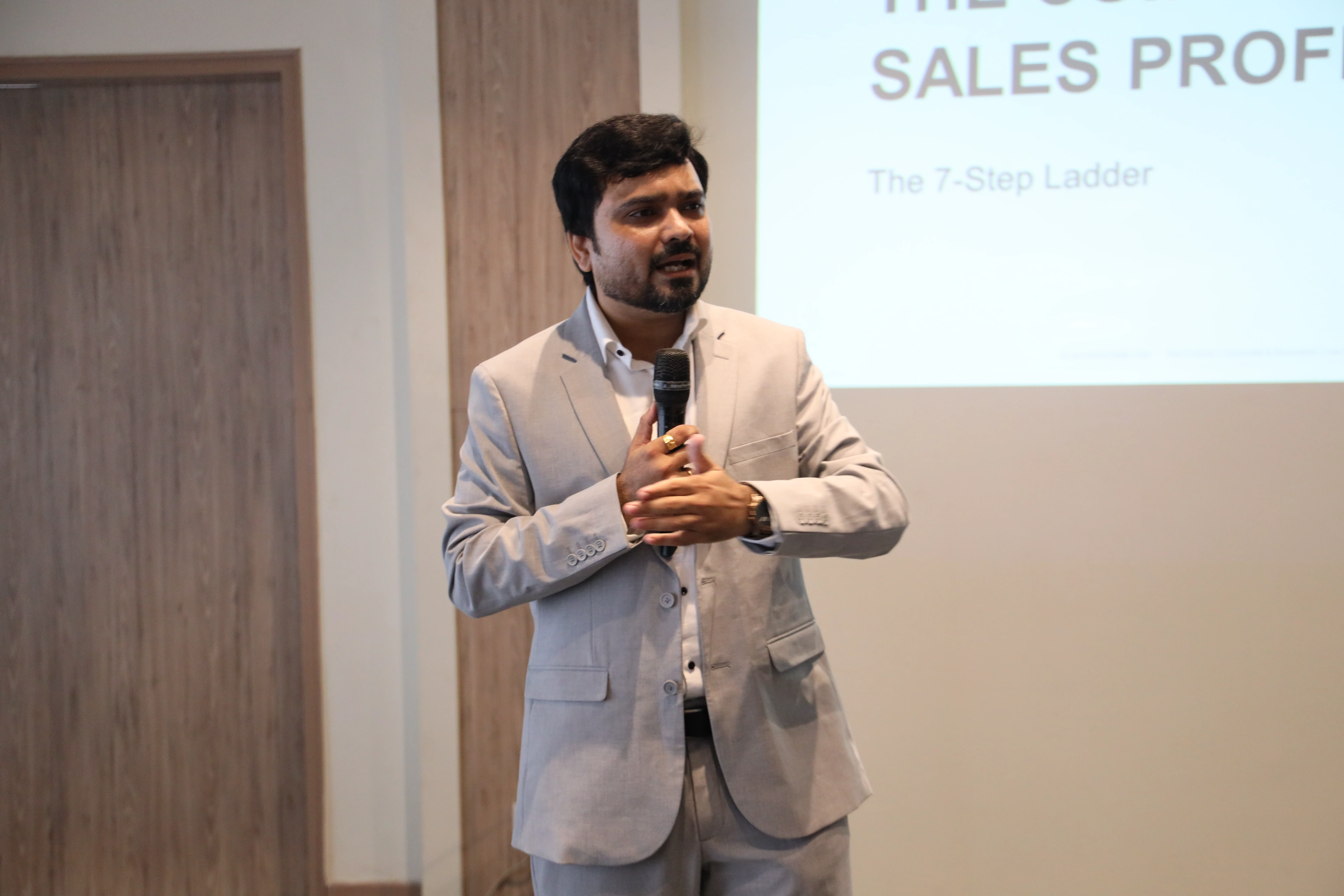
Emotional intelligence training for managers teaches the people side of leading: handling anger, hearing feedback and building trust. It matters because results get a person promoted, but relationships decide whether the promotion lasts. With 65% of Indian firms already investing in soft-skill training, EQ is where many companies still see the widest gap.
TL;DR- Productivity gets people promoted, but weak emotional control is what stalls them after the promotion.
- A manager who is angry or irritable in public damages trust faster than any missed target.
- Good EQ training for managers is practical: real cases, role-plays and a follow-up, not a one-hour lecture.
- Companies should measure the result through team feedback, attrition and escalations, not attendance sheets.
What is emotional intelligence training for managers?
Emotional intelligence, or EQ, is the ability to notice your own emotions, control how you react, and read the people around you. Emotional intelligence training for managers turns that into daily habits: pausing before replying to an angry email, giving feedback without humiliating anyone, and staying steady when a target slips. It is not therapy and it is not a motivational talk. It is a behavioural skill, and like any skill it improves with practice. I explain the basics in the five pillars of EQ.
Why does a high performer stall after promotion?
Most promotions in Indian companies reward output. You hit your targets, your numbers look good, and you move up. The trouble starts when the job changes from doing the work to leading people. A head of department no longer wins by personal productivity. She wins by how well her team trusts her. If she was never trained in handling pressure and conflict, the same intensity that made her a star can turn into irritation and sharp words in front of the team.
| Warning sign in a manager | What the team experiences | What EQ training works on |
|---|---|---|
| Quick anger or irritation | People stop bringing bad news | Spotting triggers and pausing before reacting |
| Raised voice in meetings | Silence, hidden mistakes | Staying calm under pressure |
| Feedback given harshly | Defensiveness and resentment | Specific, respectful feedback |
| Fights with peers | Departments stop cooperating | Listening and repairing relationships |
| Good numbers, high attrition | Strong people quietly leave | Leading through trust, not pressure |
A story from my sessions: results, targets and a scooter outside the office
In my video I tell a case about a woman I call Vaishnavi. Her productivity is excellent, targets are met, and she keeps getting promoted until she heads a department. Then a small glitch shows up: she gets angry and irritable easily. Six months after the promotion, a fight with a colleague ends with her crying loudly outside the office on her scooter while people watch. The question I ask the room is simple: will relationships stay healthy when the leader cannot control her own reactions?
What does weak EQ cost a company?
I put it in Marathi like this: "काम तभी तक बोलेगा, एक लेव्हलनंतर तुम्हाला रिलेशनशिप हवेत" (work speaks only up to a point; after a certain level, you need relationships). If a manager has no support above, below and beside her, her career gets cut short. That is the reality of every organisation, and it is a company problem too, because the cost lands on the team she leads.
What should an EQ programme for managers cover?
When a manager loses control in public, people stop bringing problems to her. They hide mistakes, avoid meetings and start looking at other jobs. The company then pays through missed information, repeat errors, attrition and escalations to HR. None of these shows up as a line item called "EQ", which is why the issue stays invisible for so long. HR heads usually tell me they only noticed the pattern after two or three good people left the same department within a year.
How do you know the training worked?
A useful programme for managers covers five things: self-awareness of triggers, managing anger and irritation in the moment, listening before reacting, giving and receiving feedback, and repairing a relationship after a bad exchange. Each topic should use real workplace cases from your own industry, followed by role-plays and a plan the participant commits to. This is how I design the behavioural sessions listed under behavioural training, and the same approach runs through my signature programmes.
How can your company book EQ training for managers?
Do not judge the training by how much people clapped. Look at what changes over the next two quarters: fewer escalations from that department, better scores in team feedback, lower attrition among direct reports, and managers who ask for help earlier. Ask participants to name one habit they will change and ask their manager to check it after 30 days. A short follow-up session at the 60-day mark makes the change stick far better than one big day of training. For the leadership angle, read EQ for Indian leaders.
Book Avinash Chate for Your Next Event
TEDx speaker. 11+ yrs training Army, BRO, RBI, BARC, JSW. Available for keynotes, leadership training, team building & manager development at your office or event venue.
✅ Thanks! Avinash team will reach out within 24 hours.'}).catch(function(e){f.outerHTML='Something went wrong. WhatsApp +91 8793630001
'});return false;">Select ServiceKeynote / Motivational SpeakingLeadership Development TrainingTeam Building WorkshopManager DevelopmentEmployee TrainingOutbound TrainingBook Avinash Now →Or WhatsApp directly: +91 87936 30001
Related Articles by Avinash Chate
- Responsible AI Policy for Employees in Nagpur: What Not to Paste
- The Reading-Challenge Repair: How I Fix a Broken Chain Without Losing the Word I Gave Myself
- AI Adoption for Factories in Dhule: What to Hand to AI First
Work with Avinash Chate
- Best Motivational Speaker in Mumbai →
- Best Motivational Speaker in Pune →
- Signature Corporate Training Programs →
Avinash Chate TEDx Speaker · Founder, The Future Corporate · 11+ yrs experience Avinash has trained Indian Army, BRO, RBI, BARC, JSW Steel and 1000+ corporate leaders across India. His work focuses on leadership development, communication skills, and behavioural training rooted in Indian values and modern business needs. |
Frequently Asked Questions
What is emotional intelligence training for managers?
It is a practical programme that builds a manager's ability to handle anger, give feedback, listen and keep relationships healthy. It uses real cases, role-plays and follow-up rather than theory alone.
Why do high performers fail after promotion?
Because the job changes from personal output to leading people. Skills that earned the promotion, such as speed and intensity, do not cover trust, conflict and communication. Without EQ skills, strong individual performers can damage their teams.
How long should an EQ programme for managers be?
A half-day session introduces the ideas, but habits change with repetition. A full day plus a short follow-up after 30 to 60 days works much better for managers. The right format depends on the group and goals.
Do you conduct EQ training in Marathi or Hindi?
Yes. I train in Marathi, Hindi and English, and often mix them in one session, as I do in my videos. Send your requirement through the contact page for a quote.
Avinash Chate services
Corporate Trainer in Maharashtra · Top Corporate Trainers in Maharashtra · Leadership Trainer in Maharashtra · Top Leadership Trainers in Maharashtra · Team Building Trainer in Maharashtra · Top Team Building Trainers in Maharashtra · Motivational Speaker in Maharashtra · Top Motivational Speakers in Maharashtra · All service locations
← Back to all articles · Book Avinash Chate
By Avinash Chate — Maharashtra’s #1 Corporate Trainer & Motivational Speaker. .