The Reading-Challenge Repair: How I Fix a Broken Chain Without Losing the Word I Gave Myself
A simple reading-challenge slip taught me the exact repair formula for a broken consistency chain: cover a one-day gap with five extra days of proof, and turn a missed promise into a stronger one.
A single missed day used to feel like the end of a habit for me. Then I learned a simple repair formula, built around a 30-minute daily reading challenge, that turned a broken promise into an even stronger one. This is that example, in full, and how you can use it the next time your own streak breaks.
In short- A reading challenge (30 minutes a day, December 25 to 31) is the working example for repairing a broken "Don't Break the Chain" streak.
- The repair rule: a one-day gap costs you five extra chain-days of proof; a longer gap costs five extra days for every day missed.
- This isn't punishment — it's a pre-decided formula that protects your "Power of Integrity", the inner confidence that your word and your actions match.
- Deciding the repair rule in advance is what stops one missed day from becoming a quietly abandoned goal.
- This is a PQ (Productivity) technique on the Winning Kite — it converts intention into consistent, visible output.
Where this sits on your Winning Kite
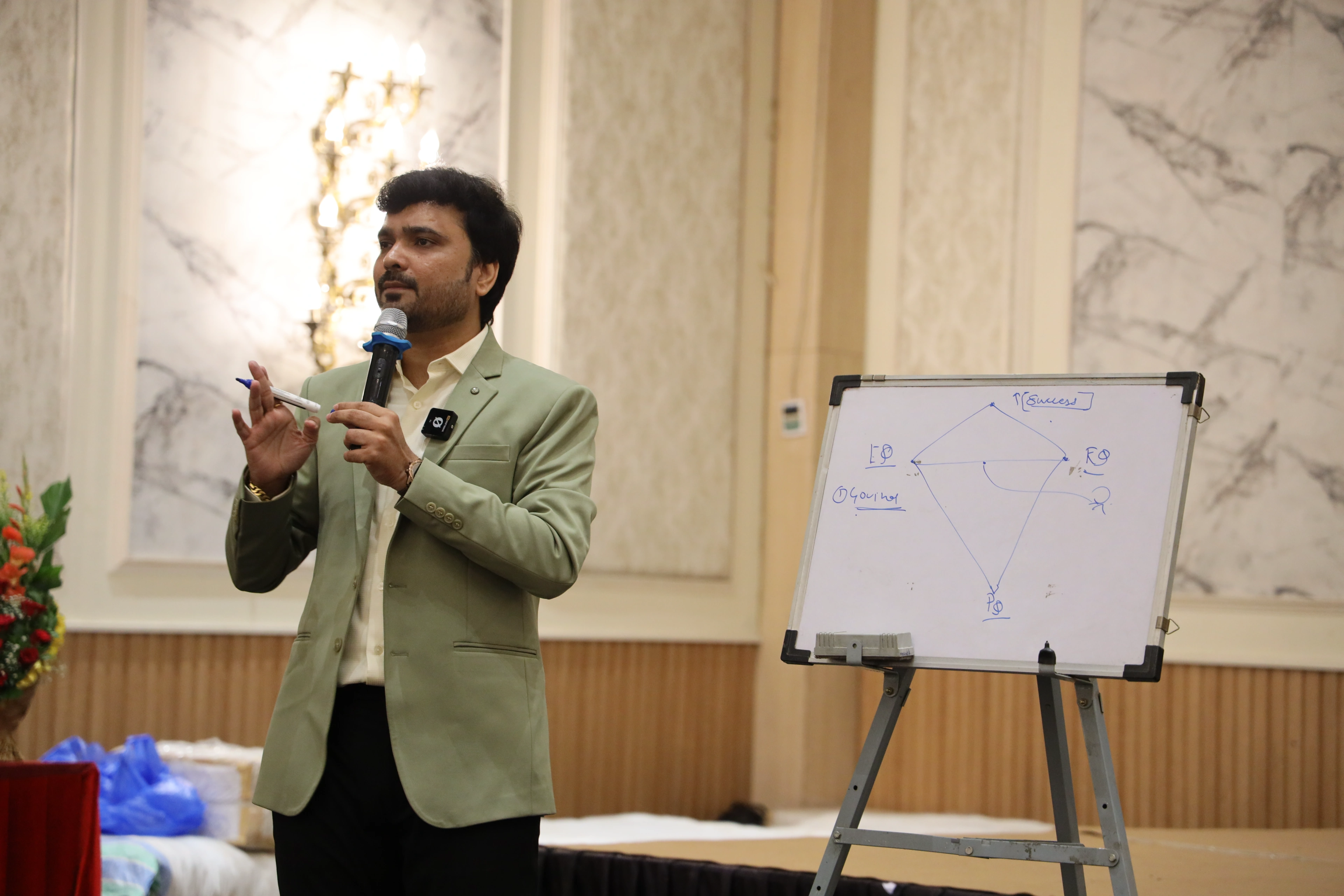
Consistency lives on the PQ — Productivity — side of your Winning Kite (KITE Leadership Framework), the bottom of the kite. EQ gives you self-awareness, RQ gives you relationships, but it's PQ that turns both into daily, repeatable output. A leader with high EQ and RQ but no consistency still under-delivers. This reading-challenge repair example is one of the sharpest tools in the PQ toolkit, because it doesn't just tell you to "be consistent" — it tells you exactly what to do the day you fail to be.
The chain, and why it breaks
I've written elsewhere about the origin of the "Don't Break the Chain" method — the story of a young comedian asking Jerry Seinfeld how to get better at comedy, and Seinfeld's advice to put a 365-day calendar on the wall and mark an X every day he wrote jokes, good or bad, for two hours. No chain stays unbroken forever. Life intervenes — a late flight, a sick child, a work crisis, plain exhaustion. The chain breaks. And here is where most people quietly stop.
Here's what actually happens inside us when a chain breaks. When we start something and sustain it for several days, our words start to carry weight — an assurance to ourselves that we will finish what we started. That assurance is what I call the Power of Integrity: the inner confidence that comes from your actions matching your word. The moment the chain breaks, that power weakens or disappears. And with it comes a very specific kind of anxiety — the anxiety of restarting. Not the anxiety of the task itself, but the anxiety of facing yourself again after having let yourself down.
Most people never restart, not because the task got harder, but because the shame of the gap became bigger than the task. This is exactly the trap the repair formula is designed to defeat.
The reading-challenge example, in full
Here is the exact example I use to make this repair rule concrete, because an abstract rule is useless until you can see it applied to a real calendar with real dates.
Say you take on a reading challenge running from December 25th to December 31st — seven days, committing to read for 30 minutes each day. You start strong. Day 1, Day 2, Day 3 — the chain is forming, and with each unbroken day, your Power of Integrity is quietly growing. You feel it: a small, private confidence that you are someone who does what they say they'll do.
Then real life happens. Maybe it's a family gathering, maybe it's a late night at work, maybe you're simply tired — and you miss a day. The chain breaks. Under the old, undecided approach, this is the moment most people give up: ‘I already broke it, what's the point of restarting now.’ The anxiety of the gap becomes bigger than the 30 minutes of reading ever was.
But because the repair rule was decided in advance, here is what actually happens instead. You restart the chain on January 2nd. You read your 30 minutes. Day 2, Day 3, Day 4 — the chain rebuilds. Then, by January 6th, when you mark what would ordinarily just be your fifth new day, you don't only mark that day — you also retroactively cover the missed day of January 1st. The gap is repaid. Five days of proof for one day of absence. The chain, in effect, has healed itself, and your word is whole again.
Notice what this formula does psychologically. It doesn't pretend the gap never happened — that would be dishonest, and it wouldn't rebuild trust in yourself. It also doesn't let the gap sit there unresolved, quietly eroding your confidence every time you look at the calendar. It converts the broken promise into a slightly harder, slightly longer commitment — five days instead of one — and once you've paid that price in effort, the ledger is genuinely clear. You are not ‘someone who failed a reading challenge.’ You are someone who broke a chain and repaired it, which, if you think about it, is actually a stronger proof of character than never breaking a chain at all.
If the gap is longer than one day — say you miss three days in a row — the same principle scales: you owe five extra chain-days of proof for each day missed. The formula is deliberately a little uncomfortable. That discomfort is the point. It sets a condition strong enough to jolt your Power of Integrity back awake, and it programs your mind with a permanent, reusable lesson: even if the chain breaks, it is not the end of the story — you have a way back, and the way back reclaims the power of your word.
Why the reading challenge is the right example for this
I use reading — not gym, not diet, not sales targets — deliberately here, because reading is the lowest-stakes habit most professionals attempt and abandon. There's no injury risk, no financial cost, no external accountability partner watching you. It is entirely a private contract with yourself. Which makes it the purest test case: if the repair formula works when nobody but you will ever know whether you kept it, it will work for anything with real stakes attached — a fitness goal, a sales pipeline, a daily leadership habit like checking in with your team.
Also notice the numbers are small and specific on purpose — 30 minutes, seven days, one missed day, five repair days. Vague commitments (‘I'll read more’) don't produce chains you can see. Precise commitments do. This is the same discipline I ask leaders to bring to every PQ habit: name the exact action, the exact duration, and the exact repair rule, before you start — not after you've already broken your word once.
Applying this at work
In my own office, this exact logic solved a stuck problem. My team wanted to post a blog or a YouTube short every day, but every planning session got stuck waiting for the ‘perfect’ video idea, and days would pass with nothing published. We eventually decided: prioritise quantity over polish, one piece of content daily, no exceptions for quality debates. That decision — combined with a pre-agreed repair rule for the days we inevitably missed — is what actually got the chain moving and kept it moving.
Try this with your own team. Pick one process goal tied to a larger outcome — not ‘grow the business’ but ‘make ten prospecting calls before 11 am,’ not ‘get fit’ but ‘walk 6,000 steps before lunch.’ Put it on a visible calendar. And before day one, decide your repair rule out loud, the same way I decided mine for the reading challenge: one missed day costs five days of proof. Say it to your manager, your spouse, your team — whoever will hold you to it. When the day comes that you break the chain — and it will come — you won't spiral into abandoning the goal. You'll already know exactly what to do next.
This single habit — deciding your repair formula before you need it — is one of the most practical PQ disciplines I train inside Signature Corporate Training Programs and inside our broader corporate training topics, because it removes the emotional decision-making from the moment you're most likely to make a bad one: right after you've failed.
| Situation | Old response | Chain-repair response |
|---|---|---|
| Missed 1 day of the reading challenge | Quietly abandon the challenge | Restart; cover the missed day on the 5th new day |
| Missed 3 days of a workout streak | Wait for "next Monday" to restart | Restart today; add 5 extra proof-days per missed day (15 total) |
| Missed a daily team check-in | Let the practice quietly fade | Resume immediately; name the gap and the repair openly to the team |
Consistency, like emotional intelligence and relationship-building on the other sides of the Winning Kite, is not about never failing. Daniel Goleman's research on self-regulation makes a similar point about emotional discipline: the goal was never a perfect, unbroken performance — it was a reliable way to return to the standard after a lapse. The reading-challenge repair formula gives you that reliable way back, in numbers you can actually count on a calendar.
Bring These Ideas to Your Team
Avinash Chate turns the traits in Stars at India Inc. into live leadership & emotional-intelligence workshops. TEDx speaker · 11+ yrs training Army, BRO, RBI, BARC, JSW & 1000+ leaders.
✅ Thanks! Avinash team will reach out within 24 hours.'}).catch(function(e){f.outerHTML='Something went wrong. WhatsApp +91 8793630001
'});return false;">Select ServiceKeynote / Motivational SpeakingLeadership Development TrainingTeam Building WorkshopManager DevelopmentEmployee TrainingBook Avinash Now →Or WhatsApp directly: +91 87936 30001
Work with Avinash Chate
- Signature Corporate Training Programs →
- The Winning Kite (KITE Leadership Framework) →
- All Corporate Training Topics →
Avinash Chate TEDx Speaker · Founder, The Future Corporate · Author of Stars at India Inc. Avinash has trained the Indian Army, BRO, RBI, BARC, JSW Steel and 1000+ corporate leaders across India. His work focuses on leadership, emotional intelligence and behavioural training rooted in Indian values and modern business needs. |
Frequently Asked Questions
What is the 'Don't Break the Chain' technique?
It is a consistency method where you mark an X on a calendar every day you complete a small committed action, building a visible chain of days. The comedian Jerry Seinfeld used it to write jokes daily; over time the chain itself becomes the motivation to keep going.
What should I do if I break my daily habit chain?
Decide the repair rule before you ever break a chain. For a one-day gap, restart the chain and on the fifth new day, also mark the missed day as covered. For a gap of more than one day, add five extra chain-days for every missed day to fully repay it.
What is the 'Power of Integrity' in this context?
It is the inner confidence you build when your actions match your word, day after day. When a chain breaks, that confidence weakens and restarting feels harder. A pre-decided repair formula restores the Power of Integrity instead of letting one missed day become permanent quitting.
Where does consistency fit on the Winning Kite framework?
Consistency sits on the PQ (Productivity Quotient) side of the Winning Kite — the bottom of the kite that supplies the daily discipline and follow-through that turns EQ and RQ strengths into visible, sustained Success.
Related Articles by Avinash Chate
- How to Identify Non-Performing Employees: 4 Types to Know
- The Wheel of Change: A Framework for Personal Reinvention
- IT Engineer Switching CCNA to Data Science to Hacking: Why Creating Without a Plan Fails
Avinash Chate services
Corporate Training · Leadership Development · Team Building · Motivational Speaking · All service locations
← Back to all articles · Book Avinash Chate
By Avinash Chate — Maharashtra’s #1 Corporate Trainer & Motivational Speaker. .