IT Engineer Switching CCNA to Data Science to Hacking: Why Creating Without a Plan Fails
An IT engineer's jump from CCNA to data science to ethical hacking looked like ambition. It was actually the Creating quadrant of the Wheel of Change without discipline — and it's a trap I see in almost every corporate training room.
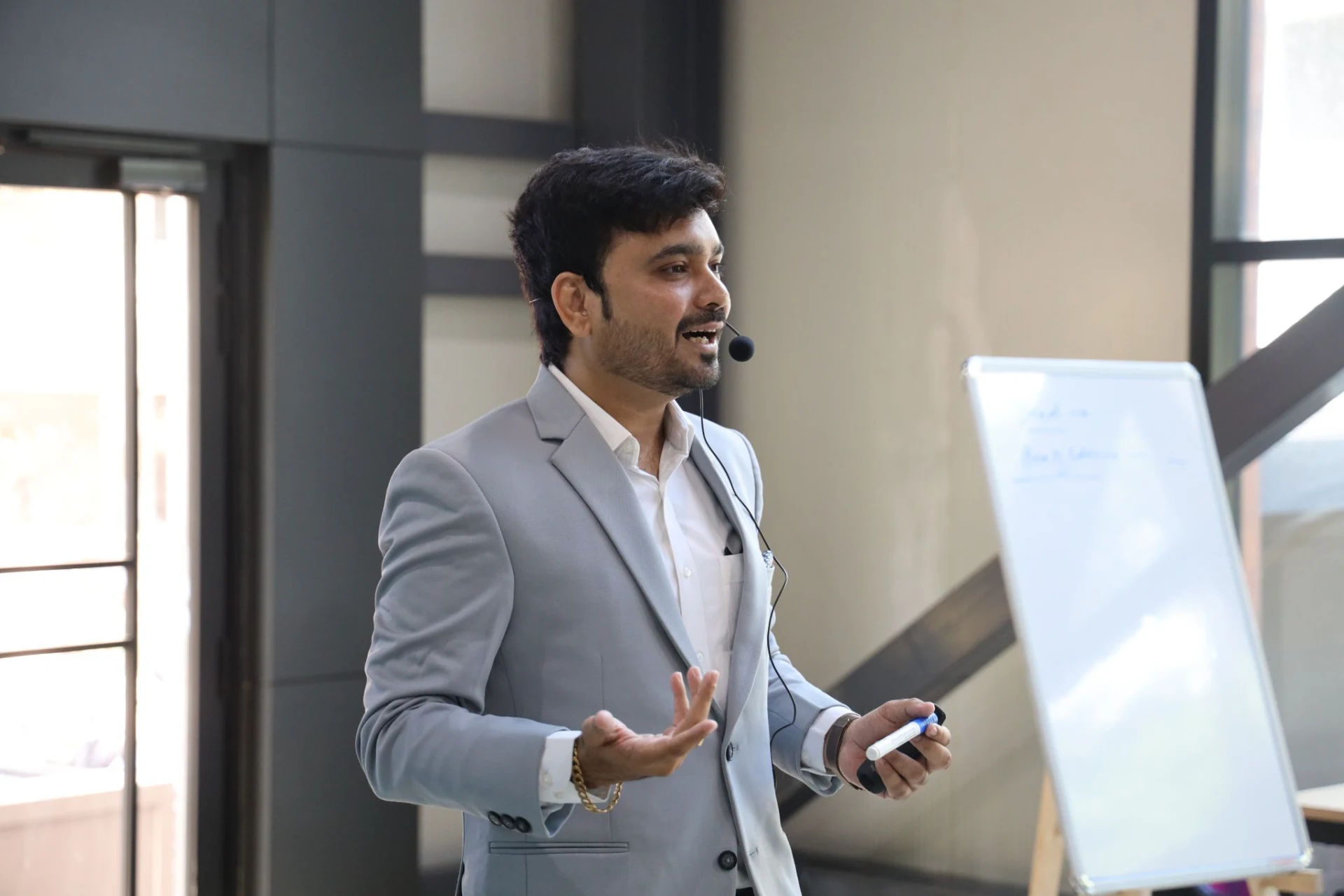
I've sat across the table from this person more times than I can count — bright, capable, and completely scattered. This time it was a young IT engineer who started a CCNA certification, dropped it for data science because a friend was excited about it, and then abandoned data science too, calling it dull, in favour of an ethical hacking course. A year later, he had three half-finished skills and zero certifications. This is the story I use to teach the Creating quadrant of the Wheel of Change, and it is one of the most common productivity traps in Indian IT careers today.
In short- An IT engineer switched from CCNA to data science to ethical hacking — chasing excitement, not a plan — and ended a year with nothing certified.
- The Wheel of Change (Marshall Goldsmith) has four quadrants: Creating, Preserving, Eliminating, Accepting — and this story is a textbook failure of Creating.
- Creating only works when it is a conscious, goal-aligned choice — like a bowler deliberately adding a slower ball, not switching bowling styles every match.
- The fix is not more discipline in general — it's tying every new skill to one defined career outcome before you start.
- This sits on the PQ (Productivity) side of the Winning Kite (KITE Leadership Framework) — the quadrant that keeps ambition grounded.
Where this sits on your Winning Kite
The Wheel of Change is Technique #2 in the Productivity chapter of Stars at India Inc., which means it lives on the PQ — bottom — side of the Winning Kite (KITE Leadership Framework). EQ gives you self-awareness, RQ gives you the relationships that open doors, but PQ is what converts intention into output. A kite with weak PQ still has good instincts and good people around it — it just never gets off the ground, because every gust of new interest pulls the string in a different direction. That is precisely what happened to this IT engineer.
The Engineer Who Kept Starting Over
He came to one of my corporate sessions somewhere in the middle of his CCNA prep. Cisco's networking certification is not a weekend course — it demands months of structured study, hands-on lab practice, and a fair amount of patience with subnetting tables that make your eyes cross. He was three months in, moving at a reasonable pace, when a friend messaged him about data science — the salaries, the demand, the AI boom everyone was talking about.
That was enough. He put CCNA aside "for now" and started data science from scratch. New books, new online courses, a new identity as a "data science aspirant." For a while it felt exciting — the way anything new does in the first few weeks. But data science has its own grind: statistics, Python fundamentals, endless practice datasets that don't feel like they're going anywhere. A few months in, the sheen wore off. He decided data science was "dull," and pivoted again — this time to ethical hacking, drawn by the thrill of the subject and, if I'm honest, probably another friend's excitement or a viral video.
By the time I met him, more than a year had passed. He had touched three serious, career-defining skill tracks. He held zero certifications. He couldn't speak with depth about any of the three — just enough surface knowledge to sound informed in a conversation, not enough to put on a resume with confidence. And worse, his own belief in his ability to finish anything had quietly eroded.
The Wheel of Change: Four Quadrants, One Missing Piece
The Wheel of Change was developed by renowned executive coach Marshall Goldsmith, and I teach it because it does something most self-improvement advice doesn't — it forces you to first identify what kind of change you're attempting before you attempt it. The wheel works on two axes: positive to negative, and change to keep. Together they create four quadrants.
1. Creating
This quadrant is about introducing positive changes into your behaviour or routine — reinventing yourself or discovering a new side of you. Joining a gym, trying a new diet, enrolling in a certification course — these are all acts of Creating. In your professional life, Creating might mean improving your presentation skills or picking up a tool that makes your work sharper. Think of a cricketer developing a new delivery — off-spinner Harbhajan Singh crafting his famous "doosra," or a fast bowler adding a slower ball to his arsenal. Each new skill reinvents the player and helps them stand out.
But here is the catch, and it is exactly where our IT engineer went wrong: Creating must be a conscious choice that aligns with your overall goals. It cannot be reactive. An IT engineer preparing for a CCNA certification who gets distracted by a friend's excitement over data science, switches subjects, and then decides data science is dull before pivoting to ethical hacking — that is not Creating. That is drifting. Creating that isn't steady and purposeful will not yield results, no matter how much energy goes into each individual switch.
2. Preserving
This quadrant is about maintaining the positive aspects of your behaviour that are already working. It can feel unglamorous — a morning ritual of pranayama or journaling, a sales team's habit of giving customers personal attention, a fast bowler like Glenn McGrath sticking relentlessly to his consistent line and length. Even Bill Gates, who reads roughly fifty books a year, shows that preserving a hunger for learning is what keeps you at the top over decades, not any single dramatic leap.
3. Eliminating
This is about removing negative habits that hold you back — even habits that once served you. A manager who micromanaged their way to early success but now stifles their team's growth needs to eliminate that instinct. A sales head clinging to an outdated reporting format after the company expands into new regions, or a project manager still using pen and paper instead of a modern ERP system — these are habits that must go, even though they once worked.
4. Accepting
The hardest quadrant. Acceptance means making peace with the parts of yourself you cannot change immediately. When a boss gives mixed feedback, we tend to cling to the praise and ignore the criticism. In business, leaders often refuse to accept poor financial results, preferring to imagine better performance ahead rather than confront what the numbers are actually saying. As Stephen Covey advised, work within your circle of influence — accept what you cannot change while acting decisively on what you can. Acceptance is not surrender; it is clarity that makes real improvement possible.
Why This IT Engineer's Creating Failed
Go back to the story. Every single switch he made was, in isolation, a reasonable act of Creating. CCNA is a legitimate, high-value certification. Data science is one of the most in-demand skills in the country. Ethical hacking is a genuinely exciting, well-paying specialisation. There was nothing wrong with any of his three choices on their own merits.
The failure was in the sequence and the trigger. He never asked himself: what career outcome am I building toward? Is this switch driven by my own five-year plan, or by someone else's enthusiasm bumping into my Monday-morning boredom? Creating, like a business strategy, should not be changed too frequently — change it too often and it becomes ineffective, no matter how sound each individual version of the strategy was.
This is where I always bring in the case of the England cricket team, which I also cover in this chapter. After a crushing 2013–14 Ashes defeat to Australia, coach Peter Moores identified four areas for improvement — mindset, environment, culture, performance — and applied all four Wheel of Change quadrants deliberately. In the Creating quadrant specifically, the team didn't randomly try new things; they introduced positive-thinking and visualisation practices in service of one clearly defined goal: winning back the Ashes. They did — in 2015. The difference between England's Creating and our engineer's Creating wasn't energy or ambition. It was purpose.
How to Apply This at Work Starting Monday
If you recognise yourself in this story — and in my training rooms across IT, banking, and manufacturing floors, a large number of people do — here is what I ask them to do before they touch another course platform:
- Write the outcome first, not the skill. Not "I want to learn data science" but "I want to move into an analytics role within eighteen months." The skill is just the vehicle.
- Give every new Creating commitment a minimum runway. Ninety days, non-negotiable, before you're allowed to even consider switching. Most excitement about a "new shiny skill" fades within three weeks if you just wait it out.
- Separate curiosity from commitment. It's fine to explore data science on YouTube for a weekend. It is not fine to abandon a paid CCNA course three months in because of that weekend. Curiosity is cheap; commitment has a cost, and switching pays that cost twice.
- Run your own Wheel of Change audit quarterly. Rate your career, health, relationships, and personal growth from 1–10, and be honest about which quadrant each area actually needs — are you meant to be Creating here, or simply Preserving what's already working?
I train teams on this exact discipline in our Signature Corporate Training Programs, because unfinished skills are one of the quietest productivity leaks in Indian corporate careers — quiet because nobody puts "started and abandoned three certifications" on their appraisal form, but everybody's manager notices the pattern eventually.
The Larger Lesson
Daniel Goleman's research on emotional intelligence often gets cited for self-awareness, but there's a productivity parallel worth borrowing here: knowing yourself well enough to tell the difference between genuine ambition and borrowed excitement is itself a form of intelligence. The IT engineer in this story wasn't lazy. He wasn't unintelligent. He was simply Creating without anchoring it — and the Wheel of Change exists precisely to catch that gap before a year disappears into it.
The Wheel of Change is not about overhauling your life overnight. It's about knowing, quadrant by quadrant, whether you should be Creating something new, Preserving something that already works, Eliminating something that no longer serves you, or Accepting something you cannot change today. Get that classification right, and even modest, steady effort compounds into real skill. Get it wrong — the way our IT engineer did — and ambition itself becomes the obstacle.
If you want to go deeper into how Productivity, Emotional Intelligence, and Relationship Intelligence work together to hold up real career success, explore the full Winning Kite (KITE Leadership Framework), or browse our corporate training topics for the workshop format that fits your team.
Bring These Ideas to Your Team
Avinash Chate turns the traits in Stars at India Inc. into live leadership & emotional-intelligence workshops. TEDx speaker · 11+ yrs training Army, BRO, RBI, BARC, JSW & 1000+ leaders.
✅ Thanks! Avinash team will reach out within 24 hours.'}).catch(function(e){f.outerHTML='Something went wrong. WhatsApp +91 8793630001
'});return false;">Select ServiceKeynote / Motivational SpeakingLeadership Development TrainingTeam Building WorkshopManager DevelopmentEmployee TrainingBook Avinash Now →Or WhatsApp directly: +91 87936 30001
Work with Avinash Chate
- Signature Corporate Training Programs →
- The Winning Kite (KITE Leadership Framework) →
- All Corporate Training Topics →
Avinash Chate TEDx Speaker · Founder, The Future Corporate · Author of Stars at India Inc. Avinash has trained the Indian Army, BRO, RBI, BARC, JSW Steel and 1000+ corporate leaders across India. His work focuses on leadership, emotional intelligence and behavioural training rooted in Indian values and modern business needs. |
Frequently Asked Questions
What is the Wheel of Change in Stars at India Inc.?
The Wheel of Change is a self-improvement tool developed by executive coach Marshall Goldsmith, which Avinash Chate teaches as Technique #2 under the Productivity (PQ) side of the Winning Kite. It divides behaviour change into four quadrants — Creating, Preserving, Eliminating, and Accepting — so you know exactly what kind of change you are attempting before you attempt it.
What happened to the IT engineer who kept switching skills?
An IT engineer began preparing for a CCNA networking certification, then got distracted by a friend's enthusiasm for data science and abandoned CCNA halfway. After some months, he decided data science was "dull" and switched again to an ethical hacking course. Each switch felt like progress, but because none of the switches were tied to a clear, purposeful goal, he ended up with three half-finished skills and no certification to show for over a year of effort.
Why does Creating fail without a clear purpose?
Creating is meant to be a conscious, goal-aligned choice — like a cricketer deliberately adding a new delivery to their repertoire. When Creating is driven by borrowed excitement (a friend's enthusiasm, a trending skill, a LinkedIn post) rather than your own career plan, you switch the moment novelty fades. The Wheel of Change fails not because the quadrant is wrong, but because the person never anchored the choice to a defined outcome.
How does the Wheel of Change connect to the Winning Kite framework?
The Wheel of Change sits on the PQ — Productivity — side of the Winning Kite (KITE Leadership Framework), the bottom corner that keeps you grounded while EQ and RQ give you lift. A kite with a strong PQ string but no direction still crashes — which is exactly what happens when Creating isn't tied to a plan.
Related Articles by Avinash Chate
- Corporate Motivational Speaker for Aurangabad-Headquartered MNCs — How Endurance and Varroc Build Global Leaders from Marathwada
- The Vertical Edge: How Decathlon Built a ₹1.5 Lakh Crore Empire
- Dhoni & Joginder Sharma – 2007 T20 World Cup Final
Avinash Chate services
Corporate Trainer in Chhatrapati Sambhajinagar (Aurangabad) · Top Corporate Trainers in Maharashtra · Leadership Trainer in Chhatrapati Sambhajinagar (Aurangabad) · Top Leadership Trainers in Maharashtra · Team Building Trainer in Chhatrapati Sambhajinagar (Aurangabad) · Top Team Building Trainers in Maharashtra · Motivational Speaker in Chhatrapati Sambhajinagar (Aurangabad) · Top Motivational Speakers in Maharashtra · All service locations
← Back to all articles · Book Avinash Chate
By Avinash Chate — Maharashtra’s #1 Corporate Trainer & Motivational Speaker. .