Gambhir vs Rayudu – IPL 2017
In IPL 2017, two seasoned professionals nearly came to blows over a few insulting words. I use this incident in every Self-Control workshop to show how emotional hijacking can undo years of discipline in seconds — and how to stop it happening to you.
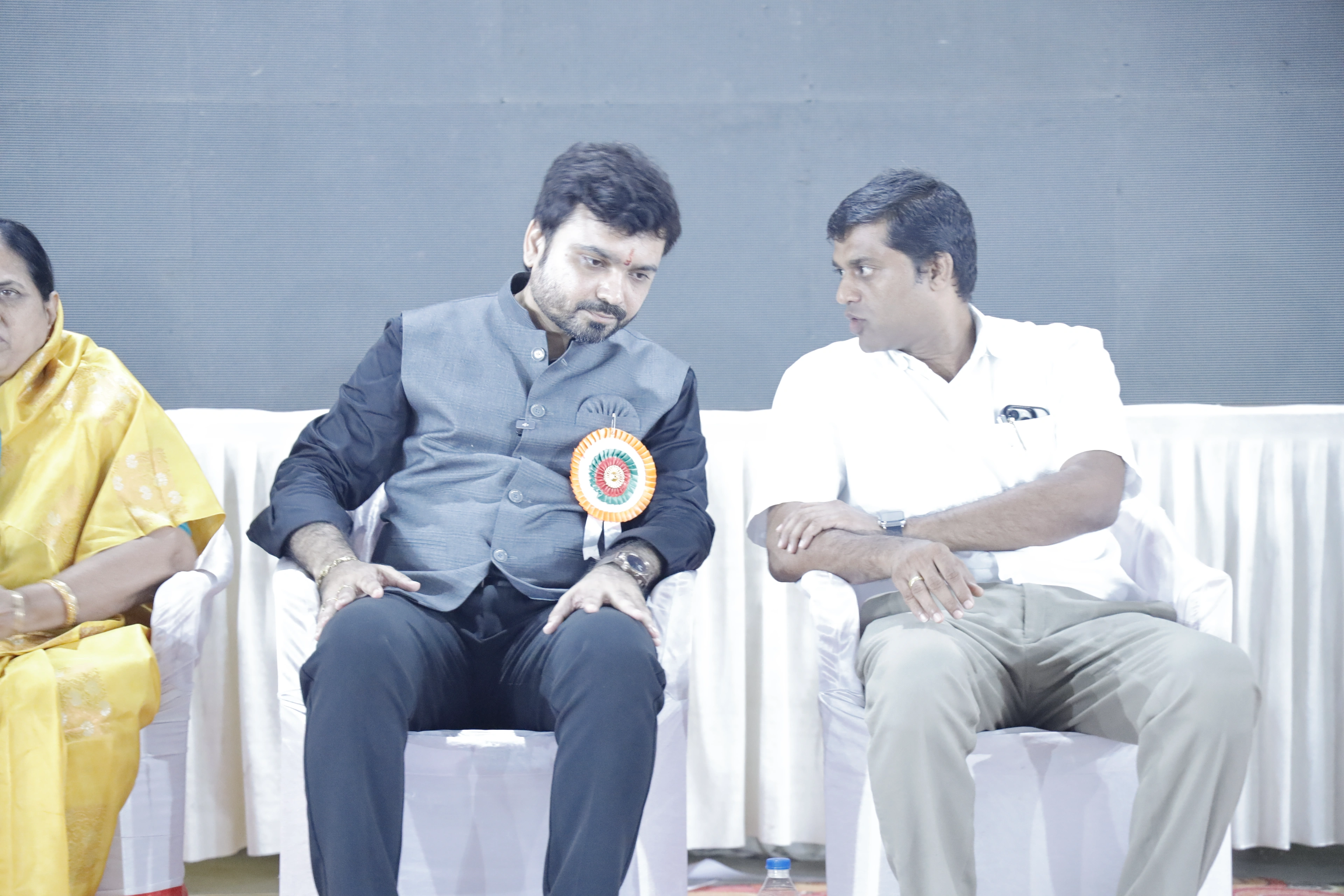
On a floodlit evening in the 2017 IPL, two of Indian cricket's most experienced professionals very nearly threw away their careers over a sentence. Gautam Gambhir, a World Cup winner and a captain known for his fierce competitiveness, and Ambati Rayudu, a seasoned middle-order batsman, went from a cricket match to a shoving match in front of millions of live viewers — all because, for a few seconds, neither of them could control what they felt.
In short- In IPL 2017, KKR captain Gautam Gambhir and MI's Ambati Rayudu clashed on-field after Rayudu allegedly insulted Gambhir's family — Gambhir pushed him, and officials had to step in.
- Both players were fined. Two respected professionals lost control in front of the whole cricketing world, over words, not wickets.
- This is a textbook case of emotional hijacking — the amygdala (heavyweight boxer) overpowering the prefrontal cortex (featherweight boxer).
- Self-control is Trait #4 on the EQ side of the Winning Kite — the discipline to pause between provocation and reaction.
- The same hijack happens at work: in appraisal meetings, heated emails, and tense deadlines — the fix is the same pause, every time.
Where this sits on your Winning Kite
Self-control is the fourth trait on the EQ — the left side — of the Winning Kite (KITE Leadership Framework). EQ combines with RQ (Relationship Intelligence) and PQ (Productivity) to lift you toward Success at the top of the kite. You can have brilliant talent, sharp strategy, and strong relationships — but one uncontrolled moment on the EQ side can rip a hole straight through the kite. Gambhir and Rayudu are proof that this applies even to people who have spent decades under pressure.
What Actually Happened on the Field
It was a 2017 IPL match between Kolkata Knight Riders (KKR) and Mumbai Indians (MI) — two of the league's most storied franchises. Gambhir, KKR's captain and a man who had famously anchored India's 2011 World Cup final chase and 2007 T20 World Cup final win, was known as one of the most combative, no-nonsense leaders in Indian cricket. Rayudu, a talented and equally competitive MI batsman, was very much his match in temperament.
Somewhere in the middle of play, words started flying between them. Sledging in cricket is common — it's part of the game's psychological chess. But this crossed a line. Rayudu reportedly said something insulting about Gambhir's family. That is the one category of comment that, across cultures and professions, reliably detonates self-control faster than almost anything else — because it stops being about the game and starts being personal.
Gambhir's reaction was instant. He lost his cool completely, closed the distance, and pushed Rayudu. For a few tense seconds, it looked like it would turn into an actual brawl — two grown men, national-level athletes, squaring up on live television with fielders, umpires, and teammates rushing in to physically separate them. Officials intervened before it went further. Both players were fined afterward by the match referee.
Think about what was on the line. Sponsorship reputations. Team standing. Personal brand. Years of disciplined training. None of it factored into that decision in the moment — because in the moment, there was no decision-making happening at all. There was only reaction.
The Science: Two Boxers Inside Your Brain
I explain this to every audience I train, because it's the single most useful mental model for understanding moments like Gambhir vs Rayudu — or your own worst moment at work.
Inside your brain, picture two boxers in a ring.
The Heavyweight Boxer — your emotional brain, the amygdala. It's fast, powerful, and reactive. The instant it senses a threat — real or perceived, physical or to your dignity — it floods your body with stress hormones like adrenaline and cortisol. Your heart races. Your muscles tense. Your rational thinking shuts down.
The Featherweight Boxer — your rational brain, the prefrontal cortex. It's slower, more thoughtful, logical. It's the part that helps you weigh consequences, make good decisions, and hold back impulses.
Here's the problem: the heavyweight can knock out the featherweight any time it wants. Under extreme stress, anger, fear, or humiliation, the emotional brain takes over completely. It grabs the rational brain by the throat and says, "I'm in charge now." Psychologists call this emotional hijacking — like a hijacker seizing the cockpit of a plane. Your emotions are flying the plane, and logic has been thrown out.
This is exactly what happened to Rayudu when he made that remark, and to Gambhir when he heard it. It's also what happened to Zinedine Zidane in the 2006 FIFA World Cup final when he head-butted Marco Materazzi in the last match of his career and got sent off — a single lapse in self-control that overshadowed a legendary career. It's what happened to Mike Tyson in his infamous 1997 "Bite Fight" against Evander Holyfield, when months of preparation were undone in a single bite. Gambhir and Rayudu belong on that same list: skilled, seasoned professionals, hijacked by their own amygdala in front of the world.
Why This Isn't Just a Cricket Story
The instinct is to file this under "sports drama" and move on. Don't. The mechanism that hijacked Gambhir on the pitch is the exact same mechanism that hijacks you in a Monday morning review meeting.
I've seen it repeatedly in the corporate rooms I train in. Praful had been working late nights for weeks, exhausted and stretched thin. When his boss sent constructive feedback on a project, Praful — already running on empty — read it as an attack. Without thinking, he fired off a harsh, defensive email. The moment he hit send, he regretted it. But it was too late. His relationship with his manager took a hit that outlasted the memory of the actual mistake.
Or take Sandesh, who had been quietly unhappy at his job for months. After one particularly tough meeting, something snapped. He walked into his manager's office and resigned on the spot — no plan, no notice period thought through, no conversation with anyone who could have talked him through it. Reality hit later: bills to pay, a family depending on that income. He had acted out of emotion, not logic, and by then the damage was done.
Neither Praful nor Sandesh is a bad employee. They are what every one of us becomes the moment the heavyweight boxer takes the ring: someone acting on impulse instead of judgment.
When Self-Control Is Actually Tested
Self-control isn't tested when everything is calm. It's tested in five specific situations, and if you're honest, you'll recognise all five from your own working life:
- After repeated failures — you've tried closing a deal three times and failed each time; on the fourth attempt, a small glitch triggers outsized frustration.
- When you're criticised publicly — your manager points out a flaw in your work in front of the team; your face flushes, your heart pounds.
- Under a tight deadline — a colleague's mistake costs you hours you don't have, and you're exhausted enough to want to yell.
- Facing a difficult client — someone rude and unreasonable blames you for something that isn't your fault.
- When you're tempted to quit — a project feels impossible and walking away feels like the only relief.
These are the moments that separate star performers from average ones. Self-control is the difference between reacting and responding.
What Self-Control Is Not
A common misunderstanding — one I correct in almost every workshop — is that self-control means suppressing emotion, pretending you don't feel anger or hurt. That's not it, and it isn't sustainable either.
Think of it like driving a car: you have both a brake and an accelerator, and you know when to use each. Even under real pressure — money stress, workplace conflict, a personal insult like the one Gambhir absorbed — a person with self-control can pause, feel the emotion fully, and still prevent it from dictating their next action. It's regulation, not repression. Daniel Goleman's work on emotional intelligence describes this same idea: managing your internal states so they serve you instead of running you. Avinash's own framing keeps it simpler and more usable for the shop floor and the boardroom alike — brake and accelerator, not silence and suppression.
The Other Side: Professionals Who Mastered It
For every Gambhir-Rayudu moment, Indian sport also gives us the opposite proof, and it's worth holding both in your head at once.
Rahul Dravid — "The Wall." He earned that nickname as much for his emotional composure as his batting technique. Facing the fastest, most hostile bowling attacks in the world, and plenty of on-field needling, Dravid rarely let anything crack his calm.
MS Dhoni — "Captain Cool." In the 2011 World Cup final, chasing under enormous pressure, Dhoni promoted himself up the order and played one of the most composed, unhurried innings in the tournament's history, finishing the game with a six. Where others might have panicked, he stayed level.
Cheteshwar Pujara. During India's historic 2020–21 Test series win in Australia, after the humiliation of being bowled out for 36 at Adelaide, Pujara absorbed blow after blow from Australian fast bowlers in the Brisbane Test. He refused even painkillers, worried they'd dull his focus. Bruised, in visible pain, he simply stayed — never losing his temper, never rushing a shot out of frustration. His self-control was a direct contributor to India winning that series 2-1.
Building Self-Control at Work: The Practical Version
Developing self-control starts with emotional awareness — noticing what's happening inside you before it takes the wheel. A few habits I train professionals on directly:
- Name it before you act on it. Silently label the emotion — "I'm angry," "I feel humiliated" — the instant you notice it. Naming an emotion measurably reduces its grip on your prefrontal cortex.
- Use the pause, deliberately. Before replying to the email, the comment, the provocation — count ten seconds, take a breath, or physically step away. This is the exact gap Gambhir didn't take.
- Separate the provocation from the person's history with you. Rayudu's remark was personal, but the reaction still had a choice point in it — a fraction of a second where a different response was possible.
- Rehearse your predictable triggers. If public criticism is your known weak spot, decide in advance how you'll respond to it, before you're in the room.
- Talk to someone after, not during. Praful and Sandesh both would have made different choices with thirty seconds of outside perspective before acting.
None of this is about becoming passive or emotionless. It's about making sure your featherweight boxer — the rational brain — stays in the ring long enough to land a punch of its own.
Bringing It Back to the Winning Kite
Gambhir and Rayudu didn't lack skill, experience, or professionalism in any general sense. What failed, for a few seconds, was one specific trait on the EQ side of their Winning Kite: self-control. And because EQ, RQ, and PQ all have to hold together for the kite to fly, a single tear on one side is enough to send the whole thing spinning to the ground — a fine, a viral clip, a reputation dent that outlived the match itself.
The same physics apply to you at your desk. You can have strong productivity (PQ) and excellent relationships (RQ), but one hijacked email, one shouted word in a review meeting, and the kite comes down. Self-control is what keeps it airborne when the wind turns hostile. If you want to go deeper into where this trait sits alongside the other 24 in the framework, explore the full Winning Kite / KITE Leadership Framework, and see how we build it into Signature Corporate Training Programs and the wider corporate training topics we run for teams across India.
Bring These Ideas to Your Team
Avinash Chate turns the traits in Stars at India Inc. into live leadership & emotional-intelligence workshops. TEDx speaker · 11+ yrs training Army, BRO, RBI, BARC, JSW & 1000+ leaders.
✅ Thanks! Avinash team will reach out within 24 hours.'}).catch(function(e){f.outerHTML='Something went wrong. WhatsApp +91 8793630001
'});return false;">Select ServiceKeynote / Motivational SpeakingLeadership Development TrainingTeam Building WorkshopManager DevelopmentEmployee TrainingBook Avinash Now →Or WhatsApp directly: +91 87936 30001
Work with Avinash Chate
- Signature Corporate Training Programs →
- The Winning Kite (KITE Leadership Framework) →
- All Corporate Training Topics →
Avinash Chate TEDx Speaker · Founder, The Future Corporate · Author of Stars at India Inc. Avinash has trained the Indian Army, BRO, RBI, BARC, JSW Steel and 1000+ corporate leaders across India. His work focuses on leadership, emotional intelligence and behavioural training rooted in Indian values and modern business needs. |
Frequently Asked Questions
What happened between Gambhir and Rayudu in IPL 2017?
During a 2017 IPL match between Kolkata Knight Riders and Mumbai Indians, KKR captain Gautam Gambhir and MI batsman Ambati Rayudu exchanged heated words on the field. Rayudu reportedly made an insulting remark about Gambhir's family. Gambhir lost his composure, pushed Rayudu, and the two nearly came to blows before umpires and teammates intervened. Both players were fined by the match officials afterward.
What is emotional hijacking?
Emotional hijacking is when your amygdala (the brain's fast, reactive emotional centre) overpowers your prefrontal cortex (the slower, rational decision-making centre) during intense stress, anger, or humiliation. It floods your body with adrenaline and cortisol, shutting down clear thinking and pushing you into impulsive action you later regret — as happened to both Gambhir and Rayudu in that moment.
How does self-control fit into the Winning Kite framework?
Self-control is Trait #4 on the EQ (Emotional Intelligence) side — the left side — of the Winning Kite leadership framework. EQ combines with RQ (Relationship Intelligence) and PQ (Productivity) to lift you toward Success, the top of the kite. Without self-control, even highly skilled, high-EQ-in-other-ways professionals can crash in a single impulsive moment.
How can working professionals build self-control like Dravid or Dhoni?
Self-control starts with emotional awareness — noticing your triggers before they take over. Practically: pause before reacting (the 10-second rule), name the emotion out loud or in your head, separate the person from the provocation, and rehearse your response to predictable stressors in advance. Avinash Chate's corporate workshops build this through real Indian workplace scenarios, not just theory.
Related Articles by Avinash Chate
- Top Indian management institute leadership study
- MS Dhoni & Chennai Super Kings: The Art of Developing Others
- Mumbai Sales Manager in Chennai: A Lesson in Political Awareness
Avinash Chate services
Corporate Trainer in Chennai · Top Corporate Trainers in India · Leadership Trainer in Chennai · Top Leadership Trainers in India · Team Building Trainer in Chennai · Top Team Building Trainers in India · Motivational Speaker in Chennai · Top Motivational Speakers in India · All service locations
← Back to all articles · Book Avinash Chate
By Avinash Chate — Maharashtra’s #1 Corporate Trainer & Motivational Speaker. .