Howard Gardner's 5 Minds Every Indian Professional Must Build for 2030
Howard Gardner identified five minds every professional needs by 2030. As Avinash Chate explains, mastering all five is how Indian managers and leaders gain an unbeatable edge.
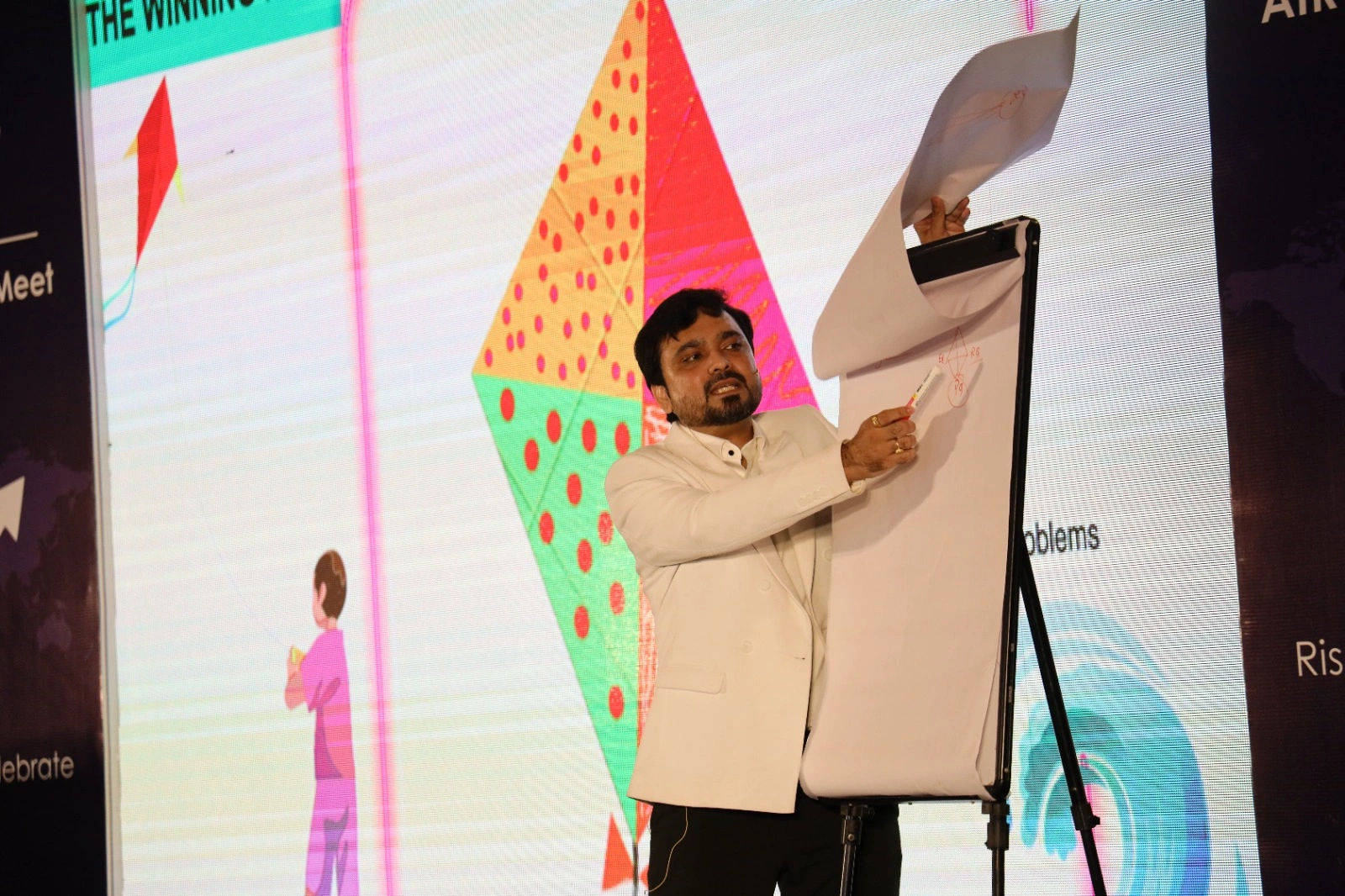
A few years ago I was facilitating a leadership workshop for a mid-sized manufacturing company in Pune. One of the senior managers leaned across the table and asked me something I have not forgotten since: "Avinash sir, in ten years, what will separate the managers who thrive from the ones who just survive?" That question is the reason I dedicated an entire section of my book The Winning Edge, The Champion Mindset to the work of Harvard cognitive psychologist Howard Gardner.
Gardner, the author of Five Minds for the Future (2006), argues that the knowledge economy will ruthlessly reward professionals who cultivate not one but five distinct ways of thinking. When I first encountered his framework, I immediately recognised it as a blueprint for exactly the kind of champions I try to build in every workshop I run across Maharashtra. India is at a unique inflection point in 2026 and the professionals who reach 2030 with all five minds sharpened will be the ones leading teams, building companies and shaping industries.
Let me walk you through each of the five minds, what they mean for your career right now, and the practical steps I teach in my corporate training sessions to help you develop them.
Why Gardner's Framework Matters More Than Ever for Indian Professionals
India is adding millions of graduates to the workforce every year. Automation is replacing routine cognitive tasks. Generative AI is handling basic content and data work. In this environment, the old formula of "study hard, get a degree, do the same job for thirty years" is simply broken.
What Gardner foresaw in 2006 has arrived ahead of schedule. The professionals who will lead India's next chapter are not just technically skilled. They are people who think across disciplines, generate new ideas, respect differences, and act ethically even when no one is watching. These are not soft skills. They are survival skills.
"The most dangerous professional is the one who is brilliant in one domain and blind to everything else. True champions integrate multiple ways of knowing." — from The Winning Edge, The Champion Mindset
In my workshops I see the same pattern repeatedly: the manager who only knows finance, or only knows operations, or only knows sales, eventually hits a ceiling. The ones who rise are the ones who have quietly been building all five minds in parallel.
A leadership development session where I introduce the Five Minds framework to senior managers and team leads.Mind 1: The Disciplined Mind — Master Your Craft First
The Disciplined Mind is the foundation of everything else. Gardner defines it as sustained, focused mastery of at least one discipline or craft over a period of years. Without this foundation, the other four minds have nothing to stand on.
What discipline really means
Discipline here does not mean working long hours. It means deliberately going deeper into your field until you understand its core principles, its patterns, and its limits. A sales professional with a Disciplined Mind does not just know how to pitch; she understands buyer psychology, market dynamics and negotiation theory at a level that most peers never reach.
- Commit to 10,000 hours of deliberate practice in your primary domain, not just repetition but reflection and refinement.
- Seek feedback from people who are better than you, not just confirmation from peers.
- Read deeply in your field: journals, case studies, biographies of masters in your domain.
- Teach what you know. Teaching is the fastest way to discover gaps in your own mastery.
The Indian professional's trap
In our culture, we celebrate the generalist who knows a little of everything. While breadth is valuable (more on that in Mind 2), breadth without depth is just noise. I consistently tell participants in my corporate training programs: before you try to synthesise across disciplines, become truly excellent in at least one. Your Disciplined Mind is your right to be at the table.
Mind 2: The Synthesising Mind — Connect the Dots Others Cannot See
Once you have built disciplinary depth, the Synthesising Mind is what lets you look across domains and find connections that produce breakthroughs. In Chapter 1 of my book I reference the famous example of Steve Jobs, who took a calligraphy course at Reed College that had no obvious relevance to technology. Years later that calligraphy course shaped the beautiful typography of the Macintosh. That is synthesis at its most powerful.
Why synthesis creates leaders
A manager with a Synthesising Mind can take a supply-chain problem and solve it using principles from behavioural economics. A salesperson with this mind can use storytelling techniques borrowed from literature to make a product pitch unforgettable. A founder with this mind can spot a market gap by combining insights from technology, anthropology, and logistics.
"The breakthroughs in your career will rarely come from going deeper into what you already know. They will come from the unexpected collision of two disciplines." — from The Winning Edge, The Champion Mindset
Building your Synthesising Mind
- Read one book per month outside your professional domain: history, philosophy, biology, design, psychology.
- Attend conferences and talks in adjacent fields, not just your industry events.
- Practice the habit of asking: "What does this remind me of in another domain?"
- Keep a synthesis journal where you record cross-domain connections you notice during the week.
- Build relationships across departments and industries. Your next breakthrough idea may come from a conversation with someone who does something completely different from you.
Mind 3: The Creating Mind — Ask New Questions, Offer New Solutions
The Creating Mind is the capacity to pose problems that have not been asked before and to generate solutions that do not yet exist. This is the mind that drives innovation, entrepreneurship and genuine competitive advantage.
Creativity is not a gift — it is a practice
One of the biggest myths I encounter in Indian corporate culture is the belief that creativity is something you either have or you do not. This is simply wrong. In my workshops I use structured exercises to help participants access creative thinking they did not know they possessed. The Creating Mind can be trained the same way the Disciplined Mind can be trained: through deliberate practice and the right environment.
- Protect time for unstructured thinking. Most Indian professionals are so meeting-dense that there is no space for creative thought to emerge. Block at least one hour per week with no agenda.
- Embrace failure as data. The Creating Mind requires experiments, and experiments sometimes fail. Build a culture in your team where failed experiments are debriefed, not punished.
- Ask "what if" and "why not" questions in every project review. These two questions are the fastest way to shift a team from execution mode to creation mode.
- Learn from adjacent industries. The best innovations in Indian banking in recent years came from people who studied retail consumer experience. Cross-pollination is the engine of creation.
India's creativity opportunity
India has an extraordinary opportunity here. Our culture of jugaad — resourceful problem-solving under constraint — is a form of the Creating Mind that the world is now recognising as a legitimate innovation philosophy. The task for the next decade is to bring the rigour of the Disciplined Mind and the breadth of the Synthesising Mind to that instinct, and transform jugaad into world-class innovation.
Mind 4: The Respectful Mind — Lead Across Differences
The Respectful Mind is the genuine appreciation for differences among human beings: differences of culture, gender, background, belief, learning style and perspective. For Indian managers in 2026, this is not an abstract concept. It is a daily operational necessity.
Respect as a competitive advantage
India's workforce is one of the most diverse in the world — in language, culture, religion, caste background, socioeconomic origin and educational pathway. Add to that the increasing presence of global teams, cross-cultural clients, and multigenerational workplaces, and the manager who lacks the Respectful Mind will constantly create friction, lose talent, and miss opportunities that a more respectful peer will capture.
- Practice active listening in meetings. Most of us listen to reply; the Respectful Mind listens to understand.
- Seek out the quietest voice in the room. In Indian hierarchical cultures, the most valuable insight often comes from the person least likely to speak up without an invitation.
- Challenge your own assumptions about people from different backgrounds. Write down three assumptions you hold about a group different from your own and then actively seek evidence that disconfirms them.
- Build diverse teams intentionally, not tokenistically. Diversity without inclusion is decoration. Inclusion without diversity is a missed opportunity.
"The leader who can make every person in the room feel genuinely seen and heard has a superpower that no AI will ever replicate." — from The Winning Edge, The Champion MindsetExploring the Respectful Mind and Ethical Mind in a leadership keynote — two of the five minds most critical for Indian managers in 2026.
Mind 5: The Ethical Mind — Do the Right Thing Without Supervision
The Ethical Mind, in Gardner's framework, is the commitment to doing the right thing not because someone is watching, not because there is an external reward, but because it is the right thing to do. In Chapter 7 of my book I place this alongside the professional definition offered by Subroto Bagchi, who built MindTree into one of India's most respected technology companies on the foundation of ethical conduct. The lesson is clear: the Ethical Mind is not just morally correct. It is strategically essential.
Why ethics is a career strategy in India 2026
We live in an era of radical transparency. Social media, whistleblower culture, ESG compliance requirements, and the expectations of the next generation of employees mean that unethical behaviour by professionals and organisations is harder to hide and more expensive to recover from than at any point in history. The professional who has built an Ethical Mind is not just sleeping better at night. She is building a reputation that compounds over decades.
Practical ethics in the Indian workplace
- Define your professional red lines in writing before a conflict of interest arises. Decisions made in advance are far more ethical than decisions made under pressure.
- Build a culture of speaking up. If your team cannot tell you bad news, you will always be the last to know about problems and the first to be blamed for them.
- Ask the newspaper test: would you be comfortable if this decision was reported accurately on the front page of a national daily? If not, reconsider.
- Model the behaviour you want. In Indian organisations, the manager sets the ethical tone for the entire team. Your team will do what you do, not what you say.
- Recognise and reward ethical behaviour publicly. What gets celebrated gets repeated.
Integrating All Five Minds: The Champion Professional Framework
Gardner's insight is that the five minds are not independent silos. They work as an integrated system. In my workshops I present this as what I call the Champion Professional Framework.
The sequence matters
You begin with the Disciplined Mind — mastery is your foundation. You expand with the Synthesising Mind — connecting your domain to others. You innovate with the Creating Mind — generating new questions and solutions. You lead with the Respectful Mind — drawing the best from every person around you. And you sustain everything with the Ethical Mind — acting with integrity in every decision, large and small.
Assessment: where are you right now?
I encourage every manager and professional reading this to rate themselves honestly on each of the five minds from 1 to 10. The gaps you find are not weaknesses to hide. They are the exact areas where your next career leap is waiting. Most Indian professionals I work with score highest on the Disciplined Mind (they have worked hard in their field) and lowest on the Creating Mind and the Ethical Mind. The Respectful Mind is often underestimated because people conflate politeness with genuine respect — they are not the same thing.
- Disciplined Mind: How deep is your mastery of your primary domain? Can you teach it to an expert?
- Synthesising Mind: How often do you draw on ideas from outside your field? Are you reading broadly?
- Creating Mind: When did you last propose something genuinely new? Do you protect time for original thinking?
- Respectful Mind: Do people who are different from you feel genuinely welcome and valued in your presence?
- Ethical Mind: Would you make the same decisions if your manager, your family, and the public could all see exactly what you were doing and why?
A note on AI and the five minds
I am frequently asked whether AI will make these five minds irrelevant. My answer is the opposite. AI is extraordinarily good at the routine, the repetitive, and the predictable. It is the Disciplined Mind applied to known patterns at scale. But it cannot synthesise across domains the way a curious human mind can. It cannot create genuinely novel questions. It does not have a Respectful Mind or an Ethical Mind in any real sense. The professionals who will harness AI most effectively are precisely those who have cultivated all five minds, because they will know what to ask AI to do, how to evaluate its outputs, and how to go beyond them.
Bring this to your team. I run Howard Gardner Five Minds-focused corporate training and keynotes for companies across Pune, Mumbai and all of Maharashtra. If you want your leadership team to enter 2030 with all five minds sharpened, let us design a program together.
Book a session · Explore corporate training programs
Frequently Asked Questions
What are Howard Gardner's five minds for the future?
Howard Gardner, the Harvard cognitive psychologist, identified five minds every professional will need for the knowledge economy: the Disciplined Mind (deep mastery of a craft), the Synthesising Mind (integrating ideas across domains), the Creating Mind (generating new questions and solutions), the Respectful Mind (genuinely appreciating human differences), and the Ethical Mind (doing what is right without external supervision). I cover all five in detail in my book The Winning Edge, The Champion Mindset and in my corporate training programs across India.
Which of the five minds is most important for Indian managers in 2026?
All five are essential, but in my experience training thousands of Indian managers, the Synthesising Mind and the Ethical Mind are the two most underdeveloped. Most managers have invested in their Disciplined Mind through their education and work experience. The real competitive advantage in 2026 comes from learning to connect your domain to adjacent fields (synthesis) and from building an unshakeable reputation for integrity (ethics). These two together differentiate a good manager from a truly great leader.
Can the five minds be developed through corporate training?
Absolutely. All five minds are learnable capacities, not fixed traits. The Disciplined Mind is developed through deliberate practice and mentorship. The Synthesising Mind is built through cross-disciplinary reading and structured reflection. The Creating Mind emerges when you protect time for original thinking and build a failure-tolerant culture. The Respectful Mind grows through exposure to diverse perspectives and active listening practice. The Ethical Mind is strengthened by pre-committing to your values before you face a conflict of interest. My corporate training programs are specifically designed to build all five capacities in managers, team leads, and senior professionals across India.
How does The Winning Edge book by Avinash Chate use Gardner's framework?
In The Winning Edge, The Champion Mindset, I draw on Gardner's five minds at two key points. In Chapter 1, I use the example of Steve Jobs and calligraphy to illustrate the power of the Synthesising Mind — how cross-disciplinary curiosity creates breakthroughs. In Chapter 7, on emotional and ethical intelligence, I cite the Ethical Mind alongside Subroto Bagchi's professional philosophy to show that ethical conduct is not just morally right but strategically essential for sustainable career success. The book is available across India and the five-minds framework is one of the most discussed sections in my reader community.
The road to 2030 is shorter than it looks, and the professionals who will lead it are building these five minds right now. If you want to explore how I can bring this framework to your organisation, I invite you to reach out directly or learn more about my corporate training programs. You can also explore my signature programs to see how the five-minds approach is woven into everything I do with leadership teams across India.
This article is adapted from my book The Winning Edge, The Champion Mindset.Related Articles by Avinash Chate
- Talent Is a Myth: The Deliberate Practice Secret of Champions
- The Ray Dalio 5-Step Model to Achieve Any Goal
- The 5 Steps of Deliberate Practice to Master Any Skill
| AC | Avinash ChateIndia's Leading Corporate Trainer | TEDx Speaker | Author With 80+ organizations trained including RBI, JSW Steels, and Ferrero, Avinash Chate delivers high-impact corporate training across India. Creator of the KITE Leadership Framework and bestselling author of "The Winning Edge." Website YouTube |
Avinash Chate services
Corporate Trainer in Maharashtra · Top Corporate Trainers in Maharashtra · Leadership Trainer in Maharashtra · Top Leadership Trainers in Maharashtra · Motivational Speaker in Maharashtra · Top Motivational Speakers in Maharashtra · All service locations
← Back to all articles · Book Avinash Chate
By Avinash Chate — Maharashtra’s #1 Corporate Trainer & Motivational Speaker. .