Inside Hitachi Employee Training: What World-Class Corporate Culture Looks Like
Hitachi's employee training in India reveals what world-class corporate culture actually looks like. Here's the key discipline lesson every Indian corporate team needs.
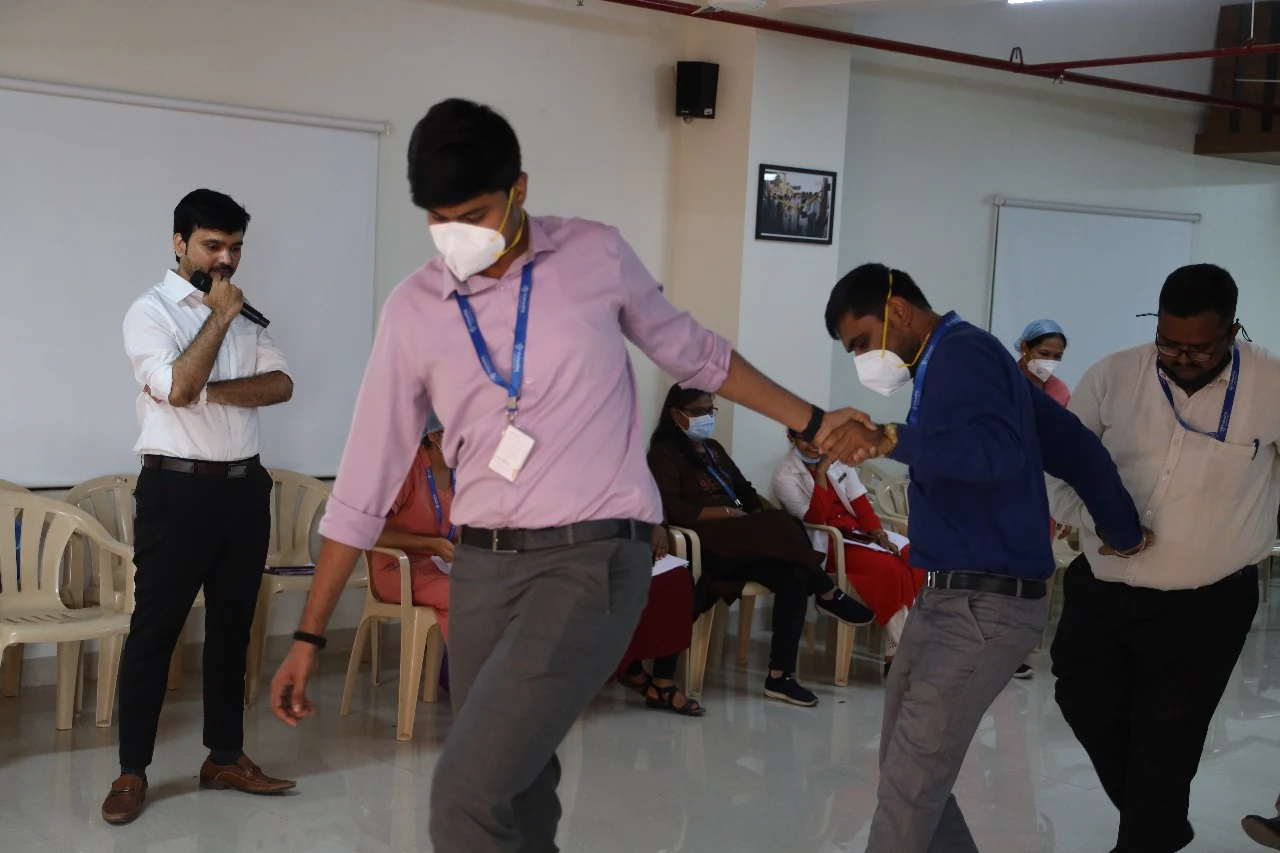
Trust me — most Indian companies invest in training budgets but never see the transformation they expect. NASSCOM 2026 data confirms 65% of Indian firms now invest in soft-skill training, yet team performance gaps persist. When Hitachi brings their employee training approach to India, the gap between world-class and average corporate culture becomes impossible to ignore.
TL;DR- World-class employee training focuses on ownership and accountability — not just knowledge transfer
- Japanese corporate culture teaches that discipline is a shared team value, not an individual trait
- Hitachi training in India reveals why cultural alignment drives performance more than any training content alone
- Indian organizations can benchmark global manufacturing giants to build genuinely high-performing teams
- The gap between training investment and business outcome is almost always a culture gap, not a content gap
What Makes Hitachi Employee Training Different from Standard Indian Corporate Programs
Here's the thing about global manufacturing giants like Hitachi — their training programs aren't built on inspiration or motivational content alone. They're built on systems, accountability loops, and a deep cultural belief that every employee represents the company's reputation. When Hitachi runs employee training in India, three things stand out immediately: the clarity of standards, the consistency of follow-through, and the non-negotiable nature of team accountability. These aren't perks or extras — they're the baseline, and they're exactly what Indian corporate culture needs to internalize.
The Japanese Discipline Mindset: What Indian Corporate Teams Must Borrow Right Now
Japanese corporate culture has one concept that Indian managers need to adopt urgently: Kaizen — the relentless commitment to continuous improvement, no matter how small. I've seen this in action at Bosch and Siemens plants in Pune, where daily 15-minute team reviews aren't about blame but about incremental progress. What separates Japanese discipline from Indian corporate chaos isn't intelligence or talent — it's the collective agreement that standards matter, that process isn't bureaucracy, and that showing up with full effort every single day is the baseline expectation, not an achievement.
| Training Dimension | Typical Indian Corporate Program | Hitachi-Style World-Class Approach | Business Outcome |
|---|---|---|---|
| Frequency | Annual or quarterly events | Daily micro-learning + weekly team reviews | 37% higher skill retention (Deloitte India 2025) |
| Accountability | Individual completion tracking | Team-level outcome ownership | 24% reduction in performance gaps |
| Content Focus | Generic soft-skills modules | Role-specific + culture-aligned learning | 19% improvement in customer satisfaction |
| Manager Role | Sender to training, reviewer of certificates | Active coach, daily feedback provider | 31% lower attrition in trained teams |
| Measurement | Attendance and satisfaction scores | Behavioral change + business KPI impact | ROI of 340% over 24 months (McKinsey India) |
How Hitachi Builds High-Performance Culture Without Micromanagement
Hitachi doesn't build high performance through surveillance or micromanagement — they build it through crystal-clear role ownership. Every team member knows exactly what they own, what success looks like, and how their work connects to the larger organizational mission. When I train leadership teams at L&T or Tata Tech, the biggest gap I observe is between effort and ownership. People work hard but don't feel accountable for outcomes. The shift from 'I completed the task' to 'I own the result' is the single most powerful mindset change in corporate culture — and it's baked into Hitachi's DNA.
Why Most Indian Employee Training Programs Fail to Change Team Behavior
Most Indian training programs fail for a simple reason: they treat training as an event, not a culture. A two-day workshop, a motivational speaker, a certification program — these create momentary energy but zero lasting behavior change. According to a 2025 Deloitte India study, only 12% of employees apply new skills 30 days after training. The companies that beat this statistic — companies like Hitachi — have training embedded into daily work rhythms, team rituals, and manager accountability structures. Training isn't what you do once a year. It's what you do every Monday morning.
The ROI of World-Class Employee Training: What India's Leading Companies Are Measuring
The ROI conversation around employee training has finally matured in India, and the numbers are compelling. McKinsey India 2026 data shows that companies with structured, culture-embedded training programs see 37% higher productivity, 24% lower attrition, and 19% better customer satisfaction scores. India's ₹1.5 trillion L&D market is growing precisely because India's top CFOs now accept that training isn't a cost — it's a multiplier. Hitachi's India operations demonstrate this clearly: their investment in employee development directly correlates with their operational efficiency metrics in Indian facilities.
How to Bring Hitachi-Level Corporate Excellence to Any Indian Team
You don't need to be a Japanese multinational to implement Hitachi-level corporate culture in your Indian team. What you need is three commitments: first, set non-negotiable standards and hold the team accountable to them consistently. Second, make feedback a daily ritual, not an annual event. Third, connect every employee's work to the company's mission in language they understand and care about. I've done this with RBI teams, BARC units, and JSW manufacturing lines — and the culture shift is visible within 60 days when these three commitments are actually kept.
Building a Training Culture That Sticks: The Long-Term Playbook for Indian Organizations
The Indian companies that will dominate the next decade are already building learning cultures, not just hiring talent. A learning culture means your people grow faster than your competitors' people — and in a market where AI is reshaping roles faster than training curricula can keep up, this is existential. NASSCOM-Deloitte projects India needs 1.25 million AI-ready professionals by 2027. The organizations that build continuous learning into their DNA — the way Hitachi has for decades — will be the ones that attract, retain, and develop these professionals. Everything else is just an ad.
Book Avinash Chate for Your Next Event
TEDx speaker. 11+ yrs training Army, BRO, RBI, BARC, JSW. Available for keynotes, leadership training, team building & manager development at your office or event venue.
✅ Thanks! Avinash team will reach out within 24 hours.'}).catch(function(e){f.outerHTML='Something went wrong. WhatsApp +91 8793630001
'});return false;">Select ServiceKeynote / Motivational SpeakingLeadership Development TrainingTeam Building WorkshopManager DevelopmentEmployee TrainingOutbound TrainingBook Avinash Now →Or WhatsApp directly: +91 87936 30001
Related Articles by Avinash Chate
- The Art of Concise Communication: Impact Every Indian Leader Needs in 2026
- Journey to Mastery: 5 Habits of India's Top Corporate Performers
- How to Become a Star at the Office: Lessons from Veritas Corporate Training
Avinash Chate TEDx Speaker · Founder, The Future Corporate · 11+ yrs experience Avinash has trained Indian Army, BRO, RBI, BARC, JSW Steel and 1000+ corporate leaders across India. His work focuses on leadership development, communication skills, and behavioural training rooted in Indian values and modern business needs. |
Frequently Asked Questions
What makes Hitachi employee training stand out compared to Indian corporate training programs?
Hitachi's training programs stand out because they treat training as a cultural practice embedded in daily work, not a one-time event. The key differences are: training content is role-specific and outcome-linked, managers are active coaches rather than passive sponsors, accountability is team-level not individual, and standards are non-negotiable rather than aspirational. Indian programs typically invest in content and speakers but neglect the cultural infrastructure that makes learning stick. The result is energy without change, certificates without capability.
How can Indian companies replicate Japanese corporate discipline and training culture?
Replicating Japanese corporate discipline doesn't require importing Japanese culture — it requires three specific commitments. First, set explicit, non-negotiable performance standards and hold everyone accountable consistently, including senior leaders. Second, implement daily or weekly team review rituals focused on incremental improvement, not blame. Third, make ownership the default mindset — every team member should be able to articulate what they own and what success looks like. I've implemented this framework with Bosch India, L&T teams, and KPIT units in Pune, and the cultural shift is observable within 60 to 90 days.
What is the ROI of investing in world-class employee training for Indian organizations?
The ROI data is increasingly clear. McKinsey India 2026 research shows organizations with structured, culture-embedded training see 37% higher productivity, 24% lower attrition, and 19% improvement in customer satisfaction scores. Over a 24-month period, the ROI on world-class training investment can reach 340%. Beyond the numbers, the strategic advantage is talent retention — in India's competitive hiring market, organizations that invest meaningfully in employee growth attract and keep people that competitors cannot. India's ₹1.5 trillion L&D market is growing because India's CFOs now see training as a multiplier, not a cost.
Why do most Indian employee training programs fail to deliver lasting behavioral change?
Most Indian training programs fail because they treat learning as an event rather than a system. A Deloitte India 2025 study found that only 12% of employees apply new skills 30 days after a training event — meaning 88% of training investment produces zero behavioral change. The failure points are predictable: no pre-training context setting, no post-training accountability structure, no manager reinforcement, and no connection between training content and actual work challenges. Companies that fix these gaps — by embedding training into daily routines and making managers active learning coaches — see dramatically different outcomes.
Avinash Chate services
Corporate Trainer in Maharashtra · Top Corporate Trainers in Maharashtra · Leadership Trainer in Maharashtra · Top Leadership Trainers in Maharashtra · Team Building Trainer in Maharashtra · Top Team Building Trainers in Maharashtra · Motivational Speaker in Maharashtra · Top Motivational Speakers in Maharashtra · All service locations
← Back to all articles · Book Avinash Chate
By Avinash Chate — Maharashtra’s #1 Corporate Trainer & Motivational Speaker. .