King Bruce and the Ant: The Cave Story That Explains Optimism
Defeated, hiding in a cave, hopeless — King Bruce of Scotland watched a tiny ant fail six times and succeed on the seventh. That one image is the clearest lesson on optimism I know, and it changed the course of a kingdom.
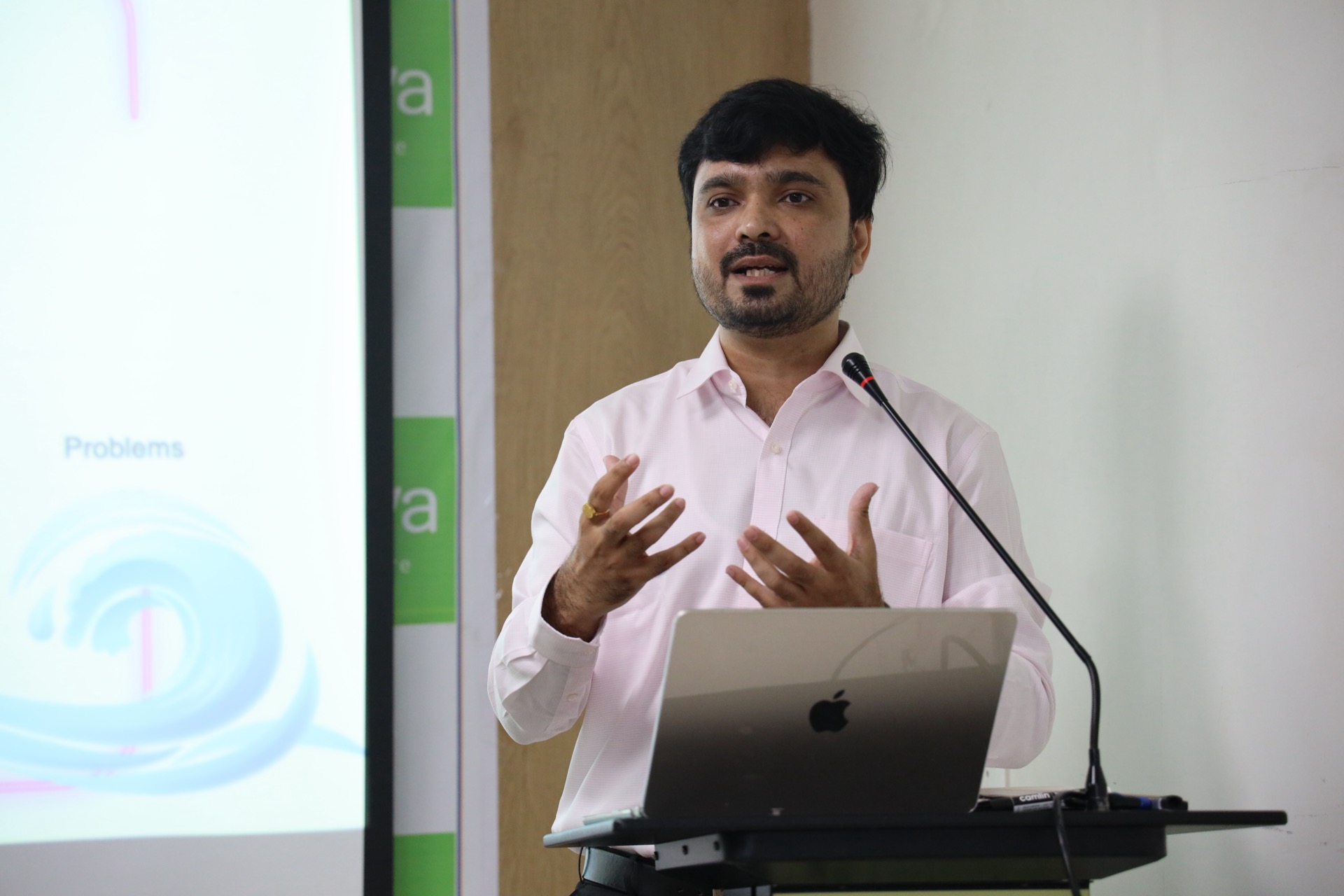
Defeated. Army destroyed. Hiding alone in an abandoned cave with no plan and no hope — that was King Bruce of Scotland at his lowest point. What pulled him out of that cave wasn't a general, an advisor, or a stroke of luck. It was a tiny ant, slipping and falling again and again, refusing to stop. I've told this story to hundreds of professionals in my sessions, and it still lands the same way every time.
In short- King Bruce, defeated and hiding in a cave, watched an ant fail repeatedly to build its web — until it finally succeeded — and it changed how he saw his own defeat.
- He imagined the ant explaining each slip as temporary and specific ("the wind on this side, I'll adjust") and each success as proof of skill — the exact pattern psychologists later called optimistic explanatory style.
- He left the cave, rebuilt his army, and reclaimed his throne — because his explanation of failure changed, not the facts of his defeat.
- Optimism is Trait #11 on the EQ side of your Winning Kite (KITE Leadership Framework) — and Martin Seligman's research shows it predicts performance better than skill or experience.
- You can train this explanatory style deliberately — awareness, reframing, reflection, and the company you keep all shape it.
Where this sits on your Winning Kite
Optimism is Trait #11 on the EQ — the left — side of your Winning Kite (KITE Leadership Framework). In my framework, a career flies like a four-sided kite: Success sits at the top, EQ (emotional intelligence) on the left, RQ (relationship intelligence) on the right, and PQ (productivity) at the bottom. EQ plus RQ plus PQ is what lifts you toward Success — you rise on balance, not on strength alone. Optimism is the trait that keeps the other twenty-four traits alive when things go wrong, because without it, effort fades, persistence weakens, and growth stops.
The cave, the defeat, and the ant
Let me tell you the story the way I tell it in my sessions, because the details matter.
King Bruce of Scotland had been defeated by his enemy. Not a narrow loss — a complete one. His army was destroyed on the battlefield. Whatever plans he had built, whatever momentum he once carried, all of it was gone in a single defeat. He escaped with his life, but with nothing else. No soldiers. No resources. No path forward that he could see. He took shelter in an abandoned cave — heartbroken, exhausted, and hopeless.
Picture that for a moment. A king, reduced to hiding in a cave, with no certainty that he would ever rule again, or even survive. This is the state most of us recognise from our own worst weeks at work — the missed target, the rejected proposal, the promotion that went to someone else, the restructuring that leaves you wondering if you still matter. Bruce was living the extreme version of that feeling.
One night in that cave, something small caught his attention. An ant, trying to build its web across a gap. The ant tried — and slipped. It tried again — and fell. Slipping, falling, struggling, over and over, with nothing to show for it. Any reasonable observer might have expected the ant to give up. Insects don't have willpower in the way we imagine it. And yet the ant kept going.
It failed once. It failed again. It kept trying. And finally — on what some tellings of this story count as the seventh attempt — the ant succeeded. The web held.
King Bruce watched all of this in silence. And in that moment, something shifted inside him. If a creature this small, with nothing but persistence, could keep going through repeated failure and eventually succeed, why couldn't he? He was a king. He had experience, allies, and a claim to a throne. Surely he had more resources than an ant.
He left the cave. He rebuilt his army. He fought back. And he won his empire.
What Bruce actually said at his crowning
Here is the part of the story that turns it from a nice anecdote into a genuine lesson on optimism — the part I spend the most time on when I teach it.
At his crowning ceremony, King Bruce revealed the secret of his comeback. He didn't just say "an ant inspired me." He described, in detail, how he had imagined the ant talking to itself through every attempt.
Every time it slipped, Bruce imagined the ant saying: "I slipped temporarily, specifically on this side of the cave because of the strong wind. Next time, I'll adjust."
Every time it succeeded in building a strand, Bruce imagined the ant saying: "I always build strong webs, whatever the structure, because I am a skilled weaver."
Read those two lines again, because they are not throwaway details — they are the entire architecture of optimism in two sentences. Notice what the ant does with failure: it makes it temporary ("temporarily"), specific ("on this side of the cave"), and external ("because of the strong wind") — not permanent, not pervasive, not personal. And notice what it does with success: it makes it permanent ("always"), pervasive ("whatever the structure"), and personal ("because I am a skilled weaver"). That is the exact opposite of how most of us are wired to explain events to ourselves — and it is precisely the pattern psychologist Martin Seligman later identified, centuries after this story was already being told to children, as the hallmark of an optimistic explanatory style.
The ant taught King Bruce optimism. And optimism gave him the courage to reclaim his throne.
Why this old story still holds up under modern psychology
Toh optimism hai kya exactly? It isn't blind positivity or pretending everything is fine when it's not. It's the ability to maintain hope in the face of challenges, to see setbacks as temporary rather than permanent, and to believe that your efforts can change outcomes.
Martin Seligman's research gives us the vocabulary to explain exactly why Bruce's shift in thinking mattered so much. When a bad event happens, pessimists explain it as permanent ("this will never change"), pervasive ("this affects everything"), and personal ("it's entirely my fault, something is wrong with me"). Optimists explain the same bad event as temporary ("this is just for now"), specific ("this is one situation, not my whole life"), and shaped by external factors ("there were other reasons — timing, circumstances, the wind on this side of the cave").
The reverse is true for good events. Pessimists dismiss a win as temporary, specific, and lucky — "it's always high in week one, it won't last, I just got lucky." Optimists claim a win as permanent, pervasive, and personal — "good things will continue, I always tend to get the best outcome, because of my skills and effort." That is exactly what the ant said after building a strong strand: not "I got lucky with this one gap," but "I always build strong webs, whatever the structure, because I am a skilled weaver."
I want to flag something important here, because I say this in every session where I teach this concept: an optimistic explanatory style does not mean avoiding accountability. It doesn't mean lacking self-assessment or blaming others unfairly. It is simply a coping style — a way to protect yourself from repeated failures so you can bounce back quickly instead of collapsing. There's a difference between humility and pessimism. You can be humble about your current skill and still believe, like the ant, that you are capable of improving and succeeding.
The workplace version of the cave
Most of us will never lose a kingdom. But we all have our own version of that cave — the moment optimism gets tested at work. It shows up when sales targets are missed repeatedly and you start questioning whether you're in the right job. When a project you worked on for months gets rejected by the client. When you're passed over for promotion more than once. When your team loses a big pitch to a competitor. When restructuring fills the air with uncertainty. When feedback from your manager feels harsh and constant, and you wonder if you're making any progress at all.
These are exactly the moments when pessimism creeps in — when the voice in your head starts saying "nothing I do will matter, why even try?" Psychologists call the end state of that spiral learned helplessness — a condition where repeated failures convince you that nothing you do will make a difference. In over 20 years of training more than 25,541 professionals across 100-plus organisations in India, I have watched this pattern surface again and again: the first failure, most people bounce back from. But after repeated failures without reflection, hope weakens, fear of failure takes over, and people quietly stop trying. That is the cave. And most people don't have an ant to watch — they just stay in it.
What separates the ones who leave the cave
The difference between Employee A and Employee B in my sessions is almost always this exact mechanism. Employee A, after missing a target, thinks "I'm just not good enough for this role," blames herself entirely for a failed project, avoids challenging assignments for fear of failing again, and becomes withdrawn and reactive. Over time her performance declines because she has stopped believing improvement is possible — she never leaves the cave.
Employee B, after missing a target, asks "what specifically went wrong, and how can I fix it?" He reflects on lessons from a failed project and applies them to the next one. He volunteers for challenging assignments because he sees them as growth opportunities. His manager notices he bounces back quickly and stays energised. Over time his performance improves because he believes his effort matters — he watches the ant, and he acts on what he sees.
This is not a personality trait some people are born with and others aren't. Optimism, like every trait on the EQ side of the Winning Kite, can be learned and strengthened with practice.
1. Become aware of your self-talk
Notice what you tell yourself after a setback. Are you saying "I always fail at this," or "this didn't work this time — what can I try differently"? Awareness is the first step. Write it down if you need to.
2. Challenge your explanatory style
When something goes wrong, pause and ask: Is this really permanent, or just temporary? Does this affect every area of my life, or just this one situation? Am I entirely to blame, or were there other factors, like the ant's "strong wind on this side of the cave"? Most of the time, you'll realise your first explanation was too harsh.
3. Practice daily reflection
Spend ten to fifteen minutes a day — through meditation, journaling, or quiet thinking — reflecting on what went well. This rewires your brain to notice progress, not just problems.
4. Carry optimistic reminders
Write down optimistic self-talk on an index card and keep it with you. When pessimism creeps in, read it. Reinforce the habit deliberately, the way Bruce carried the image of the ant with him out of the cave.
5. Seek evidence of growth
Look back at where you were six months ago, a year ago, two years ago. What have you learned? How have you improved? Growth isn't always visible day-to-day, but over time it's undeniable.
6. Surround yourself with optimistic people
Energy is contagious. If you're constantly around complainers and pessimists, their outlook rubs off on you. Find mentors, colleagues, and friends who believe in possibility.
The evidence: optimism as a performance driver, not just a mood
If the cave story sounds too neat to matter in a modern office, consider what Martin Seligman found when he studied real professionals at MetLife Insurance — a field where rejection is constant and turnover is brutal. He tracked two groups: well-qualified professionals with strong credentials, and a relatively weaker group with less experience and training. Conventional wisdom said the qualified group should win easily. Instead, there was barely any difference in performance — and some of the "weaker" group performed almost as well as the top performers among the experienced group.
Digging deeper through one-on-one interviews, Seligman found the real differentiator wasn't qualification, experience, or training — it was explanatory style, the exact mechanism inside the ant's two sentences. Optimistic professionals at MetLife sold 29% more insurance in their first year and 130% more in their second year compared to their pessimistic colleagues. Same company, same product, same training — a 130% gap purely from how they explained setbacks to themselves. Seligman later called optimism "the hidden driver of excellence." Similar results showed up at American Express Financial Advisors, where an optimism training pilot lifted sales enough that the company made it standard training. In caseworkers helping people with severe mental disabilities, those who started with high hope survived their first year with more satisfaction, less emotional exhaustion, and far higher retention.
Sir Winston Churchill put the same idea in one sentence: "Success is going from failure to failure without loss of enthusiasm." That's optimism, stated plainly. It's not about avoiding failure — Bruce didn't avoid his defeat, and the ant didn't avoid slipping six times. It's about refusing to let failure crush your enthusiasm.
If Bruce's cave is the ancient telling of this idea, Matt Biondi's comeback at the 1988 Seoul Olympics — after two disappointing races nearly derailed his entire Games — is the modern one, and I've written about that story separately because it deserves its own telling. Ayushmann Khurrana's run of rejected, unconventional scripts before he became one of Bollywood's most respected actors is another. Read them alongside this one and you'll see the same pattern repeating across a Scottish king, an American swimmer, and a Mumbai actor: the facts of the setback never change. What changes is the explanation.
Bringing the ant into your own cave
Ab aap sochiye — think about the last major setback you faced at work. How did you explain it to yourself? Did you see it as permanent, pervasive, and personal? Or did you see it as temporary, specific, and correctable? Your answer reveals your optimism index.
The good news, the same good news Bruce discovered in that cave, is that you can change it. You can learn optimism. You can train your mind to see setbacks as stepping stones rather than stop signs. And when you do, you'll notice something remarkable: challenges that used to paralyse you will start to energise you. Because optimism doesn't just change how you feel — it changes what you do. And what you do determines who you become.
As Robert Brault put it: "The average pencil is seven inches long, with just a half-inch eraser — in case you thought optimism was dead."
If you're building this trait in yourself or your team, explore the full Winning Kite framework, and see how our corporate training programs turn optimism from a nice idea into a practiced skill. For leaders who want to go deeper, the Signature Programs are built exactly for this. You can also reach out through contact to bring this session to your organisation.
Bring These Ideas to Your Team
Avinash Chate turns the traits in Stars at India Inc. into live leadership & emotional-intelligence workshops. TEDx speaker · 11+ yrs training Army, BRO, RBI, BARC, JSW & 1000+ leaders.
✅ Thanks! Avinash team will reach out within 24 hours.'}).catch(function(e){f.outerHTML='Something went wrong. WhatsApp +91 8793630001
'});return false;">Select ServiceKeynote / Motivational SpeakingLeadership Development TrainingTeam Building WorkshopManager DevelopmentEmployee TrainingBook Avinash Now →Or WhatsApp directly: +91 87936 30001
Work with Avinash Chate
- Signature Corporate Training Programs →
- The Winning Kite (KITE Leadership Framework) →
- All Corporate Training Topics →
Avinash Chate TEDx Speaker · Founder, The Future Corporate · Author of Stars at India Inc. Avinash has trained the Indian Army, BRO, RBI, BARC, JSW Steel and 1000+ corporate leaders across India. His work focuses on leadership, emotional intelligence and behavioural training rooted in Indian values and modern business needs. |
Frequently Asked Questions
What is the story of King Bruce and the ant?
King Bruce of Scotland was defeated in battle, his army destroyed, and he hid in an abandoned cave feeling hopeless. There he watched a tiny ant try again and again to build its web, slipping and falling each time, until it finally succeeded. Watching the ant's persistence, Bruce found the courage to leave the cave, rebuild his army, fight back, and reclaim his throne. At his crowning ceremony he revealed that he had imagined the ant talking to itself with an optimistic explanatory style after every slip and every success.
What lesson does the King Bruce and the Ant story teach about optimism?
It teaches that setbacks are only permanent if you decide to see them that way. The ant treated each slip as temporary and specific — caused by a strong wind on one side of the cave, fixable next time — rather than as proof it could never build a web. That explanatory style, not the absence of failure, is what optimism actually is.
Where does Optimism sit on the Winning Kite framework?
Optimism is Trait #11 on the EQ — the left — side of the Winning Kite (KITE Leadership Framework). Strong EQ, together with RQ and PQ, lifts you toward Success at the top of the kite. You rise on balance, not strength alone.
How can I build an optimistic explanatory style like the ant's?
Become aware of your self-talk after setbacks, challenge whether a failure is really permanent, pervasive and personal or actually temporary, specific and correctable, practice daily reflection on what went well, carry optimistic reminders, look for evidence of your own growth over time, and surround yourself with optimistic people. Optimism, like any EQ skill, can be learned and strengthened with practice.
Related Articles by Avinash Chate
- Ambati Rayudu's overnight retirement
- Mukesh Ambani: The Hunger That Never Saturates
- Seattle Fish Market Mindset: John Yokoyama's Near-Bankruptcy Win
Avinash Chate services
Corporate Trainer in Mumbai · Top Corporate Trainers in Mumbai · Leadership Trainer in Mumbai · Top Leadership Trainers in Maharashtra · Team Building Trainer in Mumbai · Top Team Building Trainers in Maharashtra · Motivational Speaker in Mumbai · Top Motivational Speakers in Mumbai · All service locations
← Back to all articles · Book Avinash Chate
By Avinash Chate — Maharashtra’s #1 Corporate Trainer & Motivational Speaker. .