Mr. Rajendra Gupta: The Plant Head Who Made His Cabin Door a Two-Way Street
Inside Kesardeep Pressings, Plant Head Rajendra Gupta turned an open-door policy into an open-communication culture — and taught me that approachability, listening and transparency are trainable leadership skills, not personality traits.
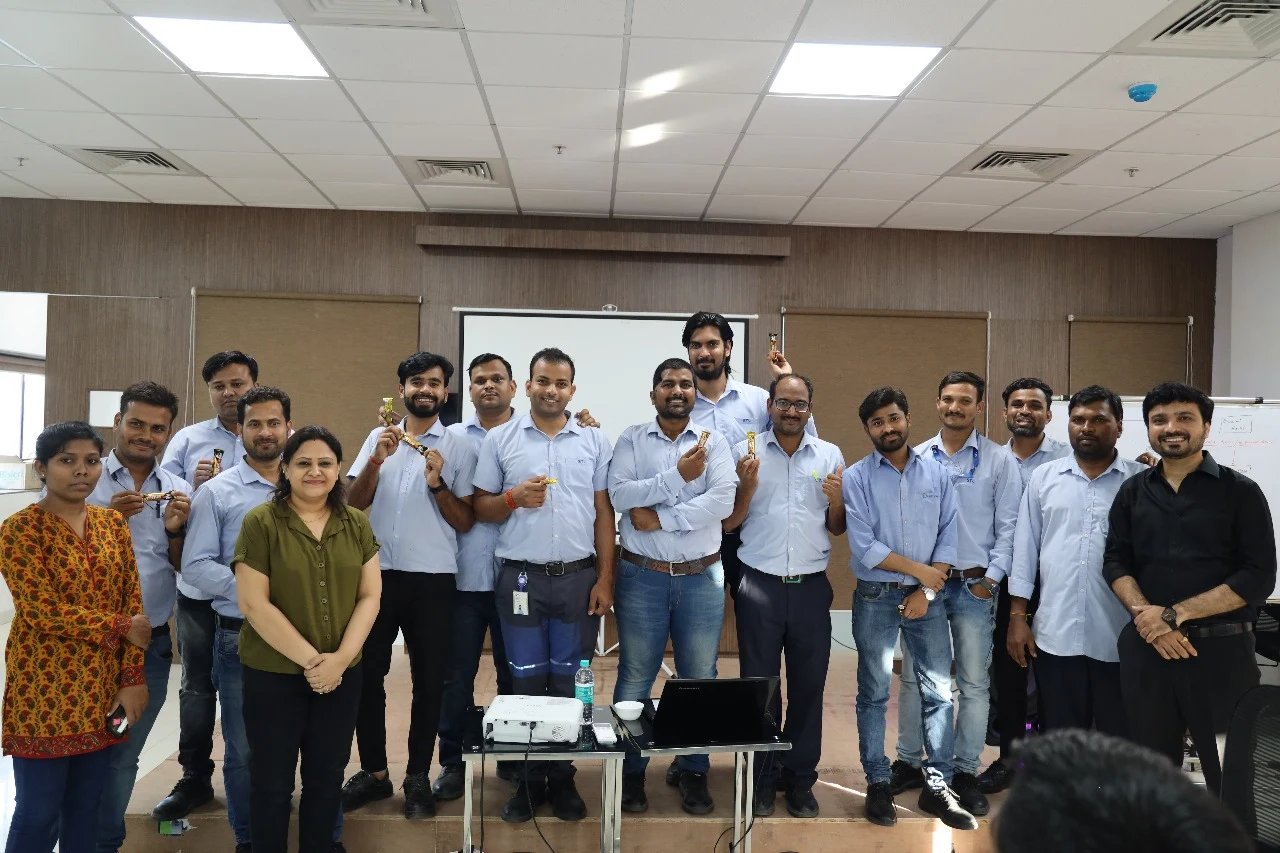
I have walked into a lot of manufacturing plants as a corporate trainer, and most cabins tell you everything about a leader before he says a word. Rajendra Gupta's cabin at Kesardeep Pressings told me something different — that the door was actually used, by actually everyone.
In short- Rajendra Gupta, Plant Head of Kesardeep Pressings, built a culture of open communication through three habits: genuine approachability, active listening, and transparent updates.
- His open-door policy was not symbolic — blue-collar workers and executives alike walked into his cabin with ideas and concerns.
- He didn't just listen for optics; he incorporated employee feedback into real decisions, which built trust from the shop floor up.
- Communication is Trait #19 on the EQ side of the Winning Kite — it's what turns a manager's authority into a team's willingness to follow.
- You can build this same trust at your workplace with three deliberate, repeatable habits — no personality transplant required.
Where this sits on your Winning Kite
Communication is Trait #19 on the EQ — left side — of your Winning Kite, sitting inside the Motivating Others cluster. Read the full framework at The Winning Kite (KITE Leadership Framework): EQ + RQ + PQ combine to lift Success at the top. You rise on balance, not on strength alone — and communication is the trait that decides whether your other strengths ever reach your team at all.
Trait #19: Communication — Articulating Your Message
Effective communication is a key skill for any organization, because it is the basis for working together and reaching goals everyone agrees on. Communication isn't only about the words we use — it's about how we deliver them, when we deliver them, and to whom. Without good communication there are misunderstandings and friction, and that friction quietly eats into work getting done and opportunities being missed. It's important to note that effective communication isn't limited to a specific language. It's about being able to put your thoughts and ideas across in a way others can understand, regardless of the language you're doing it in.
One important part of communication is being able to listen with an open mind and send messages that actually make sense to the listener. This means reading emotional cues and adjusting your message accordingly. People who have this competence are good at both giving and receiving information — they engage in real conversations, not monologues, and they understand that communication is a two-way exchange, not a broadcast.
Another part of this competence is dealing with difficult issues in a straightforward manner. People who are good at this are good listeners who share information fully. They create an environment of open communication where people feel comfortable sharing both good news and bad news. That's how trust gets built — not through polished announcements, but through leaders who don't flinch from hard conversations.
For leaders specifically, effective communication is essential to build trust and inspire a team. Leaders who communicate well listen to their people, encourage them to share ideas and opinions, give helpful feedback, and are willing to discuss tough issues honestly. By creating this environment of open communication, they inspire their team and drive results — which is exactly what I saw when I started training inside Kesardeep Pressings.
Inspiring Leadership Through Open Channels of Dialogue
In India, there are well-known examples of senior leaders who deliberately built open channels of communication. Ratan Tata, the former Chairman of Tata Sons, is known for his ‘Tata confidential’ mailbox, where employees could submit suggestions and feedback directly. Adi Godrej, Chairman of Godrej Group, is known for a genuine open-door policy where employees could approach him directly with their thoughts. Sundar Pichai, CEO of Google, hosts weekly ‘TGIF’ meetings where employees can ask him anything — meetings broadcast to every Google office worldwide, building a culture of transparency across a company of well over a hundred thousand people.
What struck me, watching Rajendra Gupta run a manufacturing plant rather than a global tech company, is that the same three habits scale down perfectly. You don't need a confidential mailbox system or a global broadcast — you need the same underlying discipline, applied consistently, at whatever size organization you lead.
Effective Communication: The Key to Success in Business Leadership
Let me take you inside it properly. As a corporate trainer who has run many employee sessions for Kesardeep Pressings, I had the privilege of watching Rajendra Gupta, the company's Plant Head, up close — not for one session, but across repeated visits, which is really the only way to know if a leader's communication style is real or performed. Mr. Gupta is a true leader who understands the importance of effective communication and has taken deliberate steps to foster open channels of communication within his organization.
1. Approachability that wasn't for show
One of Mr. Gupta's greatest strengths is his approachability. He runs a genuine open-door policy that encourages employees at every level to approach him with their ideas, concerns, and suggestions. Whether it's a high-level executive or a blue-collar worker on the shop floor, everyone is welcome to walk into his cabin and share what's on their mind. This creates a sense of inclusivity and openness that helps foster a positive, collaborative work environment — the kind you can feel the moment you walk onto the plant floor.
I want to underline something here that's easy to miss: an open door by itself is just an invitation. It's a policy on paper until people actually test it and find it real. What made Gupta's door different is that workers who weren't senior, who had no reason to expect an audience, walked through it anyway — because word had spread that walking in actually changed something.
2. Listening that fed into real decisions
In addition to being approachable, Mr. Gupta is also a great listener. He takes the time to understand his employees' perspectives and actively seeks out their feedback. He values their input and incorporates their ideas into the decision-making process whenever possible. This does two things at once: it builds trust and respect among his employees, and it leads to better-informed, more effective decisions — because the people closest to a problem on the shop floor often see solutions a plant head sitting in a cabin never would.
This is the piece that separates listening-as-theatre from listening-as-practice. Anyone can nod through a suggestion box. Gupta closed the loop — feedback he received actually showed up, later, as a changed process or a changed decision. Employees noticed. That's what converts a policy into a culture.
3. Transparency, even when the news wasn't good
Mr. Gupta also believes deeply in transparent communication. He regularly shares updates on the company's progress, goals, and challenges with his employees, and encourages them to ask questions and give feedback in return. This keeps everyone informed and engaged, and ensures the whole plant is pulling in the same direction because everyone actually understands what that direction is and why.
Overall, Mr. Rajendra Gupta is a true leader who understands the value of effective communication. By fostering open channels of communication and actively seeking out feedback, he created a positive and collaborative work environment that benefited everyone in his organization — from the newest machine operator to his senior management team.
Maan Ki Baat: Building the Same Culture in My Own Office
Watching leaders like Gupta up close shaped something I built in my own organization. In my office, we started a program called ‘Maan Ki Baat,’ where team members meet to build a culture of frankness. When employees feel they can say what they think and how they feel, they work together better, are more productive, and are happier in their jobs — that's the entire premise behind the initiative.
The program runs as a three-step process. In the pre-discussion phase, a coordinator sends a Google Form to every team member to collect their thoughts on work-related or company-policy topics — team members can answer anonymously or openly, whichever makes them comfortable being honest. The second step is the actual discussion meeting, where everyone gathers to talk through the feedback collected in step one, asking anything and sharing thoughts, ideas or concerns without fear of judgment or reprimand. The third step is the solution meeting, where the team works out actual solutions to the issues raised in the discussion.
‘Maan Ki Baat’ has been a genuine success for our team. By giving people an open and honest way to talk, they feel more comfortable sharing ideas and concerns — which has led to better teamwork, a more productive workplace and higher satisfaction. But I'll be honest about the precondition: the success of an initiative like this depends entirely on leadership. Leaders need to be open-minded, receptive, and willing to listen to feedback without bias. That's what fosters real transparency, where employees feel heard and valued — which, in turn, builds a more engaged and productive workforce.
This is where Daniel Goleman's work on emotional intelligence offers a useful frame: he describes communicators as people who can ‘deal with difficult issues in a straightforward manner’ and ‘foster open communication.’ Gupta's cabin, and our own ‘Maan Ki Baat’ table, are simply that idea made practical inside an Indian workplace.
What This Means for You as a Manager
These examples — Tata's confidential mailbox, Pichai's TGIF, and Gupta's open cabin door — all demonstrate the same underlying truth: creating open channels of communication builds trust with employees, encourages a culture of openness and new ideas, and ultimately helps organizations perform better. None of it requires charisma you either have or don't. It requires three repeatable habits:
| Habit | What Gupta Did | What You Can Do Monday Morning |
|---|---|---|
| Approachability | Open cabin door for every level of employee | Set a fixed weekly hour where anyone, any level, can walk in unannounced |
| Active listening | Fed employee ideas into real decisions | Pick one piece of team feedback this month and visibly act on it |
| Transparency | Regular updates on progress, goals, challenges | Share one number or challenge you'd normally keep to yourself |
If you want to build this trait deliberately rather than hope it develops on its own, this is exactly the kind of skill I work on with leadership teams through Signature Corporate Training Programs and our wider Corporate Training Topics — communication is trainable, and the return on it compounds across every other trait on the EQ side of your Winning Kite.
Bring These Ideas to Your Team
Avinash Chate turns the traits in Stars at India Inc. into live leadership & emotional-intelligence workshops. TEDx speaker · 11+ yrs training Army, BRO, RBI, BARC, JSW & 1000+ leaders.
✅ Thanks! Avinash team will reach out within 24 hours.'}).catch(function(e){f.outerHTML='Something went wrong. WhatsApp +91 8793630001
'});return false;">Select ServiceKeynote / Motivational SpeakingLeadership Development TrainingTeam Building WorkshopManager DevelopmentEmployee TrainingBook Avinash Now →Or WhatsApp directly: +91 87936 30001
Work with Avinash Chate
- Signature Corporate Training Programs →
- The Winning Kite (KITE Leadership Framework) →
- All Corporate Training Topics →
Avinash Chate TEDx Speaker · Founder, The Future Corporate · Author of Stars at India Inc. Avinash has trained the Indian Army, BRO, RBI, BARC, JSW Steel and 1000+ corporate leaders across India. His work focuses on leadership, emotional intelligence and behavioural training rooted in Indian values and modern business needs. |
Frequently Asked Questions
What made Rajendra Gupta an effective communicator as a Plant Head?
Three things working together: a genuinely open-door policy where any employee, from executive to shop-floor worker, could walk in and be heard; active listening that fed employee ideas into real decisions; and transparent updates on company progress, goals and challenges so everyone understood the 'why' behind decisions.
Is an open-door policy the same as good communication?
No. An open door is only an invitation. Gupta's example shows it becomes real communication only when it is paired with active listening and follow-through — using what people tell you to actually change decisions, not just to be seen as approachable.
Where does Communication sit on the Winning Kite framework?
Communication is Trait #19 on the EQ (left) side of the Winning Kite — the Emotional Intelligence side. It sits under the Motivating Others cluster because how you speak and listen directly determines whether you can move people, not just manage them.
How can a manager build the kind of trust Gupta built at Kesardeep Pressings?
Start small and consistent: genuinely welcome input from every level (not just senior voices), close the loop by showing people their feedback changed something, and share company updates — good and bad — on a regular rhythm instead of only when things go well.
Related Articles by Avinash Chate
- Thank Your Mentors: Gratitude and Mentorship for Career Success India 2026
- Behavior Coaching for Teams: Lessons From Vascon's Leadership Session
- Corporate Motivational Speaker for Aurangabad-Headquartered MNCs — How Endurance and Varroc Build Global Leaders from Marathwada
Avinash Chate services
Corporate Trainer in Chhatrapati Sambhajinagar (Aurangabad) · Top Corporate Trainers in Maharashtra · Leadership Trainer in Chhatrapati Sambhajinagar (Aurangabad) · Top Leadership Trainers in Maharashtra · Team Building Trainer in Chhatrapati Sambhajinagar (Aurangabad) · Top Team Building Trainers in Maharashtra · Motivational Speaker in Chhatrapati Sambhajinagar (Aurangabad) · Top Motivational Speakers in Maharashtra · All service locations
← Back to all articles · Book Avinash Chate
By Avinash Chate — Maharashtra’s #1 Corporate Trainer & Motivational Speaker. .