Mrs. Anjali Dhanorkar
Inside a Deputy Collector's office in Maharashtra, where farmers, talathis and tahsildars bring their disputes every single day, I watched conflict management stop being a textbook trait and become a daily discipline.
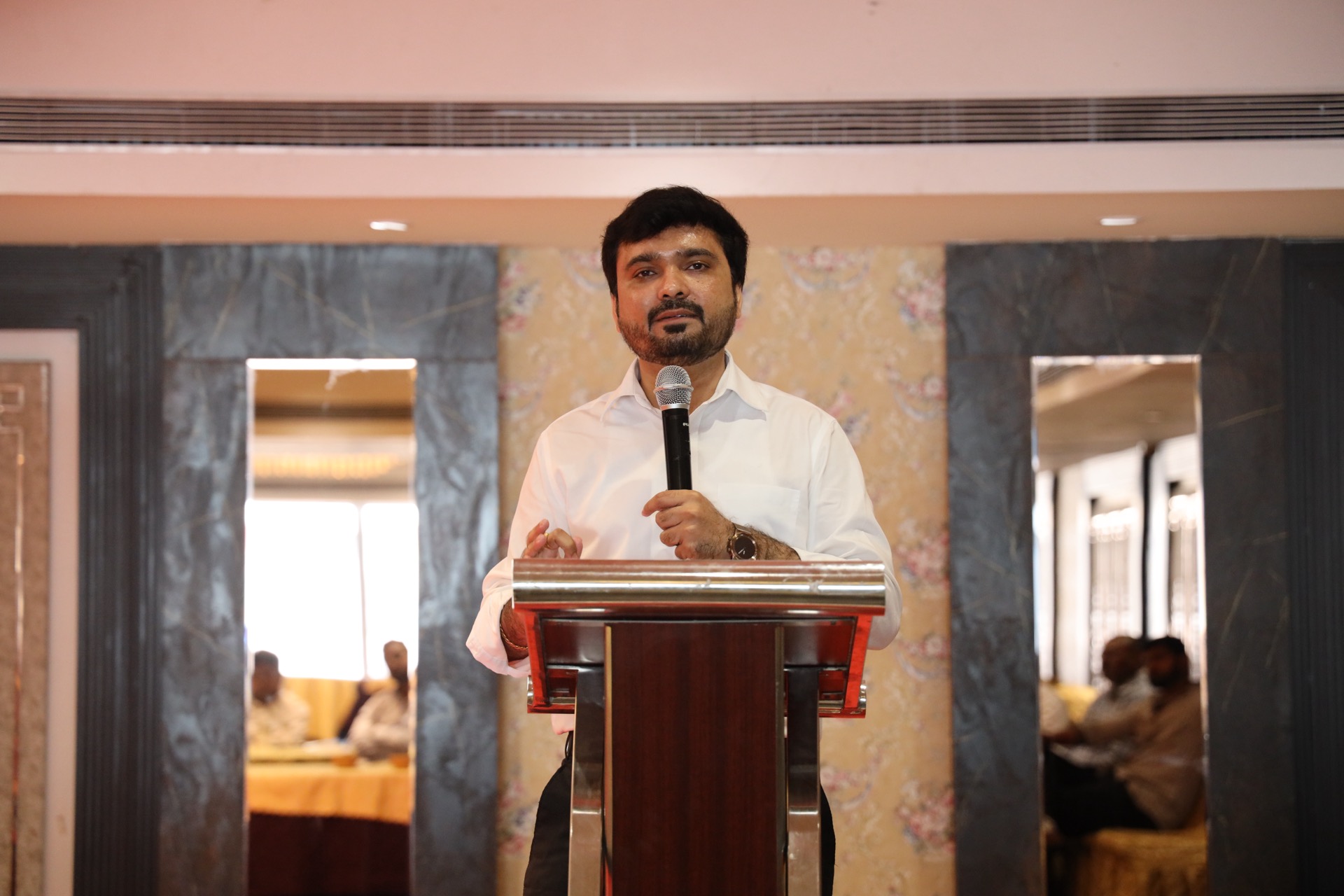
Every single working day, a Deputy Collector's office in Maharashtra fills up with farmers, businessmen, revenue officers and ordinary citizens — each one carrying a dispute they need resolved. I have walked into that office more times than I can count, to train the officers who report to Mrs. Anjali Dhanorkar, and what I saw there taught me more about conflict management than any case study ever could.
In short- Mrs. Anjali Dhanorkar, a Deputy Collector in the Maharashtra Government, resolves disputes from farmers, businessmen and officers every single day with tact and diplomacy.
- Her conflict management style rests on three habits: spotting problems early, bringing disagreements into the open, and encouraging honest discussion instead of suppressing it.
- This consistency has built deep trust among her subordinates — talathis, tahsildars and government officers — creating a culture where people speak up instead of shutting down.
- Conflict management sits on the EQ side of the Winning Kite (KITE Leadership Framework), under Social Skills, alongside influence and communication.
- The same discipline — listen, surface the issue, stay fair, find common ground — applies whether you're settling a land dispute or a disagreement between two managers on your team.
Where this sits on your Winning Kite
Conflict Management is Trait #20 in the Social Skills cluster of Emotional Intelligence — the left side of your Winning Kite (KITE Leadership Framework). Political awareness, influence and communication build relationships and a positive climate. Conflict management is different — it's what keeps that climate from collapsing when disagreement is unavoidable. And in a government office that sees a hundred disputes a week, disagreement is not just possible, it is guaranteed. A kite doesn't fly on a calm day alone; it has to hold its shape when the wind turns. That's exactly what conflict management does for a leader.
A Government Office Where Conflict Never Stops Walking In
Mrs. Anjali Dhanorkar is a Deputy Collector with the Maharashtra Government. Her office is not a place where conflict occasionally shows up — it's a place conflict walks into every morning and doesn't leave until evening. Farmers come in disputing land boundaries. Officers come in disagreeing over jurisdiction and process. Businessmen come in contesting permissions, valuations, delays. Common people come in simply looking for someone to hear them out and set things right. Each person arrives carrying their own frustration, their own version of the truth, and their own expectation that this office will fix it.
As a leadership coach, I've had the privilege of running training sessions for the officers who work under her — government officers, talathis, tahsildars and more. That gave me a front-row seat, over multiple visits, to watch how she actually runs that office day to day. I wasn't reading about her leadership style in a report. I was standing in the corridor while it happened.
Grace Under a Queue That Never Ends
What struck me first was how she carried herself. This is not a job where you get to choose your disputes or space them out for convenience. They arrive in whatever order, whatever mood, whatever urgency the visitor brings with them. And yet, visit after visit, I watched Mrs. Dhanorkar handle each situation with grace and composure. There was no visible irritation at the twentieth complainant of the day. No shortcuts taken because the office was tired. Every person who walked in got the same meticulous care and attention as the first.
That consistency is harder than it sounds. It's easy to be patient with your first difficult conversation of the day. It's a different discipline altogether to be equally patient with your fifteenth. Mrs. Dhanorkar's ability to sustain that composure, case after case, is itself a form of conflict management — because a leader who loses patience becomes part of the conflict instead of the person resolving it.
Spot It Early, Bring It Into the Open
Mrs. Dhanorkar's real skill is not just staying calm — it's what she does with that calm. She can spot potential problems before they harden into full-blown standoffs, and instead of letting them simmer, she brings disagreements out into the open in a way that works for everyone in the room. That's a crucial distinction. Many people in authority avoid conflict by suppressing it — postponing the hard conversation, hoping it resolves itself. Mrs. Dhanorkar does the opposite. She surfaces it, names it, and gives it room to be discussed.
This is exactly the behaviour that defines conflict management as an EQ competency: being good at dealing with difficult people and tense situations with tact and diplomacy, spotting potential problems, and bringing disagreements out into the open in a way that benefits everyone. She encourages open discussion and debate among the parties involved, which is what actually de-escalates a room — not silence, but structured, respectful conversation where people feel heard even if they don't get everything they came for.
The Trust This Builds Inside Her Team
The effect of this on her own team has been just as telling as the effect on the public she serves. Her ability to handle conflict with tact and diplomacy has built trust and credibility among her subordinates and colleagues. Her leadership style has created a culture of openness and honesty, where team members feel comfortable sharing their thoughts and concerns rather than burying them.
That last point matters enormously for any leader reading this. A team only tells you the truth when they believe you'll handle that truth well. If your history is one of blowing up, deflecting, or punishing the messenger, people stop bringing you problems — they hide them until the problems are too big to hide. Mrs. Dhanorkar's consistent, fair handling of conflict has done the opposite: it has made her office a place where officers, talathis and tahsildars feel safe raising issues early, which means small problems get solved while they're still small. That's a more productive, more engaged team — and it's a direct, practical benefit of conflict management done well.
Why This Applies Far Beyond a Government Office
You don't need to run a Deputy Collector's office to face what Mrs. Dhanorkar faces every day. If you lead a team, you will eventually deal with two members who have a personal rivalry that's dragging down team dynamics. If you manage across functions, you'll find yourself serving two bosses with competing priorities, needing to keep both satisfied without compromising either. If you're customer-facing, you'll handle a complaint where the customer's expectations and your company's policy don't neatly align. In every one of these, the discipline is the same one Mrs. Dhanorkar practises daily: address the conflict head-on, bring it into the open, treat everyone with respect, and work towards a solution that people can live with — even when it isn't the solution they walked in wanting.
Daniel Goleman's research on emotional intelligence identifies exactly this pattern in high-performing leaders — the ability to stay flexible under tension and keep a room productive instead of adversarial. Mrs. Dhanorkar's office is a live, everyday demonstration of that research playing out under real pressure, not in a lab.
Bringing It Into Your Own Leadership
If you want to build this trait, start where Mrs. Dhanorkar starts: with the willingness to not look away from a brewing disagreement. Most conflict at work doesn't explode suddenly — it's visible early, in tone, in body language, in who stops talking to whom. Catch it there. Bring it into the open in a private, respectful setting before it becomes public and entrenched. Listen to every side with genuine attention, not just enough attention to respond. And be consistent — the same fairness for the fifteenth case of the day as for the first, because your team and your stakeholders are always watching whether your patience runs out.
This is one trait among the twenty-five that make up the EQ side of the Winning Kite (KITE Leadership Framework) — and like every trait on that kite, it doesn't work in isolation. Conflict management without communication skills becomes silent tolerance. Conflict management without empathy becomes cold procedure. It's the combination, held in balance across EQ, RQ and PQ, that lets a leader like Mrs. Dhanorkar hold a room of frustrated people together, day after day, and send them out having been heard.
If your organisation is dealing with recurring friction — between teams, between managers, or in how your people handle difficult customers — this is exactly the kind of behavioural shift I work on with leaders through our Signature Programs and our wider corporate training topics. You can also reach out directly through my contact page to discuss what your team needs.
Bring These Ideas to Your Team
Avinash Chate turns the traits in Stars at India Inc. into live leadership & emotional-intelligence workshops. TEDx speaker · 11+ yrs training Army, BRO, RBI, BARC, JSW & 1000+ leaders.
✅ Thanks! Avinash team will reach out within 24 hours.'}).catch(function(e){f.outerHTML='Something went wrong. WhatsApp +91 8793630001
'});return false;">Select ServiceKeynote / Motivational SpeakingLeadership Development TrainingTeam Building WorkshopManager DevelopmentEmployee TrainingBook Avinash Now →Or WhatsApp directly: +91 87936 30001
Work with Avinash Chate
- Signature Corporate Training Programs →
- The Winning Kite (KITE Leadership Framework) →
- All Corporate Training Topics →
Avinash Chate TEDx Speaker · Founder, The Future Corporate · Author of Stars at India Inc. Avinash has trained the Indian Army, BRO, RBI, BARC, JSW Steel and 1000+ corporate leaders across India. His work focuses on leadership, emotional intelligence and behavioural training rooted in Indian values and modern business needs. |
Frequently Asked Questions
What is conflict management as a leadership trait?
Conflict management is the EQ competency of handling difficult people and tense situations with tact and diplomacy — spotting problems early, bringing disagreements into the open constructively, and helping all sides find a solution without damaging trust or morale.
Who is Mrs. Anjali Dhanorkar?
Mrs. Anjali Dhanorkar is a Deputy Collector with the Maharashtra Government whose office handles disputes daily — from farmers and businessmen to officers, talathis and tahsildars. Avinash Chate has trained her team and observed her conflict management skills firsthand.
Where does conflict management sit on the Winning Kite framework?
Conflict management is a Social Skills trait on the EQ (left) side of the Winning Kite. It works alongside political awareness, influence and communication to protect relationships and enable the RQ and PQ sides to hold steady.
How can leaders build conflict management skills like Mrs. Dhanorkar's?
Practice active listening, stay empathetic to every party's fears and needs, bring disagreements into the open early rather than letting them fester, and consistently apply fairness so people trust the process even when the outcome isn't in their favour.
Related Articles by Avinash Chate
- Bhagyashree Lahane: The HR Manager Who Chased Down a Vendor's Cheque Herself
- The Shipping Clerk Who Cut Courier Costs
- Cognitive Dissonance: How We Fool Ourselves at Work and Life India 2026
Avinash Chate services
Corporate Trainer in Maharashtra · Top Corporate Trainers in Maharashtra · Leadership Trainer in Maharashtra · Top Leadership Trainers in Maharashtra · Team Building Trainer in Maharashtra · Top Team Building Trainers in Maharashtra · Motivational Speaker in Maharashtra · Top Motivational Speakers in Maharashtra · All service locations
← Back to all articles · Book Avinash Chate
By Avinash Chate — Maharashtra’s #1 Corporate Trainer & Motivational Speaker. .