Pratik Jayant Patil – Islampur Business Forum: A Change Catalyst Who Chose Enterprise Over Entitlement
At the Islampur Business Forum, I met Pratik Jayant Patil — a leader who could have coasted on his father's political legacy but chose instead to build a platform for local entrepreneurs. His story is a lesson in what real Change Catalyst leadership looks like.
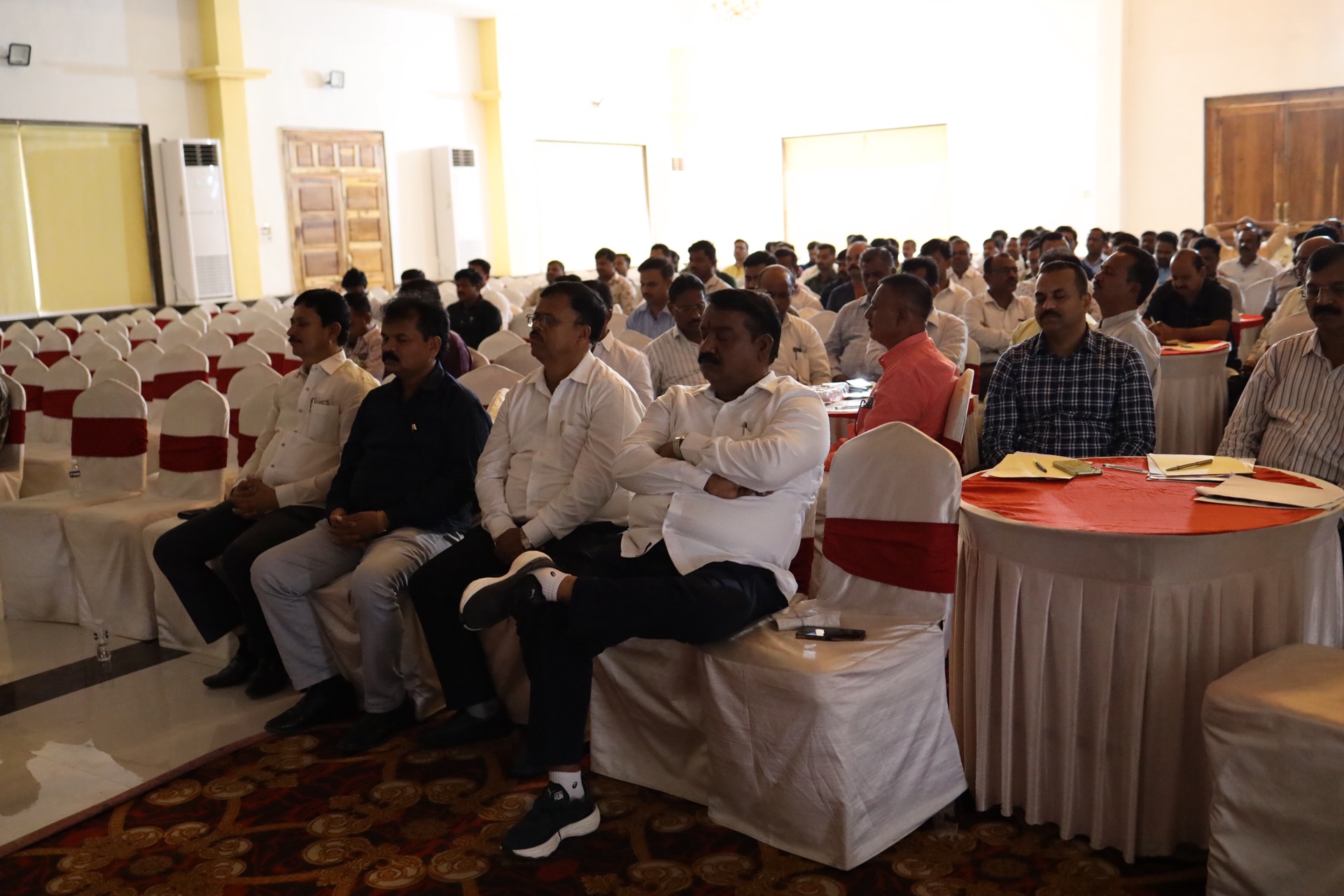
At the Islampur Business Forum, I met a young leader who had every reason to coast on his family's political capital — and chose, instead, to build something of his own for other people. Pratik Jayant Patil's story is one of the clearest examples I have encountered of what it actually looks like to be a Change Catalyst, the 24th trait on the Emotional Intelligence side of the Winning Kite.
In short- Pratik Jayant Patil, son of Maharashtra MLA Jayant Patil, founded the Islampur Business Forum to give local entrepreneurs a platform for collaboration, not political favours.
- He embodies Change Catalyst — Trait #24 of the 25 Emotional Intelligence competencies in Avinash Chate's Winning Kite framework — by recognising the need for change, removing barriers, and leading by example.
- Unlike leaders who lean on status, Pratik stayed humble, down-to-earth, and a constant learner — proof that EQ, not entitlement, is what drives lasting change.
- The ADKAR Model (Awareness, Desire, Knowledge, Ability, Reinforcement) is the practical tool for building this trait in any workplace, from a family business to a Fortune 500 floor.
- Change Catalyst draws on all 23 EQ competencies before it — it is the trait where everything else you've built comes together into visible action.
Where this sits on your Winning Kite
Change Catalyst is Trait #24 on the EQ — left side — of your Winning Kite (KITE Leadership Framework). It sits at the very end of the EQ cluster because it is, in many ways, the culmination of everything before it — self-awareness, empathy, persuasion, optimism, resilience — brought together and pointed at a single outcome: making change actually happen. A kite doesn't rise on one strong side. Change Catalysts prove this daily — their EQ has to be matched by RQ (the relationships they build to bring others along) and PQ (the discipline to execute) before the kite climbs toward Success.
The man behind the Islampur Business Forum
I had the opportunity to meet Mr. Pratik Jayant Patil at the Islampur Business Forum, an event and platform he built himself in Islampur, Maharashtra. What struck me immediately was the contrast between where he could have positioned himself and where he chose to stand instead.
Pratik comes from a well-known political family — his father, Jayant Patil, is a Member of the Legislative Assembly of Maharashtra, a name that carries weight across the state. In India, sons and daughters of prominent political families often step into public life riding on that legacy — securing positions, contracts, and influence through connections rather than contribution. Pratik took a different road entirely. He dedicated himself to entrepreneurship and philanthropy, choosing to build value rather than inherit it.
Building a platform, not a pedestal
Pratik founded the Islampur Business Forum to create a space where local entrepreneurs could come together. His goal was simple but powerful: foster a win-win environment where business owners in and around Islampur could collaborate and mutually strengthen their ventures. This wasn't a networking event designed to showcase his family's influence. It was infrastructure — a platform other people could use to grow, whether or not their last name opened doors.
That distinction matters enormously in Indian business culture, where access is so often gated by connections. Pratik used the connections he was born with to build something that widened access for others, rather than narrowing it for himself. That is not a small thing. It is, in fact, the entire difference between a Change Catalyst and someone who merely benefits from change that others create.
Humility as a leadership choice, not a personality trait
Unlike many individuals from political families who often gravitate toward power and status, Pratik's approach struck me as fundamentally different. He is humble, down-to-earth, and driven by a genuine desire to make a difference — not by a need to be seen making one. During my interactions with him, I found him to be a constant learner, always open to new ideas that could bring about positive change. He didn't posture as someone who already had the answers. He listened, asked, and adjusted.
This is worth pausing on, because humility is frequently mistaken for weakness in Indian corporate and political culture, where hierarchy and status displays are the norm. Pratik's humility was not passivity — it was a deliberate operating style. He led by example, recognising the need for change in his community's entrepreneurial ecosystem and driving it forward with conviction, while also providing tangible support to others as they navigated that change. That combination — conviction plus support — is the signature of an effective Change Catalyst.
What the Change Catalyst trait actually means
A Change Catalyst is someone who initiates or manages change. This competence is about recognising when change is needed and taking the action required to make it happen. It draws on all the previous Emotional Intelligence competencies that come before it in the model — which means the more of those qualities a person has built, the more capable they become as a Change Catalyst. People with this competence can identify the need for change, remove the obstacles blocking progress, and lead others through the pursuit of that change. In a business environment where companies are constantly reorganising, merging, acquiring, and going global, the ability to lead change has become one of the most valued leadership skills there is.
The process has a clear shape. First, a Change Catalyst recognises that change is necessary — they can look at a situation and sense when the status quo is no longer good enough to reach a desired goal or result. Second, once that need is recognised, they work to remove the barriers standing in the way — questioning the status quo, building agreement that something must shift, and clearing whatever is blocking progress. This is precisely what Pratik did: he recognised that Islampur's entrepreneurs lacked a structured platform for collaboration, and rather than waiting for someone else to build one, he built it himself.
It takes more than technical skill
[[IMAGE: image42.png]]
Being a Change Catalyst is more than having technical expertise. It requires a set of emotional skills — the ability to persuade, stay committed, stay motivated, take initiative, and remain optimistic even when progress is slow. According to Mary Shapiro, a professor at the Simmons School of Management, technical expertise is essential, but emotional intelligence is equally important. Effective change leaders need deep self-knowledge, strong empathy, sharp communication skills, the ability to adapt and bounce back, and a clear strategic understanding of the goals they're working toward.
Vineet Nayar, former CEO of HCL Technologies and author of Employees First, Customers Second, describes an effective change catalyst as someone who can inspire and empower people to drive change themselves — building a culture of trust and openness, giving people a voice, and creating room for experimentation and learning. Pratik's forum does exactly this at a grassroots level: it gives Islampur's entrepreneurs a voice and a shared space to experiment and grow together, rather than compete in isolation.
Two other faces of the same trait
I've seen this pattern play out at very different scales. When Gary Kirsten took over as coach of the Indian cricket team after their humiliating first-round exit from the 2007 Cricket World Cup, he became a change catalyst for a demoralised group of extraordinarily talented players — Sachin Tendulkar, Virender Sehwag, Gautam Gambhir, Yuvraj Singh, Mahendra Singh Dhoni, Virat Kohli, Zaheer Khan, and Harbhajan Singh among them. Kirsten built trust and credibility, tailored his approach to each player's strengths and weaknesses, and led the team to the 2011 World Cup title — their first win in 28 years, capped by Dhoni's iconic final-over six and Yuvraj Singh's Player of the Tournament performance.
At Kiran Gems, one of the world's largest natural diamond manufacturers, I met leaders like Vallabhbhai Patel, Babubhai Patel, Mavjibhai Patel, Dinesh Lakhani, and Rajesh Lakhani at a Women's Day event at the Sahara Hotel in Mumbai in March 2023. Vallabhbhai Patel, the company's Chairman, entered the industry over four decades ago and worked his way up through every stage of diamond manufacturing, eventually developing deep expertise in procurement and manufacturing technique. Dinesh Lakhani entered the business at just 17 and became known for his problem-solving ability, later driving the company's marketing strategy and global distribution. Their willingness to keep changing and adapting — rooted in a company culture built on trust, integrity, and ethics — took Kiran Gems from a small Mumbai operation in 1985 to a global No. 1 in its industry.
What connects Kirsten, the Kiran Gems leadership, and Pratik Jayant Patil is not scale — it's the same underlying pattern: recognise the need for change, remove the obstacles, and lead people through it with both conviction and support.
Change leaders aren't necessarily innovators
It's worth clearing up a common misconception. A transformational leader — the kind of person who drives change through an organisation — doesn't necessarily have to invent anything new. They don't need to come up with a new product or a novel idea. Instead, they focus on inspiring and motivating people to work toward a shared goal, even amid change and uncertainty.
Consider a hypothetical: a company's manufacturing plant has operated in Bangalore for years, and management decides to relocate it to Pune for cost savings, better logistics, or market access. This kind of shift causes real upheaval — employees who built their lives around Bangalore may resist relocating. The leader who navigates this successfully doesn't need a new invention. They need self-awareness, empathy, strong communication, adaptability, and the resilience to keep going when resistance is high. They need to paint a picture of how the move benefits both the company and the employees' own career growth, and they need to give people a voice in how the transition happens rather than simply dictating it.
Building the trait: the ADKAR Model
[[IMAGE: image15.png]]
If Change Catalyst feels abstract, the ADKAR Model — developed by Jeff Hiatt — makes it concrete and teachable at the individual level. It has five components, and I use it constantly in my own training rooms when a leader is trying to drive change on their team, whether that's a new project management tool or a much bigger organisational shift.
| ADKAR Step | What the Change Catalyst does |
|---|---|
| Awareness | Communicates why change is needed — with real data and examples, not just instructions. |
| Desire | Addresses individual concerns, shows people what's in it for them personally. |
| Knowledge | Arranges training, identifies "change champions" who support their peers. |
| Ability | Monitors progress, coaches through obstacles, provides hands-on support. |
| Reinforcement | Celebrates wins, gathers feedback, embeds the change into daily routine. |
Look at Pratik's Islampur Business Forum through this lens and the ADKAR steps map cleanly onto what he built: awareness (showing entrepreneurs the value of collaborating rather than competing in isolation), desire (creating a genuinely win-win structure so businesses wanted to participate), knowledge and ability (the forum itself as an ongoing platform for shared learning), and reinforcement (sustaining the community over time, event after event). He didn't need a manual to do this — but the manual explains, in hindsight, exactly why it worked.
Why Pratik's story matters more than the bigger names
I include Infosys' Salil Parekh and Tata Group's Ratan Tata in my sessions too — both undeniable examples of large-scale change leadership. But I keep coming back to Pratik Jayant Patil when I train mid-level managers and young leaders, because his story removes the excuse of scale. He didn't have a multinational balance sheet or a listed company's resources. He had a name that could have opened doors for himself alone, and he chose to build a door for other people instead.
That is the real test of the Change Catalyst trait: not whether you have the authority to force change, but whether you have the emotional intelligence to recognise where change is needed, the humility to lead it without needing credit, and the discipline to support others all the way through it. Leaders like Pratik are not just stars in their own domain — they are catalysts of transformation who create a ripple effect of positive change well beyond their own success.
When I run leadership workshops on this trait, I ask participants one question before anything else: where in your team, your department, or your family business are you sitting on influence you could be using to build a platform for others, instead of a pedestal for yourself? Pratik's answer to that question is the Islampur Business Forum. What's yours?
This is the kind of applied Emotional Intelligence work I bring into Signature Corporate Training Programs and corporate training sessions across India — turning a trait like Change Catalyst from a concept in a book into a behaviour your managers practise on the floor.
Bring These Ideas to Your Team
Avinash Chate turns the traits in Stars at India Inc. into live leadership & emotional-intelligence workshops. TEDx speaker · 11+ yrs training Army, BRO, RBI, BARC, JSW & 1000+ leaders.
✅ Thanks! Avinash team will reach out within 24 hours.'}).catch(function(e){f.outerHTML='Something went wrong. WhatsApp +91 8793630001
'});return false;">Select ServiceKeynote / Motivational SpeakingLeadership Development TrainingTeam Building WorkshopManager DevelopmentEmployee TrainingBook Avinash Now →Or WhatsApp directly: +91 87936 30001
Work with Avinash Chate
- Signature Corporate Training Programs →
- The Winning Kite (KITE Leadership Framework) →
- All Corporate Training Topics →
Avinash Chate TEDx Speaker · Founder, The Future Corporate · Author of Stars at India Inc. Avinash has trained the Indian Army, BRO, RBI, BARC, JSW Steel and 1000+ corporate leaders across India. His work focuses on leadership, emotional intelligence and behavioural training rooted in Indian values and modern business needs. |
Frequently Asked Questions
Who is Pratik Jayant Patil and why is he in Stars at India Inc.?
Pratik Jayant Patil is the founder of the Islampur Business Forum, a platform for local entrepreneurs in Maharashtra. Despite his father Jayant Patil being an MLA, Pratik chose entrepreneurship and community-building over political entitlement. Avinash Chate features him in Stars at India Inc. as a real-world example of the Change Catalyst trait.
What is a Change Catalyst in emotional intelligence terms?
A Change Catalyst is someone who recognizes when change is needed, removes the obstacles blocking it, and leads others through it with conviction. It is Trait #24 in Avinash Chate's 25-trait Emotional Intelligence model and sits on the EQ side of the Winning Kite leadership framework.
What is the Islampur Business Forum?
The Islampur Business Forum is a platform founded by Pratik Jayant Patil to help local entrepreneurs in and around Islampur, Maharashtra, collaborate, share resources, and grow their businesses together in a win-win environment.
How can I build Change Catalyst skills in my own team?
Use a structured model like ADKAR (Awareness, Desire, Knowledge, Ability, Reinforcement), lead by visible example the way Pratik did, remove obstacles proactively, and pair technical competence with emotional intelligence — empathy, communication, resilience, and a clear strategic vision. Avinash Chate's leadership workshops build this trait through live simulations.
Related Articles by Avinash Chate
- Human Capital ROI: How People Unlock Maximum Potential and Profits in India 2026
- Nitesh Runwal of Samyak Group: How a School Friendship Became a Networking Masterclass
- From Mainframe to Cloud: Vishal Chandane's Adaptability India 2026
Avinash Chate services
Corporate Trainer in Maharashtra · Top Corporate Trainers in Maharashtra · Leadership Trainer in Maharashtra · Top Leadership Trainers in Maharashtra · Team Building Trainer in Maharashtra · Top Team Building Trainers in Maharashtra · Motivational Speaker in Maharashtra · Top Motivational Speakers in Maharashtra · All service locations
← Back to all articles · Book Avinash Chate
By Avinash Chate — Maharashtra’s #1 Corporate Trainer & Motivational Speaker. .