Nitesh Runwal of Samyak Group: How a School Friendship Became a Networking Masterclass
My school friend Nitesh Runwal built Samyak Group into a leading name in real estate development not by chasing contacts, but by building genuine bonds. Here is what his story teaches every professional about the trait of Networking & Building Bonds.
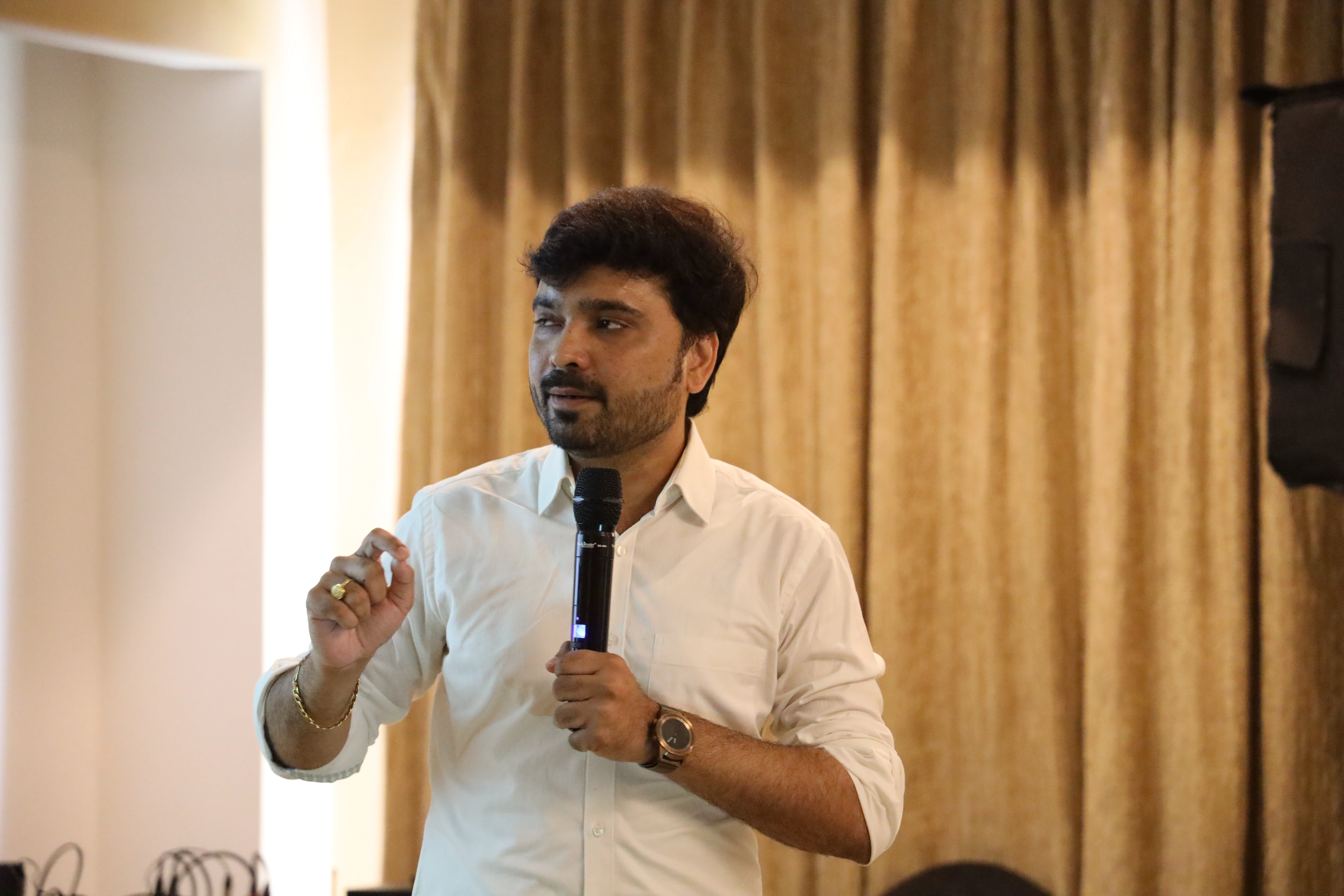
Some people network to get somewhere. Nitesh Runwal, who I have known since our school days and who today represents Samyak Group as one of the leading builders and developers in his territory, networks because it is who he is. That difference — networking as identity versus networking as tactic — is exactly what separates star performers from everyone else, and it is why his story sits at the heart of Trait #21 in my book, Stars at India Inc.: Networking & Building Bonds.
In short- Nitesh Runwal of Samyak Group built his standing as a leading builder-developer on decades of genuine, trust-based relationships — not transactional contacts.
- His networking philosophy: the strongest links are not the people closest to you geographically, but the ones you share real trust and mutual respect with.
- He deliberately builds a network of varied backgrounds and expertise, not an echo chamber of similar people.
- Networking and friendship overlap but are not identical — the best networkers know how to blend the two without losing either.
- Networking & Building Bonds sits on the RQ (Relationship Intelligence) side of the Winning Kite, and it multiplies everything you build on the EQ and PQ sides.
Where this sits on your Winning Kite
Networking & Building Bonds is Trait #21 in the Motivating Others cluster, and it lives on the RQ — Relationship Intelligence — side of your Winning Kite (KITE Leadership Framework). Picture the kite: Success sits at the top as the result you are chasing, EQ holds the left side, PQ the bottom, and RQ the right. None of the four sides fly the kite alone. You can have every ounce of technical skill and personal discipline in the world, but if your RQ side is thin, the kite drags. Nitesh's story is proof that the right side, done well, can carry an entire career.
The Friend I Have Known Since School
I have known Nitesh Runwal since our school days. That is not a throwaway detail — it matters to the story, because it means I have watched this trait in him for decades, long before Samyak Group existed, long before he became one of the leading names in real estate development in his territory. Even as a boy, Nitesh possessed this quality of building strong connections with the people around him. It was not something he learned in an MBA classroom or picked up from a networking seminar. It was simply how he moved through the world — curious about people, generous with his time, and consistent in how he treated everyone he met.
That consistency is the part people underestimate. Networking looks glamorous from the outside — the handshake, the business card, the LinkedIn connection request. But what actually built Nitesh's network was decades of unglamorous follow-through: staying in touch, remembering details, showing up, and doing it the same way whether the person in front of him could be useful to him tomorrow or never again. He has used this exact skill, sustained over a very long time, to become a leading builder and developer in his territory. In an industry where trust between a builder, buyer, financier, and local authority can make or break a project years before the first brick is laid, that network is not a soft asset. It is the business.
The Real Insight: Strength Is Not About Proximity
Here is the line from Nitesh's story that I want every reader to sit with. Nitesh recognizes that the strongest links in our networks are not necessarily those we are physically close to, but rather those with whom we feel a connection, trust, and mutual respect. Read that again, because most people get this backwards.
The instinct in most workplaces is to network with proximity — the people on your floor, in your WhatsApp group, at your regular coffee spot. Proximity is easy. It requires no effort beyond showing up where you already are. But proximity-based networks tend to be shallow and narrow. Everyone in them thinks alike, knows the same people, and has access to the same opportunities you do. There is very little new value flowing in.
Nitesh's network is built differently. He has built relationships with people from many different walks of life, so his network is made up of many different points of view and areas of expertise. A builder who only knows other builders has a network that mirrors his own blind spots. A builder who also knows lawyers, bankers, civic officials, suppliers, journalists, and old school friends from entirely unrelated fields has a network that sees around corners he cannot see around himself. That diversity of perspective, cultivated over years of genuine connection rather than convenience, is what let Samyak Group grow the way it has — because Nitesh was rarely the last to know about a shift, an opportunity, or a risk. Someone in his wide, trust-based web usually told him first.
Networking Is Not the Same as Making Friends
One of the most useful distinctions I make in this chapter — and one Nitesh's example brings to life — is that networking relationships are not the same as personal friendships that are mostly for fun. This sounds obvious, but it trips up a lot of professionals, in both directions.
Some people are too casual about it. They treat every contact as a personal friend, mixing private life and work life so completely that the relationship loses its professional usefulness and sometimes its personal warmth too, because it starts feeling transactional even when it is not meant to. Others go too far the other way. People who are shy, introverted, or reclusive may find it difficult to build such relationships in the first place. And there is a third group that quietly sabotages its own networking without realizing it: those who accept invitations but make none themselves, or restrict their conversation strictly to work matters. They show up, but they never extend the hand first, and they never let the relationship breathe beyond the transaction in front of them. Their networks stay small because they are only ever receiving, never initiating.
There is a fourth trap too, and it is one I see often among high performers who pride themselves on discipline: people who are too protective of their own work time and agendas may turn down requests to work cooperatively, leading to a stunted network. Guarding your calendar is a virtue until it becomes the reason nobody thinks to call you when something good comes up.
What Nitesh does — and what people skilled at networking generally do — is mix the private and the professional intelligently, while still knowing where to draw a line. He builds real friendships with the people he works alongside, because those friendships deepen understanding of each other's needs and perspectives. But he does not let every relationship dissolve into pure sociability with no substance, and he does not let every professional contact stay purely transactional either. He balances his important work with carefully chosen favors, which is precisely how outstanding performers build goodwill with people who could be important resources in the future. That balance — generous but not indiscriminate, warm but not reckless with his own time — is what makes an alliance, a relationship you can actually count on, possible.
Why This Matters Beyond Real Estate
You do not need to be a builder to learn from Nitesh Runwal. Every industry in India today runs on the same underlying dynamic. I have watched Indian businesses shift, over the years, from playing potential partners against each other toward building collaborative relationships with their suppliers and retailers. Companies are investing seriously in customer relationships too — through SMS, email, social media, and other online platforms — precisely because they have understood what Nitesh understood instinctively since school: that success is not only about knowledge, but also about the people you know.
This is also why so many companies now have a dedicated relationship manager role — someone whose entire job is cultivating and maintaining strong relationships with key stakeholders like suppliers, customers, and partners, so the organisation has a reliable, stable network of contacts it can lean on when things get difficult. Nitesh, in effect, has been his own relationship manager for Samyak Group for years, long before the title became fashionable in corporate India.
Practical Tools to Build Your Own Network the Nitesh Runwal Way
From this chapter of Stars at India Inc., here are the concrete habits I ask participants in my workshops to practice:
- Social Intelligence: Observe and adapt to social cues, cultural differences, and varying communication styles. Read the room before you speak.
- Follow-Up: After meeting someone new, follow up with a personalised message or email, expressing appreciation for the interaction and mentioning specific topics you discussed. This single habit, done consistently, is what separates a contact from a connection.
- Genuine Interest: Ask open-ended questions and actually listen to the answers about people's experiences, goals, and aspirations. This is where trust and authenticity begin.
- Networking Events: Attend conferences and workshops within your industry and beyond it. Nitesh's diverse network exists precisely because he did not confine himself to real-estate circles alone.
- Online Presence: Maintain a professional presence on LinkedIn and industry forums, and engage — comment, share, participate — rather than just observe.
- Collaboration: Look for genuine opportunities to work with others on projects. Shared work strengthens bonds faster than shared meals ever will.
I have written more extensively about complementary relationship-building examples in this same trait — including Madhav Kale, VP of the RBI Officers Association, whose networking opened doors all the way to a state Governor and a Chief Minister, and Bhagat Patil of Aditi Foods, who took his company's exports from two countries to twenty-five in a decade through relationship-first business building. Read both alongside Nitesh's story, and you will start to see the pattern across very different industries: the trait behind the growth is identical.
The Takeaway
Nitesh Runwal did not build Samyak Group into a leading name through advertising budgets alone or aggressive sales tactics. He built it on a network cultivated over decades, made of people he genuinely trusted and respected, drawn from far beyond his own industry, sustained by consistent follow-through rather than occasional charm. That is Networking & Building Bonds in its fullest form — and it is a trait every professional, in every sector, can deliberately practice starting today.
If you want to build this capability across your team — the RQ side of the Winning Kite that most leadership programs ignore entirely — explore my Signature Corporate Training Programs or browse the full range of Corporate Training Topics I deliver for organisations across India.
Bring These Ideas to Your Team
Avinash Chate turns the traits in Stars at India Inc. into live leadership & emotional-intelligence workshops. TEDx speaker · 11+ yrs training Army, BRO, RBI, BARC, JSW & 1000+ leaders.
✅ Thanks! Avinash team will reach out within 24 hours.'}).catch(function(e){f.outerHTML='Something went wrong. WhatsApp +91 8793630001
'});return false;">Select ServiceKeynote / Motivational SpeakingLeadership Development TrainingTeam Building WorkshopManager DevelopmentEmployee TrainingBook Avinash Now →Or WhatsApp directly: +91 87936 30001
Work with Avinash Chate
- Signature Corporate Training Programs →
- The Winning Kite (KITE Leadership Framework) →
- All Corporate Training Topics →
Avinash Chate TEDx Speaker · Founder, The Future Corporate · Author of Stars at India Inc. Avinash has trained the Indian Army, BRO, RBI, BARC, JSW Steel and 1000+ corporate leaders across India. His work focuses on leadership, emotional intelligence and behavioural training rooted in Indian values and modern business needs. |
Frequently Asked Questions
What trait does Nitesh Runwal's story illustrate in Stars at India Inc.?
Nitesh Runwal of Samyak Group illustrates Trait #21, Networking & Building Bonds, on the Relationship Intelligence (RQ) side of Avinash Chate's Winning Kite framework. It is the ability to build trust-based, mutually helpful relationships across diverse walks of life.
What makes Nitesh Runwal's networking approach different from ordinary contact-building?
Nitesh does not chase proximity or convenience. He builds his network around people he feels genuine connection, trust, and mutual respect with, drawing them from many different walks of life so his network carries many different points of view and areas of expertise.
Is networking the same as making friends at work?
No. Networking relationships are not the same as personal friendships that exist purely for fun. Skilled networkers often blend their private and professional worlds, but the best of them are careful to keep the two distinct even as they nurture both.
How can I apply the Networking & Building Bonds trait at my workplace?
Practice social intelligence by reading cultural and communication cues, always follow up personally after meeting someone new, ask genuine open-ended questions, attend events beyond your immediate circle, keep an active professional presence online, and look for real opportunities to collaborate rather than just to collect contacts.
Related Articles by Avinash Chate
- The Consequence Model: Making Quick Decisions With Lasting Impact in Indian Corporate Life
- How Kohli's Defence of Shami After 2021 T20 Defines Team Loyalty
- Chandrashekhar Puranik – fixing the forging machine
Avinash Chate services
Corporate Training · Leadership Development · Team Building · Motivational Speaking · All service locations
← Back to all articles · Book Avinash Chate
By Avinash Chate — Maharashtra’s #1 Corporate Trainer & Motivational Speaker. .