Madhav Kale – VP, RBI Officers Association: The Art of Networking
How Madhav Kale, VP of the RBI Officers Association, turned genuine warmth into a network that connects a Chief Minister, a Governor, and Ratan Tata — and what it teaches you about Networking & Building Bonds, Trait #21 on the EQ side of your Winning Kite.
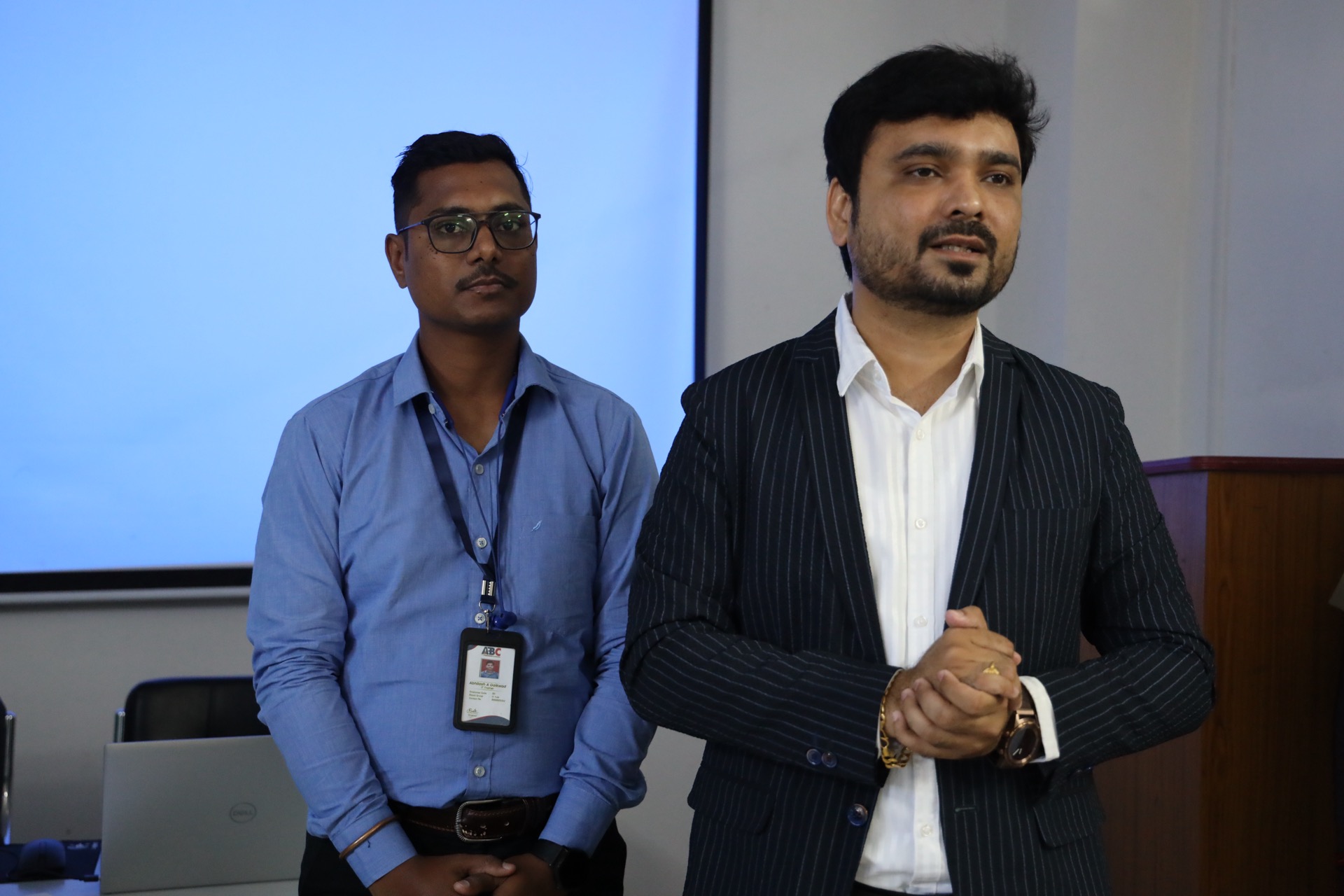
Some people collect visiting cards. Madhav Kale collects relationships — and the difference between the two is the entire trait I want to talk about today. He is the Vice President of the RBI Officers Association and Head of the Legal Cell at the RBI Regional Office, Bengaluru, and over the years he has become one of the finest networkers I have had the privilege to call a friend.
In short- Madhav Kale, VP of the RBI Officers Association, built a network spanning a Chief Minister, a Governor, and Ratan Tata — through years of genuine, unhurried relationship-building.
- Networking & Building Bonds is Trait #21 on the EQ side of the Winning Kite, under the Motivating Others cluster.
- Star performers separate work favours from personal friendships, but let the two nourish each other.
- Practical tools: social intelligence, disciplined follow-up, genuine interest, networking events, an active online presence, and collaboration.
- Networking is not schmoozing — it is the slow, deliberate construction of trust that pays off years later, for both sides.
Where this sits on your Winning Kite
Networking & Building Bonds is Trait #21, and it sits on the EQ — left side of your Winning Kite (KITE Leadership Framework), inside the cluster I call Motivating Others. Remember the kite only flies when all four sides pull their weight — Top (Success), Left (EQ), Right (RQ), Bottom (PQ). Networking is where your EQ (self-awareness of what you can offer, and empathy for what others need) starts converting into RQ — actual relationships that carry weight when you need them most. You cannot fake this trait for long. People sense within minutes whether you are networking with them or networking through them.
Who is Madhav Kale, and why does his story matter
Mr. Madhav Kale is not a CEO or a business tycoon. He is a senior banking professional — the Vice President of the RBI Officers Association and the Head of the Legal Cell at the RBI Regional Office in Bengaluru. On paper, his job is legal and administrative. In practice, he is one of the most connected people I know, because he works closely with multiple stakeholders every single day: different departments within the RBI, external legal experts, government officials, and a wide circle of people from completely unrelated walks of life.
What struck me about Madhav from the very first time I met him is that he treats every one of these interactions as an opportunity to build a relationship, not just close a transaction. Over years of cultivating this contact list with patience and genuine warmth, he built a network that most people would call extraordinary — except that for Madhav, it never felt calculated. It felt like simply being a good human being to everyone he crossed paths with.
The Chief Minister, the Governor, and Ratan Tata
Let me tell you exactly what this network looks like in practice, because the specifics matter more than the generality.
During one of my visits to the RBI, Madhav introduced me to Mr. Basavaraj Bommai, who was then the Chief Minister of Karnataka. This was not a stray, one-off favour — it was the natural outcome of the kind of access and goodwill Madhav had built through years of showing up, following through, and being useful to people without keeping score.
On another occasion, I watched Madhav's warm, welcoming nature translate directly into a meaningful connection with Baby Rani Maurya, the Governor of Uttarakhand. Madhav did not just introduce me and step back — he actively offered to gift my book, The Winning Edge, to the Governor. That is a small gesture on the surface, but it tells you everything about how he thinks: he is constantly looking for ways to add value to the people in his circle, and to connect the people in his circle to each other.
And then there is the detail that still amazes me every time I recall it — Madhav helped me send a copy of my very first book to none other than Ratan Tata. Think about what that required. It required Madhav to have, somewhere in his vast web of contacts, a credible path to one of the most respected business leaders in the country. And it required him to be willing to use that access on behalf of a friend, without any expectation of return.
This is what I mean when I say Madhav Kale is a true master of building and maintaining strong relationships. He does not maintain connections the way a Rolodex maintains names. He maintains them the way a gardener maintains a garden — with attention, patience, and care, long before he ever needs to pick the fruit.
Networks are built on trust, not proximity
One of the deepest lessons Madhav's story teaches is this: the strongest links in your network are not necessarily the people who sit closest to you at work. They are the people with whom you share a genuine connection, mutual trust, and mutual respect — regardless of department, designation, or distance.
I have seen this play out in another friend of mine, Nitesh Runwal, who represents Samyak Group and has become a leading builder and developer in his territory. I have known Nitesh since our school days, and he has always had this instinctive quality of building strong connections with the people around him. His network today spans many different walks of life — which means it also spans many different points of view and areas of expertise. That diversity is precisely what makes it valuable. A network that only contains people exactly like you cannot open doors that are different from the ones you already know.
Networking is not the same as friendship — and star performers know the difference
Here is a distinction that Madhav's example brings into sharp focus, and one that I think most people get wrong. Networking relationships are not the same as personal friendships that exist mainly for enjoyment. The best networkers — Madhav included — often blend their private and professional lives, but they are careful to keep the two conceptually separate. A favour done in a professional network context still carries professional expectations of reciprocity and discretion, even when it is wrapped in warmth.
This is also why some people struggle with this trait. If you are shy, introverted, or reclusive, building this kind of extended network does not come naturally — and that is worth acknowledging rather than shaming. Equally, people who accept every invitation but never extend one themselves, or who restrict every conversation strictly to work matters, quietly stunt their own networks without realising it. And people who guard their calendar and their agenda too tightly, who say no to every request to collaborate, end up starving their own relationship capital over time.
Star performers, on the other hand, learn to balance protecting their core work with granting carefully chosen favours. This balance builds goodwill with people who may become important resources later — not through manipulation, but through the simple, old-fashioned discipline of being reliable. Establishing what I would call an alliance — a relationship you can count on, and one that counts on you — is the foundation of every close working friendship that eventually pays dividends.
The Aditi Foods story: from two countries to twenty-five
Networking is not only a personal-growth trait — it scales into extraordinary business outcomes. Take the story of Aditi Foods, whose CEO, Mr. Bhagat Patil, understands the importance of relationship-building better than almost anyone I have studied. Under his leadership, Aditi Foods expanded its export range from just two countries to twenty-five countries in only ten years. That is not a marketing achievement — it is a networking achievement.
Mr. Patil built strong relationships with every stakeholder in his orbit: customers, vendors, and even competitors. He believes in relationships grounded in trust and mutual respect, and he goes out of his way to help others — down to never forgetting to send gifts and Aditi Foods products to everyone in his circle during Diwali. I once attended a forum for businessmen that Mr. Patil organised in his own area, despite facing intense competition from many of the very people he had invited. That single act — creating a platform for everyone, competitors included — captures the spirit of true networking better than any slide in a training deck.
It is also worth noting how this trait is scaling institutionally across Indian business. Many companies now have a dedicated relationship manager role, whose sole job is to cultivate and maintain strong relationships with key stakeholders — suppliers, customers, partners — so that the organisation always has a reliable, stable network to draw on when challenges arise. Even consumer-facing giants have industrialised this instinct: Flipkart runs customer service teams across email, social media, and chat, and Jio's app lets customers manage their account and resolve issues without friction. The instinct behind Madhav Kale's warm handshake and the instinct behind a telecom company's customer app are, at their core, the same trait, operating at different scales.
Six practical tools to build your own network
Drawing directly from what Madhav Kale, Nitesh Runwal, and Bhagat Patil practise, here are the tools I teach in my workshops for developing this trait:
1. Social Intelligence
Observe and adapt to social cues, cultural differences, and varying communication styles. Awareness of social dynamics lets you interact more effectively and respectfully with a wide range of people — which is exactly what let Madhav move comfortably between RBI colleagues, a Chief Minister, and a Governor.
2. Follow-Up
After meeting someone new, follow up with a personalised message or email that expresses appreciation and references specific topics you discussed. This single habit, done consistently, is what separates a business card in a drawer from a relationship that lasts a decade.
3. Genuine Interest
Ask open-ended questions and seek to learn about people's experiences, goals, and aspirations — not just their job title. Genuine interest is what fosters real trust and authenticity, and people can always tell the difference between curiosity and performance.
4. Networking Events
Attend events, conferences, and workshops within your industry and beyond it. Stepping outside your own field, the way Mr. Patil did by inviting even his competitors to his forum, is what exposes you to new perspectives and unexpected collaborations.
5. Online Presence
Maintain a professional presence on LinkedIn and industry forums. Share content, comment thoughtfully, and participate in discussions — your network today extends far beyond people you have physically met.
6. Collaboration
Actively seek opportunities to work with others on projects or initiatives. Collaboration strengthens existing bonds while showcasing your abilities to a wider audience — it is networking and skill-demonstration rolled into one.
You will find a full toolkit for developing these skills, along with the broader Relationship Quotient (RQ) framework, in the RQ section of Stars at India Inc., where I go deeper into how to build and sustain professional bonds over a career, not just a quarter.
What this means for your career, starting Monday
Madhav Kale did not wake up one day and decide to become a super-connector. He built this trait meeting by meeting, favour by favour, follow-up by follow-up, over years. That is the real lesson: networking is not an event you attend once a quarter — it is a discipline you practise in every single interaction, including the ones that seem to offer you nothing in return.
If you are building your own EQ and RQ through corporate training programs or exploring the full Signature Programs I run for organisations, Networking & Building Bonds is one of the traits we work on directly — because a star performer who cannot build bonds beyond their own desk eventually hits a ceiling no amount of individual brilliance can break through. If a leader in your organisation embodies this trait the way Madhav does, I would also point you to the story of Vighnesh Shahane on Team Competence — the natural next trait once your individual network starts translating into collective results.
Bring These Ideas to Your Team
Avinash Chate turns the traits in Stars at India Inc. into live leadership & emotional-intelligence workshops. TEDx speaker · 11+ yrs training Army, BRO, RBI, BARC, JSW & 1000+ leaders.
✅ Thanks! Avinash team will reach out within 24 hours.'}).catch(function(e){f.outerHTML='Something went wrong. WhatsApp +91 8793630001
'});return false;">Select ServiceKeynote / Motivational SpeakingLeadership Development TrainingTeam Building WorkshopManager DevelopmentEmployee TrainingBook Avinash Now →Or WhatsApp directly: +91 87936 30001
Work with Avinash Chate
- Signature Corporate Training Programs →
- The Winning Kite (KITE Leadership Framework) →
- All Corporate Training Topics →
Avinash Chate TEDx Speaker · Founder, The Future Corporate · Author of Stars at India Inc. Avinash has trained the Indian Army, BRO, RBI, BARC, JSW Steel and 1000+ corporate leaders across India. His work focuses on leadership, emotional intelligence and behavioural training rooted in Indian values and modern business needs. |
Frequently Asked Questions
What is Networking & Building Bonds in the Winning Kite framework?
Networking & Building Bonds is Trait #21 on the EQ (left) side of the Winning Kite, under the cluster of Motivating Others. It is the ability to build and maintain informal, mutually helpful relationships based on trust and respect, both inside and outside your organisation.
Who is Madhav Kale mentioned in Stars at India Inc?
Madhav Kale is the Vice President of the RBI Officers Association and Head of the Legal Cell at the RBI Regional Office, Bengaluru. Avinash Chate cites him in Stars at India Inc as a role model for the trait of Networking & Building Bonds.
How do I build a professional network like Madhav Kale?
Follow up genuinely after every meeting, show real interest in people beyond the transaction, attend events outside your own department or industry, maintain an active online presence, and be willing to do a favour before you need one back.
Is networking the same as making personal friends at work?
No. Networking relationships are built for mutual professional benefit, while personal friendships are mostly for enjoyment. Star performers keep the two related but distinct, and know when to draw the line.
Related Articles by Avinash Chate
- Understanding Others: Empathy as a Workplace Superpower
- Huggies Pull-Ups – Kimberly Clark Empathy Survey
- Team Capabilities: The Fevicol Skill That Unites Winners
Avinash Chate services
Corporate Trainer in Bengaluru · Top Corporate Trainers in India · Leadership Trainer in Bengaluru · Top Leadership Trainers in India · Team Building Trainer in Bengaluru · Top Team Building Trainers in India · Motivational Speaker in Bengaluru · Top Motivational Speakers in India · All service locations
← Back to all articles · Book Avinash Chate
By Avinash Chate — Maharashtra’s #1 Corporate Trainer & Motivational Speaker. .