Vighnesh Shahane – Cricketer-Turned-CEO of Ageas Federal on Team Capabilities
How Vighnesh Shahane carried a cricketer's instinct for teamwork into the CEO's chair at Ageas Federal Life Insurance — and what his story teaches every Indian leader about the Team Capabilities trait on the EQ side of the Winning Kite.
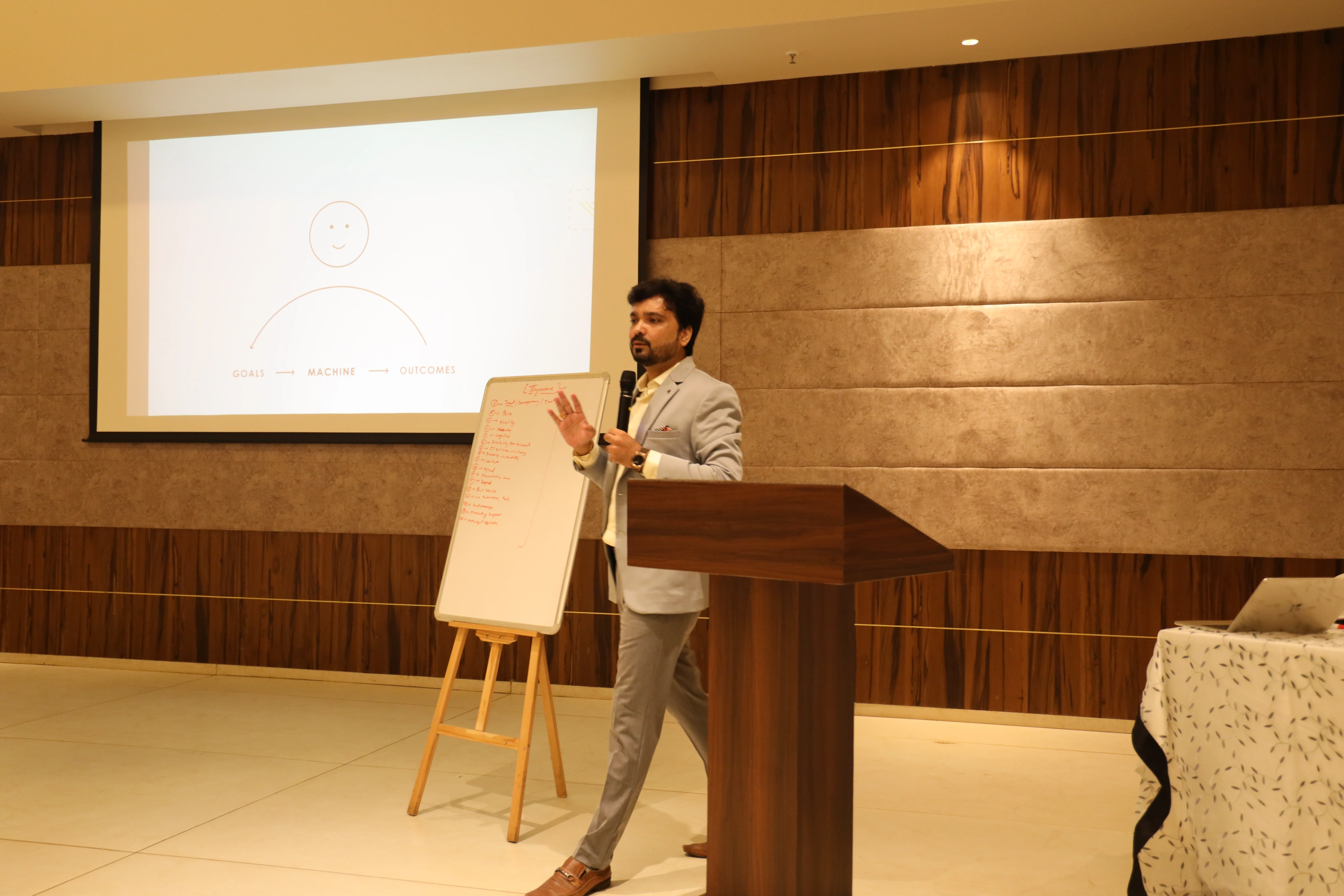
A while ago, I had the chance to interact with Vighnesh Shahane, CEO of Ageas Federal Life Insurance. We never met in person — our conversation happened over a call — but his journey from being a serious cricketer to running a corporate boardroom left a lasting impression on me. What stayed with me most was not his business acumen. It was his instinct for teamwork, carried straight off the cricket field and into the CEO's chair.
\n\nIn short- Vighnesh Shahane, CEO of Ageas Federal Life Insurance, played competitive cricket before he became a corporate leader — and it shaped how he runs his company.
- His core belief: the secret to a successful team is working together and supporting each other, on the field or in the office.
- He makes every team member feel valued, the way a well-coordinated cricket XI values its number eleven batsman as much as its opening bowler.
- He always shares credit — every win is a team win, never a solo achievement.
- This is Trait #22, Team Capabilities, on the EQ side of the Winning Kite — and Sourav Ganguly's 2003 Indian cricket team shows the same trait at national scale.
Where this sits on your Winning Kite
\nTeam Capabilities is Trait #22, sitting on the EQ — the left side — of your Winning Kite. If you have followed the Winning Kite (KITE Leadership Framework) through this series, you already know the shape: Success sits at the top, held aloft by EQ on the left, RQ on the right, and PQ at the bottom. A kite does not fly because one string is strong — it flies because all the strings hold their tension together. Team Capabilities is one of those strings. It is what stops individually brilliant people from becoming a group of individuals who happen to share an office.
\n\n\n\nThe competency behind the trait: what Team Capabilities actually means
\nBefore I tell you Vighnesh's story in full, let me define the trait itself, because it is more precise than the everyday phrase "team player" suggests.
\nThe Team Capabilities competency is about building strong and effective teams that work together towards a common goal. People who fit this competency model carry three visible traits: respect, being helpful, and working together as a team. They encourage and inspire everyone on the team to take an active and enthusiastic part in the work. They build a strong sense of team identity — a feeling of being part of something cohesive — and a strong commitment to the team's shared goals.
People with this skill also do something quieter but equally important: they make sure team members are working together well and efficiently, and they actively protect the team and its reputation. And crucially, they give credit to everyone on the team for the team's successes, recognising that each person made a difference — not just the person who presented the final numbers in the boardroom. This competency is essential for anyone who wants to be an effective leader or an effective team member, because it is what creates a positive, productive environment where people actually want to show up and contribute.
Now hold that definition next to Vighnesh Shahane's story, and you will see it is not theory. It is a description of how he actually leads.
\n\nThe cricketer who became a CEO
\nA while ago, I had the chance to interact with Vighnesh Shahane, the CEO of Ageas Federal Life Insurance. Despite never meeting in person, his unique journey from being a successful cricketer to a corporate leader left a deep impression on me. What stood out the most was his insights on the importance of teamwork.
\nVighnesh, with his cricketing background, shared with me that the secret to a successful team is working together and supporting each other. This is not a line he keeps reserved for the sports field out of nostalgia — he applies it equally, deliberately, in his role as CEO of a life insurance company. He focuses on making everyone in his team feel valued and appreciated, the same way a well-coordinated cricket team values every player on the roster, not just the ones who score centuries or take five-wicket hauls.
\nHis belief, in his own framing to me, is that you don't have to be in a high position to be a great team player. Everyone, regardless of their job title, can contribute to the team's success. It is about doing your best in your own role and feeling genuine pride in what the entire team achieves together — the fielder who saves four runs matters as much as the batsman who scores forty.
\nAnd here is the part that struck me the most: Vighnesh always made it a point to share credit with his team. For him, every victory was a team victory. It was never attributed to a single individual — not even to himself as CEO — but understood as the result of collective effort. In a corporate culture where credit-grabbing in review meetings is almost a survival skill, that is a genuinely rare posture for a CEO to hold.
\nHis perspective on teamwork had a profound impact on me. It served as a reminder that a good leader isn't just someone who racks up individual accomplishments — it's someone who can uplift the entire team around them. So here is the main takeaway I carried away from that conversation: to truly excel at your workplace, embrace being a team player first. Follow in the footsteps of Vighnesh Shahane — always play for the team, because when the team wins, everyone wins.
\n\nThe national-team version of the same trait: Sourav Ganguly, 2003
\nVighnesh's story is not an isolated case of one good CEO. India has watched this exact trait play out on a much bigger stage.
\nIn the early 2000s, the Indian cricket team was struggling to win matches consistently despite having several talented individual players. When Sourav Ganguly took over as captain, he did not simply reshuffle the batting order — he focused on building a cohesive team that worked well together. Ganguly emphasised the importance of teamwork, actively encouraging his players to support and help each other rather than compete for the spotlight. He also gave credit to everyone on the team for their successes, recognising that each player, in his own role, contributed to the team's achievements.
\nUnder Ganguly's leadership, the Indian cricket team — featuring stars like Sachin Tendulkar, Rahul Dravid, Virender Sehwag, and Anil Kumble — evolved into one of the best sides in the world. They triumphed in several major tournaments, including the 2002 NatWest Trophy. And though Ganguly himself was not captain by the time of the 2007 ICC World Twenty20, the team culture he had nurtured and developed — carried forward by players like Yuvraj Singh, M.S. Dhoni, and Harbhajan Singh — played a decisive role in India's victory at that tournament. The team he built outlived his captaincy. That is what real Team Capabilities looks like: a culture that survives the person who created it.
\n\nWhy this trait is so easy to say and so hard to practise
\nEvery manager I have trained across the Indian Army, BRO, RBI, BARC, JSW Steel and dozens of corporate floors will tell you, on a slide, that they "value teamwork." Almost none of them are lying — and almost none of them are practising it the way Vighnesh Shahane or Sourav Ganguly did. The gap is not intention. The gap is in three specific behaviours that are uncomfortable in the moment:
\n1. Sharing credit publicly, not privately. It is easy to tell a junior colleague "good job" in a one-on-one. It is much harder to stand up in front of your own boss and say, "this result belongs to my team, not to me." Vighnesh's habit of framing every win as a collective effort is a leadership discipline, not a personality quirk.
\n2. Valuing the quiet roles, not just the visible ones. In cricket, the number eleven batsman rarely gets applause. In your office, the person managing vendor reconciliations rarely gets applause either. Team Capabilities means you notice them anyway — because a leader who fits this competency actively protects the team and its reputation, including the parts of the team that never present in the town hall.
\n3. Treating position as irrelevant to contribution. Vighnesh's own words to me were direct: you don't have to be in a high position to be a great team player. That single idea, taken seriously, changes how a CEO listens to a fresher's suggestion in a meeting.
\n\nA borrowed idea, for colour
\nDaniel Goleman's research on emotional intelligence has long argued that teams with high collective EQ — not just high individual IQ — consistently outperform teams stacked with lone-star talent. Vighnesh Shahane's cricket-to-corporate story and Ganguly's captaincy are, in effect, Indian, lived proof of that same idea, arrived at not through a psychology textbook but through years on a cricket pitch. I use Goleman's research as a reference point here — the lived example, and the framework I have built around it in the Winning Kite, remain the centre of what I teach.
\n\nHow to build this trait in your own team, starting this week
\nYou do not need to be a CEO or a national cricket captain to practise Team Capabilities. Start smaller:
\nNext time your team wins something — closes a deal, hits a target, ships a project on time — resist the instinct to say "I did X." Say what the team did, and name at least two people who are usually invisible in that story. Next time someone on your team who does not have a senior title raises a point in a meeting, treat it with the same weight you would give a VP's comment. And once a month, ask yourself honestly: did I protect my team's reputation this month, or did I let someone outside the team take a cheap shot at them without pushing back?
\nThese are small, repeatable acts. They are also, cumulatively, the difference between a group of talented individuals and an actual team — the difference Vighnesh Shahane found on the cricket pitch and carried, deliberately, into the CEO's chair.
\n\nIf you want to go deeper into how Team Capabilities fits alongside the other 24 traits on the EQ side, explore our full corporate training topics or see how this trait is woven into our Signature Leadership Programs.
\n\nBring These Ideas to Your Team
Avinash Chate turns the traits in Stars at India Inc. into live leadership & emotional-intelligence workshops. TEDx speaker · 11+ yrs training Army, BRO, RBI, BARC, JSW & 1000+ leaders.
✅ Thanks! Avinash team will reach out within 24 hours.'}).catch(function(e){f.outerHTML='Something went wrong. WhatsApp +91 8793630001
'});return false;">Select ServiceKeynote / Motivational SpeakingLeadership Development TrainingTeam Building WorkshopManager DevelopmentEmployee TrainingBook Avinash Now →Or WhatsApp directly: +91 87936 30001
\n\nWork with Avinash Chate
- Signature Corporate Training Programs →
- The Winning Kite (KITE Leadership Framework) →
- All Corporate Training Topics →
Avinash Chate TEDx Speaker · Founder, The Future Corporate · Author of Stars at India Inc. Avinash has trained the Indian Army, BRO, RBI, BARC, JSW Steel and 1000+ corporate leaders across India. His work focuses on leadership, emotional intelligence and behavioural training rooted in Indian values and modern business needs. |
Frequently Asked Questions
\nWho is Vighnesh Shahane?
Vighnesh Shahane is the CEO of Ageas Federal Life Insurance. Before his corporate career, he was a serious cricketer, and he carries the sport's team-first instincts into how he leads his company today.
\nWhat is the Team Capabilities trait in the Winning Kite framework?
Team Capabilities is Trait #22 on the EQ (left) side of Avinash Chate's Winning Kite framework. It is about building strong, effective teams — respect, helpfulness, shared credit, and a genuine sense of belonging to something bigger than yourself.
\nWhat can corporate leaders learn from Vighnesh Shahane's approach to teamwork?
That leadership is not about the title on your door — it is about making every person on the team feel valued, sharing credit generously, and measuring success by what the team achieves together, not by individual glory.
\nHow does the Winning Kite framework connect EQ to team success?
The Winning Kite says Success sits at the top, held up by EQ on the left, RQ on the right, and PQ at the bottom. Team Capabilities, an EQ trait, is one of the strings that keeps the kite flying steady — without it, even talented individuals fail to rise as a team.
Related Articles by Avinash Chate
- Ganpatrao Appasaheb Patil – Datta Sahakari Sugar Factory: The Fevicol of Collaboration
- Mina vs. Arjun – compassionate CEO vs. strict manager
- Lack of Ownership at Work Is a Culture Problem, Not a Task Problem
Avinash Chate services
Corporate Training · Leadership Development · Team Building · Motivational Speaking · All service locations
← Back to all articles · Book Avinash Chate
By Avinash Chate — Maharashtra’s #1 Corporate Trainer & Motivational Speaker. .