Ganpatrao Appasaheb Patil – Datta Sahakari Sugar Factory: The Fevicol of Collaboration
In Kolhapur, I met a chairman who runs a sugar factory the way you'd run a family — Ganpatrao Appasaheb Patil taught me that Collaboration and Cooperation, Trait #23 of the Winning Kite, is what turns a cluster of farmers, bankers and politicians into one thriving institution.
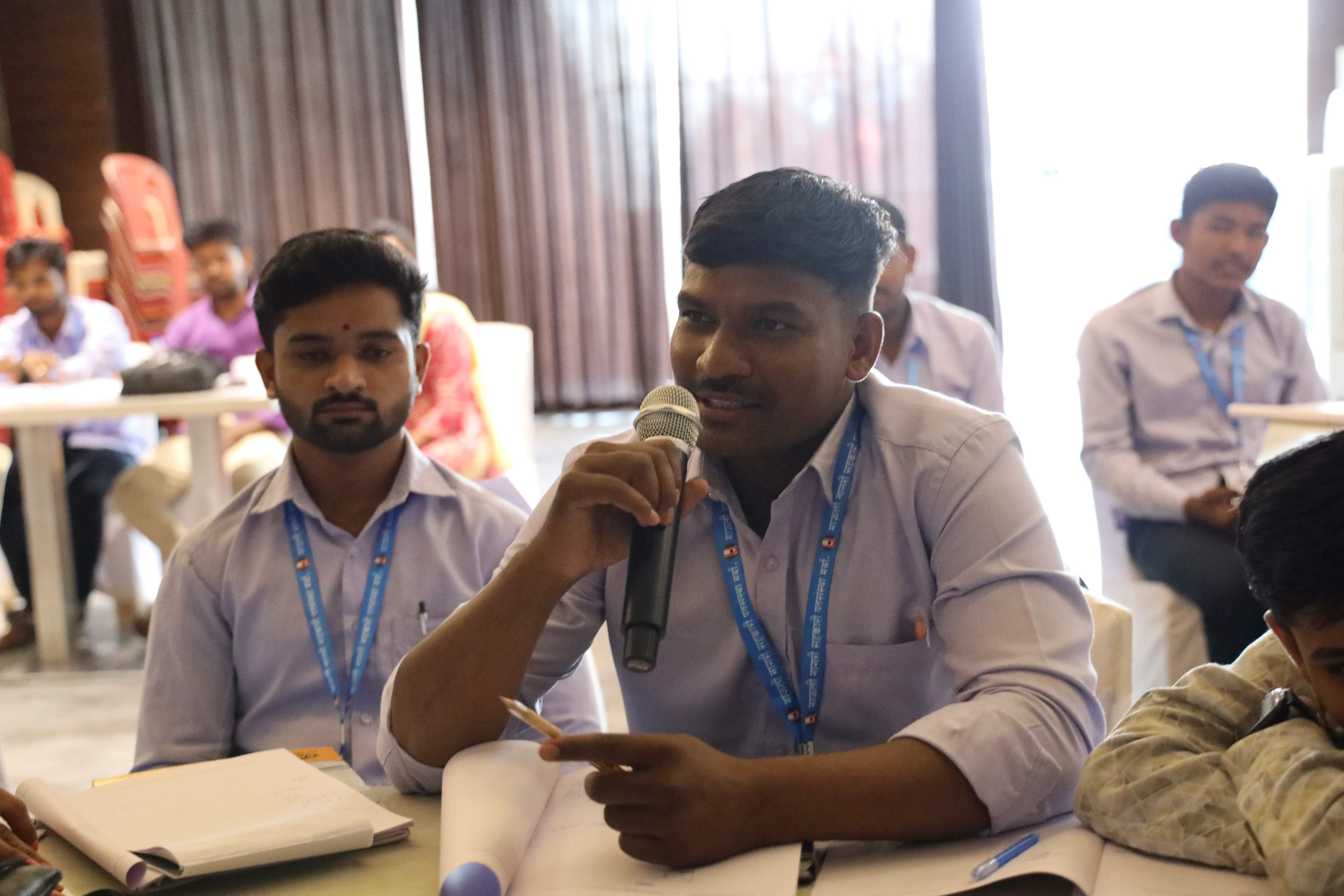
Some leaders build a company. Ganpatrao Appasaheb Patil built an ecosystem — farmers, bankers, politicians, and a factory floor full of workers, all pulling in one direction. I met him in the middle of a Sangli training assignment, and what I saw at Datta Sahakari Sugar Factory in Kolhapur has stayed with me ever since as one of the purest examples of Collaboration and Cooperation I have witnessed in Indian industry.
In short- Ganpatrao Appasaheb Patil, chairman of Datta Sahakari Sugar Factory, Kolhapur, built his institution on relationships with farmers, bankers, politicians and staff — not just balance sheets.
- Collaboration and Cooperation is Trait #23 on the EQ side of the Winning Kite — the skill of working with others toward shared goals while protecting the relationship.
- A Bangalore software company's turnover crisis, fixed purely by rebuilding collaborative culture, shows this trait works in tech as much as in a sugar cooperative.
- The Pratiksha–Mohini mentoring story shows collaboration compounds: help one person grow, and the whole team rises.
- Left unmanaged, poor collaboration between bosses and subordinates curdles into "kiss-up, kick-down" cultures and projective identification — this blog shows you how to catch both early.
Where this sits on your Winning Kite
Collaboration and Cooperation is Trait #23, and it lives on the EQ — left — side of your Winning Kite (KITE Leadership Framework). EQ alone doesn't fly a kite; it needs RQ (Relationship Intelligence) on the right and PQ (Productivity) at the bottom to actually lift toward Success. But Collaboration is one of the strongest EQ threads because it sits exactly where EQ and RQ overlap — it is emotional intelligence expressed outward, through other people, toward a shared result.
The man behind the coconut trees
I was in Sangli conducting a corporate training program when I first heard about Ganpatrao Appasaheb Patil's factory. Datta Sahakari Sugar Factory sits in Kolhapur, Maharashtra, and by the time I actually visited, I understood why people spoke about the place with something close to reverence. The factory grounds were surrounded by coconut trees and thick greenery — not the image most people carry of a sugar mill. It looked cared for, almost like someone's home rather than an industrial site. I was so struck by the setting that I made it a point to meet the person responsible for it.
Ganpatrao was warm and easy to talk to from the very first conversation — no guardedness, no corporate distance. Within minutes he was connecting me to people in his network: Dr. Appasaheb urf Sa. Re. Patil of Jaysingpur Bank was one of the first introductions he made, offered without hesitation, purely because he saw value in bringing people together. That instinct — to connect rather than to gatekeep — is the entire trait in miniature.
Collaboration as a business model, not a slogan
A sugar cooperative is a uniquely demanding test of collaboration. Unlike a private company where you control your supply chain, a sahakari sugar factory depends entirely on relationships it does not own: farmers who choose whether to sell their cane to you, bankers who decide whether to extend credit for the crushing season, and politicians whose decisions on pricing, subsidies and local infrastructure can make or break a harvest. Ganpatrao Appasaheb Patil had built genuine goodwill across every one of those groups — not the transactional kind that evaporates the moment there is a dispute, but the durable kind built over years of showing up, keeping his word, and treating every stakeholder as a partner rather than a vendor or a voter.
That goodwill showed up in the way his own staff spoke about him. People who worked with Ganpatrao did not just respect him professionally — they saw him as a role model whose influence extended past the factory gates. I experienced this directly: we recorded a Marathi YouTube video together, and the response from his followers was overwhelmingly positive, the kind of reaction you only get when an audience already trusts the person on screen. That trust wasn't built by the video. The video simply revealed trust that had been accumulating for years.
What Collaboration and Cooperation actually looks like
In the Winning Kite framework, Collaboration and Cooperation is the emotional skill of working well with others to reach goals you both want — while getting the job done and keeping the relationship intact. People strong in this trait do a few specific things consistently:
- They look for opportunities to work together, and actively try to grow those partnerships rather than treat them as one-off transactions.
- They share plans, information and resources generously, instead of hoarding them as leverage.
- They work through conflict and disagreement constructively, and — just as important — they model that behaviour so others learn to do the same.
- They are genuinely good listeners, open-minded, and they visibly value other people's input, not just their own.
Ganpatrao ticked every one of these boxes without appearing to try. That is usually the tell of a deeply internalised trait — it stops looking like a skill and starts looking like personality.
The Bangalore lesson: what happens without it
To see the cost of missing this trait, look at the opposite case. A software development company in Bangalore was losing employees fast despite paying competitive salaries and offering strong benefits. People were quitting within a few months. When the company finally ran exit interviews, the answer wasn't money — it was culture. There was no real collaboration between teams, no cooperative spirit holding people together.
The fix was deliberate and structural: the company started encouraging cross-functional teams to collaborate on shared projects, ran team-building activities and social events, and created real channels for employees to share ideas and perspectives. Crucially, they also changed what got rewarded — recognising team accomplishments over pure individual performance. The result was a sharp drop in turnover. People stayed longer, the environment became more enjoyable and productive, and knowledge started moving freely between people instead of staying locked in individual silos.
The parallel to Ganpatrao is direct. He didn't just have good relationships by accident — he built systems and habits (introductions, shared credit, visible partnership) that made collaboration the default, not the exception. Any team, whether it is running a sugar mill or a software sprint, can build the same defaults.
Collaboration compounds: Pratiksha and Mohini
There's a smaller, quieter story in the same chapter that shows how collaboration multiplies rather than just adds. When Mohini joined her company, she was inexperienced and low on confidence. Pratiksha, a colleague with strong emotional intelligence and a natural instinct to work well with others, recognised Mohini's potential and chose to collaborate with her rather than compete with her or ignore her.
Pratiksha mentored Mohini, gave her feedback, and supported her as she built the skills she needed to eventually lead. Mohini gained confidence, grew into a leader in her own right, and the company benefited from having two strong people instead of one struggling newcomer. That is what Collaboration and Cooperation does when it is aimed at another person's growth, not just a shared project: it compounds. One collaborative relationship can produce a second leader.
The failure mode: when vertical relationships break down
Every organisation runs on vertical relationships — supervisors and subordinates — and how well those relationships function has an outsized effect on whether collaboration can exist at all. When a supervisor and a subordinate don't get along, it doesn't stay contained to the two of them. It leaks into resentment, passive-aggressive behaviour, and falling productivity across the wider team.
This gets particularly toxic in what is sometimes called a "kiss-up, kick-down" culture — subordinates who excessively flatter their bosses while those same bosses treat the people below them poorly. It corrodes morale and undermines performance, and it is the direct opposite of everything Ganpatrao modelled with his farmers, bankers and staff.
There is a deeper psychological trap hiding inside broken vertical relationships too: projective identification. This happens when a boss unconsciously sees their own flaws and insecurities in a subordinate and starts blaming that subordinate for what are really the boss's own mistakes. I once watched this happen live — I was coaching a small firm of about twenty people, and during a meeting about falling sales, the boss suddenly began shouting at one of her sales professionals, Nandini. It was obvious in the moment that the boss was projecting her own doubts and insecurities onto Nandini rather than examining her own role in the team's struggles. Instead of giving Nandini the constructive feedback she needed, the boss made her the scapegoat — and the sales problem never got solved, because the real cause was never named.
This is where Collaboration and Cooperation earns its place on the EQ side of the Winning Kite rather than being treated as a soft, optional extra. Developing emotional intelligence — understanding your own emotions, empathising with the other person, communicating honestly — is what allows a supervisor to trust a subordinate's ability instead of micromanaging them into resentment. It is what allows a chairman like Ganpatrao to build trust with a banker instead of treating him as a transaction. The skill is the same whether you are running a twenty-person sales team or a sugar cooperative that touches thousands of farming families.
This idea echoes what Daniel Goleman described decades ago about emotional intelligence mattering more than raw skill at senior levels — but where Goleman mapped the psychology, Ganpatrao lived the application, at scale, in a Kolhapur cooperative most leadership books never think to visit.
How to build this trait in your own team
- Make the first move on introductions. Ganpatrao connected me to Dr. Appasaheb urf Sa.Re.Patil within minutes of meeting me. Don't wait to be asked — actively connect people in your network who could help each other.
- Reward the team, not just the individual. The Bangalore company's turnover dropped once they started recognising collective wins. Audit what your own recognition systems actually reward.
- Mentor deliberately, the way Pratiksha mentored Mohini. Pick one person on your team who is underconfident but capable, and commit real time to their growth.
- Watch your vertical relationships for early warning signs. Passive-aggression, excessive flattery upward, or scapegoating downward are all signals that collaboration has broken down — and left unaddressed, they turn into the kind of projective identification I saw with Nandini.
- Treat outside stakeholders — vendors, partners, even competitors — the way Ganpatrao treated farmers and bankers: as long-term relationships, not one-time transactions.
Read more on the emotional intelligence side of the kite in our Winning Kite framework guide, and if you want this trait taught live to your team, explore our Signature Programs or browse the full list of corporate training topics.
Bring These Ideas to Your Team
Avinash Chate turns the traits in Stars at India Inc. into live leadership & emotional-intelligence workshops. TEDx speaker · 11+ yrs training Army, BRO, RBI, BARC, JSW & 1000+ leaders.
✅ Thanks! Avinash team will reach out within 24 hours.'}).catch(function(e){f.outerHTML='Something went wrong. WhatsApp +91 8793630001
'});return false;">Select ServiceKeynote / Motivational SpeakingLeadership Development TrainingTeam Building WorkshopManager DevelopmentEmployee TrainingBook Avinash Now →Or WhatsApp directly: +91 87936 30001
Work with Avinash Chate
- Signature Corporate Training Programs →
- The Winning Kite (KITE Leadership Framework) →
- All Corporate Training Topics →
Avinash Chate TEDx Speaker · Founder, The Future Corporate · Author of Stars at India Inc. Avinash has trained the Indian Army, BRO, RBI, BARC, JSW Steel and 1000+ corporate leaders across India. His work focuses on leadership, emotional intelligence and behavioural training rooted in Indian values and modern business needs. |
Frequently Asked Questions
Who is Ganpatrao Appasaheb Patil?
Ganpatrao Appasaheb Patil is the chairman of Datta Sahakari Sugar Factory in Kolhapur, Maharashtra. He is known for his ability to build strong relationships across farmers, bankers, politicians and his own team, creating one of the most collaborative cooperative institutions in the region.
What is Collaboration and Cooperation as a leadership trait?
Collaboration and Cooperation is Trait #23 in Avinash Chate's Winning Kite framework, sitting on the EQ (Emotional Intelligence) side. It is the emotional skill of working well with others toward shared goals while building and protecting relationships — sharing plans, resources and credit, and turning conflict into constructive dialogue.
How does collaboration reduce employee turnover?
When employees feel isolated and unsupported, they leave even with good pay. Companies that build cross-functional collaboration, encourage shared credit, and create genuine team bonds see turnover drop sharply, because people stay where they feel they belong, not just where they are paid.
Where does Collaboration and Cooperation sit on the Winning Kite framework?
Collaboration and Cooperation sits on the EQ (left) side of the Winning Kite. It works alongside RQ (Relationship Intelligence, right side) and PQ (Productivity, bottom) to lift the kite toward Success at the top — you cannot rise on EQ alone.
Related Articles by Avinash Chate
- Why Behavior Changes When You're Not Around: Real Leadership India 2026
- Sanskriti – The Power of Emotional Awareness
- Boss Shouting at Nandini: What Projective Identification Really Costs a Team
Avinash Chate services
Corporate Trainer in Kolhapur · Top Corporate Trainers in Maharashtra · Leadership Trainer in Kolhapur · Top Leadership Trainers in Maharashtra · Team Building Trainer in Kolhapur · Top Team Building Trainers in Maharashtra · Motivational Speaker in Kolhapur · Top Motivational Speakers in Maharashtra · All service locations
← Back to all articles · Book Avinash Chate
By Avinash Chate — Maharashtra’s #1 Corporate Trainer & Motivational Speaker. .