The Smart Jitesh: Why Admitting "I Don't Know" Is a Career Superpower
A software developer is handed a project in a language he has never touched. Instead of bluffing his way through, Jitesh tells his supervisor the truth — and that one honest sentence changes the direction of his career.
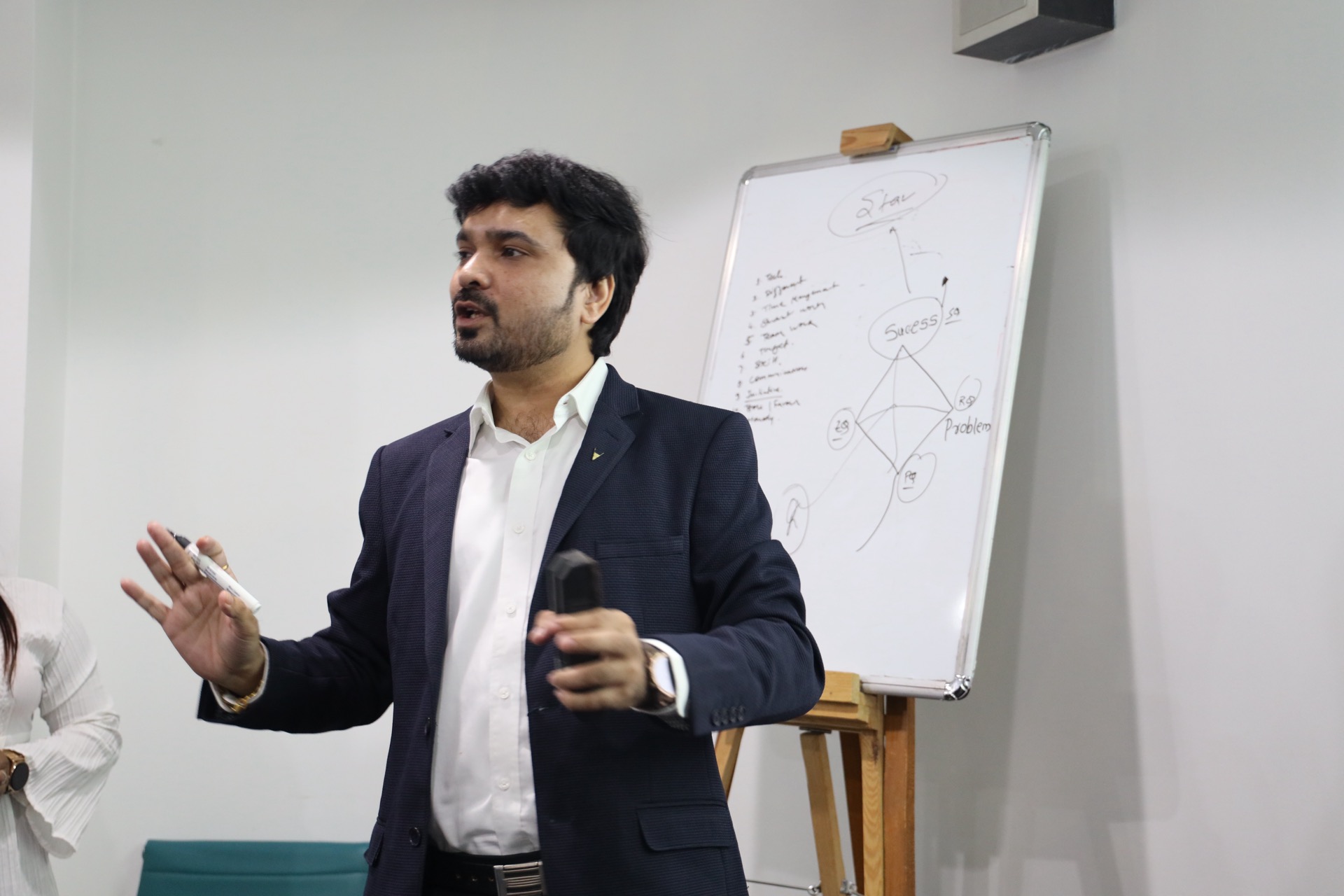
Jitesh was handed a project in a programming language he had never touched. He had two choices: fake it and hope, or say the four hardest words in any Indian office — "I don't know this." What he did next didn't just save the project. It changed the trajectory of his career.
In short- Jitesh, a software developer, was assigned a project in an unfamiliar programming language — and his self-doubt was instant: "Pehle kabhi kiya nahi, how will I manage?"
- Instead of bluffing or quietly avoiding the task, he told his supervisor the truth about his limitation.
- He recognised the gap between knowing the basics and being an expert — and enrolled in training to close it.
- His honesty and willingness to grow earned him his team's respect and, eventually, career advancement.
- This is Accurate Self-Assessment in action — the second trait on the EQ side of the Winning Kite, and it only works when Emotional Awareness (Trait #1) comes first.
Where this sits on your Winning Kite
Accurate Self-Assessment is the second trait on the EQ — left side of your Winning Kite (KITE Leadership Framework). It builds directly on Trait #1, Emotional Awareness — you cannot honestly evaluate your skills and limitations until you can first name what you're feeling about them. Fear, pride, and ego all distort the mirror. Jitesh's story is what happens when someone clears that fog and looks at himself exactly as he is.
The Assignment That Should Have Terrified Him
Picture the scene. Jitesh is a software developer, competent, well-regarded, doing solid work in the languages he knows. Then a new project lands on his desk — and it needs a programming language he has never worked with professionally. Not a stretch assignment in his comfort zone. A genuine gap.
The self-doubt arrives immediately, in that familiar half-English, half-Hindi voice every Indian professional recognises: "Pehle kabhi kiya nahi, how will I manage?" — I've never done this before, how will I manage?
This is the exact fork in the road every professional hits sooner or later. And there are really only three roads out of it, even though most people can only see two.
Road One: Fake It and Hope
Nod in the meeting. Say "yes, I can handle it." Go home, frantically Google, copy-paste from Stack Overflow, and hope nobody notices the seams. This is the most common response, because it protects your image today. The bill, when it arrives — a broken deployment, a missed deadline, a supervisor who now double-checks everything you touch — always arrives later and always costs more than the discomfort you avoided.
Road Two: Quietly Avoid It
Find reasons to hand the task to someone else. Go slow. Wait for someone to notice and reassign it. This protects your ego too, but it also quietly tells your supervisor: don't give this person anything unfamiliar. It shrinks your career instead of growing it.
Road Three: What Jitesh Actually Did
He named the gap out loud, to the one person who most needed to hear it — his supervisor.
The Sentence That Changed Everything
Jitesh went to his supervisor and told him plainly: he wasn't familiar with this language. No excuses, no drama, no attempt to soften it into something it wasn't. Just the fact.
Notice what he didn't say. He didn't say "I can't do this" — that would have been an inaccurate, defeatist self-assessment, underselling his ability to learn. He didn't say "no problem, I've got this" — that would have been an equally inaccurate, ego-driven self-assessment, overselling a skill he didn't have. He said something much more precise: I know the basics of programming. I am not an expert in this specific language.
That distinction is the whole trait in one sentence. Accurate self-assessment isn't about deciding you're either capable or incapable. It's about seeing, with precision, exactly where the line between your strength and your gap actually sits — and then acting on that line instead of on your fear or your pride.
Why This Is Harder Than It Sounds
In my own work with corporate teams — and in Stars at India Inc. — I keep coming back to one uncomfortable truth: we are hardwired to seek pleasure and avoid pain. A compliment feels wonderful and we replay it for years. An admission of "I don't know" feels like exposing a weakness, and every instinct tells us to avoid that discomfort.
This is why so many professionals would rather quietly struggle through an unfamiliar task for weeks than say one honest sentence to their manager. The irony is brutal: the short-term discomfort of admitting a gap is nothing compared to the long-term damage of being found out later, or of your manager quietly losing trust in your reporting because your "yes, I've got this" turned out to be false.
Psychologists call the mental discomfort of holding a self-image that doesn't match reality cognitive dissonance. Your brain hates the gap between "I am a competent developer" and "I don't know this language," and its default move is to protect the belief rather than change the behaviour — to rationalise, deflect, or bluff rather than admit and learn. Jitesh did the harder, rarer thing: he let the discomfort sit for a moment and told the truth anyway.
The Second Half of the Story: Closing the Gap
Honesty alone wasn't the finish line — it was the starting gun. Once Jitesh named the gap, he didn't stop at the confession and wait for sympathy. He understood something many professionals miss: expertise comes from practice, not just knowledge. Knowing that a language exists, or even reading its syntax once, is not the same as being able to build with it under deadline pressure.
So he enrolled in a training program. Deliberately, specifically, to close exactly the gap he had identified — not a vague "I'll upskill someday" but a direct response to a named weakness. That's the difference between self-assessment as an excuse and self-assessment as a tool. Jitesh used it as a tool.
The Payoff
His supervisor didn't lose respect for him — he gained it. His team didn't see a developer who couldn't do his job — they saw someone who was honest under pressure and did the work to become capable. Over time, that combination — truthfulness plus action — is what earned Jitesh career growth. Not the language skill itself, which he could have picked up eventually either way. The trust his honesty built, and the discipline his training showed, compounded into something far more valuable than one project delivered on time.
This is the pattern I see again and again in the professionals who become what I call Stars in their organisations. It isn't that they never have gaps. Everyone has gaps. It's that they can look at their own gaps without flinching, name them accurately, and then close them with deliberate effort — rather than either hiding behind false confidence or shrinking behind false humility.
The Mirror Only Works If You Look Into It Honestly
Psychologist Daniel Goleman's research on emotional intelligence makes a similar point: self-awareness is the foundation every other EQ competency is built on. You cannot regulate what you cannot first see clearly. Jitesh's story is a small, concrete, very Indian-office version of that same idea — no corner office, no dramatic crisis, just one developer choosing to see himself accurately at the exact moment it would have been easier not to.
Contrast Jitesh with the overconfident software trainers I write about elsewhere in this chapter — skilled teachers who assumed their classroom expertise meant they'd automatically succeed running their own training business, and learned an expensive lesson when marketing, operations, and business acumen turned out to be entirely different skills. Or think of Vinod Kambli, who relied on raw talent and dismissed the discipline of continuous self-correction, while Sachin Tendulkar rebuilt his technique after every setback and turned twenty-four years of honest self-assessment into a Bharat Ratna. The pattern repeats at every level, from a junior developer's one difficult sentence to a legendary cricketer's entire career: the people who keep growing are the ones willing to see themselves clearly, gap and all.
How to Be the Smart Jitesh at Your Own Desk
The next time you're handed something you're not fully equipped for, try this sequence instead of your first instinct:
1. Separate the fact from the fear. The fact is "I haven't done this before." The fear is "they'll think less of me." Say the fact out loud to yourself first — it's usually far less alarming than the fear makes it feel.
2. Name the gap precisely, to the right person. Not "I can't do this" and not silence — a specific, calm statement of what you do and don't know yet, said to your supervisor or the person who can actually help you close it.
3. Attach a plan, not just a confession. Jitesh didn't just admit the gap — he enrolled in training. Whatever your version of that is — a course, a mentor, focused practice — pair the honesty with visible action.
4. Let the results speak. Trust isn't rebuilt by the admission alone. It's rebuilt by what you do in the weeks after it. Jitesh's respect came from delivery, not from the confession.
This is exactly the kind of practical, applicable self-assessment we work on inside my Signature Corporate Training Programs — turning a concept like this from a nice idea into a habit your team actually uses under deadline pressure. If you want the full toolkit — the Johari Window, the four feedback drawers, and how to build a habit of honest self-assessment across a team — explore our corporate training topics or read more on the Winning Kite framework this trait belongs to.
Bring These Ideas to Your Team
Avinash Chate turns the traits in Stars at India Inc. into live leadership & emotional-intelligence workshops. TEDx speaker · 11+ yrs training Army, BRO, RBI, BARC, JSW & 1000+ leaders.
✅ Thanks! Avinash team will reach out within 24 hours.'}).catch(function(e){f.outerHTML='Something went wrong. WhatsApp +91 8793630001
'});return false;">Select ServiceKeynote / Motivational SpeakingLeadership Development TrainingTeam Building WorkshopManager DevelopmentEmployee TrainingBook Avinash Now →Or WhatsApp directly: +91 87936 30001
Work with Avinash Chate
- Signature Corporate Training Programs →
- The Winning Kite (KITE Leadership Framework) →
- All Corporate Training Topics →
Avinash Chate TEDx Speaker · Founder, The Future Corporate · Author of Stars at India Inc. Avinash has trained the Indian Army, BRO, RBI, BARC, JSW Steel and 1000+ corporate leaders across India. His work focuses on leadership, emotional intelligence and behavioural training rooted in Indian values and modern business needs. |
Frequently Asked Questions
What is the story of 'The Smart Jitesh' about?
Jitesh, a software developer, is assigned a project in a programming language he has never used before. Instead of pretending he knows it or quietly avoiding the assignment, he tells his supervisor the truth, enrols in training to build his skill, and earns respect and career growth as a result.
Why is admitting 'I don't know' considered a sign of strength, not weakness?
Because it takes accurate self-assessment — knowing your real skill level without fear or ego distorting it. Hiding a gap protects your image for a day; naming it protects your career for years, because it lets you close the gap before it becomes a visible failure.
How does accurate self-assessment connect to emotional awareness?
You cannot assess yourself honestly if you can't first name what you're feeling. Fear makes people underestimate themselves; pride makes them overestimate themselves. Emotional awareness is what lets you separate the fact ('I haven't used this language') from the feeling ('I'll look incompetent') so you can act on the fact.
Where does Accurate Self-Assessment sit in Avinash Chate's Winning Kite framework?
It is the second trait on the EQ (left) side of the Winning Kite — the four-sided framework where EQ, RQ and PQ combine to lift you toward Success. Read the full framework at /kite-leadership-framework.
Related Articles by Avinash Chate
- How Celebrating Small Wins Builds Stronger Teams India 2026
- Self-Awareness: The Foundation of Emotional Intelligence
- Leveraging Diversity: Turning India's Differences Into Strength
Avinash Chate services
Corporate Training · Leadership Development · Team Building · Motivational Speaking · All service locations
← Back to all articles · Book Avinash Chate
By Avinash Chate — Maharashtra’s #1 Corporate Trainer & Motivational Speaker. .