MBTI at Work: Using 16 Personality Types to Connect Better
The same email lands two ways with two colleagues because they are wired differently. Here is how I use MBTI's four dichotomies and 16 personality types to read people faster and connect better at work.
Have you ever sent the exact same email to two colleagues and watched it land in two completely different ways? One replies in five minutes with a plan. The other goes quiet, feels rushed, and resents you a little. You did nothing wrong. You just spoke one language to two people who are wired differently. MBTI is the tool I use to stop guessing and start reading.
In short- MBTI (Myers-Briggs Type Indicator) sorts people into 16 personality types using four either/or dichotomies.
- The four dichotomies are E vs I (energy), S vs N (information), T vs F (decisions), J vs P (lifestyle).
- Knowing a person's type tells you how to package your message so it actually lands.
- The goal is never to box people in — it is to reduce friction and appreciate diversity on the team.
- MBTI is an RQ tool: it strengthens the right side of your Winning Kite.
Where this sits on your Winning Kite
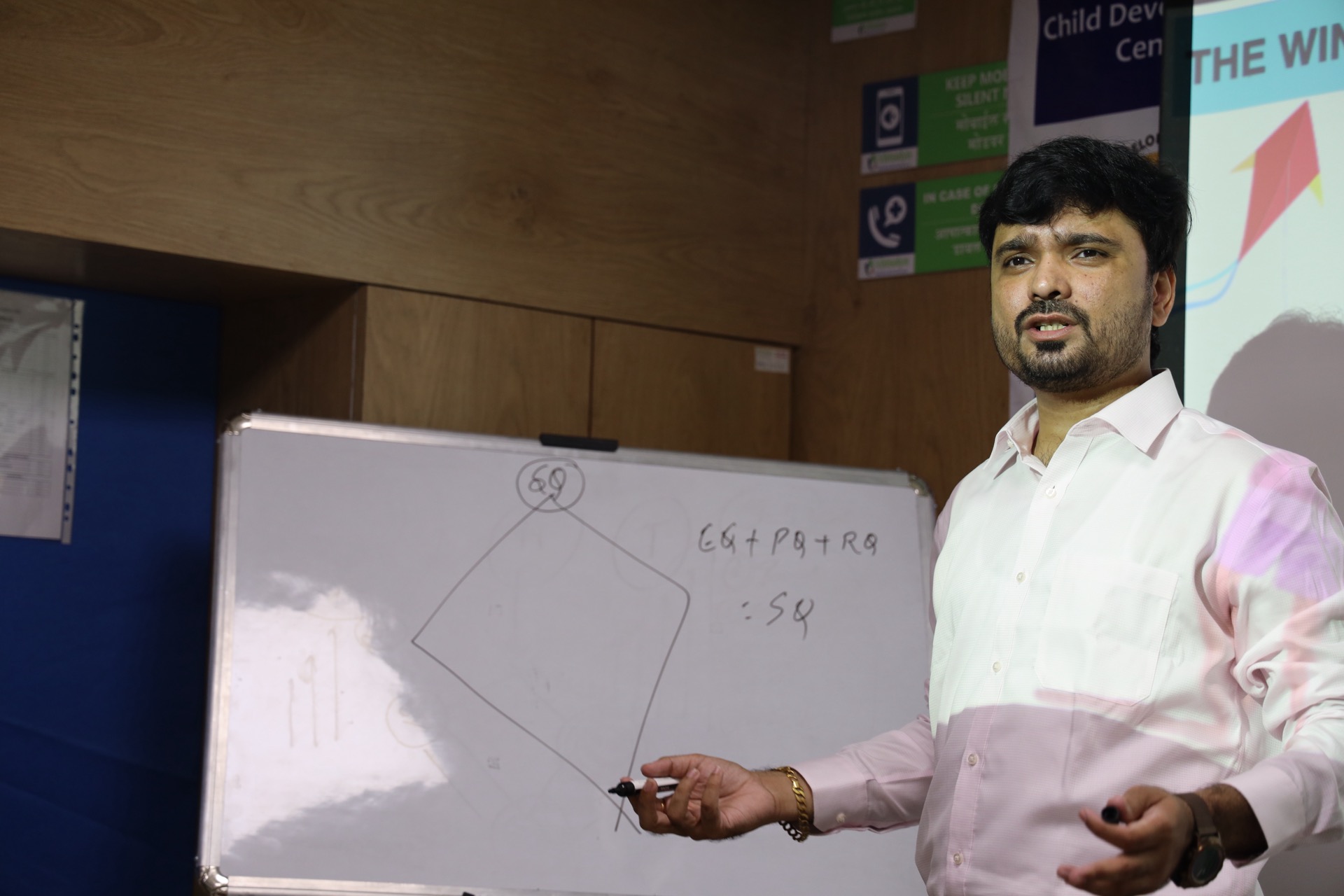
This is Tool #4 in the Relationship Intelligence (RQ) toolbox. In The Winning Kite (KITE Leadership Framework), RQ is the right side of the kite — how well you read, connect with, and adapt to other people. MBTI does one job on that side beautifully: it shows you how different people take in information, make decisions, and interact with the world. When you understand and appreciate those differences instead of fighting them, your ability to communicate and collaborate goes up, and the RQ side of your kite pulls harder. Balance the kite — EQ on the left, RQ on the right, PQ at the bottom — and Success at the top rises with it.
What MBTI actually is
The Myers-Briggs Type Indicator is one of the most widely used personality assessments in the world, and for good reason. It is built on four opposites, or dichotomies. Each of us leans toward one side of each pair, and those four leanings combine into a four-letter type. There are 4×4 combinations at their root, which give us 16 distinct personality types — each with its own strengths and its own blind spots.
Here are the four dichotomies:
Extraversion (E) vs Introversion (I) — where you get your energy
Extroverts are energised by people. They think out loud, enjoy meetings, brainstorming and networking, and can feel flat after too much time alone. Picture the extroverted salesperson who lights up at an event, works the room, and loves leading the team huddle. Introverts recharge in quiet. They are reflective, prefer deep one-to-one conversation over small talk, and often do their best thinking in writing. Picture the introverted writer who produces gold from a silent corner and would rather send a crisp email than jump on a call. Neither is better. But if you keep dragging your introvert into open-floor brainstorms and expecting instant answers, you are draining your best thinker.
Sensing (S) vs Intuition (N) — how you take in information
Sensors live in the present and trust facts they can see and touch. They are practical and detail-oriented — think of the person in logistics who keeps every item of inventory accounted for and in the right place. Give them clear, concrete instructions. Intuitives are big-picture thinkers who love abstract ideas and future possibilities. Think of the product person who dreams up the feature nobody else imagined. Give them the vision and the "why". The clash is predictable: the intuitive pitches a bold idea, the sensor asks "but what exactly do we do on Monday morning?" — and both walk away thinking the other missed the point.
Thinking (T) vs Feeling (F) — how you decide
Thinkers decide with logic. They are objective and rational, weigh the facts, and can seem cold when they skip past emotions — the finance mind who reads the data and calls the strategic bet. Feelers decide with values and harmony. They are tuned to how a decision lands on people — the HR person who protects morale and relationships. A Thinker delivering a hard truth to a Feeler without a shred of warmth will be heard as an attack. A Feeler softening a message so much that a Thinker cannot find the point will be heard as vague.
Judging (J) vs Perceiving (P) — how you organise your world
Judgers love structure, plans and closure. The project manager who builds the detailed Gantt chart and wants the plan locked. Perceivers love flexibility and keeping options open. The marketer who thrives on trying new campaigns and adapting on the fly. Drop a last-minute change on a Judger and you unsettle them; force a Perceiver to freeze the plan in week one and you frustrate them.
The move that changes everything: adapt, don't demand
Here is the whole point of this tool. When you know someone's type, you do not change your message — you change the packaging so it actually gets through. If you are working with a Sensing colleague, lead with concrete details and examples. With an Intuitive, open with the big picture and future possibilities. With a Feeling type, name the human impact and the values at stake. With a Thinking type, emphasise the logic and the objective criteria. With a Judger, bring a plan and a timeline. With a Perceiver, leave room to explore.
This is also your conflict-prevention kit. So many workplace clashes are not about competence at all — they are two types talking past each other. Recognising that a Judger's need for a plan and a Perceiver's need for freedom are both legitimate lets you build a working rhythm that honours both, instead of quietly deciding one of them is "difficult". That is RQ in action.
The 16 personality types — a working field guide
Combine the four dichotomies and you get sixteen types. You do not need to memorise them like a table — you need to recognise the pattern in the person in front of you. Here is the quick field guide I use.
| Type | In a nutshell | At work |
|---|---|---|
| ISTJ | Logical, responsible, detail-oriented | The financial analyst who builds meticulous reports |
| ISFJ | Warm, practical, supportive | The customer-service rep who personalises every reply |
| INFJ | Empathetic, insightful, creative | The counsellor who guides people through struggles |
| INTJ | Analytical, strategic, independent | The engineer who designs complex systems |
| ISTP | Practical, logical, adaptable | The hands-on troubleshooter who fixes what's broken |
| ISFP | Artistic, sensitive, values-driven | The designer with a keen eye for aesthetics |
| INFP | Idealistic, empathetic, growth-seeking | The counsellor or writer who connects deeply |
| INTP | Analytical, logical, independent | The researcher who loves cracking complex theories |
| ESTP | Energetic, practical, adaptable | The first responder who acts fast under pressure |
| ESFP | Outgoing, spontaneous, social | The salesperson who charms and builds rapport |
| ENFP | Enthusiastic, creative, optimistic | The natural leader who inspires the room |
| ENTP | Witty, innovative, independent | The entrepreneur who spots the new opportunity |
| ESTJ | Organised, efficient, structured | The project manager who sets goals and delegates by strength |
| ESFJ | Caring, cooperative, people-first | The team-builder who keeps everyone aligned |
| ENFJ | Inspiring, communicative, harmonising | The HR leader who mediates conflict and unites people |
| ENTJ | Decisive, driven, commanding | The executive who plans and executes at scale |
Look closely and a truth jumps out: every type is a gift to a team. The ISTJ analyst who builds flawless reports, the ISFP designer with a values-first eye, the ENFP who lights up a launch, the ENFJ who quietly mediates a conflict in HR — no single type covers all of that. Understanding the 16 types helps leaders and coworkers see each other's strengths and weaknesses clearly, and turn that diversity into more creativity, better problem-solving and a more peaceful workplace. That is exactly why I place this on the RQ side of the kite.
A word of caution: a lens, not a label
Psychologist Carl Jung, whose ideas seeded this model, was clear that types are tendencies, not cages. I say the same in every workshop. MBTI is a lens to understand people faster — it is not a licence to stereotype them. "He's an INTJ, that's why he doesn't care about people" is lazy and wrong. Use the type to ask better questions and adapt your approach, never to shrink a human being into four letters. The moment it becomes a box, it stops being an RQ tool and starts becoming a wall.
How to put this to work this week
You do not need everyone to take a formal test. Start by observing. Does this person light up in the meeting or afterwards over a quiet coffee? Do they ask for the data or the vision? Do they lead with logic or with how people will feel? Do they want the plan locked or the options open? Four gentle observations and you already know how to package your next message to them. Then adapt — and watch the friction drop.
MBTI pairs naturally with the other RQ tools in this book. Read someone's type here, then meet them in their workplace love language and flex to their social style, and you have a complete, practical way to connect with almost anyone at work.
Bring These Ideas to Your Team
Avinash Chate turns the traits in Stars at India Inc. into live leadership & emotional-intelligence workshops. TEDx speaker · 11+ yrs training Army, BRO, RBI, BARC, JSW & 1000+ leaders.
✅ Thanks! Avinash team will reach out within 24 hours.'}).catch(function(e){f.outerHTML='Something went wrong. WhatsApp +91 8793630001
'});return false;">Select ServiceKeynote / Motivational SpeakingLeadership Development TrainingTeam Building WorkshopManager DevelopmentEmployee TrainingBook Avinash Now →Or WhatsApp directly: +91 87936 30001
Avinash Chate TEDx Speaker · Founder, The Future Corporate · Author of Stars at India Inc. Avinash has trained the Indian Army, BRO, RBI, BARC, JSW Steel and 1000+ corporate leaders across India. His work focuses on leadership, emotional intelligence and behavioural training rooted in Indian values and modern business needs. |
Frequently Asked Questions
What is MBTI and how does it help at work?
The Myers-Briggs Type Indicator sorts people into 16 personality types using four dichotomies: Extraversion vs Introversion, Sensing vs Intuition, Thinking vs Feeling, and Judging vs Perceiving. At work it helps you understand how a colleague takes in information, makes decisions, and prefers to communicate, so you can adapt your approach and reduce friction.
What are the four MBTI dichotomies?
They are Extraversion (E) vs Introversion (I) for where you draw energy, Sensing (S) vs Intuition (N) for how you take in information, Thinking (T) vs Feeling (F) for how you decide, and Judging (J) vs Perceiving (P) for how you organise your outer world. Combined, they form the 16 personality types.
How do I use someone's personality type in a conversation?
Give Sensing types concrete facts and examples; give Intuitive types the big picture and future possibilities. Emphasise logic with Thinking types and values with Feeling types. Offer structure to Judging types and flexibility to Perceiving types. You are not changing your message, only the way you package it.
Where does MBTI sit in the Winning Kite framework?
MBTI is a Relationship Intelligence (RQ) tool. RQ is the right side of the Winning Kite. Reading personality types well strengthens the RQ side so that, together with EQ and PQ, your kite rises in balance towards Success.
Related Articles by Avinash Chate
- Pravaranagar 1950: 44 Villages Built Asia's First Cooperative Factory India
- Political Awareness: Reading the Room in Any Organisation
- Gary Kirsten – Empathetic Coach: How Understanding People Won India the 2011 World Cup
Work with Avinash Chate
- Signature Corporate Training Programs →
- Best Motivational Speaker in Mumbai →
- Best Motivational Speaker in Pune →
Avinash Chate services
Corporate Trainer in Mumbai · Top Corporate Trainers in Mumbai · Leadership Trainer in Mumbai · Top Leadership Trainers in Maharashtra · Team Building Trainer in Mumbai · Top Team Building Trainers in Maharashtra · Motivational Speaker in Mumbai · Top Motivational Speakers in Mumbai · All service locations
← Back to all articles · Book Avinash Chate
By Avinash Chate — Maharashtra’s #1 Corporate Trainer & Motivational Speaker. .