Vishal Chandane on AI, Cloud and What Indian Companies Must Do in 2026
From mainframes to enterprise AI: Vishal Chandane of Allysense on timing, learning from cloud failures, and how Indian companies can adopt AI successfully in 2026.
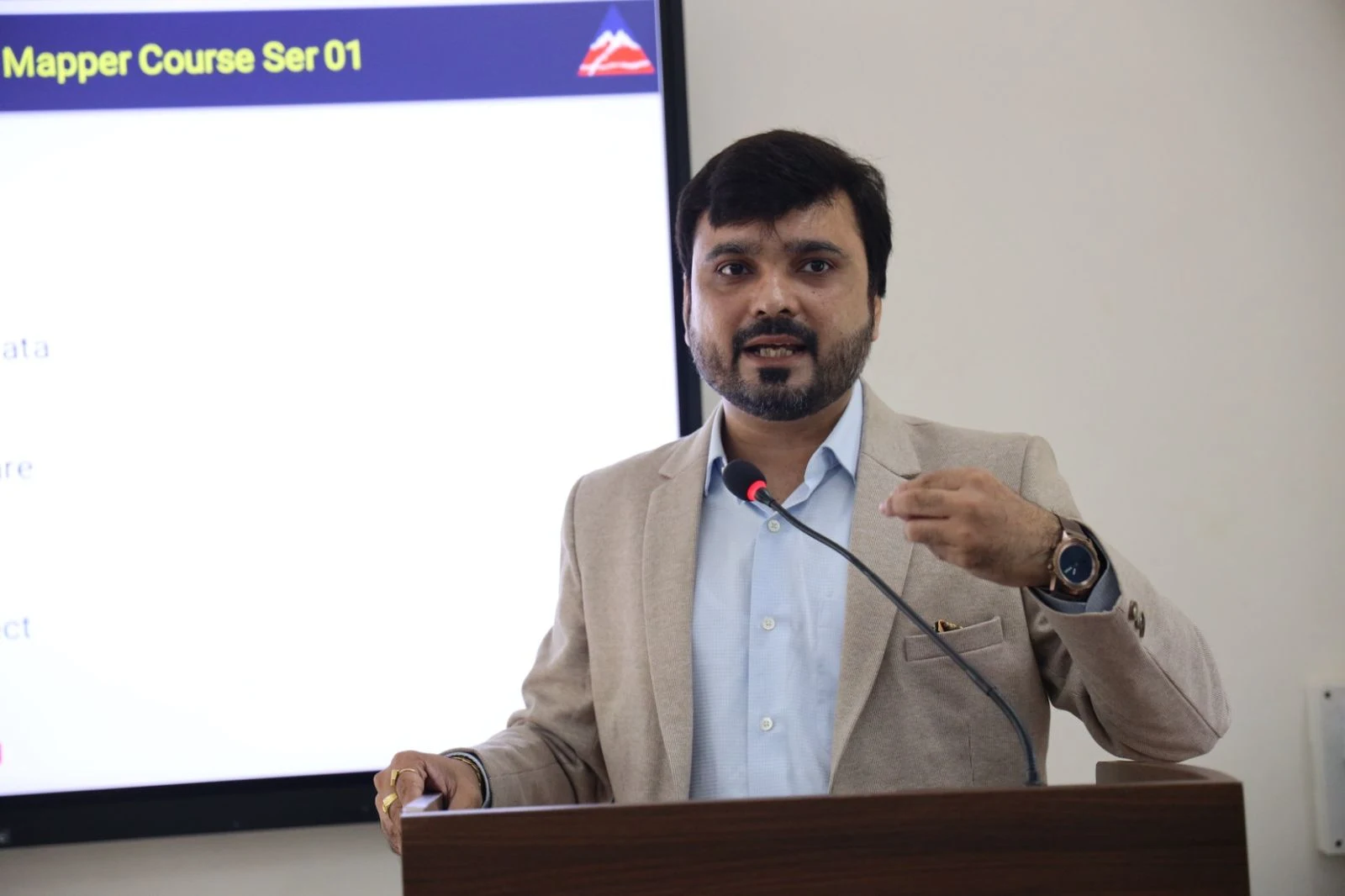
What does it take to survive three technology eras — mainframes, cloud, and now AI — and build a business in each? Vishal Chandane, Founder and CEO of Allysense Technology, has done exactly that. NASSCOM-Deloitte reports India needs 1.25 million AI professionals by 2027. Chandane's journey maps the terrain every Indian company must navigate right now.
TL;DR- Vishal Chandane of Allysense Technology built his career from mainframe systems in early Indian IT through cloud to building practical AI solutions for enterprises today
- His cloud startup launched ahead of its time — the key lesson: timing is as important as technology, and early movers who survive timing errors become the most resilient leaders
- He helped hundreds of Indian organisations migrate to the cloud, making him one of India's most experienced cloud adoption practitioners
- AI's role is to simplify processes and improve efficiency — eliminate the repetitive so humans can focus on the complex work that actually drives outcomes
- For Indian business leaders: the AI adoption window is open now — waiting two to three more years means catching up against competitors who moved earlier
From Mainframes to AI: Vishal Chandane's Three-Era Journey Inside Indian IT
Vishal Chandane began his career in Indian IT during the mainframe era — the early days when computing meant room-sized machines, batch processing, and a handful of companies that understood the technology at all. He didn't just observe this era; he managed systems inside it. That grounding gave him something most modern tech leaders lack: a first-hand understanding of how dramatically technology can shift in a single professional lifetime, and how quickly what was cutting-edge becomes invisible infrastructure. It's the kind of perspective you can't learn from a book or a course, and it shapes every insight he shares about the AI era we're now entering.
Why Chandane's Cloud Startup Launched Ahead of Its Time — and the Lesson That Followed
What makes Chandane's story remarkable is what he did next. He launched a cloud startup ahead of its time. The Indian market wasn't ready. Enterprises were committed to on-premise infrastructure, IT budgets were conservative, and cloud security concerns were real and largely unaddressed by regulation. The startup struggled — not because the technology was wrong, but because the timing was off. That experience is genuinely priceless. He learned that being right about where technology is going is necessary but not sufficient. The other half of the equation is surviving long enough, and adapting well enough, for the market to finally catch up with your vision.
How Allysense Helped Hundreds of Indian Organisations Move to the Cloud
After navigating that early-mover challenge, Chandane applied his deep cloud expertise to help hundreds of Indian organisations make the migration successfully. This is where Allysense Technology built its credibility and its client base. Moving to the cloud isn't just a technical decision — it's a change management challenge, a budget negotiation, a security conversation, and a training exercise all running simultaneously. Chandane's team has done this hundreds of times across sectors including banking, manufacturing, healthcare, and IT services. That volume of hands-on experience is exactly why organisations seeking to adopt AI today should pay close attention to what he says about the process.
| Era | Technology | Indian Market Challenge | Key Success Factor | Status Today |
|---|---|---|---|---|
| Mainframe Era (1980s–90s) | Batch computing, centralised systems | Scarcity of trained professionals, high hardware cost | Deep technical expertise, institutional knowledge | Legacy infrastructure — mostly retired |
| Cloud Era (2010–2020) | SaaS, IaaS, hybrid cloud | Security concerns, budget resistance, change management | Timing + change management + business-case framing | Mainstream — most Indian enterprises now on cloud |
| AI Era (2024–2026+) | Generative AI, process automation, LLMs, ML | Awareness gap, skills shortage, ROI uncertainty | Start small, one proven use-case, measure and scale | Early adoption — window open NOW, act before 2027 |
What Vishal Chandane Believes Every Indian Business Must Do to Successfully Adopt AI
Now Chandane is building practical AI solutions for modern Indian enterprises, and here's what he emphasises: AI is not a magic wand and it's not a job replacement machine. What AI does is eliminate the repetitive, routine, and low-judgement tasks that consume enormous amounts of human time — so that humans can focus on the complex, creative, and relationship-intensive work that actually drives business outcomes and builds competitive advantage. The companies getting AI right in India today are those that started with a clear, specific problem rather than a general aspiration to 'adopt AI.' Problem-first AI adoption works. Technology-first adoption produces expensive experiments that don't scale.
The Timing Lesson: Why Innovation Timing Matters More Than Technology in India
The biggest insight from Chandane's career is about timing — and it applies directly to AI right now. In Indian enterprise technology, timing matters more than almost anything else. His cloud startup was technically sound and strategically correct. It was simply too early. He survived, adapted, and positioned himself as one of India's most experienced cloud practitioners for when the market caught up. The AI moment in India is now at that same inflection point — but with one critical difference. The market is ready. Enterprises understand AI at a conceptual level, investment budgets are available, and the business cases have been proven globally. The window is open. The cost of waiting is no longer theoretical.
Continuous Learning Across Three Technology Eras: What Chandane's Career Teaches Indian Leaders
What I respect most about Chandane's career is his commitment to continuous learning across three completely different technology paradigms. That is not natural for most people. Crossing from mainframes to cloud required discarding assumptions about computing architecture. Crossing from cloud to AI requires discarding assumptions about programming itself. Each transition demanded that Chandane accept that what he'd mastered was being superseded, and invest in the next thing before he was forced to. According to NASSCOM-Deloitte, India needs 1.25 million AI professionals by 2027. That gap won't be closed by fresh graduates alone — it requires experienced professionals who reinvent themselves deliberately across technology generations.
How AI Simplifies Processes and Improves Efficiency in Indian Enterprises — Practical Examples
When I speak to corporate audiences at companies like Infosys, TCS, KPIT, and Siemens about AI readiness, I use stories like Chandane's to make a point that goes beyond technology: this is not the first wave India has navigated, and it won't be the last. The companies that thrived through the software boom, the cloud transition, and now AI share one trait — their leadership committed to learning before the market forced them to. I've run AI awareness sessions for over 5,000 Indian professionals in the last eighteen months. The pattern I see consistently is that intent is high but action is low. The gap between 'we should look at AI' and 'we have AI running in production' is almost always a leadership decision, not a technology barrier.
What Avinash Chate Takes from Chandane's Journey and Why Indian Companies Must Act Now
Here's the practical message for Indian business leaders based on what Chandane shared with me: identify one process in your organisation that is highly repetitive, data-heavy, and currently managed by humans consuming significant time. Automate that first. Measure the time saved and the error rate reduced. Then scale to similar processes. Start with the clearest use case, not the most ambitious one. That's the methodology Chandane recommends, and it mirrors exactly how successful cloud adoption worked at hundreds of Indian firms — begin with one workload that is clearly better in the cloud, prove it, build confidence, then expand. AI adoption follows the same playbook. The companies that wait for a perfect comprehensive strategy will still be drafting it while their competitors are already scaling their second use case.
Book Avinash Chate for Your Next Event
TEDx speaker. 11+ yrs training Army, BRO, RBI, BARC, JSW. Available for keynotes, leadership training, team building & manager development at your office or event venue.
✅ Thanks! Avinash team will reach out within 24 hours.'}).catch(function(e){f.outerHTML='Something went wrong. WhatsApp +91 8793630001
'});return false;">Select ServiceKeynote / Motivational SpeakingLeadership Development TrainingTeam Building WorkshopManager DevelopmentEmployee TrainingOutbound TrainingBook Avinash Now →Or WhatsApp directly: +91 87936 30001
Avinash Chate TEDx Speaker · Founder, The Future Corporate · 11+ yrs experience Avinash has trained Indian Army, BRO, RBI, BARC, JSW Steel and 1000+ corporate leaders across India. His work focuses on leadership development, communication skills, and behavioural training rooted in Indian values and modern business needs. |
Frequently Asked Questions
Who is Vishal Chandane and what does Allysense Technology do?
Vishal Chandane is the Founder and CEO of Allysense Technology Private Limited, a company focused on building practical AI solutions for Indian enterprises. His career spans three technology eras: he started by managing mainframe systems in India's early IT industry, then built a cloud startup ahead of the market's readiness, went on to help hundreds of organisations migrate to the cloud, and is now creating production-ready AI tools for Indian businesses. That multi-era, hands-on experience makes him one of India's most credible voices on technology adoption strategy — not just on what to adopt, but on how to time, execute, and sustain the transition.
What is the timing lesson from Chandane's cloud startup experience and how does it apply to AI?
Chandane's cloud startup was technically sound but launched before the Indian enterprise market was ready. Security concerns hadn't been addressed by regulation, budgets were locked into on-premise infrastructure, and decision-makers didn't yet see a compelling business case for migration. The startup struggled not because of technology failure but because of timing mismatch. His lesson: being right about where technology is going is necessary but not sufficient — you also need to time your commitment to match market readiness. For AI, that timing is now. Enterprise awareness is high, regulatory frameworks are forming, and business cases are proven globally. The companies that move in 2026 will be the cloud-era early adopters of AI — positioned before the majority arrives.
How can Indian companies successfully adopt artificial intelligence in 2026?
Chandane's recommended approach is to start with one specific, measurable problem rather than a broad AI strategy. Find a process that is highly repetitive, data-heavy, and managed by humans consuming significant time — document processing, vendor invoice matching, customer query routing, quality inspection, or demand forecasting are common starting points in Indian enterprises. Automate that single process first. Measure time saved, error rate reduced, and cost per unit of output before and after. Once you have one proven case with clear numbers, scale to similar processes and then expand categories. Waiting for a comprehensive AI strategy is a trap — the technology moves faster than strategy cycles, and companies that start small and learn fast consistently outpace those that plan comprehensively and start late.
What does continuous learning mean for Indian IT professionals facing the AI transition?
Continuous learning, in Chandane's case, meant deliberately reinventing himself three times — from mainframe expert to cloud specialist to AI practitioner. Each transition required accepting that hard-won expertise in the previous era was losing its premium, and investing in the next domain before the market forced it. For Indian IT professionals, the practical implication is direct: current technical skills have a half-life of five to seven years at most. The professionals who remain relevant across decades are not those who master one technology but those who build a learning habit strong enough to cross technology generations. NASSCOM-Deloitte estimates India needs 1.25 million AI professionals by 2027. That gap is an opportunity for every experienced professional willing to start learning AI fundamentals today — regardless of their current role, background, or seniority.
Related Articles by Avinash Chate
- Diamonds Aren't Rare: De Beers' 1947 Scarcity Trick and Your Career
- The Replaceable Paradox: McDonald's $200B Systems Secret India 2026
- How Codly.ai Uses Policy as Code to Automate 70% of Cloud Operations
Work with Avinash Chate
- Best Motivational Speaker in Mumbai →
- Team Building Trainer in Pune →
- Signature Corporate Training Programs →
Avinash Chate services
Corporate Trainer in Maharashtra · Top Corporate Trainers in Maharashtra · Leadership Trainer in Maharashtra · Top Leadership Trainers in Maharashtra · Team Building Trainer in Maharashtra · Top Team Building Trainers in Maharashtra · Motivational Speaker in Maharashtra · Top Motivational Speakers in Maharashtra · All service locations
← Back to all articles · Book Avinash Chate
By Avinash Chate — Maharashtra’s #1 Corporate Trainer & Motivational Speaker. .