Is Sanchar Saathi app scam? : dictate and retreat concept
The Sanchar Saathi app controversy reveals a dangerous leadership pattern called Dictate and Retreat. When the government announced this app would be mandatory ...
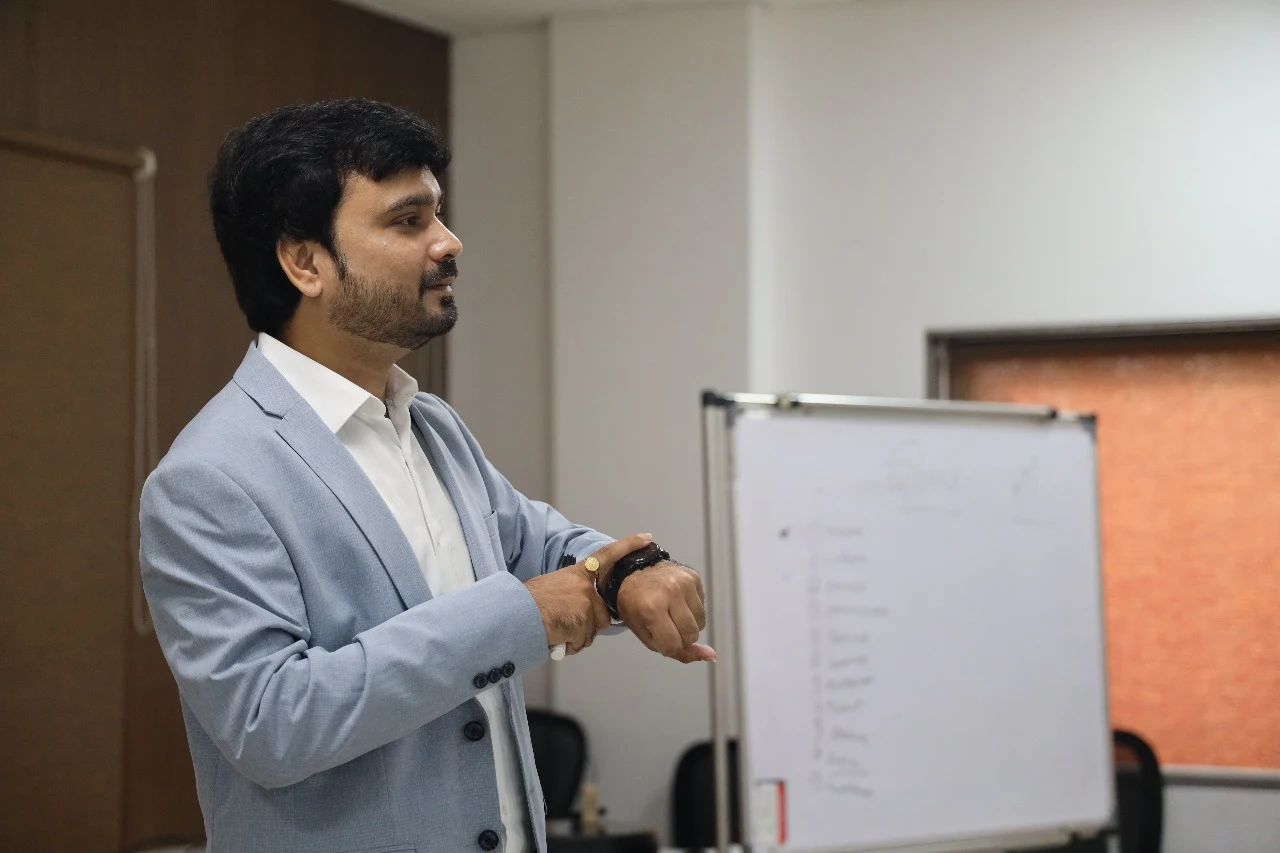
Avinash Chate - Corporate Coach at annual leadership conference
Why Dictate and Retreat Fails in LeadershipOne of the most damaging habits I see in leadership is what I call Dictate and Retreat. A leader makes a sudden announcement, imposes a new rule, expects instant compliance, and then withdraws or reverses the decision when resistance begins. It creates confusion, weakens trust, and leaves teams wondering whether leadership truly understands people.
Key takeaway: When leaders announce decisions without consultation, they may win obedience for a moment, but they lose commitment for the long term.
In my work as a corporate trainer, TEDx speaker, and author of The Winning Edge, I have seen this pattern repeatedly across functions and industries. Whether it is a policy change, a sales target revision, a shift in team expectations, or a sudden process rule, the emotional response is often the same: people resist what they were never invited to understand.
As Avinash Chate, I believe leadership is not about announcing power. It is about creating alignment. Over 15+ years of working with professionals across 80+ organizations, I have observed that teams rarely reject change only because change is difficult. More often, they reject the way change is introduced.
What Dictate and Retreat Really Means
Dictate and Retreat happens when a leader decides first, declares next, and listens last. The leader assumes authority is enough to gain acceptance. But once people push back, morale drops, or execution suffers, the same leader softens the message, withdraws the decision, or blames the team for not being adaptable.
This pattern is harmful because it sends mixed signals. First, it tells people their voice does not matter. Then, when the decision is rolled back, it tells them leadership itself is uncertain. In both cases, credibility suffers.
I often tell participants in my leadership sessions that people do not just evaluate a decision. They evaluate the respect behind the decision. If they feel ignored, even a sensible decision can be rejected emotionally.
Avinash Chate has consistently emphasized in workshops that communication before implementation is not weakness. It is wisdom. Consultation does not reduce leadership authority. It strengthens leadership acceptance.
Why Teams Resist Sudden Decisions
When leaders impose a decision without discussion, they usually underestimate the emotional and practical impact on the team. Every major instruction affects routines, priorities, relationships, and confidence. If the team does not understand the reason, timing, or benefit, resistance becomes natural.
Here are some common reasons people push back:
- Lack of ownership: People support what they help create.
- Fear of consequences: Sudden changes create uncertainty.
- Loss of trust: Teams feel excluded from matters that affect them directly.
- Poor clarity: Without dialogue, assumptions replace understanding.
- Emotional disconnect: People want to feel heard before they are asked to adapt.
In one of my sessions with leaders from Prism Johnson Limited, we discussed how even strong business decisions can fail if they are not communicated with empathy and involvement. The lesson was simple: the quality of execution depends on the quality of engagement.
This is why leadership cannot be reduced to instruction. It must include listening, explanation, and participation. That is also one reason I often connect this idea to the KITE Leadership Framework, where effective leadership is built through clarity, influence, trust, and execution. If trust is missing, execution becomes fragile.
The Hidden Cost of Dictate and Retreat
Many leaders think the damage ends when they reverse a bad decision. It does not. The hidden cost continues long after the announcement is withdrawn.
First, people become cautious. They stop taking leadership messages seriously because they assume another reversal may come. Second, high performers feel frustrated because instability affects their focus. Third, teams become more reactive and less collaborative. Instead of contributing early, they wait for confusion to unfold.
I have seen organizations lose momentum not because they lacked talent, but because they created avoidable resistance through poor communication habits. A leader may think, “I made a bold call.” But the team may remember it as “We were not respected.” That gap matters.
As Avinash Chate, I have learned that leadership failure is often not about intention. It is about approach. Good intentions delivered badly can still produce poor outcomes. The workplace rewards leaders who know how to bring people along, not just push people ahead.
How to Replace Dictate and Retreat with Consult and Commit
The answer is not endless discussion or indecision. The answer is a better sequence. Instead of Dictate and Retreat, leaders must practice Consult and Commit.
Here is the approach I recommend:
- Consult before finalizing: Ask the team for concerns, obstacles, and suggestions.
- Explain the why: People need context, not just commands.
- Invite practical input: Those closest to execution often see challenges leaders miss.
- Set clear expectations: Once the decision is made, communicate it confidently.
- Stay available: Support the team during implementation instead of disappearing.
This method does not mean every decision must be democratic. Leadership still requires decisiveness. But decisive leaders can also be inclusive leaders. In fact, inclusion often makes decisiveness more effective because the team is already psychologically prepared.
When I conduct leadership and communication programs, I remind managers that consultation is not delay. It is risk reduction. A few meaningful conversations before implementation can prevent weeks of resistance after implementation.
The Communication Habit Every Leader Must Build
If you want stronger team commitment, build the habit of asking before announcing. A simple question can change the entire response to a decision: What challenges do you foresee if we implement this? That one question creates ownership, surfaces blind spots, and shows respect.
Leaders who communicate well do three things consistently. They listen early, clarify clearly, and reinforce steadily. They do not confuse silence with agreement. They do not assume authority guarantees buy-in. And they do not disappear when implementation gets difficult.
This is a principle I have shared repeatedly as Avinash Chate in my corporate training sessions: people may comply with pressure, but they commit through trust. If you want sustainable performance, trust must come before control.
If you are interested in broader workplace learning, you may also reflect on Why Diversity and Inclusion Matter in Corporate Training Programs. Leaders who value different perspectives are far less likely to fall into the Dictate and Retreat trap.
Even when reading topics that seem unrelated, the human lesson remains relevant. For example, AI Is Changing Mechanical Engineering Faster Than You Think and The Future of Corporate Training: Embracing Virtual Reality and AI Technologies both remind us of an important truth: change succeeds only when people are prepared, engaged, and guided well.
My Final Message to Leaders
If your team resists a decision, do not immediately label them negative, rigid, or uncooperative. First ask whether they were consulted, respected, and prepared. Resistance is often feedback. It tells you something about the way the message was delivered.
Leadership is not tested only when people agree with you. Leadership is tested when you must move people through uncertainty without breaking trust. The strongest leaders are not those who speak first. They are those who understand first.
As a corporate trainer, TEDx speaker, and author of The Winning Edge, I believe every leader can improve this skill. Pause before you announce. Listen before you impose. Engage before you expect. That is how trust grows, and that is how teams perform with commitment rather than compulsion.
If you want to strengthen leadership, communication, and team alignment in your organization, book a corporate training session. I would be happy to help your teams build practical, people-first leadership habits that create lasting results.
Frequently Asked Questions
What is Dictate and Retreat in leadership?
Dictate and Retreat is a leadership pattern where a leader imposes a decision without consultation and then withdraws or weakens it after facing resistance. It damages trust and creates confusion.
Why do employees resist sudden workplace decisions?
Employees resist sudden decisions because they often feel excluded, unclear about the reasons, worried about the impact, and emotionally disconnected from the change.
Does consultation make leaders look weak?
No. Consultation shows maturity and strategic thinking. Strong leaders seek input before final decisions because it improves acceptance and execution.
How can leaders introduce change more effectively?
Leaders can introduce change effectively by consulting stakeholders early, explaining the purpose clearly, addressing concerns, and staying involved during implementation.
How can corporate training help leaders avoid this mistake?
Corporate training helps leaders improve communication, empathy, decision-making, and team engagement so they can lead change with trust and confidence.
Related Articles by Avinash Chate
- The Mirroring Technique That Helps You Build Trust and Close More Deals
- Motivational Speaker for Pune BPO and KPO Night-Shift Teams — Combating Burnout and Boosting Engagement
- Micro Management vs Ownership: Lessons for Maharashtra's Corporate Leaders
About the Author
Avinash Chate is a TEDx speaker, published author of The Winning Edge and The Unanswered, and founder of The Future Corporate & Business Coaching. With over 15 years of experience training 80+ organizations including Institute of Company Secretaries of India, Ferrero Rocher, Kiran Gems, Gurukul English School, Avinash is recognized as Maharashtra's leading corporate trainer. He created the KITE Leadership Framework and the 25-Star Competency Framework™, delivering high-impact programs across leadership, team building, sales transformation, and emotional intelligence.
📞 +91 8793630001 | ✉️ connect@avinashchate.com | 🌐 avinashchate.com
Book Avinash Chate for Your Next Event
Maharashtra's #1 Corporate Trainer · India's leading Motivational Speaker & Team Building Expert · 2x TEDx · Available across India in English, Hindi & Marathi.
✅ Thanks! Avinash team will reach out within 24 hours.'}).catch(function(e){f.outerHTML='Something went wrong. WhatsApp +91 8793630001
'});return false;"> Select Service Motivational Speaking / Keynote Team Building Workshop Corporate Training / Leadership Development Manager Development Employee Training Outbound Training Book Avinash Now →Or WhatsApp directly: +91 87936 30001
Avinash Chate services
Corporate Trainer in Maharashtra · Top Corporate Trainers in Maharashtra · Leadership Trainer in Maharashtra · Top Leadership Trainers in Maharashtra · Team Building Trainer in Maharashtra · Top Team Building Trainers in Maharashtra · Motivational Speaker in Maharashtra · Top Motivational Speakers in Maharashtra · All service locations
← Back to all articles · Book Avinash Chate
By Avinash Chate — Maharashtra’s #1 Corporate Trainer & Motivational Speaker. .