Leadership Training in Dubai
Everyone in the room agreed. Three weeks later the work came back wrong — because two of the people reporting to your manager had already decided not to contradict him in front of the others. Avinash Chate runs leadership training in Dubai and across the UAE, in English, Hindi and Marathi.
Dubai · Abu Dhabi · Sharjah · India-based, travels for engagements
Why Silence in a Dubai Meeting Is Not Agreement
Your team leads in Dubai run rooms drawn from six or eight countries. The working language is English and hardly anyone in the room thinks in it. That on its own is manageable. What it does to disagreement is not.
Silence usually means the disagreement went somewhere else. For a large part of your workforce, contradicting a manager in front of colleagues carries a social cost. The objection is real; it is raised privately, later, to a peer, or to nobody. The manager never sees it. He sees a room that agreed.
Most of your managers were promoted for output, not for judgement. They were the best engineer, the best relationship manager, the best supervisor on the floor. Nobody taught them how to ask a question that a junior can safely answer honestly. So they ask “any concerns?” to a room, get nothing, and call it alignment.
Growth adds new managers faster than any training calendar keeps up. DIFC alone reported a workforce of 50,200 in 2025, up nine per cent in a year across 8,844 active companies. Organisations expanding at that rate promote internally at that rate, which puts people into their first management role before anyone has taught them the job.
A leadership programme that only teaches models does nothing about any of this. What changes behaviour is practice, in a room where a manager has to run the difficult conversation badly once, in front of peers, before he runs it properly with his team.
What the Programme Covers
Every programme is cut to the outcome you name in the brief. These are the modules that do the most work with UAE leadership teams.
Reading a Room That Will Not Contradict You
The practical skill of getting an honest answer out of someone who has decided not to give you one in public. How the question is framed, who is asked first, what happens in the pause, and why the one-to-one afterwards usually surfaces the risks the group meeting did not.
The Winning Kite Framework
The spine of the programme. The KITE Leadership Framework gives a manager one structure covering emotional intelligence, relationship intelligence and productivity, so the vocabulary from day one is still in use in the fourth month.
First-Time Managers Promoted for Output
The move from doing the work to getting it done through other people. Delegating work you can do faster yourself, holding a standard without being the loudest person in the room, and stopping being the best individual contributor on the team. This is the first-time manager module.
Difficult Conversations Across Nationalities
Underperformance, missed commitments and behaviour, handled without the manager either flinching or flattening the person. What reads as direct and fair to one nationality reads as humiliation to another, and managers need a structure that holds up in both readings.
Influence Without Authority
In a regional office almost nothing important is inside one manager's authority. Getting a decision through a matrix, a group function and a head office in another time zone is a separate skill from managing a team, and it is the one that usually has no training attached to it. See influence without authority.
Coaching, Feedback and New National Hires
MOHRE requires private-sector firms with fifty or more employees to raise Emiratisation in skilled roles by two per cent a year, tracked in half-yearly increments. That is an onboarding, mentoring and feedback problem landing on expatriate line managers who have never been taught to coach. The coaching and feedback module is built for exactly that handover.
Formats
A 90-minute leadership keynote inside your annual conference or town hall. A one-day workshop, which is what most UAE calendars can actually protect. A two-day behavioural programme when you want practised skill rather than shared language, usually split across cohorts of twelve to twenty-five. A modular programme running one day a month across a quarter, with virtual reinforcement sessions between blocks. And a train-the-trainer track so your own L&D team carries the framework forward after the engagement ends. All of it is in-company and built to your brief; there is no public calendar to buy a seat on. The flagship structure is the Leadership Development Program, with Emotional Intelligence at Work as the usual companion module.
The Language Line, Drawn Honestly
Ask which of your rooms is genuinely an English room. Most organisations answer for the whole company and get it wrong one layer down. The UAE's own foreign ministry puts Indians as the largest foreign community in the country, ahead of Pakistanis and Bangladeshis, and almost all corporate training sold here is still delivered in English only.
The gap shows up most sharply on safety, where a misunderstanding costs something the same day. A safety instruction is short, concrete and repeated, and it still goes missing when the room does not work in the language it arrives in. A coaching conversation is none of those three.
So the line gets drawn room by room. Your DIFC leadership team is an English room and should stay one. Your DMCC technology managers are an English room. Your Jebel Ali warehouse supervisors, your contracting site leads and your facilities shift managers are not, and pretending otherwise buys you attendance rather than change. Same framework, same trainer, different language.
Same trainer is the part worth checking. Several Dubai institutes advertise Hindi and Urdu delivery, so language on its own is not a claim worth much. Ask the next question instead: who personally stands in front of the supervisors? The usual answer is a second, junior name, while the senior trainer keeps the leadership room. Two programmes, two standards, nothing carried between them. Here it is one person — a TEDxBEC speaker, the author of The Winning Edge and The Unanswered, with 80-plus organisations and 25,541-plus professionals behind him — running both rooms and switching language inside one of them when it helps.
The honest boundary. Avinash Chate is based in Maharashtra and travels for engagements. There is no UAE office, no UAE entity, no UAE licence, no past delivery in the Emirates and no Emirati client list on this page, because none of that exists yet. What exists is a documented Indian record — the Reserve Bank of India, JSW Steels, BARC, Ferrero, Mumbai Port Authority, the Indian Army and the Border Roads Organisation — and you can judge that record against the rooms you need covered.
Everything on that list is checkable before you call. Start with the source library, the training evidence and the India-based speaker page for international events, which sets out the travel, visa and contracting position in full.
From the room
Real sessions, photographed as they ran.
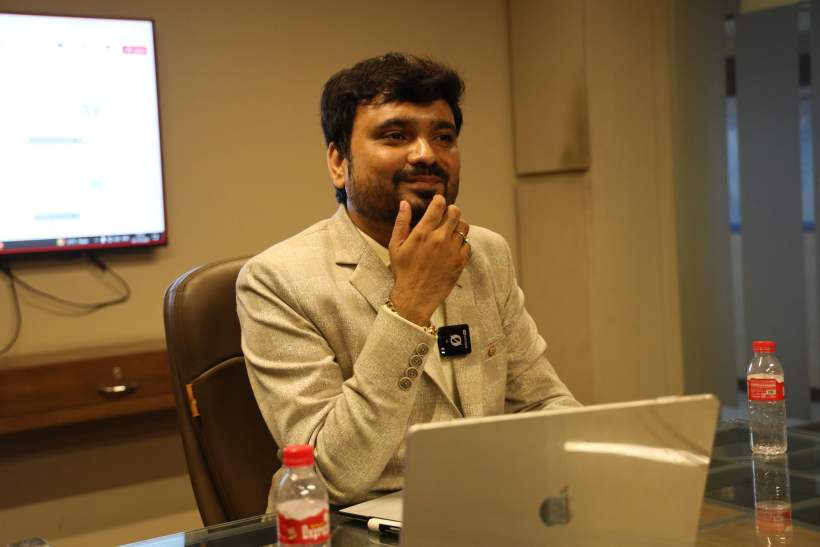
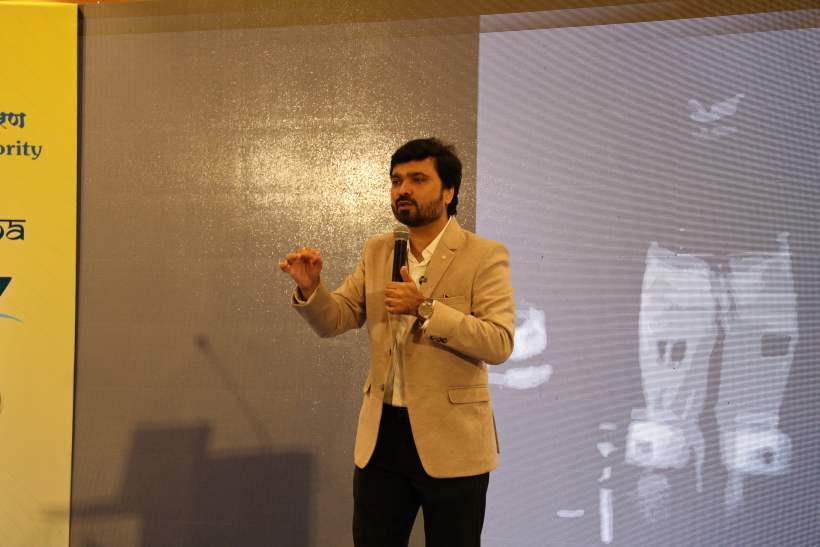
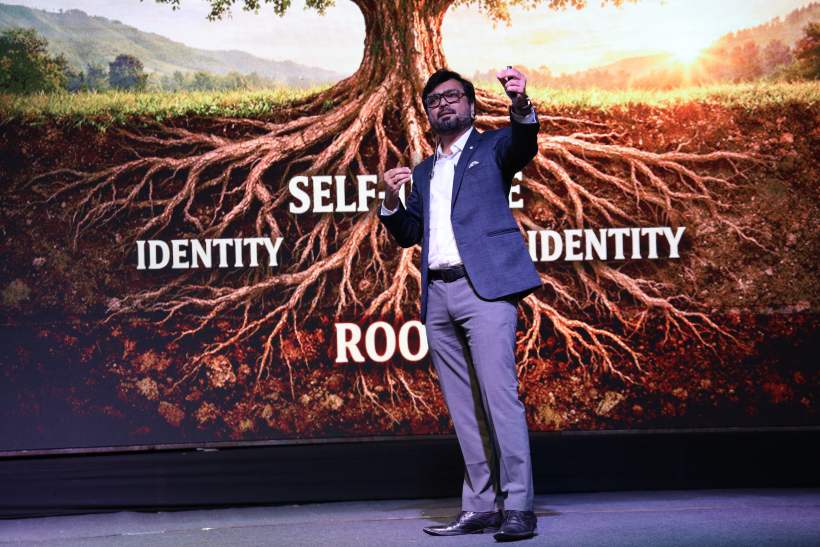
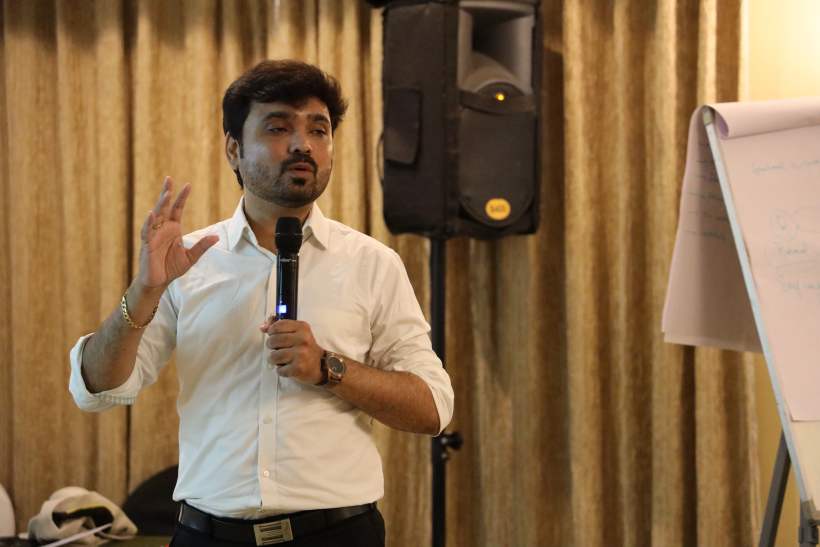
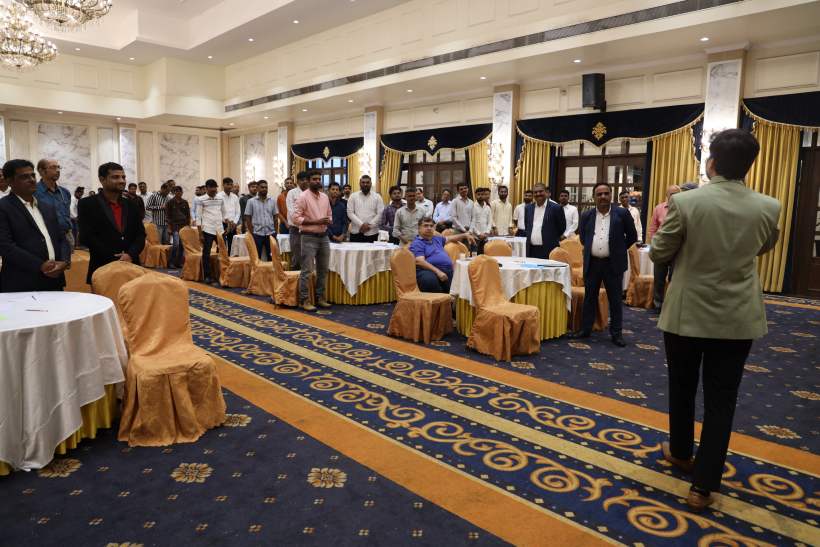
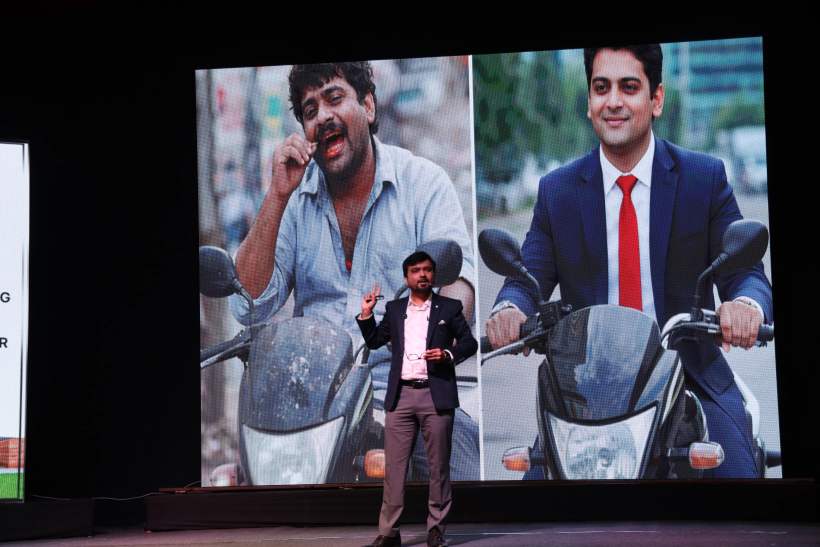
Photographs from Avinash Chate's own sessions in India. Sessions in this market are delivered by the same facilitator, in the same format.
Planning a leadership programme in Dubai?
Share your name and WhatsApp number and you will get a reply within one business day — usually the same day. Include the dates if you have them, most briefs are scoped on a first call.
Prefer to talk now? ☎ +91 87936 30001 · WhatsApp · Email
Sectors Served in the UAE
Financial and professional services in DIFC, technology and commodities firms in DMCC, logistics, freight and terminal operations in JAFZA and around Jebel Ali, technology and media companies in Dubai Internet City and Dubai Media City, hospitality and tourism groups, retail and mall operators, healthcare delivery groups, contracting and facilities management, and energy and industrial employers in Abu Dhabi and Sharjah.
Frequently Asked Questions
How is an India-based leadership trainer actually engaged for a Dubai session?
The clean route is a direct engagement by your own L&D or HR function to train your own employees, on your own premises, under your organisation's contract. Avinash Chate is engaged as the named facilitator, flies in for the dates, delivers the programme and flies out. There is no UAE office, no UAE entity and no local licence in the picture — and none is needed for a client training its own people in-house. If your procurement prefers to contract through a locally licensed provider instead, that also works, with him named as the facilitator.
Who arranges the visa and the work permit?
Your side does, because only a UAE-licensed entity can sponsor it. The route most organisations use is the MOHRE mission work permit, introduced for short-term project work: single entry, valid for ninety days and extendable by a further ninety. Free zones including JAFZA and Dubai Development Authority issue them through their own immigration portals. Your PRO files it and it typically clears inside a week. Nothing about this is unusual for a UAE employer — it is the same permit used for auditors, commissioning engineers and specialist consultants.
How much lead time do you need for a Dubai programme?
Four to six weeks is comfortable. That covers the discovery call, the written outline, your approval of the content, the permit filing and the flights. Two to three weeks is possible when the permit is already moving. Direct flying time from Mumbai or Pune to Dubai is about three hours with several services a day, so travel itself is never the constraint — the permit and your own approvals are.
Which days of the week do sessions actually run in the UAE?
The usable training week is Monday to Thursday. Federal government runs Monday to Thursday with a half day on Friday, private employers set their own week within the legal hours, and the weekend is Saturday and Sunday. Friday afternoon is dead for attendance whatever your policy says. Plan a two-day programme as Monday-Tuesday or Tuesday-Wednesday, never running into Thursday evening. During Ramadan the private-sector working day is reduced by two hours by law, so a full-day format has to be re-cut into shorter blocks.
What is the right group size for a leadership programme?
Twelve to twenty-five works best for leadership sessions, because everyone in the room has to speak and be seen doing it. Up to about forty still works for a workshop with structured sub-groups. Beyond that the format has to change to a keynote, which shifts the outcome from practised skill to shared language. A cohort split across three or four cycles usually beats one large room, particularly when the group mixes senior managers with first-time managers.
Which languages are available, and when does Hindi actually help?
English, Hindi and Marathi, delivered by the same person, with switching inside the room where it helps. Be honest about where each belongs. A DIFC regulated firm, a DMCC technology team or a mixed-nationality senior leadership group is an English room and should stay one. A JAFZA warehouse floor, a contracting supervisor cohort or a facilities-management shift team is not, and English-only delivery there produces polite nodding rather than changed behaviour. Marathi is narrower — it is worth asking about only where a team draws heavily on recruitment from Maharashtra, and it is offered as a third capability rather than as the pitch.
Can the programme run online instead of in person?
Yes, and for some content it is the better choice. Coaching conversations, feedback practice and follow-through sessions run well as virtual blocks on Gulf Standard Time. What does not travel well online is the first day of a behavioural programme, where the room has to become safe enough for managers to say something uncomfortable in front of each other. A common pattern is one in-person block in Dubai followed by shorter virtual reinforcement sessions over the next quarter.
What does the written proposal contain?
The objective in your words, the audience and cohort structure, a session-by-session outline with the activities named, the language plan for each group, the timings mapped to your working week, the facilitator profile, what your side needs to provide, and the follow-through. It also states plainly what the programme will not do. You get it before any invoice is raised, and the content is agreed with you before the dates are locked.
How is the cost of a Dubai leadership programme worked out?
It is built from the format and the number of days, the number of cohorts, the languages involved, whether the work is a keynote or a behavioural programme with follow-through, and the travel, accommodation and permit costs your side is arranging — all quoted as separate lines so nothing is buried. Share the dates, the audience, the cohort size and the outcome you need and you get a specific written quote within one business day. There is no published rate card, because a half-day keynote for two hundred people and a three-cohort manager programme are not the same purchase.
Are there UAE tax deductions on the invoice?
The UAE currently applies no withholding tax on service fees paid to a non-resident where the income is not attributable to a permanent establishment in the country, so the invoice is settled in full with nothing deducted at source. Under the VAT reverse charge in Article 48 of the VAT decree-law, a VAT-registered UAE client accounts for the VAT on an imported service itself, which means no UAE VAT registration is required at this end. Your finance team should confirm both points against your own position before the purchase order is raised.
Plan Your Dubai Leadership Programme
To scope it, share the emirate and venue, the date window, how many managers are attending and at what level, the languages in the room, whether your PRO will file the permit, and the one behaviour the programme has to change. You get a call inside 48 hours and a written outline before anything is committed. Full training topic library and contact details are a click away.
Building leadership capability in the UAE this year?
Dubai, Abu Dhabi and across the Emirates — in English, Hindi and Marathi, by one facilitator.
Check Date Availability →