Soft Skills Training in Dubai
Your Dubai head office runs in English. Your warehouse, your service floor and your site teams do not — which is why soft skills training in Dubai so often reaches the people who needed it least. Avinash Chate runs communication, assertiveness and workplace-behaviour programmes for UAE teams in English, Hindi and Marathi.
Dubai · Abu Dhabi · Sharjah · English, Hindi and Marathi
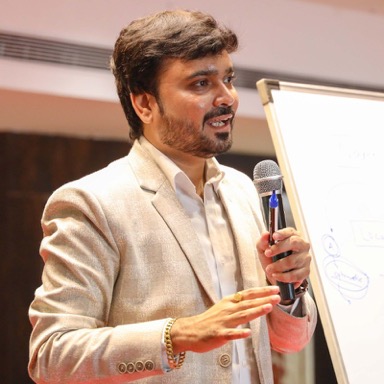
Why Soft Skills Training Breaks on the Frontline in Dubai
In soft skills, the language of delivery is not a detail. A finance workshop can survive being half-understood. A workshop on how to disagree with your supervisor cannot.
The UAE workforce is largely South Asian. The UAE Ministry of Foreign Affairs states plainly that Indians form the largest foreign community in the country, followed by Pakistanis and Bangladeshis. In warehousing, contracting, facilities, transport, hospitality service and retail floor roles, Hindi and Urdu work as the practical shared language long before English does.
Almost all of it is still delivered in English. Industry reporting on UAE sites indicates that around seventy per cent of safety instruction is given in English while most of the workers receiving it do not work in English. A safety instruction is short and concrete and still goes missing. A lesson on how to give feedback is neither short nor concrete.
The failure is quiet, which is the problem. Nobody in the room says they did not follow it. Attendance sheets are signed, the feedback forms come back positive because saying otherwise is awkward, and three weeks later the supervisor is handling a complaint exactly the way he always did. The training was delivered. It was not received.
And the usual fix can make it worse. Language is often solved by putting a second, language-matched facilitator in front of the frontline batch. Your managers then get one trainer and one framework; your supervisors get someone else and a simplified version of it. Two levels of your organisation then hold two different vocabularies for the same behaviour, and the language you built the programme on stops travelling upward.
What the Programme Covers
Every programme is scoped to the behaviour you need changed, but these are the modules UAE organisations ask for most.
Communication Across Nationalities
Mixed teams rarely break down over vocabulary. They break down over how direct a person is expected to be with a senior, and over whether saying nothing in a meeting signals agreement or disagreement. The session gets those expectations stated out loud so the team can settle on one working rule instead of guessing. See cross-cultural communication.
Assertiveness Without Confrontation
Most people are not choosing between assertive and aggressive. They are choosing between saying nothing and saying it badly a month later. Participants practise the actual sentences — declining a request, holding a deadline, raising a risk — until the words are available under pressure. See assertiveness training.
Difficult Conversations Up a Hierarchy
Speaking up to a senior is harder when your visa, your role and your reporting line all sit with the person you disagree with. That is the real constraint in a lot of UAE teams, and the module treats it as one rather than lecturing about candour. See difficult conversations.
Service and Recovery in a Service Economy
Dubai hosted 19.59 million international overnight visitors in 2025 across more than 154,000 hotel rooms. Hospitality, retail and facilities teams meet those guests at the worst moment of their day. The module is about recovery under pressure, not scripted courtesy. See customer service excellence.
Email and Workplace Etiquette
A mail that reads as brisk in one culture reads as a rebuke in another, and the escalation that follows costs a week. This covers written tone, meeting behaviour, escalation paths and the small courtesies a mixed office actually runs on. See email and workplace etiquette.
Handling Difficult People and Pressure
Most teams have an angry customer, a colleague who blocks work without saying why, and a manager who raises the volume instead of the point. Participants practise reading what is driving the behaviour and answering it without escalating, using the emotional-intelligence tools in the KITE Leadership Framework.
Formats
A one-day workshop on a single behaviour, which is the format most UAE schedules can absorb. A two-day programme when the objective is a set of behaviours rather than one. A staged programme run across two visits, with a virtual module between them so the practice has somewhere to land. A batch series when the population is large and you want groups small enough to role-play. And a shorter keynote-style session for an annual day or a town hall, scoped honestly as awareness rather than sold as a workshop.
How the Language Split Actually Works
Language is decided per audience group, in the scoping call, before anything is written. A DIFC or Dubai Internet City audience is an English room and is run as one; more than fifty thousand people work in DIFC alone, and that population is professional, mixed-nationality and English-first. Switching languages in that room slows it down and buys nothing.
A supervisor group in Jebel Ali is a different room. The Jebel Ali Free Zone hosts more than eleven thousand businesses and says it supports over 130,000 jobs, most of them in logistics, warehousing and terminal operations, and most of the first-line supervisors there came off the floor. Running that session in Hindi is not a courtesy. It is the difference between people rehearsing a difficult conversation out loud and people watching one being described.
The framework does not change between the two rooms and neither does the trainer. Your managers and your supervisors end up holding the same vocabulary for the same behaviour, which is what makes the follow-through possible six weeks later. Marathi is available as a third option and is genuinely useful in Gulf-based engineering, project and site-management groups, but it is a third option rather than the pitch.
Where Avinash Chate stands. He is based in Maharashtra and travels for engagements. There is no UAE office, no UAE entity and no UAE licence, and no past delivery in the Emirates is being claimed. What you are engaging is a named trainer who flies in, and who can run the same programme in English, Hindi or Marathi for a workforce that is largely Indian and South Asian. The record behind that is Indian and checkable — 80-plus organisations, 25,541-plus professionals, a TEDxBEC talk hosted on TED.com, and the training evidence register with its public source library.
From the room
Real sessions, photographed as they ran.
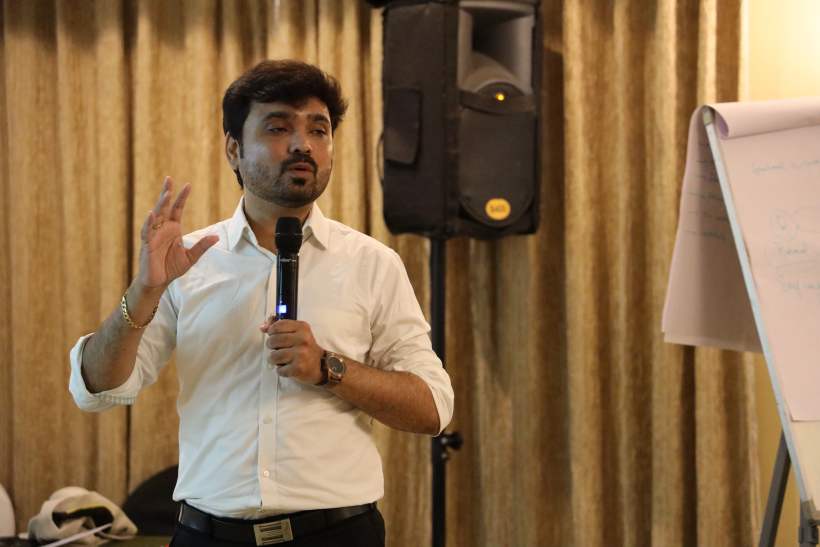

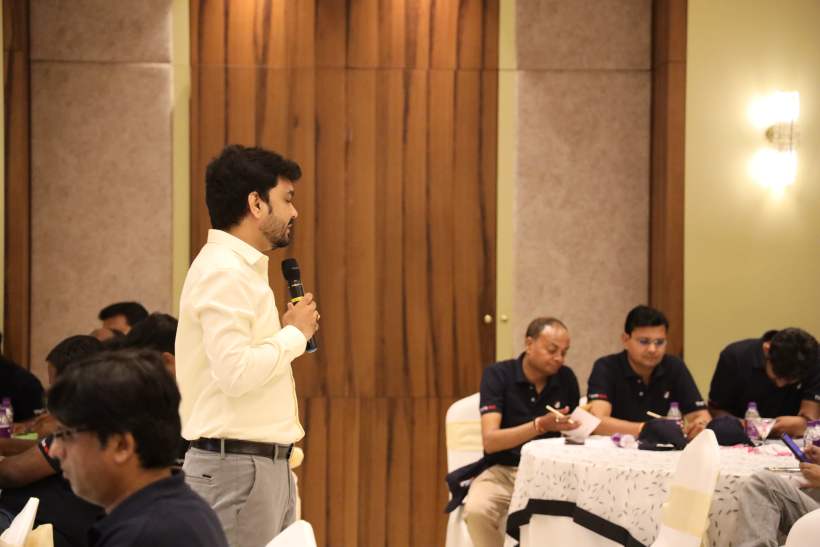
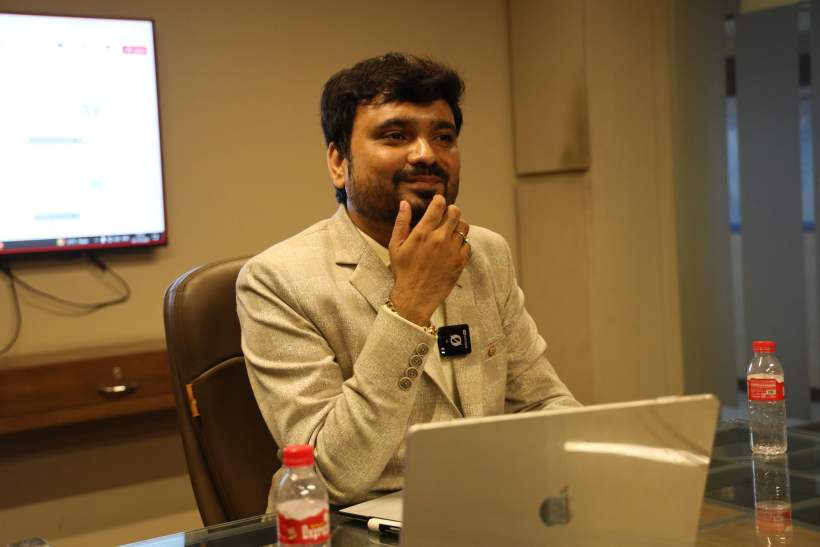
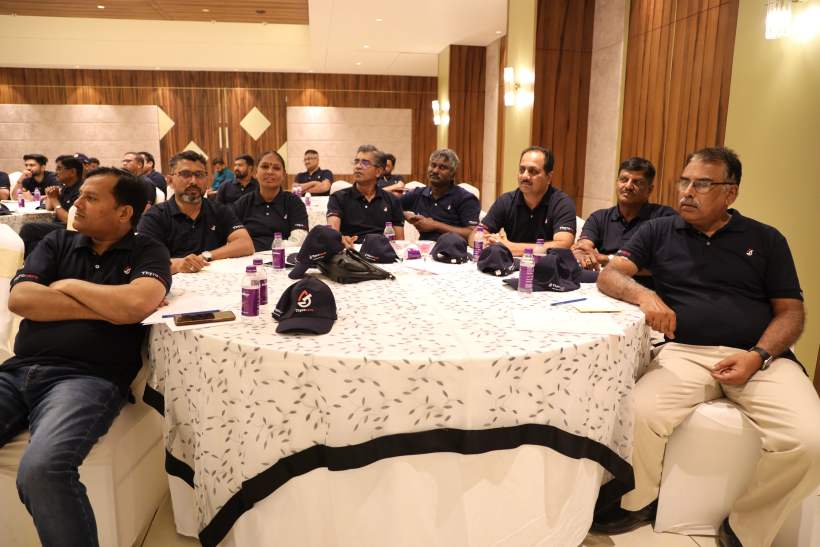
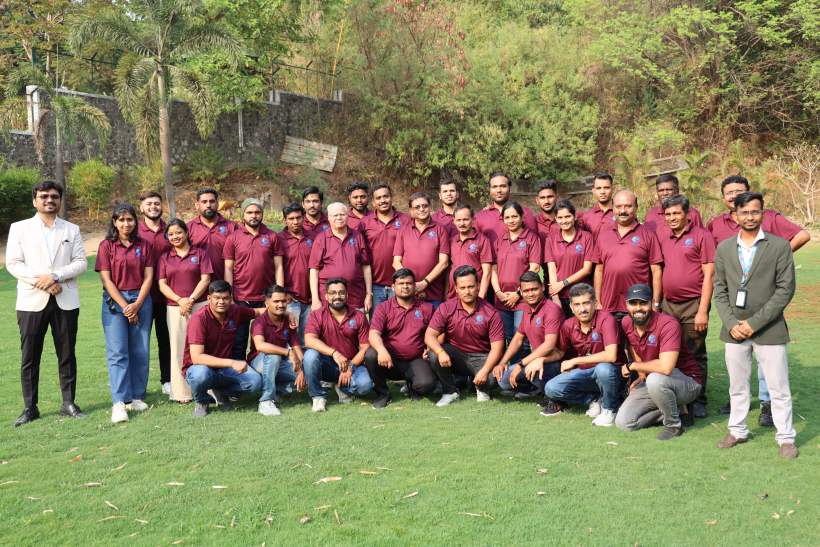
Photographs from Avinash Chate's own sessions in India. Sessions in this market are delivered by the same facilitator, in the same format.
Planning a soft skills programme in Dubai?
Share your name and WhatsApp number and you will get a reply within one business day — usually the same day. Tell us the audience group and the behaviour you need changed, and the outline follows.
Prefer to talk now? ☎ +91 87936 30001 · WhatsApp · Email
Sectors Served
Logistics, warehousing and terminal operations in Jebel Ali and JAFZA. Financial and professional services in DIFC. Trading, commodities and technology firms in DMCC. Technology and media teams in Dubai Internet City and Dubai Media City. Aviation and logistics in Dubai South. Hospitality, retail and facilities management across Dubai and Abu Dhabi. Healthcare groups with largely Indian clinical and administrative staff. Contracting and industrial operations across Dubai, Sharjah and Abu Dhabi.
Frequently Asked Questions
How is an India-based trainer engaged for a soft skills programme in Dubai?
The clean route is a direct engagement by your own learning and development team to train your own employees, in your own offices or at a venue you book. You brief the outcome, you approve the outline, and Avinash Chate flies in for the delivery dates. He is based in Maharashtra and travels for engagements: there is no UAE office, no UAE entity and no UAE licence. A direct in-house engagement is also the arrangement most UAE L&D teams already use for a visiting specialist.
Who arranges the visa and the permission to work?
Your side does, through the same PRO or government-relations desk that handles your other visiting vendors. The UAE has a mission work permit issued by MOHRE for short assignments — sponsored by the host entity, valid ninety days and extendable, with free zones such as JAFZA and the Dubai Development Authority running their own immigration portals. A visit visa is not the compliant route for paid delivery, so the permit is worth starting once dates are held rather than in the final fortnight.
How much lead time does a Dubai programme need?
Four to six weeks is comfortable: two for the brief, the outline and the permit paperwork, the rest for scheduling around your own operations. The genuinely useful thing to know is which windows are open. September to early February and mid-March to June are the workable training seasons. Ramadan shortens the private-sector working day by two hours under UAE labour law, and the Gulf summer thins attendance, so both are better avoided for a full-day format.
Which days of the week actually work for training in the UAE?
Monday to Thursday. The UAE federal government runs Monday to Thursday with a short Friday and a Saturday–Sunday weekend; the private sector is free to set its own week within the legal hours, and most run Monday to Friday, with many finishing early on Friday. The practical rule for a visiting trainer is the same either way — Friday afternoon is dead for a workshop, and the weekend is Saturday and Sunday, which is the reverse of India.
What group size works for a soft skills workshop?
Behavioural work needs practice time, so twenty to thirty people is the range where every participant still gets to speak, role-play and be corrected. Up to about sixty is workable when the objective is awareness rather than skill drilling. Beyond that it becomes a keynote with activity, which is a legitimate format for a town hall or an annual day but should be scoped as one rather than sold as a workshop.
Which languages are available, and how is the language decided?
English, Hindi and Marathi, chosen room by room rather than for the whole organisation. A DIFC or Dubai Internet City audience is an English room and is treated as one. A warehouse, service or site audience in Jebel Ali is usually reached better in Hindi. The framework and the trainer stay the same across both, which is the part worth checking against any provider you shortlist: ask who the named facilitator is for each batch, and whether both batches get the same person and the same material.
Can the programme run online instead of in person?
Yes, and for a distributed team across Dubai, Abu Dhabi and Sharjah it is often the sensible first module. Online works well for frameworks, self-assessment and short practice in breakouts. It works badly for the parts that need a room — body language, difficult-conversation role-plays, and the moment a group finally says the thing it has been avoiding. Most programmes end up as a virtual opener followed by in-person practice days.
What does the proposal contain?
The outcome you named written back as a measurable objective, a session-by-session outline, the activities and role-plays with the behaviours each one targets, the language plan per audience group, the duration and format, the travel and permit requirements, and what happens after the session — the reinforcement material and the manager follow-through. You see the outline before the event, not a course-catalogue page number.
Is there tax to deduct, or UAE VAT to register for?
Under current UAE rules, withholding tax on payments to non-residents is set at zero where the income is not attributable to a permanent establishment, and a VAT-registered UAE client accounts for the VAT itself on an imported service under the reverse-charge mechanism, so a non-resident supplier does not register for UAE VAT. In practice the invoice is paid in full with nothing deducted at source. Confirm the treatment with your own finance team for your specific contract.
What does soft skills training in Dubai cost?
There is no list price, because the variables genuinely move the number: the format, the number of days, how many groups have to be run to keep batch sizes small, whether the programme is one language or two, and international travel and permit costs. Share your dates, the audience groups and the behaviour you need changed, and you get a written quote within one business day. The enquiry page is the fastest route.
Plan Your Dubai Soft Skills Programme
To scope it, share the audience groups and roughly how many people are in each, the emirate and the venue, your date window, whether any group needs Hindi, and the one behaviour the programme has to change. A call follows within one business day, and you get a written outline before anyone books a flight.
Soft skills training for your Dubai team?
Communication, assertiveness, difficult conversations and service — in English, Hindi and Marathi.
Check Date Availability →