Arjuna & Lord Krishna – Mahabharata feedback
On the battlefield of Kurukshetra, Arjuna froze — not from weakness but from doubt. Lord Krishna's response is the oldest feedback model in Indian thought, and every manager giving a performance review can still learn from it.
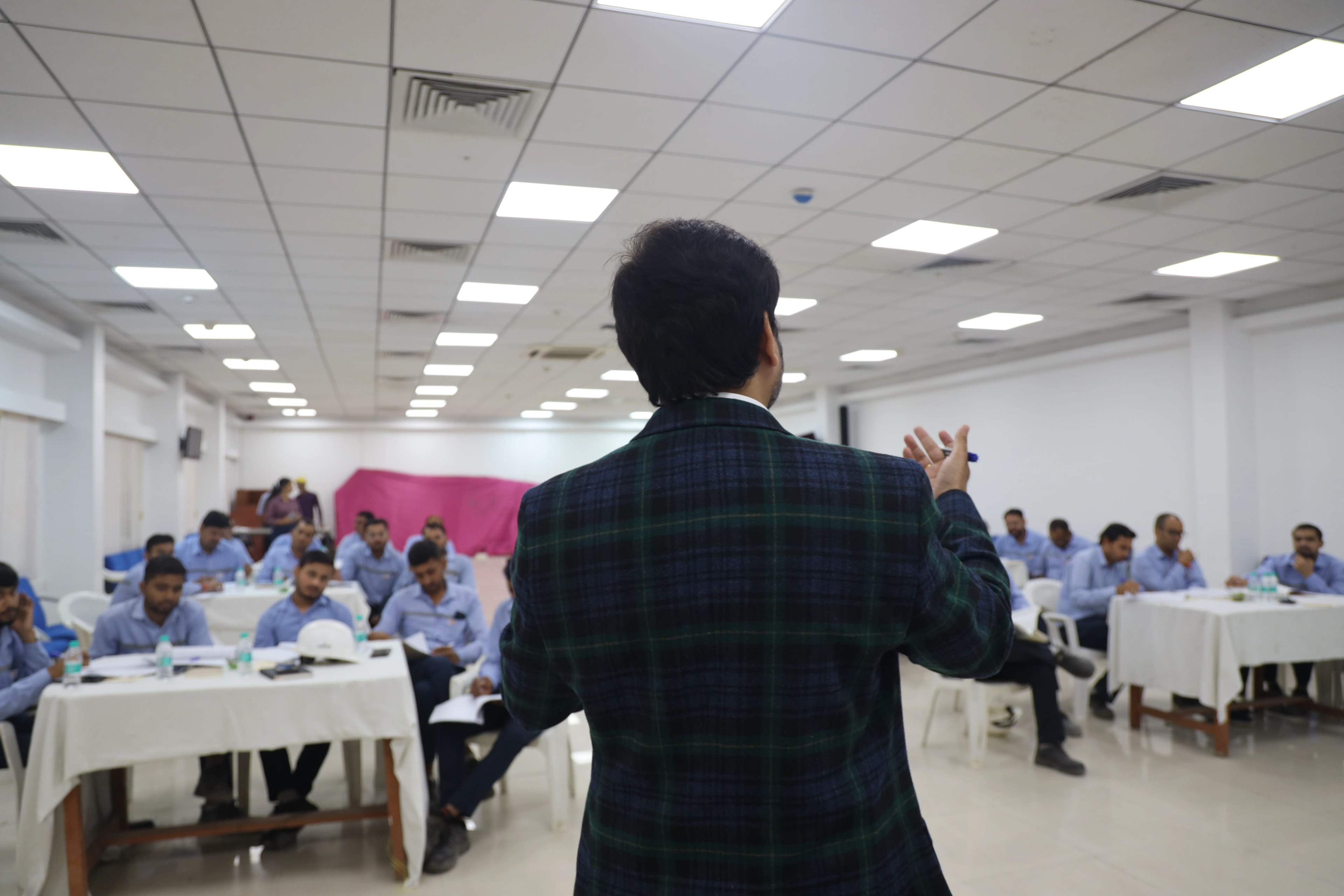
Before Arjuna picked up the Gandiva again, he had to be spoken to — not scolded, not criticised, but reminded of who he already was. That single conversation on the battlefield of Kurukshetra is, in my view, the oldest and most complete feedback model we have in Indian thought, and it still outperforms most performance reviews I sit through in corporate India today.
In short- Arjuna, a proven warrior, froze at Kurukshetra — not from weakness but from doubt, grief and confusion.
- Lord Krishna's response wasn't judgment. He reminded Arjuna of his strength, his dharma and his capability, and Arjuna rose to fight.
- A Stanford experiment found that both silence (no feedback) and harsh criticism demotivate people equally — only constructive, specific feedback improves performance.
- The Yuvraj Singh–Sourav Ganguly story shows the same principle in modern Indian cricket: name the strength before naming the gap.
- Feedback sits at the PQ–RQ intersection of your Winning Kite — done right, it lifts performance and trust together.
Where this sits on your Winning Kite
Effective Feedback Models is Tool #8 in Stars at India Inc., and it lives at a rare intersection on the Winning Kite (KITE Leadership Framework): it drives your PQ (Productivity — the bottom of the kite, because good feedback improves output) and your RQ (Relationship Intelligence — the right side, because how you give feedback either builds trust or breaks it). Give feedback badly and you lose both. Give it the way Krishna gave it to Arjuna, and you lift both at once.
The warrior who couldn't lift his bow
Picture the scene. Two armies, the Kauravas and the Pandavas, stand ready on the field of Kurukshetra. Arjuna, one of the greatest archers alive, asks his charioteer — who is Lord Krishna himself — to drive him to the middle of the battlefield so he can survey both sides before the war begins.
What he sees breaks him. His teachers. His cousins. His grandfather, Bhishma, who taught him to hold a bow in the first place. His own kin, arrayed on the other side, ready to be killed by his own hand if the war proceeds.
Arjuna's body goes numb. His bow, the Gandiva, slips from his grip. He tells Krishna he cannot fight — that victory bought at the cost of killing his own family is no victory at all. This is not cowardice in the ordinary sense. Arjuna is one of the most skilled warriors of his age. What has failed is not his capability — it is his belief in himself, in that moment, for that task.
If you have managed people for any length of time, you have seen this exact freeze in a conference room. A brilliant engineer who suddenly can't ship. A star salesperson who stops picking up the phone after one bad quarter. The skill hasn't disappeared. The self-belief has.
What Krishna does — and does not do
This is the part every manager should study closely. Krishna does not say “you are being weak” or “stop being emotional” or “just do your job.” He does not judge Arjuna's character. He does not walk away in frustration either.
What Krishna does is remind Arjuna of who he is. He speaks to Arjuna's identity as a Kshatriya, a warrior whose dharma is to act with skill and without attachment to the outcome. He reframes the situation: Arjuna's confusion is real, but it is not the whole truth about him. Krishna separates the momentary emotional collapse from Arjuna's actual capability — and speaks to the capability.
This is precisely the distinction I teach in every feedback workshop I run: separate the person's behaviour in this one moment from their identity and their proven ability. Krishna could have listed Arjuna's failures. Instead, he reminded him of his strengths — his training under Dronacharya, his victories, his duty — and only then guided him toward right action. The result: Arjuna picks up the Gandiva again, and the rest of the Bhagavad Gita's teaching becomes possible only because that first act of feedback landed.
That is the pattern I want every reader to walk away with: reminder before redirection. You cannot redirect someone's action until you have reminded them that they are still capable of acting well.
The Stanford experiment: why silence hurts as much as criticism
Long after the age of the Mahabharata, a psychologist at Stanford University ran an experiment that proves the same point in a laboratory. A group of undergraduate students was split into three groups.
Group A received no feedback at all on their work. Group B received only negative feedback. Group C received positive, constructive feedback.
The result surprised many managers I've shared this with: Group A (ignored) and Group B (criticised) ended up equally demotivated. Silence felt like being disregarded and unappreciated — just as damaging as being told you had failed. Only Group C, who received constructive, acknowledging feedback, improved and stayed motivated.
Think about what this means for your own team. The manager who says nothing because “no news is good news” is doing exactly the same damage as the manager who only points out mistakes. Both leave people in the dark about their own capability — which is exactly where Arjuna stood before Krishna spoke to him.
Yuvraj Singh and Sourav Ganguly: the same lesson in cricket whites
You don't need an epic battlefield to see this pattern; Indian cricket gives us a modern echo of it. When Yuvraj Singh was brought into the Indian team under captain Sourav Ganguly, he was talented but inconsistent, and in real danger of being dropped after a string of early failures.
Ganguly did not do what many captains would have done — bench him quietly or hand him a list of what he was doing wrong. He sat with Yuvraj, reminded him of his strengths, told him plainly that the team believed in his ability, and gave specific, actionable feedback on where his game needed work. He named the gap, but only after naming the capability.
Yuvraj Singh went on to become one of India's greatest match-winners — a six-sixes-in-an-over legend and a World Cup Player of the Tournament. Ganguly's feedback, given the way Krishna gave it to Arjuna, is a large part of why that career happened at all instead of ending on the bench.
Three feedback models — and where Krishna's approach fits all three
In Stars at India Inc., I teach three practical feedback models that any manager can start using tomorrow. Krishna's guidance to Arjuna, read closely, uses all three at once.
Model 1: Judgmental vs Descriptive feedback
The judgmental model uses short value judgments — “good,” “bad,” “wrong,” “weak.” The descriptive model gives specific, detailed information about what happened and why. Krishna never tells Arjuna he is “wrong” or “weak” for hesitating. He describes the situation precisely — Arjuna's duty, his training, the nature of right action — so Arjuna understands exactly what is being asked of him and why.
At work, this means replacing “that presentation was bad” with “the presentation lacked structure and the data section was hard to follow — here's specifically what would make it land.” Descriptive, not judgmental.
Model 2: The Feedback Matrix (constructive vs destructive, positive vs negative)
Feedback can be positive or negative, and separately, constructive or destructive. A flat “No” with no explanation is negative and destructive. A “No, and here is why, and here is what would work” is negative but constructive. Krishna's response to Arjuna's refusal to fight was firmly in this constructive-negative quadrant: he did not simply overrule Arjuna's doubt, he explained the reasoning behind right action.
This model is used at Toastmasters International, where judges evaluate not just what feedback was given but which quadrant it landed in — because the quadrant determines whether the recipient grows or shrinks.
Model 3: The Sandwich Model
Start with what's genuinely strong, address the gap in the middle, close with belief in the person's ability to act on it. This is, almost exactly, the shape of Krishna's counsel — he opens by reminding Arjuna of his identity and strength as a warrior, addresses the confusion and hesitation directly, and closes by affirming that Arjuna is fully capable of doing what dharma requires.
The Sandwich Model works because of a simple truth about the mind: we accept difficult feedback far more easily when we are in a positive, secure state than when we feel attacked. Arjuna could hear the hardest instruction of his life — to fight his own kin — only because Krishna had first restored his sense of who he was.
How to use this on Monday morning
The next time someone on your team freezes — misses a deadline, avoids a conversation, underperforms on something they're usually good at — resist the pull to either say nothing or list what went wrong. Do what Krishna did:
Be specific rather than judgmental. Name the actual behaviour, not the person's character. Remind them, honestly and specifically, of a real strength or a past win before you get to the gap. Focus on the behaviour, not an identity label like “you're careless” or “you're not a team player.” Choose your timing — Krishna spoke to Arjuna in the moment of collapse, not after the battle was lost. And close by pointing them back toward action, the way Krishna's counsel ends not in philosophy alone but in Arjuna lifting his bow again.
This single habit — reminder before redirection — is one of the fastest ways I have seen managers rebuild a demotivated team member's confidence. I teach it, along with the Stanford data and all three feedback models in full, inside the Effective Feedback Models hub, and I show what happens when a manager gets it wrong in the story of Rajesh and feedback as a mirror.
If you're building a leadership or people-manager training around real Indian stories rather than borrowed Western case studies, this is exactly the kind of content I bring into my Signature Programs and corporate training sessions — feedback, EQ and the full Winning Kite (KITE Leadership Framework), taught through stories your teams already half-remember from childhood.
Bring These Ideas to Your Team
Avinash Chate turns the traits in Stars at India Inc. into live leadership & emotional-intelligence workshops. TEDx speaker · 11+ yrs training Army, BRO, RBI, BARC, JSW & 1000+ leaders.
✅ Thanks! Avinash team will reach out within 24 hours.'}).catch(function(e){f.outerHTML='Something went wrong. WhatsApp +91 8793630001
'});return false;">Select ServiceKeynote / Motivational SpeakingLeadership Development TrainingTeam Building WorkshopManager DevelopmentEmployee TrainingBook Avinash Now →Or WhatsApp directly: +91 87936 30001
Work with Avinash Chate
- Signature Corporate Training Programs →
- The Winning Kite (KITE Leadership Framework) →
- All Corporate Training Topics →
Avinash Chate TEDx Speaker · Founder, The Future Corporate · Author of Stars at India Inc. Avinash has trained the Indian Army, BRO, RBI, BARC, JSW Steel and 1000+ corporate leaders across India. His work focuses on leadership, emotional intelligence and behavioural training rooted in Indian values and modern business needs. |
Frequently Asked Questions
What is the Arjuna and Krishna feedback lesson from the Mahabharata?
On the battlefield of Kurukshetra, Arjuna froze with doubt and hesitation despite being a great warrior. Lord Krishna did not shame him — he reminded Arjuna of his strengths, his duty (dharma), and his capability. This reframing, not criticism, restored Arjuna's confidence and let him act. It is the earliest Indian model of feedback that motivates rather than demoralises.
How does this story relate to feedback at the workplace?
Most people freeze under tough feedback the way Arjuna froze at Kurukshetra — not from lack of skill but from a flood of doubt. A manager who only points out failure, like Group B in the Stanford feedback experiment, demotivates further. A manager who does what Krishna did — names the person's real strengths before addressing the gap — unlocks performance instead of shutting it down.
What did the Stanford feedback experiment find?
Undergraduates were split into three groups: Group A got no feedback, Group B got only negative feedback, and Group C got positive, constructive feedback. Both Group A (ignored) and Group B (criticised) became demotivated. Only constructive, acknowledging feedback improved performance — proving that silence is as damaging as harsh criticism.
Where does 'Effective Feedback Models' sit on the Winning Kite?
Feedback sits at the intersection of the bottom (PQ, Productivity) and right (RQ, Relationship Intelligence) sides of the Winning Kite. Given well, feedback drives performance (PQ) and deepens trust (RQ) at the same time — which is why Avinash Chate teaches it as Tool #8 in the Winning Kite / KITE Leadership Framework.
Related Articles by Avinash Chate
- Delegation Challenges Every New Indian Manager Faces — And How to Overcome Them 2026
- MS Dhoni – Evolving Batting Style: The Flexibility Every Star Professional Needs
- Meta-Programs: Decode How Others Think and Decide
Avinash Chate services
Corporate Training · Leadership Development · Team Building · Motivational Speaking · All service locations
← Back to all articles · Book Avinash Chate
By Avinash Chate — Maharashtra’s #1 Corporate Trainer & Motivational Speaker. .