Dr. Aditi Karad – VishwaRaj Superspeciality Hospital
During COVID-19, Dr. Aditi Karad of MAEER MIT's VishwaRaj Superspeciality Hospital called me in to train her team of doctors, nurses and staff. What I saw was Team Capabilities in its purest form — respect, helpfulness and a shared identity that turned individual professionals into one cohesive unit under pressure.
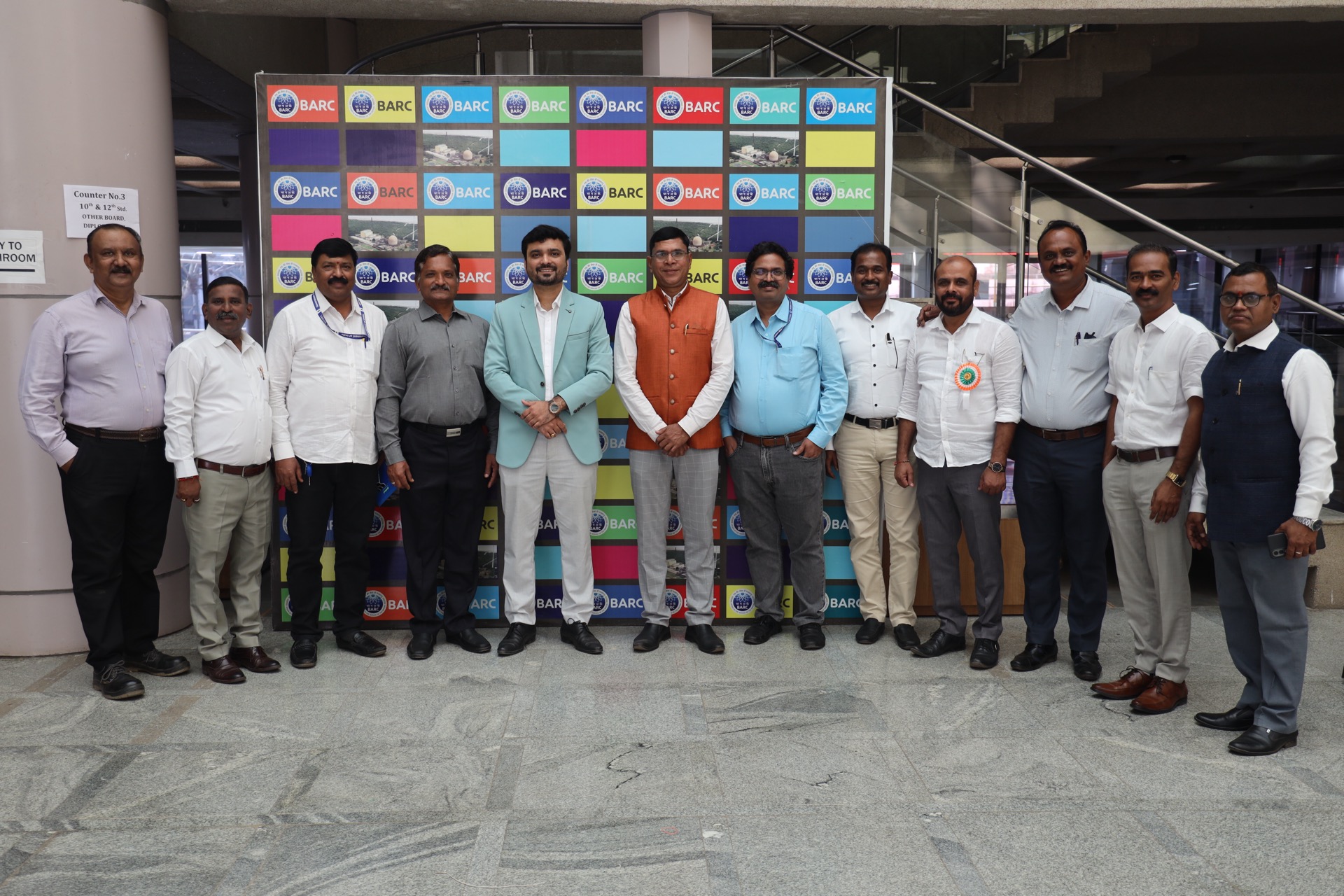
In the middle of a pandemic, when hospitals across India were buckling under fear and fatigue, I watched a hospital's entire team — doctors, nurses, ward staff, administrators — move like one organism. That was Dr. Aditi Karad's doing, and it remains one of the clearest live demonstrations of Team Capabilities I have ever trained inside.
In short- Dr. Aditi Karad is Executive Director of MAEER MIT's VishwaRaj Superspeciality Hospital, Pune, and was involved from the hospital's construction to its peak performance today.
- I met her during the COVID-19 pandemic, when she called me in to train her team of doctors, nurses and staff — and I saw Team Capabilities in action under real pressure.
- Her leadership traits — respect, helpfulness, working together — built a strong team identity and a shared commitment to the hospital's goals.
- HR head Harsha Palwe independently confirmed her team-building strength during our conversations.
- The same “Fevicol skill” that held her hospital team together shows up in Bollywood film units, political coalitions, product launch teams, IT delivery teams and hotel operations — it is a universal leadership competency, not a healthcare-only one.
Where this sits on your Winning Kite
Team Capabilities is Trait #22, sitting on the EQ — left side of your Winning Kite (KITE Leadership Framework). It belongs to the fifth cluster of Emotional Intelligence traits — the ones that decide whether you can multiply your own competence through other people. A brilliant individual contributor can win a task. Only a leader with Team Capabilities can win a mission, a ward, a quarter, a hospital.
What Team Capabilities actually means
The Team Capabilities competency is about building strong and effective teams that work together towards a common goal. People who fit this competency model have traits like respect, being helpful, and working together as a team. They encourage and inspire everyone on the team to take an active and enthusiastic part. They also work to build a strong sense of team identity — a feeling of being part of a cohesive group — and a strong commitment to the team's goals.
People with this skill make sure that team members are working together well and efficiently to protect the team and its reputation. They also give credit to everyone on the team for the team's successes, recognising that each person made a difference. This competency is essential for anyone who wants to be an effective leader or team member, because it creates a positive, productive environment where everyone works together to achieve common goals.
Meeting Dr. Aditi Karad
Let me introduce you to Dr. Aditi Karad, the Executive Director of MAEER MIT's VishwaRaj Superspeciality Hospital, a woman with a remarkable vision to provide quality and affordable healthcare to all. Her passion and commitment have been instrumental in creating a hospital that stands as a testament to her tireless efforts.
From the very beginning, Dr. Karad has been the driving force behind the hospital's success. Her involvement in every step of the way — from the construction of the hospital to its peak performance today — has earned her respect and admiration from everyone who works with her. This is not a leader who arrived after the building was finished and put her name on the door. She was there when the foundations were poured, and she has stayed close to the ground ever since.
The call that came during COVID-19
During the COVID-19 pandemic, I had the privilege of meeting Dr. Karad when she called me to train her team of doctors, nurses, and staff. Think about the timing of that decision. This was a period when hospitals everywhere were stretched thin — staff exhausted, protocols changing by the week, fear running through every corridor. Most institutions in that moment were purely in survival mode, cutting anything that wasn't strictly clinical.
Dr. Karad chose that exact moment to invest in her team's emotional and behavioural capability. That decision alone tells you something about her priorities as a leader. She understood that a hospital is not just equipment and protocols — it is a team of human beings who have to hold their nerve together, day after day, under conditions none of them signed up for.
Her team's capabilities and seamless teamwork were truly impressive. Dr. Karad's leadership had created a culture of teamwork where everyone worked together towards a common goal, with each person's contribution valued. I did not see a hierarchy where doctors mattered and support staff didn't. I saw a hospital where the person managing patient records and the surgeon in the operating theatre were both treated as essential to the same mission.
The traits that made it work
Dr. Karad's leadership is a shining example of the Team Capabilities competency, with her traits of respect, helpfulness, and ability to work together as a team creating a positive and productive team environment. She's built a strong sense of team identity and a commitment to the team's goals, bringing out the best in everyone.
It was evident to me that Dr. Karad's team capabilities are exceptional. And this wasn't just my outside impression as a trainer walking in for a few sessions. Even the HR head of the hospital, Harsha Palwe, spoke highly of her abilities during our discussions. When the person who sits closest to the day-to-day people-management of an organisation independently vouches for a leader's team-building strength, that is a far stronger signal than any external observer's praise. Harsha Palwe was watching the culture from the inside, every single day, and what she described matched exactly what I had seen walk through those hospital corridors.
Why this matters more in a crisis, not less
It would have been easy for Dr. Karad to assume that a crisis is the wrong time to worry about “soft” things like team culture. The opposite is true, and her hospital proved it. In a crisis, a fractured team fractures faster — mistakes multiply, morale collapses, people start protecting themselves instead of the patient in front of them. A team with real Team Capabilities does the opposite: pressure makes the glue stronger, not weaker, because everyone already knows their role matters and their colleagues have their back.
The Fevicol skill — the glue that holds every team together
The ability to keep a group working effectively together is a valuable talent in itself. Every high-functioning group almost certainly has at least one member with this skill, often referred to as the “Fevicol skill” — for their ability to act as the glue that holds the team together. The more complex the group's task, the more critical these individuals are to the group's success. This is especially clear in industries and fields where the goal is to create or come up with something new, or — as in Dr. Karad's hospital — to keep human lives safe under extraordinary pressure.
You see this Fevicol skill everywhere once you know to look for it:
| Field | Where the Fevicol skill shows up |
|---|---|
| Bollywood | Directors and producers managing egos across actors, technicians and crew so the film comes together as one vision — celebrated collectively at events like the Filmfare Awards, which honour Best Film and Best Director alongside individual categories. |
| Indian politics | Strategists who bring together different factions and interests during a campaign or policymaking process — a skill political advisor Suresh Narayan has spoken about at length. |
| Corporate product launches | A project manager who can align marketing, sales, R&D and other departments so the launch lands as one coordinated push, not five disconnected efforts. |
| IT / software delivery | A team lead coordinating programmers, designers and testers so the final product actually matches what the client asked for, delivered on time. |
| Hospitality | A hotel general manager aligning front desk, housekeeping and food & beverage so the guest experiences one seamless stay, not four disconnected departments. |
| Healthcare | Dr. Aditi Karad, aligning doctors, nurses and staff into one team identity — most visibly tested during COVID-19. |
A friend named Shrinivas: the same skill outside the office
During my engineering days, I fondly remember my friend Mr. Shrinivas, who had a unique ability to bring people together. He was the glue that held our group of friends intact. As the natural leader of our circle, Shrinivas took it upon himself to manage and plan our trips, ensuring that every detail was perfectly executed. His magnetic personality, combined with his exceptional organisational skills, made him the ideal person to keep everyone in sync.
Shrinivas is now an entrepreneur, and he still shows off these skills — not just to his friends, but also to his professional team. His innate ability to lead, inspire, and unite people has helped him build a successful business. Shrinivas is a living example of how the Fevicol skill can transcend beyond college days and play a significant role in both personal and professional spheres.
The impact of Shrinivas's leadership is felt by everyone who has the privilege to work with him. He creates an environment of camaraderie and collaboration, encouraging his team members to voice their opinions and contribute their unique talents. His approach fosters innovation, productivity, and a sense of belonging among his employees, ultimately leading to the success of his ventures. I tell this story alongside Dr. Karad's deliberately — one is a hospital of hundreds under pandemic pressure, the other a small circle of college friends planning a trip. The underlying skill is identical. Team Capabilities does not care about the size of the group; it cares about whether someone is actively doing the work of holding it together.
How to build Team Capabilities in your own team
Dr. Karad's example gives us a practical checklist any manager can apply, whether you run a ward, a sales floor, or a ten-person startup:
- Be present from the ground up. Dr. Karad was involved from construction to peak performance. Teams trust leaders who have been in the trenches with them, not leaders who arrived after the hard part was done.
- Value every role, not just the visible ones. Respect and helpfulness across the hierarchy — from doctor to ward assistant — is what created the seamless teamwork I witnessed.
- Invest in the team especially when it's hardest to justify. Calling in training during a pandemic, when every rupee and every hour felt precious, was a signal that culture was not negotiable even in crisis.
- Give credit generously and publicly. People with strong Team Capabilities make sure everyone's contribution to a shared success is recognised — nobody quietly carries the team while someone else takes the bow.
- Protect the team's cohesion as your own job. A leader with this competency treats the team's reputation and functioning as something they are personally responsible for protecting, not something that happens automatically.
As Daniel Goleman's research on emotional intelligence has long pointed out, the traits that build strong teams — empathy, social skill, the ability to manage relationships — are learnable, not fixed. Dr. Karad's hospital is proof that this learnability holds even in high-stakes, high-stress environments like a pandemic-era hospital floor.
If you lead a team of five or five hundred, the question worth asking after reading Dr. Karad's story is simple: if a crisis hit tomorrow, would your team hold together — or would it need you standing in the middle, holding the pieces together with your own two hands? Building the kind of Team Capabilities she demonstrated is exactly the work we do inside Signature Corporate Training Programs and our wider corporate training topics, so that your team's glue doesn't depend on any one person being in the room.
Bring These Ideas to Your Team
Avinash Chate turns the traits in Stars at India Inc. into live leadership & emotional-intelligence workshops. TEDx speaker · 11+ yrs training Army, BRO, RBI, BARC, JSW & 1000+ leaders.
✅ Thanks! Avinash team will reach out within 24 hours.'}).catch(function(e){f.outerHTML='Something went wrong. WhatsApp +91 8793630001
'});return false;">Select ServiceKeynote / Motivational SpeakingLeadership Development TrainingTeam Building WorkshopManager DevelopmentEmployee TrainingBook Avinash Now →Or WhatsApp directly: +91 87936 30001
Work with Avinash Chate
- Signature Corporate Training Programs →
- The Winning Kite (KITE Leadership Framework) →
- All Corporate Training Topics →
Avinash Chate TEDx Speaker · Founder, The Future Corporate · Author of Stars at India Inc. Avinash has trained the Indian Army, BRO, RBI, BARC, JSW Steel and 1000+ corporate leaders across India. His work focuses on leadership, emotional intelligence and behavioural training rooted in Indian values and modern business needs. |
Frequently Asked Questions
What is the Team Capabilities trait in the Winning Kite framework?
Team Capabilities is Trait #22 on the EQ (left) side of the Winning Kite. It is the emotional skill of building strong, effective teams — respect, helpfulness, working together, giving credit to everyone, and creating a shared team identity around common goals.
Who is Dr. Aditi Karad?
Dr. Aditi Karad is the Executive Director of MAEER MIT's VishwaRaj Superspeciality Hospital, involved in the hospital from construction through to its peak performance today, known for building a culture of seamless teamwork among doctors, nurses and staff.
What is the 'Fevicol skill' in leadership?
The Fevicol skill is the ability to be the glue that holds a team together — the person or leader whose presence keeps a group emotionally bonded and working effectively, especially in complex, high-pressure or creative tasks.
How can leaders build Team Capabilities in their own teams?
By being visibly involved from the ground up, treating every role as valuable, giving credit publicly and generously, building a shared identity around the team's purpose, and protecting the team's cohesion and reputation as a leader's own responsibility.
Related Articles by Avinash Chate
- Why India Ranks Top 5 in Global Warming Risk: ESG Lessons for Leaders
- Dhoni's 2007 T20 World Cup Gamble: The Strategic Risk Formula Every Indian Leader Needs
- They Come Just for Salary?
Avinash Chate services
Corporate Trainer in Pune · Top Corporate Trainers in Pune · Leadership Trainer in Pune · Top Leadership Trainers in Pune · Team Building Trainer in Pune · Top Team Building Trainers in Pune · Motivational Speaker in Pune · Top Motivational Speakers in Maharashtra · All service locations
← Back to all articles · Book Avinash Chate
By Avinash Chate — Maharashtra’s #1 Corporate Trainer & Motivational Speaker. .