Testimonial – भीतीपासून आत्मविश्वासापर्यंतचा प्रवास
अनेक संस्थांमध्ये कर्मचारी मनातील भीतीमुळे आपले विचार मांडू शकत नाहीत. सार्वजनिक बोलण्याची भीती, टीममध्ये समन्वयाचा अभाव आणि एकमेकांबद्दल गैरसमज यामुळे संस्थेची...
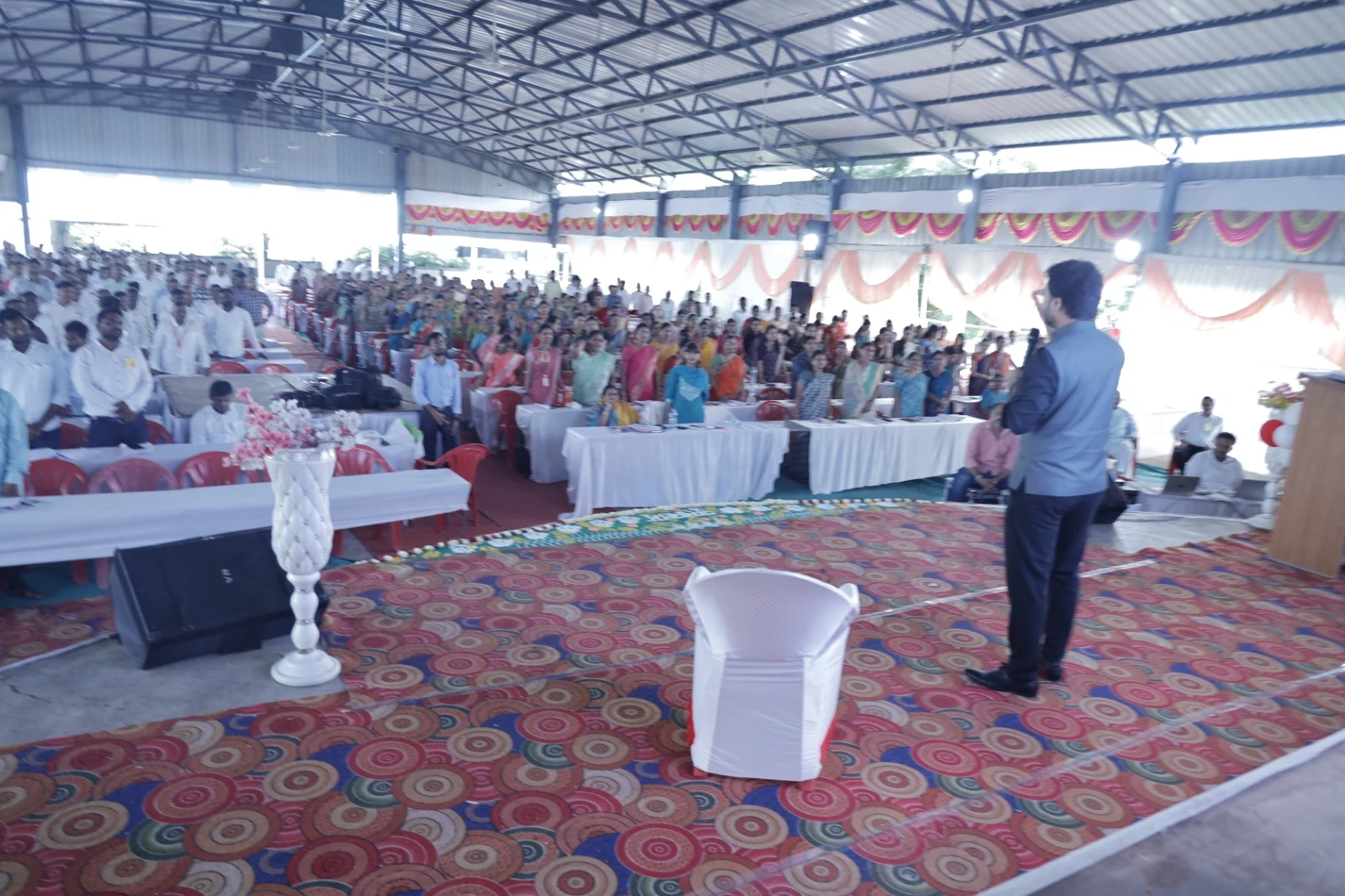
Avinash Chate - TEDx Speaker delivering keynote at corporate event
From Fear to Confidence: What Truly Changes People in a Training RoomIn my work as a corporate trainer, I have seen a pattern repeat itself across teams, institutions, and workplaces. People are not always lacking talent. They are often carrying fear. Fear of speaking. Fear of being judged. Fear of making mistakes. Fear of saying the wrong thing in front of seniors or colleagues.
When fear begins to fade, confidence does not arrive as noise. It arrives as clarity, courage, and the willingness to participate.
This is why I believe that real training is not about filling minds with information. It is about unlocking expression, strengthening belief, and helping people discover their own voice. That is the journey I have witnessed in countless sessions as Avinash Chate, a TEDx speaker and author of The Winning Edge.
Why Fear Silences Good People
Many employees and team members have valuable ideas, but they do not express them. Not because they do not care, but because they are internally blocked. In many workplaces, people hesitate to ask questions, avoid sharing suggestions, and stay quiet in discussions even when they know something important.
This silence creates a hidden cost. Misunderstandings increase. Coordination weakens. Team members begin to assume instead of communicate. Gradually, performance suffers not because people are incapable, but because they are emotionally restricted.
I have often noticed that before training, participants come with doubt in their minds. They wonder whether they will be forced to speak, whether they will be judged, or whether they will feel uncomfortable. This is natural. But once the environment becomes safe, respectful, and energizing, people begin to open up.
That is why the first responsibility of any trainer or leader is not to impress people. It is to create trust.
Confidence Is Built Through Experience, Not Advice Alone
One of the biggest mistakes people make is assuming that confidence can be built only through motivational words. Words matter, but experience matters more. A person becomes confident when they speak once, survive the moment, and realize, I can do this.
In my sessions, I focus on helping participants move from hesitation to participation. The shift does not happen through pressure. It happens through structure, encouragement, and repeated opportunities to express themselves. When someone who was silent at the beginning of the session starts contributing by the end, that is a real breakthrough.
This is where soft skills training becomes transformational. Communication is not just about language. Teamwork is not just about sitting together. Leadership is not just about authority. These are deeply human capabilities that grow when people feel seen, heard, and supported.
Over 15+ years, I have learned that confidence grows fastest in an atmosphere where people are allowed to try without fear of embarrassment. That is why practical exercises, reflection, and group interaction are so powerful.
People do not become confident because someone tells them they are capable. They become confident when they experience their own capability in action.
How Team Unity Begins With Better Understanding
Fear does not affect only individual confidence. It also affects team relationships. When people do not communicate openly, they begin to misunderstand each other. One person appears rude when they are actually anxious. Another appears disengaged when they are actually unsure. A third seems resistant when they are simply afraid of failure.
This is why team building is not a luxury activity. It is a strategic investment in trust, alignment, and collaboration. When people understand themselves and one another better, they stop reacting blindly and start working together more effectively.
I often tell teams that before managing performance, we must understand people. That is why I strongly recommend reading The Ferob Model: Understanding People Before Managing Them. It offers a practical perspective on how behavior, emotion, and response patterns influence team dynamics.
Similarly, when organizations want to strengthen collaboration in a meaningful and engaging way, they can explore Team Building Activities for Corporate Teams in Mumbai — Indoor and Outdoor. The larger lesson is simple: teams do not become stronger by instruction alone. They become stronger through shared experience.
The Role of Leadership in Creating Psychological Safety
Confidence does not grow in isolation. It grows in culture. If leaders want people to contribute more, they must create an environment where speaking up feels safe. This is one of the most important leadership responsibilities in any organization.
In my leadership sessions, I often draw from the KITE Leadership Framework to explain how effective leaders build trust, inspire participation, and create emotional ownership within teams. A leader who listens well, responds respectfully, and encourages initiative automatically reduces fear in the system.
When people know that their voice will not be mocked, dismissed, or punished, they begin to contribute more honestly. This changes meetings. It changes relationships. It changes accountability. It also changes energy.
I have seen this principle reflected across diverse organizations, including institutions such as Bajaj hospital, where human connection and communication are essential to performance. Whether the setting is healthcare, education, manufacturing, or services, one truth remains constant: people perform better when they feel psychologically safe.
As Avinash Chate, I believe that the strongest teams are not the ones with the loudest people. They are the ones where even the quietest person feels comfortable speaking.
Environment Shapes Mindset More Than We Realize
Sometimes people assume that lack of confidence is a permanent personality trait. I disagree. In many cases, confidence is deeply influenced by environment. A fearful environment produces withdrawal. A supportive environment produces participation. A growth-oriented environment produces ownership.
That is why I encourage leaders and organizations to think beyond training as a one-time event. Training can ignite change, but the workplace environment must sustain it. If a participant leaves a powerful workshop and returns to a culture of ridicule, interruption, or indifference, the old fear quickly returns.
This is also why mindset and environment are closely connected. If you want to explore this idea further, I recommend How Environment Changes Mindset: What Davos Teaches Leaders About Growth. The message is clear: people rise when the environment invites growth.
As a TEDx speaker and author of The Winning Edge, I have always believed that transformation is not accidental. It is designed. It comes from intentional leadership, meaningful training, and a culture that values human potential.
What Real Transformation Looks Like
For me, the most meaningful testimonials are not about applause. They are about change. When a participant says, “I was afraid before the session, but now I can express my thoughts,” that is success. When a team says, “We understand each other better now,” that is success. When an organization says, “There is more unity, more openness, and more initiative,” that is success.
Real transformation is visible in small but powerful moments. A hesitant employee volunteers to speak. A team member apologizes and reconnects. A group begins listening instead of interrupting. A manager starts encouraging instead of controlling. These are not minor improvements. These are culture shifts.
Avinash Chate has worked with 80+ organizations, and this is the lesson I continue to carry into every program: people do not need more pressure; they need more possibility. They need a space where they can discover that they are capable of far more than fear allowed them to believe.
If your team is struggling with hesitation, low confidence, weak communication, or lack of unity, the answer is not blame. The answer is development. The answer is training that touches mindset, behavior, and relationships together.
If you are ready to strengthen confidence, communication, leadership, and team spirit in your organization, book a corporate training session. I would be glad to support your people on their journey from fear to confidence.
Frequently Asked Questions
Why do employees hesitate to speak even when they have good ideas?
In many workplaces, hesitation comes from fear of judgment, rejection, or making mistakes. When people do not feel emotionally safe, they often choose silence over participation.
Can confidence really be developed through training?
Yes, absolutely. Confidence grows when people get structured opportunities to speak, interact, reflect, and succeed in a supportive environment. It is built through experience, not just advice.
How does training improve teamwork?
Training improves teamwork by increasing self-awareness, reducing misunderstandings, strengthening communication, and helping people appreciate each other’s strengths and working styles.
What is the role of leaders in reducing fear in teams?
Leaders shape the emotional climate of a team. When they listen, encourage, and respond respectfully, they create psychological safety, which helps people contribute with more confidence.
Who should attend confidence and communication training programs?
Such programs are valuable for employees, managers, team leaders, frontline staff, and any group that wants to improve communication, collaboration, motivation, and workplace confidence.
Related Articles by Avinash Chate
- The Power of Emotional Intelligence at Workplace in Mumbai
- The Tetra Pak Lesson: Solve the Real Problem, Not the Visible One
- Corporate Training in Nashik for Sinnar MIDC and Emerging Industrial Corridors
About the Author
Avinash Chate is a TEDx speaker, published author of The Winning Edge and The Unanswered, and founder of The Future Corporate & Business Coaching. With over 15 years of experience training 80+ organizations including Sakla Group, Ferrero Rocher, Aurus Group Real Estate, Kaeser Compressors India, Avinash is recognized as Maharashtra's leading corporate trainer. He created the KITE Leadership Framework and the 25-Star Competency Framework™, delivering high-impact programs across leadership, team building, sales transformation, and emotional intelligence.
📞 +91 8793630001 | ✉️ connect@avinashchate.com | 🌐 avinashchate.com
Book Avinash Chate for Your Next Event
Maharashtra's #1 Corporate Trainer · India's leading Motivational Speaker & Team Building Expert · 2x TEDx · Available across India in English, Hindi & Marathi.
✅ Thanks! Avinash team will reach out within 24 hours.'}).catch(function(e){f.outerHTML='Something went wrong. WhatsApp +91 8793630001
'});return false;"> Select Service Motivational Speaking / Keynote Team Building Workshop Corporate Training / Leadership Development Manager Development Employee Training Outbound Training Book Avinash Now →Or WhatsApp directly: +91 87936 30001
Avinash Chate services
Corporate Trainer in Maharashtra · Top Corporate Trainers in Maharashtra · Leadership Trainer in Maharashtra · Top Leadership Trainers in Maharashtra · Team Building Trainer in Maharashtra · Top Team Building Trainers in Maharashtra · Motivational Speaker in Maharashtra · Top Motivational Speakers in Maharashtra · All service locations
← Back to all articles · Book Avinash Chate
By Avinash Chate — Maharashtra’s #1 Corporate Trainer & Motivational Speaker. .