Mr. Kaushal Mishra rising to director
A junior software trainer who walked 12 kilometres through monsoon rain to never miss a client session rose to director in under a decade. Here is the full story of Kaushal Mishra's service orientation, and how you can build the same trait.
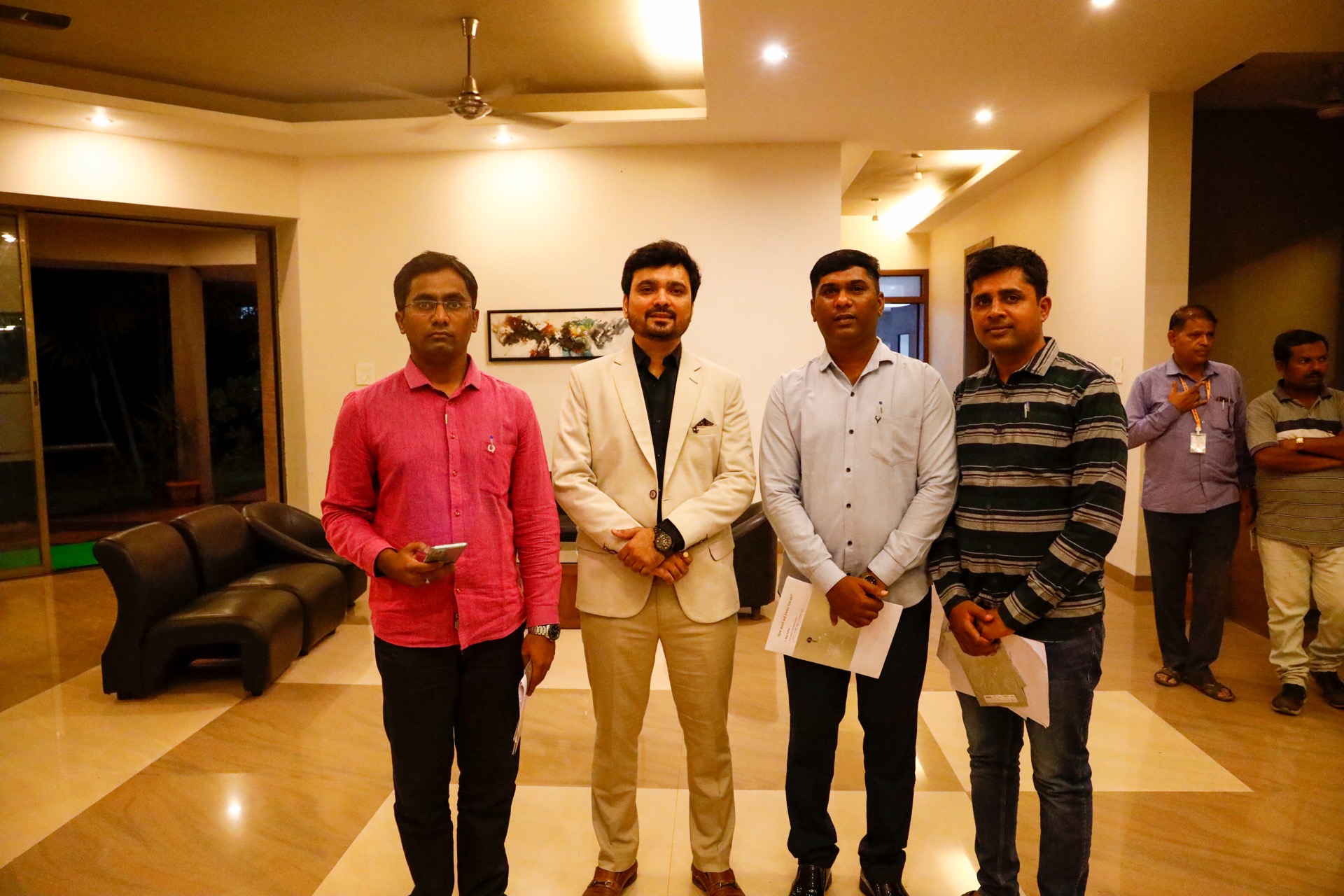
A junior trainer who never once complained, even when he arrived drenched to a cancelled class, became a director in under a decade. This is not a story about talent. It is a story about a single trait, practised daily, until it became a career.
In short- Kaushal Mishra joined CADD Centre Training Services as a junior software trainer and rose to director in 8-10 years, driven almost entirely by his service orientation.
- He once travelled 12 km daily through heavy monsoon rain to train 20-25 employees at a construction company called Amanora — and when a session was cancelled after he arrived soaked, he asked for a glass of water and left without a word of complaint.
- Service orientation is Trait #16 on the EQ side of the Winning Kite — it is empathy and self-control turned into daily professional behaviour.
- It is a choice between short-term sales and long-term relationships; Avinash pairs Kaushal's story with Bhagyashree Lahane's, who chased down a vendor payment out of sheer fairness, not obligation.
- You can deliberately build this trait through self-awareness, active listening, adaptability and setting your own standard higher than what is asked of you.
Where this sits on your Winning Kite
Service orientation is Trait #16, and it sits on the EQ — the left side — of the Winning Kite (KITE Leadership Framework). On the kite, EQ, RQ and PQ together lift you toward Success at the top. Service orientation is one of the clearest bridges between EQ and RQ on that kite: it starts as an inner discipline — understanding your own impulses when things go wrong — and it shows up outwardly as relationship strength with everyone around you: clients, colleagues, even vendors. Kaushal's story is the cleanest illustration in the whole book of how a single EQ trait, compounded over years, changes a career trajectory.
The story: a junior trainer who never complained
I want to tell you about Mr. Kaushal — later, Kaushal Mishra — a software trainer who demonstrated exceptional service orientation in a way I still use as a benchmark when I train corporate teams today.
He was assigned to train a group of 20-25 employees from a large construction company called Amanora. The training programme was scheduled to run for a full month, and it happened to fall during the rainy season. Every single day, Kaushal had to travel 12 kilometres to reach the training site. In Pune's monsoon, that is not a short, easy commute — it means traffic, waterlogging, and a real physical toll.
Despite the weather, Kaushal never complained. He was always on time.
One day, he made the same 12 km journey through heavy rain and arrived at the site completely soaked. When he got there, he discovered that the training session had been cancelled — unexpectedly, with no warning to him. Think about that moment. He had braved bad weather, arrived wet, and the reason for the entire trip had simply vanished. Most of us would feel entitled to be upset. Many would have said something to the client, or at least made their frustration visible.
Kaushal did neither. He calmly asked for a glass of water, and then returned to his office without a single complaint.
That is the whole incident. No dramatic dialogue, no confrontation, no story to tell about how hard done by he was. Just a quiet, consistent choice to absorb the inconvenience and move on.
[[IMAGE: image25.png]]Why that one incident mattered more than it looked
When the training programme eventually came to an end, one of the participants — who happened to be a good friend of mine — could not stop praising Kaushal for his dedication and his commitment to giving his clients the best possible service. What struck this participant was not any single grand gesture. It was Kaushal's willingness to make sacrifices, day after day, and to put in extra effort to make sure the training programme succeeded, despite the obstacles.
This story captures the exact difference between a professional who genuinely prioritises the client's needs and one who does not. We have all experienced the opposite: service providers who were more interested in chatting with their coworkers than helping us, or who gave us a lower level of service than we expected — whether it was a broadband connection issue or a problem at a bank counter. You know the feeling of being treated as an interruption rather than the reason the business exists. Kaushal represents the opposite instinct, practised consistently enough that it became his professional identity.
The difference between these two types of professionals lies entirely in their level of service orientation. It is rooted in empathy and in the ability to understand what the other person actually needs — not what is easiest for you to give them. This is especially crucial in sales, in consulting, or in any service-based profession, where understanding and addressing a client's pain points can make the entire difference in the experience they walk away with.
From junior trainer to director
Here is where the story completes itself. Mr. Kaushal Mishra joined CADD Centre Training Services as a junior trainer 8-10 years before I wrote this. Today, he is a director at the company — and it is thanks, almost entirely, to his passion for customer orientation.
Many people assume that things like polished English, a certain appearance, or a confident demeanour are what get someone promoted quickly. But those who know Kaushal well, who have actually worked alongside him, know better. They know the sacrifices he has made for customers over the years. He has always emphasised taking that extra pain for the customer, fulfilling commitments even when it is inconvenient, and building trust one interaction at a time.
There was no single dramatic turning point in his rise. There was a decade of glasses of water asked for calmly, of 12 km commutes made without complaint, of showing up early and leaving without drama when things did not go his way. That consistency is what a director's chair is actually built from.
A second example: Bhagyashree Lahane and the vendor she chased down
Avinash pairs Kaushal's story in the book with another one, because service orientation is not only about how you treat paying clients — it is about how you treat everyone connected to your workplace, including the people who serve you.
Bhagyashree (Mhaske) Lahane is the Assistant Manager of HR at AEL — Mahindra CIE Group Company. She shows the same commitment, but from the other side of the table: she makes sure that everyone connected with her workplace, including vendors like us, is satisfied and well taken care of.
Not long ago, our company had the chance to work with Bhagyashree as a corporate consultant, training employees at Mahindra. Throughout that engagement, she consistently went the extra mile to make sure our needs were met, and that we felt supported through the whole process. From the very first meeting where we discussed our training services, right through to organising and running the sessions, her attention to detail and her proactive approach were unmistakable.
What impressed me the most, though, was her dedication to making sure I received payment quickly. In our line of work, it is not unusual to have to follow up repeatedly on an invoice. Bhagyashree's proactive approach was a refreshing change. Even though we were slow in collecting the payment ourselves, she kept calling, asking in Marathi, "Avinash, tujha kade paise jast zhalet ka?" — "Avinash, don't you need the money?" She went out of her way to collect the cheque herself and kept it at her house, which was near our office, until we could come and get it.
Bhagyashree's outstanding service orientation highlights something important: thinking about the needs of everyone connected with your workplace — not only clients or coworkers, but vendors too. By treating vendors with the same level of care and attention as she treats her internal stakeholders, she builds strong professional relationships that add to the overall success and harmony of her organisation.
The choice underneath service orientation
Service orientation is, at its core, a choice you make in how you approach work. When you engage in sales or client-facing work, you essentially have two options: focus on short-term gains, or invest in long-term relationships. In the short term, you may earn money either way. But only the long-term approach builds a community of customers who actively promote your work through word of mouth.
If you live by the philosophy "once a customer, always a customer," you stop merely selling a product or a service. You start fulfilling needs and building lasting relationships. The choice is entirely yours: think short-term, or think long-term. Prioritise exceptional service, offer real help, and your results grow organically, without you having to force them.
Professionals who genuinely believe in service orientation take on the role of a trusted advisor. They never misguide a customer just to close a sale. They control the temptation to oversell, and instead focus on understanding what the customer actually needs. That builds honesty and integrity — and that, in turn, builds the trust that keeps clients coming back and referring others. It is said that a service-oriented salesperson's performance is three to five times greater than that of an average sales professional. That is not a soft, feel-good statistic. It is a direct commercial outcome of an emotional trait.
There is also a quieter benefit: job security. In a difficult job market, going the extra mile for your customers, addressing their concerns without being chased, and offering genuine assistance builds a reputation that protects you. No matter how tough the situation gets, your job stays secure as long as your customers keep coming back to you specifically.
The link back to self-awareness
If you have followed the traits earlier in this book, you will remember that everything starts with self-awareness — being conscious of your own thoughts, moods, feelings, fears, and temptations, so that you can control your actions rather than be controlled by them. Service orientation asks you to apply that same self-control outward. You will often need to understand a customer's pain points even when they are not communicating them clearly, and you will need to make extra efforts that may not directly move the needle on your sales numbers that week. If you still put in that extra effort anyway, you are a star. That is what going the extra mile actually looks like in practice — it is self-control applied in service of someone else.
This self-control feeds directly into the next skill: understanding others — the empathy that lets you read what people need before they ask. Daniel Goleman's work on emotional intelligence describes empathy as one of its core pillars, and Kaushal's story is a live demonstration of exactly that pillar in an ordinary Indian workplace, not a boardroom case study from abroad.
Why service orientation is missing in so many places
We have all felt the absence of this trait — in supermarkets, at airports, in hotels. It is missing in far more people than it should be. In my experience, there are three likely reasons:
| Reason | What it looks like |
|---|---|
| Management prioritising sales over customers | When the sole focus is meeting targets, employees learn to neglect the customer's actual needs in favour of the number. |
| Short-term success over long-term retention | Daily crises, incentive pressure and job insecurity push people to chase this month's number instead of the relationship. |
| Lack of job satisfaction or engagement | If you don't like your job, it is genuinely hard to go above and beyond for the people it serves. |
Recognising these three causes is useful whether you are the employee trying to build the trait, or the manager trying to build it into a team.
How to build service orientation, step by step
Developing service orientation requires a combination of self-awareness, empathy, and a commitment to continuous improvement. Here is how to build it deliberately, the way Kaushal appears to have built it without ever naming it:
- Cultivate self-awareness. Understand your own thoughts, emotions and motivations so you can control your impulses and respond more effectively when things go wrong — like a cancelled session after a soaking commute.
- Develop empathy. Put yourself in your customer's shoes and try to understand their needs, feelings and pain points before they have to spell them out for you.
- Listen actively. Pay close attention to what people say, and ask open-ended questions to clarify their real concern rather than assuming you already know it.
- Improve communication. Practise clear, concise, empathetic communication so you both understand needs and convey solutions well.
- Be adaptable and flexible. Every customer or colleague is unique. Be willing to adjust your approach and take feedback on board.
- Sharpen problem-solving. Strengthen your ability to spot problems early and generate creative, workable solutions.
- Stay current in your field. Relevant, up-to-date knowledge lets you offer solutions that actually help, not generic advice.
- Set a higher personal standard. Hold yourself accountable for excellence even when no one is checking, and keep seeking ways to grow your skillset.
- Maintain a positive attitude. A genuinely helpful, friendly demeanour changes how every interaction lands, especially difficult ones.
- Learn from others who excel at it. Watch colleagues and mentors who are naturally service-oriented, and absorb their techniques into your own habits.
Practise these consistently, and you build exactly the kind of reputation Kaushal built — the reputation that, over years and without any single dramatic moment, turns a junior trainer into a director.
If you are building this trait into your own team, my Signature Corporate Training Programs work through service orientation as part of the EQ cluster on the Winning Kite, alongside the other 24 traits. You can also explore the full list of corporate training topics we run for teams across India, or read the companion story of Bhagyashree Lahane's commitment to vendor fairness for the other half of this trait in action.
Bring These Ideas to Your Team
Avinash Chate turns the traits in Stars at India Inc. into live leadership & emotional-intelligence workshops. TEDx speaker · 11+ yrs training Army, BRO, RBI, BARC, JSW & 1000+ leaders.
✅ Thanks! Avinash team will reach out within 24 hours.'}).catch(function(e){f.outerHTML='Something went wrong. WhatsApp +91 8793630001
'});return false;">Select ServiceKeynote / Motivational SpeakingLeadership Development TrainingTeam Building WorkshopManager DevelopmentEmployee TrainingBook Avinash Now →Or WhatsApp directly: +91 87936 30001
Work with Avinash Chate
- Signature Corporate Training Programs →
- The Winning Kite (KITE Leadership Framework) →
- All Corporate Training Topics →
Avinash Chate TEDx Speaker · Founder, The Future Corporate · Author of Stars at India Inc. Avinash has trained the Indian Army, BRO, RBI, BARC, JSW Steel and 1000+ corporate leaders across India. His work focuses on leadership, emotional intelligence and behavioural training rooted in Indian values and modern business needs. |
Frequently Asked Questions
What is service orientation and why does it matter at work?
Service orientation is the habit of proactively understanding and meeting the needs of everyone connected to your work — clients, colleagues, managers, vendors and support staff — without being asked. It matters because it is rooted in empathy and self-control, two markers of emotional maturity, and it directly drives customer loyalty, referrals and career growth.
Who is Mr. Kaushal Mishra in Stars at India Inc.?
Mr. Kaushal Mishra is a CADD Centre Training Services trainer who joined as a junior trainer and rose to director within 8 to 10 years. Avinash Chate uses his story, including the day Kaushal walked 12 km through monsoon rain for a client training that was cancelled without complaint, as the defining example of Trait #16, Service Orientation, on the EQ side of the Winning Kite.
How is service orientation different from just being polite to customers?
Politeness is a surface behaviour. Service orientation is a choice about long-term relationships over short-term gains — it means going the extra mile even when it does not directly impact your sales, being a trusted advisor rather than a pushy salesperson, and extending that same care to coworkers and vendors, not only paying customers.
How can I build service orientation as a trait in my own career?
Start with self-awareness of your own impulses under pressure, then practise empathy by actively listening to what people need before they ask directly. Set high personal standards, stay adaptable to each person's situation, and keep a long-term, 'once a customer, always a customer' mindset instead of chasing short-term wins.
Related Articles by Avinash Chate
- Team Building Games That Actually Build Trust and Collaboration India
- Best Motivational Speaker for Sakinaka Andheri Kurla Corporates 2026
- Future-Proof Your Career From AI: A 25-Year Tech Story
Avinash Chate services
Corporate Trainer in Pune · Top Corporate Trainers in Pune · Leadership Trainer in Pune · Top Leadership Trainers in Pune · Team Building Trainer in Pune · Top Team Building Trainers in Pune · Motivational Speaker in Pune · Top Motivational Speakers in Maharashtra · All service locations
← Back to all articles · Book Avinash Chate
By Avinash Chate — Maharashtra’s #1 Corporate Trainer & Motivational Speaker. .