Shrimant Nagargoje – "we above me"
One sentence from Shrimant Nagargoje, the Operations Head of a training company I work with, taught me the difference between a visitor and a resident at work — and why “we above me” is the truest test of Commitment.
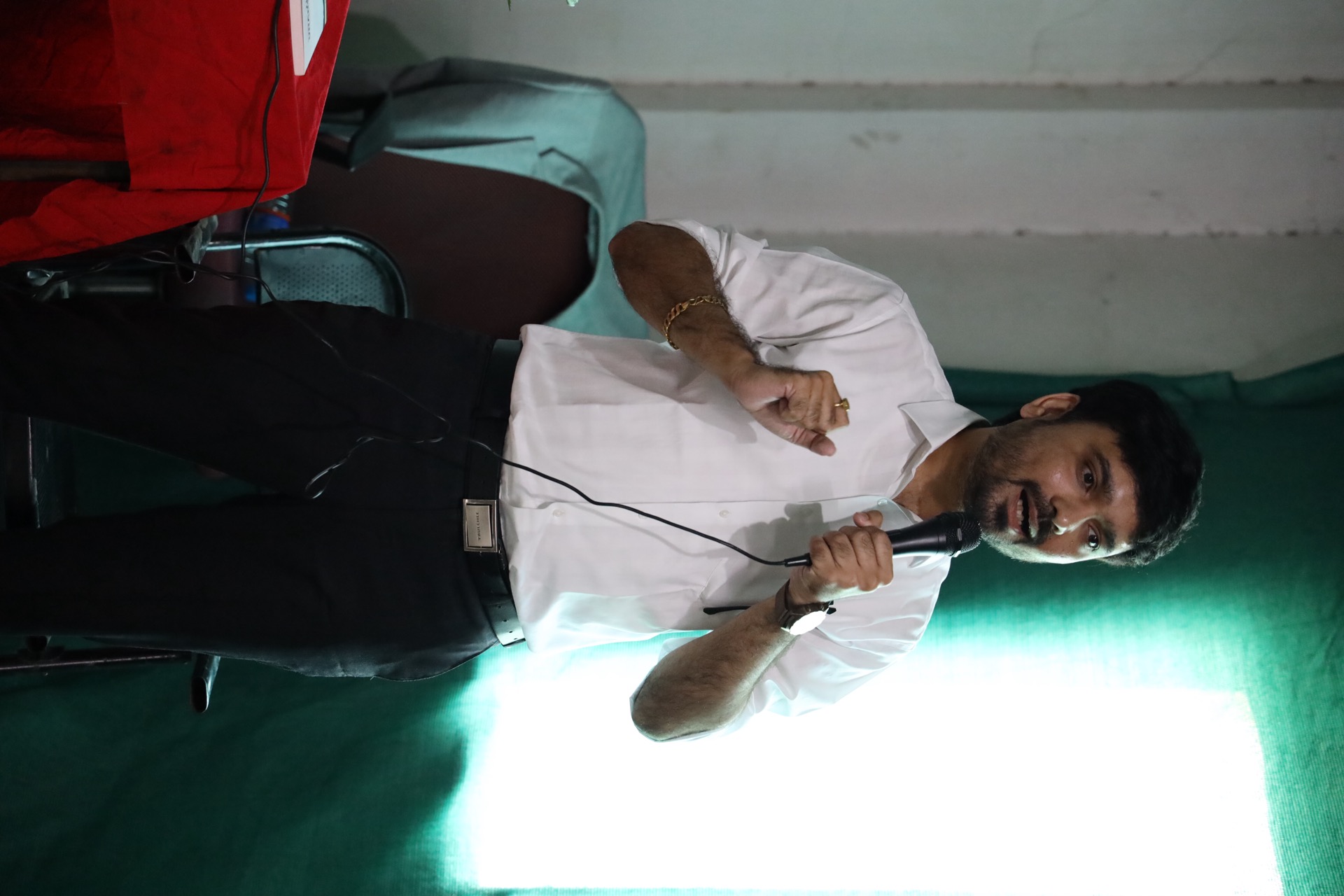
One line, spoken without any drama, has stayed with me for years: "I always believe in keeping we above me." It came from Shrimant Nagargoje Sir, the Operations Head of a training company I work closely with — and it is one of the purest, most unfiltered examples of Commitment I have ever heard at an Indian workplace.
In short- Shrimant Nagargoje Sir, Operations Head of a training company, told Avinash Chate: "I am proud that I'm making a change in society. I always believe in keeping we above me."
- He backs the words with action — working late for deadlines, sacrificing personal time for team goals, staying committed to the larger mission, not just his own success.
- His mindset is the clearest real-life marker of a "resident" at work, as opposed to a "visitor" who is there only for the salary.
- Commitment is Trait #9 on the EQ side of The Winning Kite (KITE Leadership Framework) — and "we above me" is its everyday test.
- You can build this same commitment in your team using the Golden Triad: Focus → Meaning → Action → Results.
Where this sits on your Winning Kite
Commitment is the ninth trait on the EQ — left — side of your Winning Kite (KITE Leadership Framework). EQ, RQ and PQ together lift you toward Success at the top of the kite — and no leader rises on strength alone; balance is what makes the kite fly. Shrimant Nagargoje's story shows what strong EQ looks like when it shows up as sustained, quiet dedication rather than a one-time act of heroism.
The conversation that stayed with me
I meet a lot of leaders across a lot of organisations. Most conversations are about targets, timelines, and training calendars. But every once in a while, someone says something in passing that ends up defining an entire chapter of a book.
Shrimant Nagargoje Sir is the Operations Head of a training company I work with. He runs the machinery behind the scenes — the scheduling, the logistics, the coordination that makes sure trainers reach the right city, the right client, at the right time, with the right materials. It is not glamorous work. Nobody claps for a well-run logistics sheet.
One day, talking about what keeps him going through the grind of back-to-back batches, tight deadlines, and last-minute changes, he said something simple and direct:
"As the head of this company, I am proud that I'm making a change in society. I always believe in keeping we above me."
I didn't ask him to elaborate. I didn't need to. Anyone who has worked with him already knows what that sentence looks like in practice. He's ready to work late if there's a deadline. He sacrifices his personal time for the team's goals. He is committed not just to his own success, but to the larger mission of the company — training and changing people, one batch at a time.
That's the difference commitment makes. It's not a slogan on the office wall. It's a man choosing, again and again, to put the team's success ahead of his own convenience — and being proud of it, not resentful.
Visitors vs Residents: the real test of commitment
In every organisation, I have found there are two kinds of people: visitors and residents.
Visitors come to work for the salary. They clock in at 9, clock out at 5. They do the bare minimum. They're not invested in the company's mission. If a better offer comes along, they're gone tomorrow without a backward glance. They watch the clock constantly, count their working hours, hunt for credit, and become so blind in their self-interest that they slowly turn negative toward the company. Any decision that goes against their personal interest causes them pain — and that pain widens the gap between them and the team, until they become lost and disconnected from the very organisation that pays them.
Residents feel a sense of belonging. They take pride in their work. They care about the company's success — not because they're told to, but because they want to. They readily make personal sacrifices for the team's goals. They find purpose in the larger mission. They use the company's core values, not just their personal convenience, to make decisions. They actively seek opportunities to fulfil the group's mission, and they stay loyal even in tough times. In one phrase: they put "we" above "me."
Shrimant Nagargoje Sir is a resident in the truest sense. And that is precisely why his one sentence carries so much weight — it isn't a management platitude borrowed from a training slide. It is a description of how he actually shows up, every single day.
What Commitment looks like when it's real
Commitment is an emotional quality that creates a strong attachment to your goals — whether personal or organisational. It is the ability to stay focused on what matters most, even when distractions, temptations, and setbacks try to pull you away.
In the workplace, committed professionals are the ones who work round the clock when needed, who sacrifice personal comforts for the team's success, who stay late to meet deadlines, and who are ready to take on urgent missions at the eleventh hour. They're willing to trade short-term pleasures for long-term missions. Committed professionals are the patriots of a company — the natural boosters, the ones who genuinely care about its vision and values.
As Salman Khan's famous dialogue goes: "Ek baar jo maine commitment kar di, toh main khud ki bhi nahi sunta." (Once I make a commitment, I don't even listen to myself.) That's commitment. It isn't just about saying you'll do something. It's about doing it — no matter what.
Commitment gets tested in specific, recognisable moments:
When distractions tempt you — will you stay focused on the goal, or get pulled away by short-term pleasures?
When setbacks hit you — will you quit when things get hard, or keep going?
When no one is watching — will you do the right thing even when there's no reward, no recognition, no applause?
When sacrifices are required — will you put the team's success above your own comfort?
Shrimant Nagargoje Sir passes each of these tests without ever framing it as a test. That's what makes his commitment authentic rather than performative.
Other stars who carried the same flame
I've seen this same quality show up in very different settings. During the COVID-19 pandemic, I spoke with Avinash Aghav Sir, a Police Inspector, who told me: "People may insult us. They may treat us badly. They may disrespect us. But we are committed to our job. Our personal interests don't matter here. It's our duty to protect this nation." That is commitment, worn as a uniform.
Or take Mr. Ankush, a trainer at our own company. When his father fell seriously ill, he asked us to reschedule a training batch in Pune. We couldn't accommodate the change. It was a brutally difficult decision — but Ankush chose to honour his commitment, travelled to Pune, delivered the sessions with full professionalism, and received excellent feedback. Only once the batch was done, and his father's condition had improved, did he finally allow himself to relax. I've written his full story separately: Mr. Ankush — the trainer who chose duty over a personal crisis.
Then there is Herman Miller, the office furniture company, where a group of accountants — not salespeople, not the delivery team — discovered that shipping had damaged chairs meant for an important new client opening on Monday morning. Nobody told them to fix it. They formed teams on the spot, worked through the night with steam irons to restore the fabric, and had every chair perfect by opening time. That is what "we above me" looks like when nobody is watching and there's no bonus attached.
And at the extreme end sits Dashrath Manjhi, who spent 22 years breaking a mountain with a hammer and chisel after losing his wife because the nearest hospital was a punishing 55-kilometre trek around that very mountain. I've told his story in full here: Dashrath Manjhi — the Mountain Man. Twenty-two years is an extraordinary number. But the emotional quality underneath it — staying attached to a goal bigger than yourself, day after day, without applause — is exactly the same quality Shrimant Nagargoje Sir brings to running training logistics.
Why most professionals struggle to sustain commitment
If commitment is this powerful, why don't more people have it? In my experience, four things quietly erode it.
1. Distractions and temptations. You're not distracted by things you don't love — you're distracted by things you do love. I know a professional who committed to giving up drinking. For a few weeks he held firm. Then, every evening at exactly 7 PM, he'd rush out of the office — pending work or not, team needing him or not — because the pull of that drink outweighed his commitment. In Dangal, Geeta gets pulled off-track by the glamour of city life once she leaves the akhada. In Bhaag Milkha Bhaag, Milkha Singh is derailed early by parties and temptations before he refocuses and becomes a champion. The pattern repeats everywhere: pleasure pulls people away from purpose.
2. Setbacks and failures. It's easy to stay committed when things are going well. Businessmen abandon ventures after losses. Writers give up after repeated rejection. Salespeople lose heart after a hundred "no's." But setbacks are part of the journey — quit every time it gets hard, and you never achieve anything great.
3. No alignment with the mission. If you're just showing up for a paycheck, real commitment never arrives. But when you believe in what your organisation stands for — the way Shrimant Nagargoje Sir clearly believes he's "making a change in society" — commitment stops feeling like effort and starts feeling like identity.
4. Fear of sacrifice. Commitment demands late nights, cancelled plans, personal discomfort. Many people want the rewards without paying the price. But nothing great is ever built without sacrifice — ask Dashrath Manjhi, ask the Herman Miller accountants, ask Ankush.
The Golden Triad: how to build this in yourself and your team
Here is a framework I use in my own workshops to strengthen commitment, and it's simple enough to remember under pressure: Focus → Meaning → Action → Results.
What you focus on determines the meaning you give to events. The meaning you assign drives your action. And your action determines your results. If you focus on the distractions and the temptations, you'll always find a reason to break your commitment. But if you focus on the larger mission — on the impact your work will actually have — you'll find the strength to stay committed. Choose your focus wisely; everything downstream follows from it.
This is exactly the loop Shrimant Nagargoje Sir has internalised. His focus is on "making a change in society." That focus gives every late night, every logistics fire drill, every deadline sprint a meaning bigger than personal convenience. The meaning drives the action — staying late, sacrificing personal time. And the action produces the result: a training company that runs like clockwork and a team that trusts its Operations Head completely.
Psychologist Carol Dweck's research on growth mindset offers a useful parallel here, purely as supporting colour: people who see effort and setbacks as part of growth — rather than as threats to their self-worth — sustain commitment far longer than those who need constant validation. Nagargoje's "we above me" is, in a sense, a growth mindset applied to organisational loyalty rather than personal skill.
Building this on your own team
If you want more residents and fewer visitors in your organisation, start here:
Align people with the vision. Help every employee see how their specific work — even something as unglamorous as logistics scheduling — connects to a mission bigger than the task list.
Set clear goals. Vague goals produce vague commitment. Specific, written targets sharpen focus.
Reward ownership, not just output. Notice and appreciate the people who ask "what could I have done better" instead of assigning blame.
Model it yourself first. Nagargoje's commitment is credible precisely because he lives it before he ever says it. Teams copy behaviour, not slogans.
Ask the resident question out loud. In your next team huddle, ask: "When there's an urgent project and no one will get credit for it — will you still contribute?" Watch who answers with their actions over the following weeks.
Now, this is not a call for blind loyalty. As Tom Peters wisely points out, there is a more balanced kind of loyalty emerging in the modern workplace — loyalty to your colleagues, your team, your project, your customers, and to yourself. "We above me" does not mean erasing yourself; it means finding the equilibrium between personal growth and organisational dedication, which is exactly what Nagargoje models — he takes pride in his own growth as Operations Head while never losing sight of the team.
The question worth asking yourself
Dashrath Manjhi spent 22 years breaking a mountain because he was committed to a cause bigger than himself. Shrimant Nagargoje Sir runs a training company's operations with the same underlying commitment, minus the hammer and chisel. Different scale, same emotional muscle.
So ask yourself honestly: are you a visitor in your workplace, or are you a resident? When the going gets tough, will you stay, or will you quit? Is your work just your salary — or is it something bigger, something you'd describe, the way Nagargoje did, as "making a change in society"?
If you're building leaders in your own organisation and want them to think this way, explore our Signature Corporate Training Programs or browse the full library of corporate training topics we deliver across India. And if you'd like to talk about bringing the Winning Kite framework to your team directly, get in touch.
Bring These Ideas to Your Team
Avinash Chate turns the traits in Stars at India Inc. into live leadership & emotional-intelligence workshops. TEDx speaker · 11+ yrs training Army, BRO, RBI, BARC, JSW & 1000+ leaders.
✅ Thanks! Avinash team will reach out within 24 hours.'}).catch(function(e){f.outerHTML='Something went wrong. WhatsApp +91 8793630001
'});return false;">Select ServiceKeynote / Motivational SpeakingLeadership Development TrainingTeam Building WorkshopManager DevelopmentEmployee TrainingBook Avinash Now →Or WhatsApp directly: +91 87936 30001
Work with Avinash Chate
- Signature Corporate Training Programs →
- The Winning Kite (KITE Leadership Framework) →
- All Corporate Training Topics →
Avinash Chate TEDx Speaker · Founder, The Future Corporate · Author of Stars at India Inc. Avinash has trained the Indian Army, BRO, RBI, BARC, JSW Steel and 1000+ corporate leaders across India. His work focuses on leadership, emotional intelligence and behavioural training rooted in Indian values and modern business needs. |
Frequently Asked Questions
Who is Shrimant Nagargoje in Stars at India Inc?
Shrimant Nagargoje Sir is the Operations Head of a training company Avinash Chate works with. Avinash uses Nagargoje's own words — "I always believe in keeping we above me" — as a real, living example of the Commitment trait in the Winning Kite framework.
What does "we above me" mean at work?
It means putting the team's and organisation's success ahead of personal credit, comfort, or convenience — staying late for a deadline, taking on unglamorous work, and finding meaning in the larger mission rather than individual glory.
What is the difference between a visitor and a resident at work?
Visitors work only for the salary, clock-watch, and disengage the moment something goes against their personal interest. Residents feel a sense of belonging, take pride in their work, make personal sacrifices for team goals, and stay loyal even in tough times — they put "we" above "me."
Where does Commitment sit on the Winning Kite framework?
Commitment is Trait #9 on the EQ (left) side of the Winning Kite — the four-sided leadership framework where EQ, RQ and PQ together lift you toward Success at the top.
Related Articles by Avinash Chate
- Time Management Strategies for Busy Professionals India 2026
- Rahul & Swati – Pune Startup Blind-Spot
- Build a Culture of Learning: Corporate Training That Goes Beyond Basics India
Avinash Chate services
Corporate Trainer in Pune · Top Corporate Trainers in Pune · Leadership Trainer in Pune · Top Leadership Trainers in Pune · Team Building Trainer in Pune · Top Team Building Trainers in Pune · Motivational Speaker in Pune · Top Motivational Speakers in Maharashtra · All service locations
← Back to all articles · Book Avinash Chate
By Avinash Chate — Maharashtra’s #1 Corporate Trainer & Motivational Speaker. .