Swapnali – boutique owner and learned helplessness
A Mumbai boutique owner's sales crashed every month at the same point — not because of the market, but because of learned helplessness. Here's the pattern, the psychology, and how she fixed it.
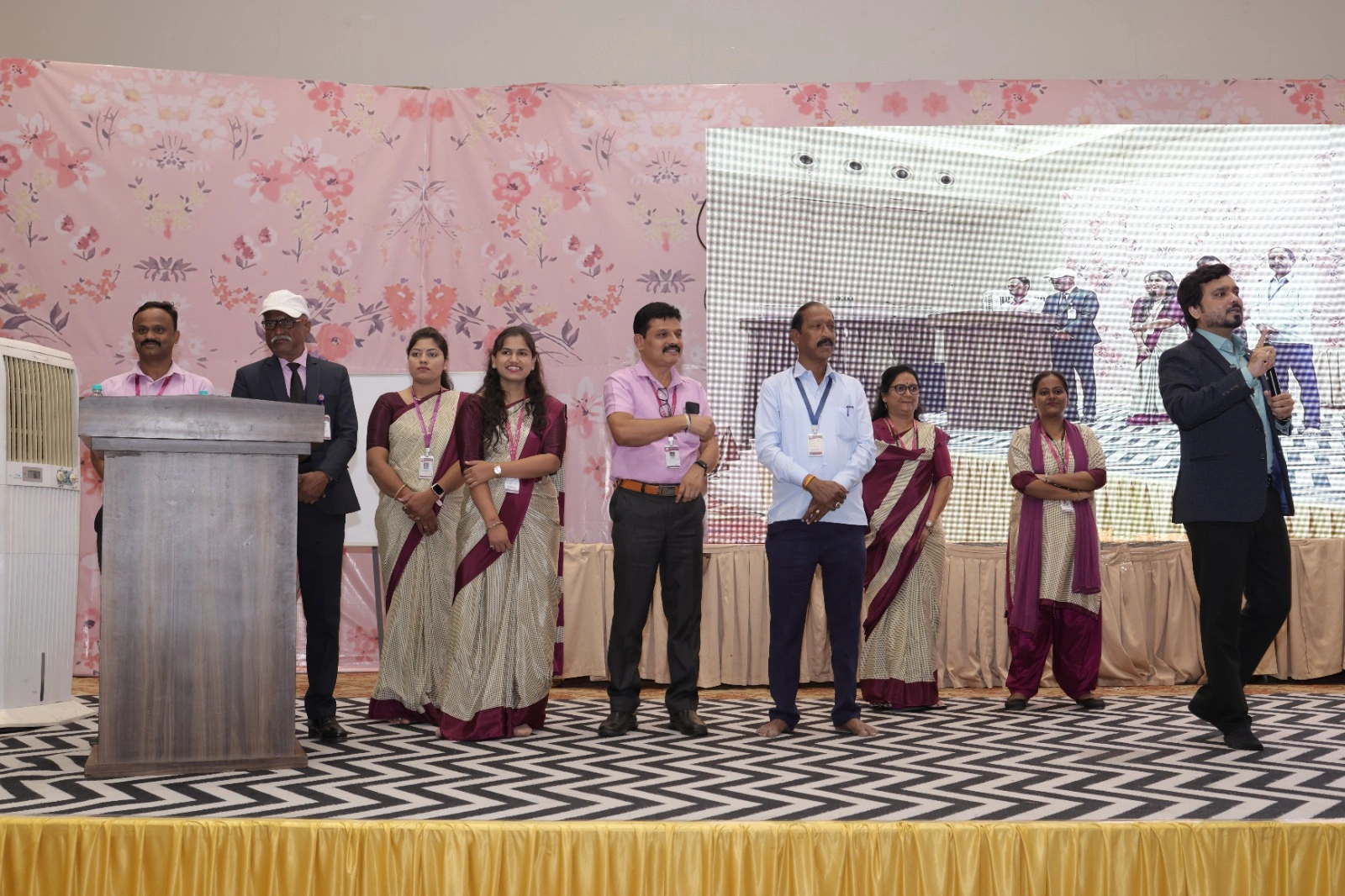
Swapnali walked into my two-day signature program, IMPACT, with a fashion design degree from London, a boutique in Mumbai that her father had funded, and a business that was bleeding money by the fourth month. She wasn't lacking talent, capital, or ambition. She was caught in a pattern I now recognise instantly in professionals across industries — a pattern psychologist Martin Seligman calls learned helplessness.
In short- Swapnali's boutique boomed for two months, then began losing money — and the cause wasn't the market, it was her mid-month emotional collapse.
- Whenever the first two weeks of a month were slow, she stopped marketing, stopped asking for referrals, and gave up on the rest of the month — classic learned helplessness.
- Learned helplessness sets in when we explain setbacks as permanent, pervasive, and personal instead of temporary, specific, and external.
- Martin Seligman's MetLife research found optimistic salespeople outsold pessimists by 29% in year one and 130% in year two — same training, same product, different mindset.
- Optimism, the eleventh trait on the EQ side of the Winning Kite (KITE Leadership Framework), can be trained — Swapnali did, and so can you.
Where this sits on your Winning Kite
Optimism is the eleventh trait on the Emotional Intelligence — the left — side of your Winning Kite (KITE Leadership Framework). EQ stands alongside RQ (Relationship Intelligence) and PQ (Productivity) to lift Success at the top. You don't rise on any single side being strong — you rise on balance. Swapnali had achiever energy and drive in abundance. What she was missing was the resilience that keeps the EQ side of the kite taut when the wind turns against you.
The boutique that boomed, then broke
Swapnali had recently completed her fashion design course from a renowned institution in London. Six months before she came to my program, with investment from her father, she opened her own boutique in Mumbai. The first two months were incredible. Sales boomed. There was buzz around her collection. Effective marketing made her popular in her area, and it looked, from the outside, like a young entrepreneur was off to a flying start.
Then the third month arrived, and sales dropped sharply. By the fourth month, she wasn't even covering her expenses. The next two months brought heavy losses. By the time she walked into IMPACT, she was desperate — the kind of desperate where you've stopped believing your own business plan.
As she narrated her story, I sensed something immediately. I told her: "I think I have a solution." We sat down and analysed her sales data — week by week, month by month. After a few pointed questions, a clear pattern emerged, and it had nothing to do with the market, her designs, or her competitors.
The pattern hiding inside her sales sheet
Here's what was happening. When the first and second weeks of any month showed strong sales, Swapnali's energy turned electric. Her "Achiever" identity kicked in. She felt like a winner. Her positivity soared, and that momentum carried her through the rest of the month — she closed profitably, almost effortlessly.
But when the first week or two of a month were slow, everything changed. By mid-month she felt helpless. She stopped marketing actively. She became hesitant to reach out to customers. Even more critically, she stopped asking for referrals — which for a brand-new boutique with no reputation cushion is close to essential oxygen.
She felt irritated with her team. Anger built up inside her. Fear took over — fear of losing everything she'd invested, fear of disappointing her father, fear of plain failure. And most dangerously, she became unable to motivate herself. She'd wake up thinking, "What's the point? Nothing I do will help anyway."
That sentence — nothing I do will help anyway — is the exact signature of learned helplessness, a state where an individual feels unable to change their situation, leading to dullness, hesitation to ask for help, irritation, and a quiet undertow of anger and fear.
Understanding learned helplessness
In my 20+ years of training over 25,541 professionals across 80+ organisations in India, I've seen this pattern again and again, in sales teams, in founders, in mid-career managers who suddenly go quiet after one bad quarter.
What Swapnali was experiencing is what psychologist Martin Seligman calls learned helplessness — a state where repeated failures convince you that nothing you do will make a difference. When we chase big goals, whether as an athlete, lawyer, doctor, engineer, or entrepreneur, setbacks are inevitable. The first time we fail, most of us bounce back. We still have hope. We believe we can try again. But after repeated failures, that hope weakens. Fear of failure takes over. Eventually we reach a point where we think: "Ab hum kuch nahi kar sakte. Kuch karne se bhi koi faida nahi hai" — we can't do anything now, there's no point in even trying. Once this belief takes root, we stop making the effort. We stop taking action. That is learned helplessness, and it is exactly what was quietly hollowing out Swapnali's business every single mid-month.
You see this everywhere once you know what to look for. Sales professionals face rejection all day and many quit — not because they lack skill, but because they've learned helplessness. Entrepreneurs flirt with risk constantly; a few bad quarters, and many give up not because the business can't work, but because they've stopped believing it will. Sports teams that keep losing start expecting defeat before they even walk onto the field. Their body language changes. Their effort drops. They've learned to be helpless.
Why the explanation you choose decides your next move
Seligman's deepest insight, and the one that changed how I coach founders like Swapnali, is about explanatory style — how you explain events to yourself after they happen.
When a bad event happens, pessimists explain it as permanent ("This will never change, I'll always be bad at this"), pervasive ("This affects everything — if I failed here, I'll fail everywhere"), and personal ("It's all my fault, something is wrong with me"). A salesperson who faces two or three rejections and thinks "the entire market will reject me, I'm just not cut out for sales" is running the pessimist's script.
Optimists explain the same bad event as temporary ("this is just for now"), specific ("this is about this client, not about me as a whole"), and driven by external factors ("there could be other reasons — timing, budget, market conditions"). The same salesperson, thinking like an optimist, tells himself: "These clients weren't the right fit. Maybe they don't have the budget right now. Let me refine my approach and try the next prospect."
And it flips for good events too. Pessimists downplay wins as temporary, specific to circumstance, and lucky — "it's always unusually high the first week, next week will be terrible like always." Optimists let good events be permanent, pervasive, and personal — "everywhere I always tend to get the best deal because of my effective interpersonal skills." Same event, opposite explanation, completely different next Monday morning.
One caution I always add here: this explanatory style is not an excuse to dodge accountability. An optimist can still be humble, still do honest self-assessment, still own their mistakes. This is a coping style, not a character flaw dressed up as confidence — there's a real difference between humility and pessimism, and Swapnali needed to learn exactly where that line sat.
Employee A vs Employee B
I often use two contrasting employees in my workshops to make this concrete. Employee A, after missing a target, thinks "I'm just not good enough for this role." When a project fails, she blames herself entirely and stops taking initiative. She avoids challenging assignments because she fears failing again, and her manager notices she's become withdrawn, defensive, reactive. Over time her performance declines because she's stopped believing improvement is even possible.
Employee B, after missing the same kind of target, thinks "What specifically went wrong, and how can I fix it?" When a project fails, he reflects on the lesson and applies it to the next one. He volunteers for challenging assignments because he sees them as growth, not risk. His manager notices he bounces back quickly and stays energised. Over time his performance improves because he believes his effort matters.
Before IMPACT, Swapnali was Employee A running her own company. The good news: this is trainable, and she proved it.
What the MetLife research proved about optimism and results
This isn't just a motivational idea — it has hard sales numbers behind it. Martin Seligman studied professionals at MetLife Insurance, a field where rejection is constant and turnover is brutal. He compared a well-qualified, well-trained Group A against a Group B that was weaker on paper — less experience, less formal training, fewer credentials.
Conventional wisdom said Group A should win easily. Instead, after a month of tracking, there was hardly any difference — some of the "weaker" Group B salespeople performed almost as well as the top of Group A. Seligman went deeper with one-on-one interviews and found the real driver wasn't qualification, experience, or training. It was explanatory style.
The numbers: optimistic professionals at MetLife sold 29% more insurance in their first year and 130% more in their second year than their pessimistic colleagues. Same company, same product, same training — a 130% gap purely from mindset. Similar patterns showed up elsewhere: a pilot optimism-training program at American Express Financial Advisors lifted sales significantly within three months, and in a study of caseworkers supporting people with severe mental disabilities, those who started with high hope were the least emotionally exhausted and the most likely to still be in the job a year later. Seligman even built a psychometric tool, the Attributional Style Questionnaire, which Fortune 500 companies still use to screen their sales forces — the correlation between optimism and performance is that well established.
Matt Biondi at the Seoul Olympics
The clearest live demonstration of this I know is Matt Biondi at the 1988 Seoul Olympics. America's golden boy was expected to shatter Mark Spitz's legendary seven-gold record. He finished fourth in his first race. In his second, the 200m butterfly, he was pushed to silver in the final inches. The stadium's mood flipped — coaches doubted him, commentators questioned his form, fans wondered if he'd win even one gold.
But sports psychologist Martin Seligman, who had tested Biondi and other elite swimmers months earlier by giving them false, worse-than-actual times after each race, wasn't surprised by what came next. Most swimmers who got that harsh false feedback got frustrated and their performance dropped. Biondi did the opposite — every negative signal made him work harder. He didn't blame conditions or make excuses. After two disappointing races at the real Olympics, he came roaring back and won five gold medals in the remaining events. That's optimism as Seligman defines it: the ability to persevere and bounce back amid setbacks, not blind positivity, but a refusal to let one bad result rewrite the whole story.
Six ways to build the trait Swapnali was missing
Optimism, like most emotional intelligence skills, can be learned and strengthened with practice — I've watched it happen hundreds of times in my training rooms. Here is what I walked Swapnali through, and what I recommend to any professional facing the same mid-month collapse:
- Become aware of your self-talk. Notice what you tell yourself after a setback. Is it "I always fail at this" or "This didn't work this time — what can I try differently?" Awareness is the first step; write it down if you need to catch it.
- Challenge your explanatory style. When something goes wrong, pause and ask: Is this really permanent, or just temporary? Does it affect every area of my life, or just this one situation? Am I entirely to blame, or were there other factors? Most of the time your first explanation was too harsh.
- Practice daily reflection. Ten to fifteen minutes of journaling, meditation, or quiet thinking on what went well each day rewires your brain to notice progress, not just problems.
- Carry optimistic reminders. Write your optimistic self-talk on an index card and keep it with you. Read it when pessimism creeps in — reinforce the habit deliberately, the way Swapnali began reading hers every mid-month.
- Seek evidence of growth. Look back six months, a year, two years. What have you learned? How have you improved? Growth isn't always visible day to day, but over time it's undeniable.
- Surround yourself with optimistic people. Energy is contagious. If you're constantly around complainers, their outlook rubs off on you. Find mentors, colleagues, and friends who believe in possibility.
Focus, Meaning, Action — the chain that decides your month
When faced with a setback, we choose where to focus. Focus decides Meaning, and Meaning decides Action. Imagine you didn't get promoted. The pessimistic path: Focus — "I worked so hard and still didn't get it." Meaning — "I'm not valued here, I'll never get ahead." Action — you stop trying, you disengage. The optimistic path: Focus — "What feedback did I get, what can I improve?" Meaning — "This is a chance to grow, I'll be better prepared next time." Action — you ask for specific feedback, work on the gaps, stay engaged.
This is precisely the chain Swapnali had to rebuild for her slow weeks. Old chain: slow week → "nothing works" → stop marketing. New chain: slow week → "this week's footfall was low, let me check what changed" → send five personal messages to past customers today.
The ant that rebuilt a kingdom
There's an old story about King Bruce of Scotland, defeated in battle, his army destroyed, hiding heartbroken in an abandoned cave. One night he watched an ant trying to build its web — slipping, falling, trying again, slipping again. Finally, it succeeded. Something shifted in the King. If a tiny ant could persist through repeated failure, so could he. He rebuilt his army, fought back, and won his empire.
At his crowning ceremony he shared how he imagined the ant talking to itself. Every slip: "I slipped temporarily, specifically on this side of the cave because of the wind — next time I'll adjust." Every success: "I always build strong webs, whatever the structure, because I am a skilled weaver." Temporary and specific for the failure, permanent and personal for the success — the ant, without knowing it, was running Seligman's optimistic explanatory style centuries before anyone had a name for it.
Winston Churchill put the same idea in one line: "Success is going from failure to failure without loss of enthusiasm." It isn't about avoiding failure. It's about refusing to let failure crush your enthusiasm — which is exactly what Swapnali had been letting happen every month, on schedule, like clockwork.
What changed after IMPACT
Once Swapnali could see her own pattern on paper — the mid-month collapse, the silence to customers, the referrals she stopped asking for — she stopped treating it as "just how her business was." She started treating slow weeks as data, not verdicts. She kept marketing through the dip instead of freezing. She kept asking for referrals precisely when it felt hardest, because that's when a new business needs them most. The trait she was missing wasn't a personality flaw; it was a skill she hadn't yet practised. Once she named it, she could train it — the same way we train any of the twenty-five traits across the four sides of the Winning Kite in our leadership programs.
If you want to see how Optimism connects to the other traits on the EQ side and to the full Winning Kite (KITE Leadership Framework), or if you lead a team where a few strong months are routinely followed by a collapse, that pattern is far more common — and far more fixable — than most leaders assume.
Bring These Ideas to Your Team
Avinash Chate turns the traits in Stars at India Inc. into live leadership & emotional-intelligence workshops. TEDx speaker · 11+ yrs training Army, BRO, RBI, BARC, JSW & 1000+ leaders.
✅ Thanks! Avinash team will reach out within 24 hours.'}).catch(function(e){f.outerHTML='Something went wrong. WhatsApp +91 8793630001
'});return false;">Select ServiceKeynote / Motivational SpeakingLeadership Development TrainingTeam Building WorkshopManager DevelopmentEmployee TrainingBook Avinash Now →Or WhatsApp directly: +91 87936 30001
Work with Avinash Chate
- Signature Corporate Training Programs →
- The Winning Kite (KITE Leadership Framework) →
- All Corporate Training Topics →
Avinash Chate TEDx Speaker · Founder, The Future Corporate · Author of Stars at India Inc. Avinash has trained the Indian Army, BRO, RBI, BARC, JSW Steel and 1000+ corporate leaders across India. His work focuses on leadership, emotional intelligence and behavioural training rooted in Indian values and modern business needs. |
Frequently Asked Questions
What is learned helplessness in the workplace?
Learned helplessness is a state where repeated setbacks convince you that nothing you do will change the outcome, so you stop trying. Psychologist Martin Seligman identified it, and it shows up at work as dulled effort, hesitation to ask for help, irritation, and quiet giving up after a string of failures.
What was Swapnali's actual problem in her boutique business?
Swapnali, a young fashion design graduate who opened a boutique in Mumbai, had strong sales for two months and then began crashing by month three. Her pattern showed that whenever the first two weeks of a month were slow, she emotionally collapsed mid-month, stopped marketing, stopped asking for referrals, and let the whole month go to waste.
How is optimism different from blind positivity?
Optimism is not pretending everything is fine. It is an explanatory style: seeing setbacks as temporary, specific, and caused by external factors rather than permanent, pervasive, and personal. It lets you keep taking action even when results are bad, because you believe your effort still matters.
Where does Optimism sit on the Winning Kite framework?
Optimism is Trait #11 on the Emotional Intelligence (EQ) side, the left side of the Winning Kite framework. EQ works with RQ (Relationship Intelligence) and PQ (Productivity) to hold up Success at the top. A kite with a weak EQ side, no matter how strong the other sides, will not fly straight.
Related Articles by Avinash Chate
- Self-Awareness: The Foundation of Emotional Intelligence
- Types of ATM and Credit Cards: The Complete Guide Every Indian Professional Needs in 2026
- The Go-Getter Mindset: Take Responsibility and Find Areas for Improvement — India 2026
Avinash Chate services
Corporate Trainer in Mumbai · Top Corporate Trainers in Mumbai · Leadership Trainer in Mumbai · Top Leadership Trainers in Maharashtra · Team Building Trainer in Mumbai · Top Team Building Trainers in Maharashtra · Motivational Speaker in Mumbai · Top Motivational Speakers in Mumbai · All service locations
← Back to all articles · Book Avinash Chate
By Avinash Chate — Maharashtra’s #1 Corporate Trainer & Motivational Speaker. .