Teacher Training Builds India Education: Lessons from Mumbai School
At U.S. Ostwal English Academy in Mira Road Mumbai, Avinash Chate empowered teachers with strategies to inspire students, build classroom leadership, and embrace growth and innovation.
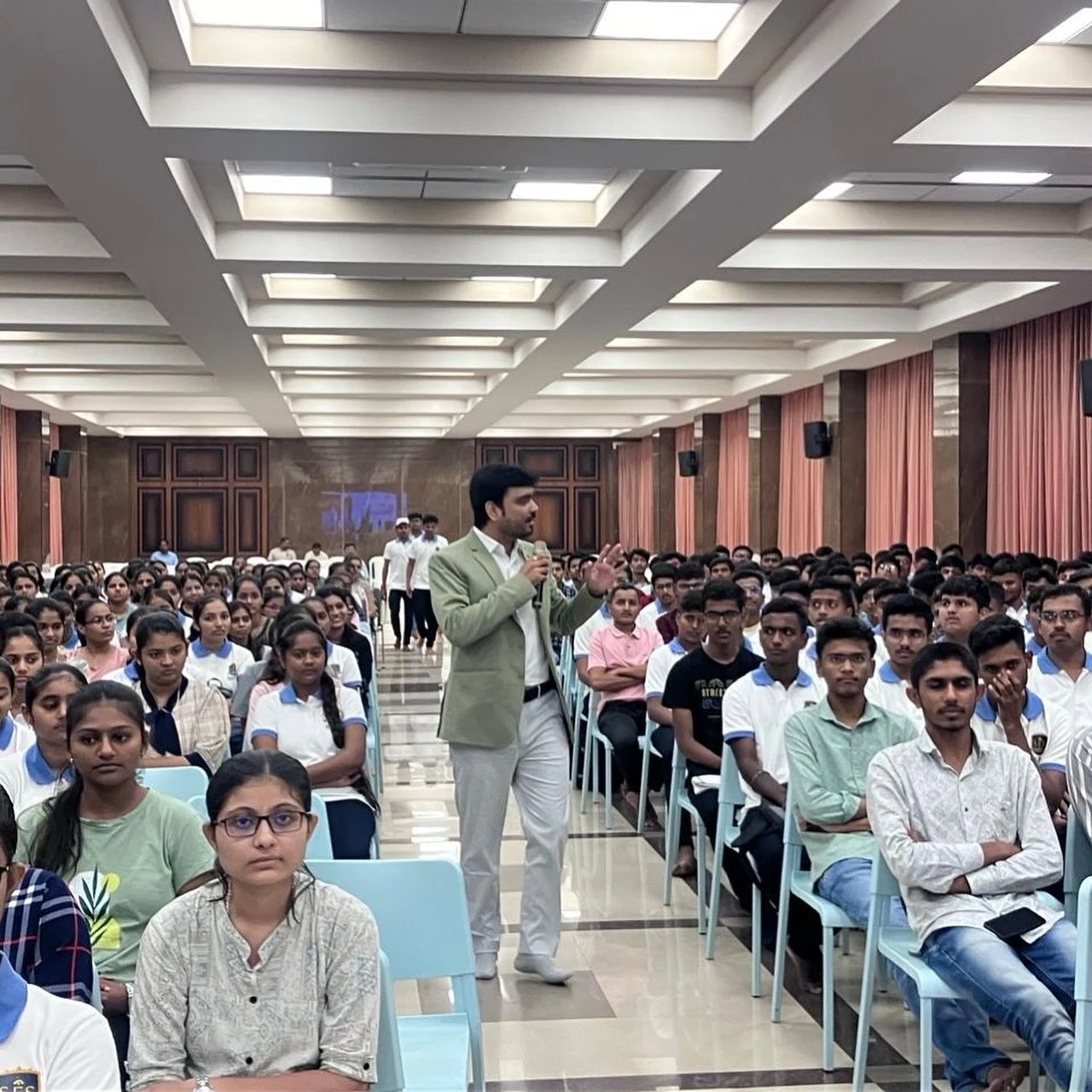
Teachers are the most underdeveloped leaders in India's entire professional landscape — and the most important ones. At U.S. Ostwal English Academy in Mira Road, Mumbai, I ran a motivational training session covering strategies to inspire students, build confidence and leadership in teaching, practical classroom management, and motivating teachers to embrace growth and innovation. 65% of Indian firms invest in soft-skill training for corporate employees. The question is: why do we invest so much less in the people building the next generation?
TL;DR- Teachers are the most underdeveloped leaders in India despite being the most influential ones
- The U.S. Ostwal English Academy training session focused on student engagement, classroom confidence, and innovation
- Strategies to inspire students must be backed by teacher confidence and leadership, not just content knowledge
- Classroom management tools taught in this session go beyond discipline to genuine student relationship-building
- Investing in teacher training creates a ripple effect across students, schools, and entire communities
Why Teacher Training Is the Most Neglected Investment in India's Education System
Here's something that strikes me every time I work with a corporate client: we invest enormous resources in training managers, engineers, and sales professionals. We run leadership programs, behavioral workshops, and coaching sessions for people who manage teams of 10 to 100. But we rarely extend the same investment to teachers — people who shape the thinking, behavior, and character of 30 to 50 young minds every single day for an entire year. The compounding effect of a great teacher is orders of magnitude larger than any corporate leader, yet teacher professional development remains one of India's most underfunded education priorities.
What the U.S. Ostwal English Academy Training Session Covered and Why It Matters
At U.S. Ostwal English Academy in Mira Road, Mumbai, I had the privilege of conducting a motivational and skills training session for the school's teachers. The session was designed around four core areas that I've found most determine teacher effectiveness: strategies to inspire and engage students — specifically, how to create curiosity-driven learning environments rather than fear-driven ones; building personal confidence and leadership identity as an educator; practical classroom management tools; and motivating teachers themselves to embrace growth and innovation as ongoing professional practices.
| Teaching Dimension | Without Training | After Teacher Training |
|---|---|---|
| Student engagement | Content delivery, passive listening | Curiosity-driven, interactive learning |
| Classroom confidence | Uncertain, reactive to disruptions | Authoritative, warm, proactive |
| Classroom management | Discipline and rules-based | Relationship and expectation-based |
| Innovation mindset | Fixed — what worked before | Experimental — iterating continuously |
| Student confidence built | Subject-dependent | Holistic — character and capability |
| Teacher satisfaction | Job-focused, isolated | Purpose-driven, community-connected |
Strategies Teachers Can Use to Inspire and Engage Students More Effectively
What I find again and again is that teachers who struggle with student engagement are not failing because they don't know their subject. They're failing because nobody taught them how to read a room, create psychological safety, use storytelling to make concepts concrete, or vary their energy to match different learning styles. The most effective teachers I've observed — and I've worked with educators across Maharashtra and Mumbai — are the ones who have deliberately developed these skills, usually through their own initiative. Teacher training programs formalize what great teachers do naturally, so that entire school communities benefit from those practices.
Building Confidence and Leadership in Teaching: What It Actually Takes
Confidence and leadership in teaching are different from subject expertise, and they must be developed separately. A teacher who knows chemistry perfectly but enters the classroom with low self-confidence will consistently produce worse outcomes than a confident teacher who knows slightly less chemistry. In the U.S. Ostwal Academy session, a significant portion of time was dedicated to helping teachers recognize and articulate their own leadership identity — to own the room, to communicate with authority and warmth simultaneously, and to see themselves as leaders of learning environments rather than just deliverers of content. This shift in self-perception changes everything about how a teacher teaches.
Practical Classroom Management Tools That Go Beyond Rules and Discipline
Classroom management is often mistakenly treated as a discipline tool — a way to control students. What it actually is, when done well, is relationship engineering. The most well-managed classrooms I've encountered are not the quietest ones; they're the ones where students feel heard, respected, and challenged in equal measure. The practical tools I covered in the U.S. Ostwal training included: how to set expectations that students co-create rather than just receive, how to address disruption without escalating conflict, how to use structured group work to distribute energy productively, and how to build the kind of relationship with students that makes discipline issues rare in the first place.
Why Motivating Teachers to Embrace Innovation Is Critical for India's Education Future
Innovation in teaching is not about technology — it's about being willing to try something different when what you're doing isn't working. The teachers I meet who are most effective approach their craft with a learning mindset: they watch what their students respond to, they adjust, they experiment. In the training session, I encouraged teachers to adopt what I call the 30-day classroom experiment — identify one aspect of your teaching that isn't working, change one variable, and observe the result for 30 days. It's a structured way to build the habit of innovation without requiring massive disruption to daily practice.
How Teacher Training Creates a Ripple Effect Across Students Schools and Communities
The ripple effect of teacher training extends far beyond the individual classroom. When a teacher learns to inspire students more effectively, those students carry that energy home, into communities, and eventually into the workplace. When a teacher builds genuine confidence in a child who was written off, that child's entire trajectory changes. The investment in training 50 teachers at U.S. Ostwal English Academy will touch the lives of 1,500 to 2,000 students directly — and through them, their families and communities. In India's education system, teacher training is not a nice-to-have. It's the highest-leverage intervention available to any school that wants to genuinely improve student outcomes.
Book Avinash Chate for Your Next Event
TEDx speaker. 11+ yrs training Army, BRO, RBI, BARC, JSW. Available for keynotes, leadership training, team building & manager development at your office or event venue.
✅ Thanks! Avinash team will reach out within 24 hours.'}).catch(function(e){f.outerHTML='Something went wrong. WhatsApp +91 8793630001
'});return false;">Select ServiceKeynote / Motivational SpeakingLeadership Development TrainingTeam Building WorkshopManager DevelopmentEmployee TrainingOutbound TrainingBook Avinash Now →Or WhatsApp directly: +91 87936 30001
Related Articles by Avinash Chate
- Self-Confidence Competency: What Gets You Promoted in India 2026
- Bridging Generational Gap at Work: Gratitude and Innovation India 2026
- Are You an Asset or Liability at Work? How to Matter More India 2026
Avinash Chate TEDx Speaker · Founder, The Future Corporate · 11+ yrs experience Avinash has trained Indian Army, BRO, RBI, BARC, JSW Steel and 1000+ corporate leaders across India. His work focuses on leadership development, communication skills, and behavioural training rooted in Indian values and modern business needs. |
Frequently Asked Questions
Why is teacher training important for India's education system in 2026?
Teacher training is critical for India's education system because the quality of education a student receives depends far more on the quality of their teacher than on the quality of their curriculum or facilities. India has over 9 million teachers shaping the next generation, yet teacher professional development receives a fraction of the investment that corporate employee training does. Trained teachers inspire more students, manage classrooms more effectively, build student confidence, and adapt their methods to different learning styles — all of which directly improve academic outcomes, student mental health, and long-term life trajectories.
What did Avinash Chate's training session at U.S. Ostwal English Academy cover?
The training session at U.S. Ostwal English Academy in Mira Road, Mumbai covered four primary areas. First: strategies to inspire and engage students more effectively, including creating curiosity-driven learning environments and using storytelling to make concepts concrete. Second: building confidence and leadership identity in teaching, helping teachers see themselves as leaders of learning rather than just content deliverers. Third: practical classroom management tools based on relationship-building rather than pure discipline. Fourth: motivating teachers themselves to embrace growth and innovation as ongoing professional practices, not just a one-time training event.
How can teachers improve student engagement and classroom management effectively?
Teachers can improve student engagement by shifting from content delivery to curiosity creation — starting lessons with questions rather than answers, using real-world examples that connect to students' lived experiences, and building in structured participation so students are active rather than passive in every lesson. For classroom management, the most effective approach is establishing clear, co-created expectations at the start of the year and building genuine relationships with students so that behavioral issues are addressed within a context of trust rather than authority.
How do schools benefit from investing in teacher motivational training programs?
Schools that invest in teacher motivational training see benefits across multiple dimensions. At the teacher level: reduced burnout, higher job satisfaction, greater willingness to innovate, and improved pedagogical skills. At the student level: higher engagement, stronger academic performance, and better classroom behavior driven by the improved teacher-student relationship. At the school level: improved reputation, higher parent satisfaction, and a stronger culture of continuous improvement. A single well-designed teacher training program can transform the learning culture of an entire school within one academic year when it is followed by consistent practice and peer support among the teaching staff.
Avinash Chate services
Corporate Trainer in Mumbai · Top Corporate Trainers in Mumbai · Leadership Trainer in Mumbai · Top Leadership Trainers in Maharashtra · Team Building Trainer in Mumbai · Top Team Building Trainers in Maharashtra · Motivational Speaker in Mumbai · Top Motivational Speakers in Mumbai · All service locations
← Back to all articles · Book Avinash Chate
By Avinash Chate — Maharashtra’s #1 Corporate Trainer & Motivational Speaker. .