Why Upskilling Employees Is Crucial for Business Growth in 2023
I believe business growth in 2023 depends on one major factor: how consistently organizations develop their people. When employees strengthen communication, leadership, collaboration, accountability, and customer-facing skills, companies build stronger teams, better managers, and sustainable growth.
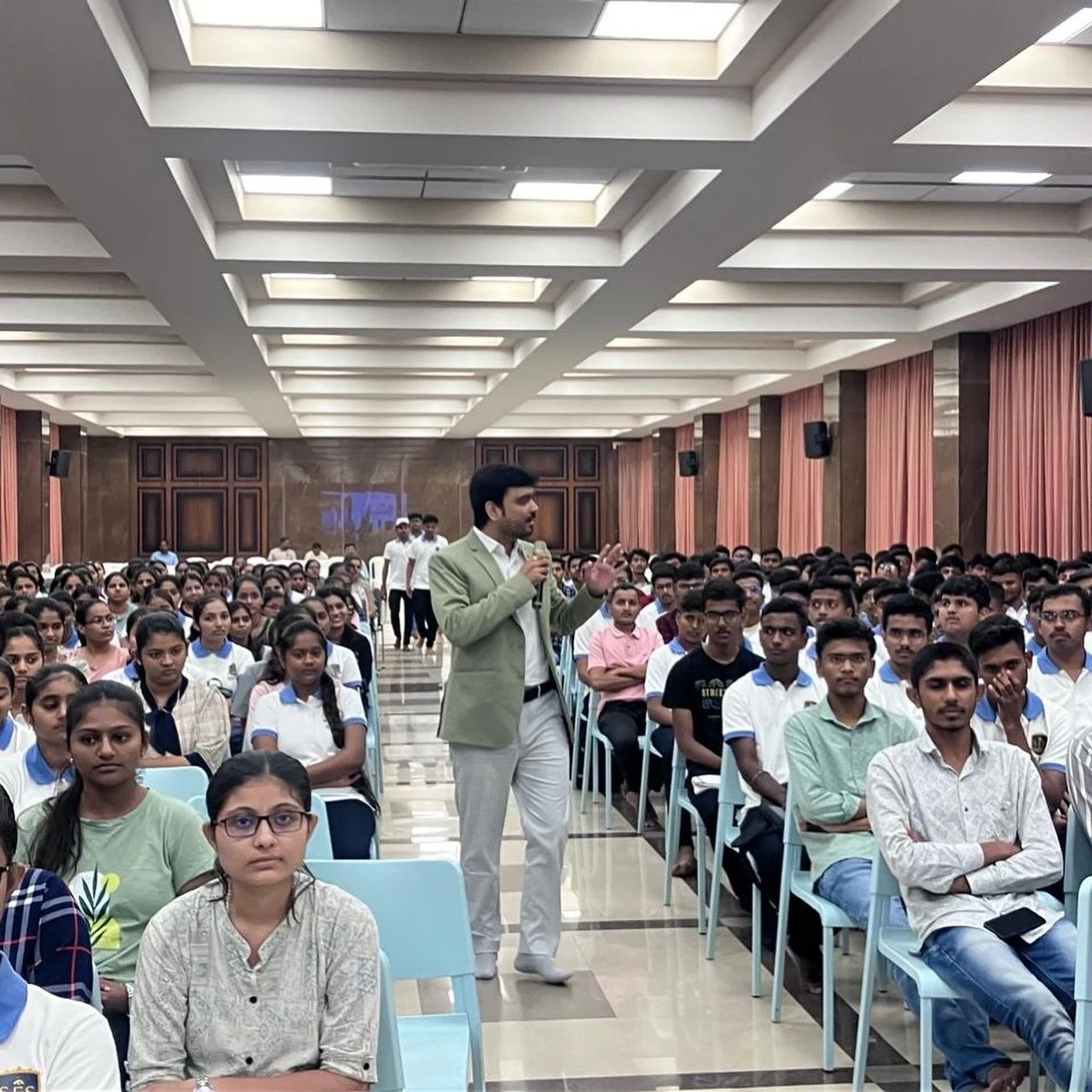
Avinash Chate - Best Motivational Speaker in India addressing corporate audience
Why Upskilling Employees Is Crucial for Business Growth in 2023In my experience, organizations do not grow only because of strategy, products, or market opportunity. They grow because their people grow. When employees improve their communication, leadership mindset, accountability, collaboration, sales conversations, and problem-solving attitude, business growth becomes stronger and more sustainable.
Key takeaway: upskilling is not a cost to manage; it is a growth investment that strengthens performance, culture, and leadership at every level.
As a corporate trainer, TEDx speaker, and author of The Winning Edge, I have seen this pattern repeatedly across 80+ organizations. The companies that keep learning alive are the companies that create better managers, more confident teams, stronger customer relationships, and higher ownership. That is why I believe upskilling employees is one of the most important business priorities in 2023.
At Avinash Chate, my focus has always been clear: when people become better at working with people, business results improve. Whether I am working with frontline teams, middle managers, sales professionals, or leadership groups, the transformation begins with human skills that influence daily performance.
Upskilling Creates Business Growth from the Inside Out
Many leaders think growth starts in the market. I believe growth starts inside the organization. If employees are not improving, the business eventually slows down. Teams begin to repeat old habits, communication gaps widen, managers become reactive, and motivation starts dropping.
Upskilling changes this completely. It helps employees handle responsibility with more maturity, communicate with clarity, solve conflicts early, and contribute with confidence. These are not small improvements. These are the foundations of execution.
When I work with organizations, I often tell leaders that growth is not only about hiring better talent. It is also about developing the talent they already have. A team that learns continuously becomes more agile, more accountable, and more aligned with business goals.
This is exactly why people development should not be treated as an annual event. It should be part of the culture. Avinash Chate has consistently emphasized that a learning culture creates long-term competitive strength because skilled people bring better energy, better judgment, and better teamwork to every business function.
What Upskilling Really Means in a Business Context
When I say upskilling, I am not referring to only technical knowledge. For business growth, the most powerful upskilling areas are often human-centered. These include communication skills, team collaboration, leadership presence, sales effectiveness, customer handling, emotional resilience, conflict resolution, and personal accountability.
In 2023, these capabilities matter more than ever because workplaces are changing fast, expectations are rising, and teams are under pressure to deliver more with consistency. Employees need more than information. They need behavioral strength.
I have found the 25-Star Competency Framework especially useful in helping organizations understand that high performance is multidimensional. A successful employee is not just knowledgeable. That person must also be proactive, disciplined, persuasive, emotionally balanced, team-oriented, and committed to continuous improvement.
When leaders begin to look at upskilling through this wider lens, they stop seeing training as a one-time intervention and start seeing it as a business growth engine.
- Better communication reduces errors and confusion.
- Stronger leadership improves team ownership.
- Sales capability increases customer trust and conversion.
- Conflict resolution protects productivity and morale.
- Personal growth improves confidence and initiative.
That is why upskilling is not limited to one department. It supports the entire organization.
Why 2023 Demands a Stronger Focus on Employee Development
In 2023, organizations are operating in a highly demanding environment. Teams are expected to adapt quickly, collaborate better, and stay motivated despite pressure. In such a climate, employees cannot perform at their best if they are left to learn only through trial and error.
Structured development gives people the mindset and skills to respond better to challenges. It helps managers lead with clarity instead of authority alone. It helps teams solve problems together instead of working in silos. It helps sales professionals connect more meaningfully instead of simply pushing offers.
I have seen this in my sessions with diverse organizations, including Ellora Natural Seed Pvt Ltd, where people development conversations are deeply connected to long-term growth. Businesses that invest in learning send a powerful message to employees: you matter, your growth matters, and your contribution can become bigger.
That message alone can improve engagement. When employees feel that the organization is investing in their development, they naturally become more committed. Motivation rises because people begin to see a future for themselves within the company.
If you want to understand how leadership directly affects discretionary effort, I recommend reading Why Employees Stop Giving Their Best and What Leadership Must Do About It. The connection between growth, effort, and leadership is impossible to ignore.
How Upskilling Strengthens Leadership, Teamwork, and Sales Excellence
One of the biggest mistakes organizations make is separating business growth from people skills. In reality, business growth is driven by conversations, decisions, trust, execution, and relationships. All of these depend on soft skills.
For example, when managers are upskilled in leadership communication, delegation, feedback, and coaching, team performance improves. Employees become clearer about expectations. Accountability becomes easier to build. Performance discussions become more constructive.
When teams are upskilled in collaboration and conflict handling, workplace friction reduces. Instead of allowing misunderstandings to grow, people learn how to address issues with maturity. This protects both culture and productivity. For organizations looking to build this capability, I suggest exploring Conflict Resolution Training for Corporate Teams in Pune, India because the principles apply broadly to teams across industries.
Sales teams also benefit significantly from upskilling. In my sessions, I often focus on listening, need discovery, objection handling, confidence, and relationship-based selling. These skills help sales professionals move beyond scripts and create genuine customer trust. That trust drives repeat business, referrals, and stronger market reputation.
Avinash Chate has always believed that sales excellence is not just about persuasion. It is about credibility, consistency, and communication. When sales teams are developed in these areas, business growth becomes more predictable.
Organizations that upskill their people do not just improve capability. They improve belief, ownership, and execution.
Upskilling Builds a Culture of Confidence and Shared Growth
Another reason I strongly advocate employee development is that it changes workplace culture. A culture of learning creates confidence. Employees stop fearing mistakes as much and start focusing on improvement. Managers begin to coach more. Teams become more open to feedback. Leaders become more intentional about growth.
This is where business growth becomes truly sustainable. A company cannot depend only on a few high performers forever. It needs a wider bench of capable people who can step up, take initiative, and support one another.
In my view, the strongest organizations are not those with the loudest vision statements. They are the ones where people at every level are becoming better every quarter. That is the real sign of a healthy business.
When leadership chooses development over fear, the impact is powerful. I encourage leaders to reflect on this through The Leadership Decision That Replaced Layoff Fear With Shared Growth. It is a reminder that people grow best in environments where trust and development go together.
As Avinash Chate, I have seen that once employees feel supported in their growth, they contribute with greater ownership. They stop doing the minimum and start thinking like stakeholders. That shift is one of the most valuable outcomes of upskilling.
How I Recommend Organizations Approach Upskilling in 2023
If I were advising any organization on upskilling priorities in 2023, I would suggest starting with business outcomes and then identifying the human skills needed to support them. Do you want stronger managers? Better team coordination? Higher sales conversion? Improved employee engagement? Faster conflict resolution? Every business goal has a people capability behind it.
Once that is clear, development must be practical and continuous. Employees learn best when training is relevant to their real workplace situations. Sessions should not stay theoretical. They should help people apply new behaviors immediately.
I also recommend involving managers in the learning process. Training becomes more effective when managers reinforce the right habits through follow-up, feedback, and example. Learning should not end when the session ends.
- Identify the people skills linked to your business goals.
- Train employees with practical, role-relevant examples.
- Reinforce learning through managers and leadership.
- Create regular opportunities for feedback and reflection.
- Make development part of culture, not a one-time event.
When organizations do this well, the return is visible in morale, performance, retention, and customer experience.
If you are serious about building a stronger workforce, a healthier culture, and better business results, I invite you to book a corporate training session. As a TEDx speaker and author of The Winning Edge, I continue to work with organizations that want to strengthen leadership, communication, motivation, team building, and sales excellence through focused people development.
Frequently Asked Questions
Why is upskilling employees important for business growth?
Upskilling improves communication, accountability, leadership, teamwork, and customer interactions. These directly influence productivity, employee engagement, and long-term business performance.
What kind of upskilling matters most in 2023?
In 2023, organizations need strong human skills such as leadership, communication, collaboration, conflict resolution, sales effectiveness, resilience, and personal accountability.
How does employee development improve retention?
When employees feel the organization is investing in their growth, they feel valued and see a future within the company. This increases commitment and reduces disengagement.
Can upskilling help managers become better leaders?
Yes. Upskilling helps managers improve delegation, feedback, coaching, communication, and decision-making. These skills strengthen team trust and performance.
How can I start upskilling my workforce effectively?
Start by linking business goals with people skills, then provide practical training, manager reinforcement, and ongoing learning opportunities. A structured approach creates stronger results.
Related Articles by Avinash Chate
- How to Craft an Inspiring Corporate Vision Statement That Motivates Employees
- How to Motivate Remote Teams: Practical Strategies for the New Normal
- How to Measure the Success of a Motivational Speaker at Your Corporate Event
About the Author
Avinash Chate is a TEDx speaker, published author of The Winning Edge and The Unanswered, and founder of The Future Corporate & Business Coaching. With over 15 years of experience training 80+ organizations including Rajuri Steels, Aurangabad electricals, Rajarambapu Patil Sahakari Sakhar Karkhana Limited, Aabasaheb Kakde Educational Group of Organization, Avinash is recognized as Maharashtra's leading corporate trainer. He created the KITE Leadership Framework and the 25-Star Competency Framework™, delivering high-impact programs across leadership, team building, sales transformation, and emotional intelligence.
📞 +91 8793630001 | ✉️ connect@avinashchate.com | 🌐 avinashchate.com
Book Avinash Chate for Your Next Event
Maharashtra's #1 Corporate Trainer · India's leading Motivational Speaker & Team Building Expert · 2x TEDx · Available across India in English, Hindi & Marathi.
✅ Thanks! Avinash team will reach out within 24 hours.'}).catch(function(e){f.outerHTML='Something went wrong. WhatsApp +91 8793630001
'});return false;"> Select Service Motivational Speaking / Keynote Team Building Workshop Corporate Training / Leadership Development Manager Development Employee Training Outbound Training Book Avinash Now →Or WhatsApp directly: +91 87936 30001
Avinash Chate services
Corporate Trainer in Maharashtra · Top Corporate Trainers in Maharashtra · Leadership Trainer in Maharashtra · Top Leadership Trainers in Maharashtra · Team Building Trainer in Maharashtra · Top Team Building Trainers in Maharashtra · Motivational Speaker in Maharashtra · Top Motivational Speakers in Maharashtra · All service locations
← Back to all articles · Book Avinash Chate
By Avinash Chate — Maharashtra’s #1 Corporate Trainer & Motivational Speaker. .