Corporate Training in Oman
Omanisation moves people into supervisory roles on a policy timetable rather than an experience one. The new supervisor is holding a job the expatriate now training him held for nine years, and neither of them has been taught how to run that handover. Avinash Chate runs corporate training in Oman for organisations in Muscat, Sohar and Duqm, built around exactly that problem.
Muscat · Sohar · Duqm · India-based, travels for engagements

Omanisation Is a Hiring Number and a Capability Problem
Omanis in private-sector employment reached 441,737 at the end of June 2026, up 8.6 per cent in a year. In January 2026 the Ministry of Labour closed more than two hundred job titles to expatriates, across hospitality, tourism, management, administration, logistics, technical services and the higher-skill digital roles. From April 2026 every foreign-owned company has to hire at least one Omani national within a year of starting operations and register that person with the Social Protection Fund. Those are hiring instruments, and hiring is the part your organisation has already solved.
Hiring closes the quota; it does not close the capability gap. The policy sets a date and experience does not arrive on one, so a capable Omani engineer, analyst or officer is moved into a supervisory role before the role has been practised. On the first Sunday of the new job the content of the work changes: it becomes delegation, holding a standard when the person in front of you is older, and running a performance conversation that has consequences.
The second demand is the one buyers underestimate. Somebody has to hand the job over. That somebody is usually an experienced expatriate line manager who is being asked to coach, mentor and transfer nine years of judgement to a successor — sometimes to his own successor — and who has never been taught to coach anybody in his life. He knows how to do the job and how to check the job. Nobody showed him how to let a competent adult get it wrong in a controlled way and learn from it, which is the entire mechanism by which a handover works.
Government policy assumes both halves. Oman pairs the quotas with training, development and career-progression programmes; the stated intent is to localise without destabilising. That intent lands on your L&D function as two cohorts who need different things in the same quarter, and it lands on a diversification programme that is already moving. The economy grew 2.3 per cent in 2025 while the non-oil sector ran ahead of it, up 4.8 per cent in the fourth quarter, and the Eleventh Five-Year Development Plan for 2026 to 2030 targets four per cent annual real growth with manufacturing and tourism named as the priority sectors. An organisation adding capacity at that rate promotes people before they have the experience the role assumes.
Neither half of that is a knowledge problem, so neither half is solved by a lecture. It is solved in a room where the new supervisor has to run the difficult conversation badly once, in front of peers, before he runs it with his own team on Sunday morning — and where the manager handing over has to watch someone make a mistake he could have prevented, and say nothing until afterwards.
What the Programme Covers
Every programme is cut to the outcome you name in the brief. These are the modules that do the most work inside an Omanisation handover.
First-Time Managers on a Policy Clock
The hardest transition in any organisation, made harder when the promotion arrives before the experience does. Delegating work you can still do faster yourself, holding a standard without being the loudest person in the room, and stopping being the best individual contributor on the team. This is the first-time manager module.
Coaching the Successor You Are Handing To
Built for the experienced manager running the handover rather than for the person receiving it. How to set a task that stretches without endangering anything, how to let a mistake happen small, and how to give the correction afterwards so it is heard as instruction rather than as a verdict. The coaching and feedback module is built for exactly that transfer.
Frontline Supervision at Sohar and Duqm
Shift leadership on an industrial site, where the supervisor is often younger than half his crew and newer than most of it. Briefing so instructions survive the walk to the floor, correcting a safety lapse in front of others without humiliating anyone, and escalating a problem upward before it becomes an incident. See frontline supervisor development.
Difficult Conversations on a Mixed-Nationality Site
Underperformance, missed commitments and behaviour, handled without the manager either flinching or flattening the person. On a mixed site what reads as direct and fair to one nationality reads as humiliation to another, and a new supervisor needs a structure that holds up under both readings. This is the difficult conversations module.
Influence Without Authority
Very little that matters in a state-linked or group-structured business sits inside one manager's authority. Getting a decision through a group function, a parent company and a committee is a separate skill from managing a team, and it is the one that stalls careers just after the promotion everybody celebrated. See influence without authority.
The KITE Leadership Framework
The spine of the programme. The KITE Leadership Framework gives a manager one structure for emotional, relational and performance capability, so the vocabulary from day one survives into the fourth month instead of dissolving into good intentions once the cohort disperses back to its sites.
Formats
A 90-minute keynote inside your annual conference, town hall or national-talent event. A one-day workshop, which is what most Omani calendars can actually protect between Sunday and Thursday. A two-day behavioural programme when you want practised skill rather than shared language, usually split across cohorts of twelve to twenty-five. A modular programme running one day a month across a quarter, with virtual reinforcement between blocks, which suits a handover that is going to take a year anyway. And a train-the-trainer track so an internal academy carries the framework forward after the engagement ends, which is the sensible route where your organisation already runs its own learning function. All of it is in-company and built to your brief; there is no public calendar to buy a seat on. The flagship structure is the Leadership Development Program, with Emotional Intelligence at Work as the usual companion module.
How This Is Contracted, and What You Are Checking
This page exists because buying decisions in Oman do not start with a search. They start with a call, a referral or a shortlist, and then somebody in procurement or HR opens a page to find out whether the name is real. So here is the part that page usually leaves out.
There are two contracting routes and they are not interchangeable. A direct engagement by your own L&D function to train your own people, under your own contract, with him named as the facilitator, is the clean path and the fastest one. Where procurement requires a registered vendor instead, the work is contracted through a locally registered Omani provider with him named as the facilitator on the proposal and in the room. That second route exists for a specific reason: Petroleum Development Oman will not do business with a vendor outside the Joint Supplier Registration System, In-Country Value is scored during prequalification under the Ministry of Energy and Minerals mandate, and public tenders under the Tender Board sit on Esnad with a published sequence of registration, submission, technical evaluation and financial evaluation. None of that bends for a good facilitator.
What an evaluation committee asks for is duller than what a trainer wants to talk about. A named legal contracting entity with registration documents, audited financials and a bank letter. A written HSE position and an HR policy statement, which get requested even on a services engagement where nobody is going near a plant. A facilitator CV with verifiable credentials and named past engagements. And a structured written proposal — objective, cohort structure, session-by-session outline, deliverables, exclusions — because a proposal survives a committee and a bare quotation does not. All of that is prepared before the dates are discussed, not after.
The tax point is a real difference from the neighbouring market, and your finance team will find it anyway. Oman applies a ten per cent withholding tax on service fees paid to non-residents, reaching technical, professional and consultancy services whether the work is performed inside the country or outside it, under the Income Tax Law, Royal Decree 28/2009 and its amendments. The Royal Directives of 2022 and 2023 suspended withholding on dividends, interest and ship and aircraft leasing, and not on services. The India-Oman double taxation avoidance agreement is where the credit side of that is settled. Nothing on this page is tax advice; it is here so the question is raised at proposal stage rather than at payment stage.
And the honest boundary. Avinash Chate is based in Maharashtra and travels for engagements. There is no Oman office, no Oman entity, no Oman licence, no JSRS registration, no ICV certificate, no past delivery in the Sultanate and no Omani client list on this page, because none of that exists yet. What exists is a documented Indian record — the Reserve Bank of India, JSW Steel, BARC, Ferrero, Hitachi, Mumbai Port Authority, the Indian Army and the Border Roads Organisation — and a central bank and an atomic research centre are rooms a buyer running a plant, a port or a bank can compare against his own before he calls.
Everything on that list is checkable before you call. Start with the source library, the training evidence, the client list and the India-based speaker page for international events, which sets out the travel and contracting position in full.
From the room
Real sessions, photographed as they ran.
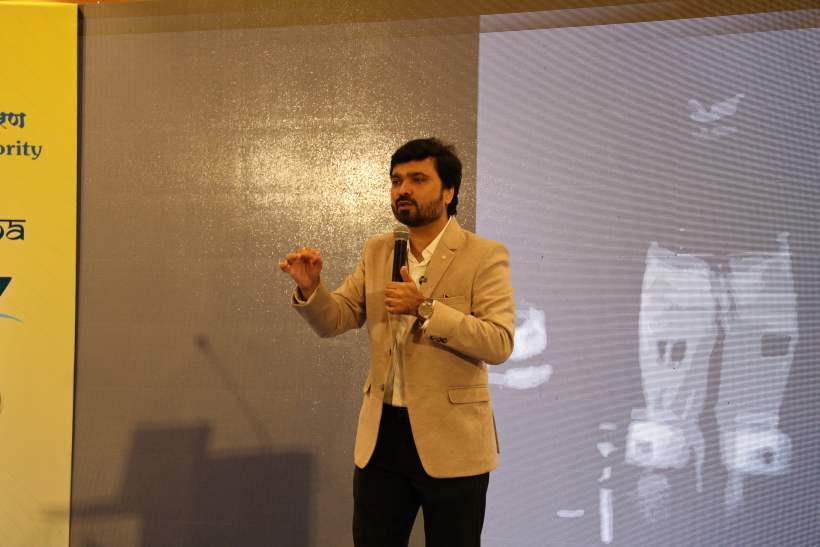
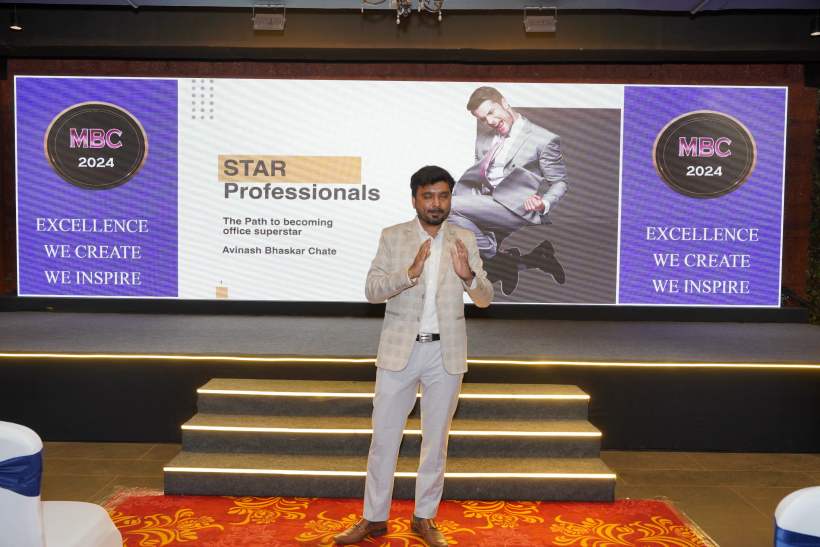
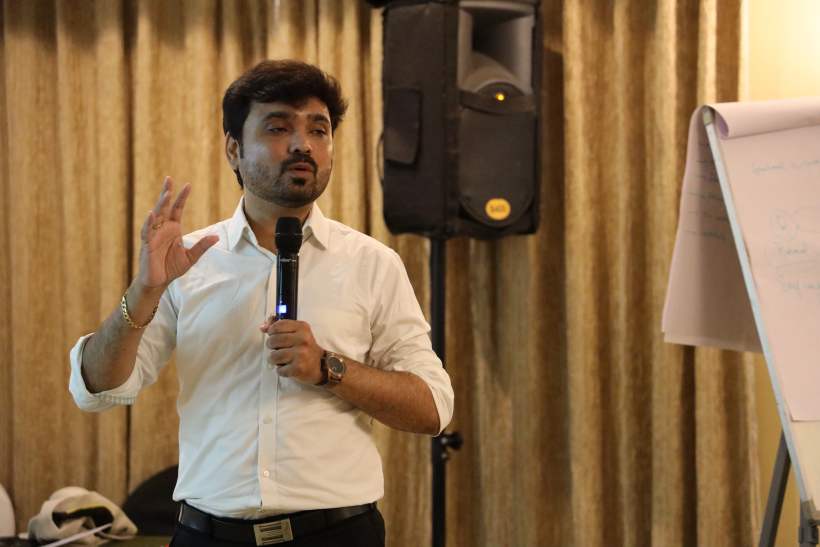

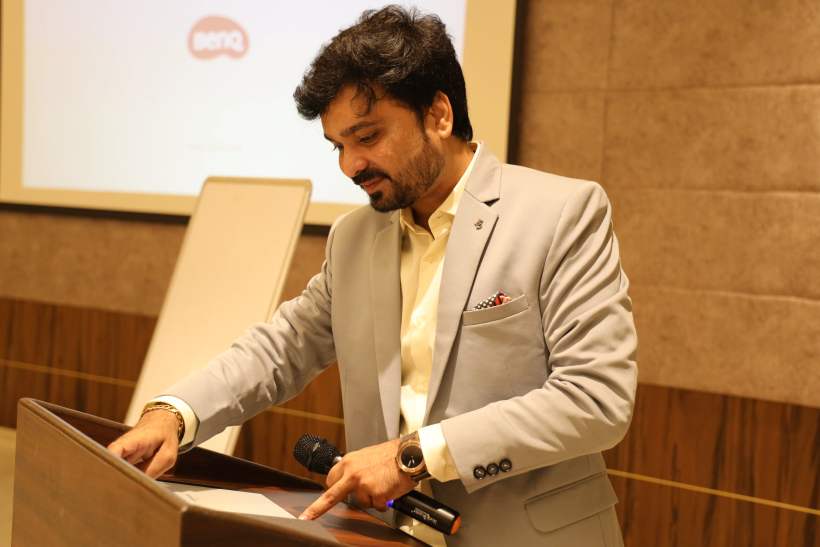

Photographs from Avinash Chate's own sessions in India. Sessions in this market are delivered by the same facilitator, in the same format.
Scoping a training programme in Oman?
Share your name and WhatsApp number and you will get a reply within one business day — usually the same day. Say whether this is going through procurement, and a proposal in the shape a committee expects follows the first call.
Prefer to talk now? ☎ +91 87936 30001 · WhatsApp · Email
Sectors Served in Oman
Energy, petrochemicals and the industrial supply chain around them, where Vision 2040 is pushing oil and gas below a tenth of GDP and the workforce plan has to move with it. Ports, shipping and logistics at Sohar, Duqm and Salalah, including the 2,000 square kilometre special economic zone at Duqm and its refinery and industrial complex. Banking and financial services, where localisation targets in customer-facing and administrative roles run at the highest levels in the economy and several institutions already run their own internal academies. Telecommunications and the digital economy, targeted at a tenth of GDP by 2040. Manufacturing and tourism, named as the priority engines of the Eleventh Five-Year Development Plan. And government-linked entities and their subsidiaries, where procurement runs through the Tender Board and the proposal has to survive a committee.
Frequently Asked Questions
How is an India-based corporate trainer actually engaged for an Oman programme?
Two routes, and your procurement function decides which one applies. The clean route is a direct engagement by your own L&D or HR function to train your own employees, on your own premises, under your organisation's contract, with Avinash Chate named as the facilitator. The second route is a contract placed with a locally registered Omani provider who carries the vendor registration, again with him named as the facilitator on the proposal and in the room. Which one you use is a procurement question rather than a training question, and it is worth settling in the first call, because it changes who raises the invoice and what paperwork has to exist before the dates can be held.
Does he need to be in JSRS, or hold an ICV certificate?
If the work is being bought as a registered-supplier contract, yes, and that is the reason the second route above exists. Petroleum Development Oman will not do business with a vendor that is not registered in the Joint Supplier Registration System, and In-Country Value, mandated by the Ministry of Energy and Minerals, is scored during prequalification, which means a bidder without ICV certification is excluded from major contracts before anyone reads the technical content. A single facilitator based in India does not carry either credential and this page does not pretend otherwise. Where your L&D function engages a named trainer directly to develop your own people, those registrations usually sit outside the transaction — but confirm that against your own procurement policy rather than against this page.
Who arranges entry and any permit for the trainer?
Your side does, because only an Omani-registered entity can sponsor a visiting professional, and the sponsoring organisation is the one named on the Ministry of Labour and Royal Oman Police filings. No permit category is named on this page, because which one applies turns on the length of the visit and on how your entity is registered. Your PRO or GRO confirms the current route and the lead time it needs, and that answer sets the earliest date the programme can run. Nothing here is unusual for an Omani employer bringing in an auditor, a commissioning engineer or a specialist consultant.
How much lead time do you need for an Oman programme?
Four to six weeks is comfortable, and longer if the engagement has to pass through a tender or an evaluation committee. That window covers the discovery call, the written outline, your approval of the content, the entry formalities your side is filing and the flights. Two to three weeks is possible when the contracting route is already settled and the paperwork is only being repeated. Travel itself is rarely the constraint; your internal approvals and the sponsoring formalities are.
Which days of the week do sessions actually run in Oman?
Sunday to Thursday, with the weekend on Friday and Saturday. That differs from the UAE working week and it catches out schedulers who plan a Gulf trip as one block, so a two-day programme in Muscat is planned as Sunday-Monday or Monday-Tuesday rather than by copying an Emirates calendar. During Ramadan, Article 70 of the Labour Law, Royal Decree 53/2023, caps Muslim employees at six hours a day and thirty hours a week. The six-hour day is the same as the UAE applies; the thirty-hour week is tighter than the UAE's thirty-six, so a Ramadan programme is re-cut into shorter blocks rather than trimmed at the edges.
What is the right group size for a behavioural programme?
Twelve to twenty-five is where behavioural work lands hardest, because everyone in the room has to speak and be seen doing it. Up to about forty still works for a workshop with structured sub-groups. Beyond that the format has to change to a keynote, which shifts the outcome from practised skill to shared language. Where a cohort mixes newly promoted Omani supervisors with the experienced expatriate managers handing work over to them, running two or three smaller cycles usually beats one large room, because the two groups are being asked to practise different things.
Which languages are the sessions delivered in?
English is the working language and the default for every room, and it is what a Muscat head-office leadership cohort should stay in. Hindi and Marathi are additional capabilities most competitors do not have, delivered by the same facilitator rather than split across two trainers, and they are deployed by room — a Sohar or Duqm supervisor cohort with a large South Asian contingent is the case where the option earns its keep. Where a group needs Arabic-medium delivery, that is outside what is offered here and it is better said now than discovered in the room.
Can the programme run online instead of in person?
Yes, and for some content it is the better choice. Coaching conversations, feedback practice and follow-through sessions run well as virtual blocks on Gulf Standard Time, which is an hour and a half behind Indian Standard Time and needs no compromise from either side. What does not travel well online is the first day of a behavioural programme, where the room has to become safe enough for a manager to say something uncomfortable in front of peers. The pattern that works is one in-person block in Muscat or at the site, followed by shorter virtual reinforcement sessions across the following quarter.
What does the written proposal contain?
The objective in your words, the audience and cohort structure, a session-by-session outline with the activities named, the timings mapped to a Sunday-to-Thursday week and to Ramadan hours where relevant, the facilitator profile with verifiable credentials and named past engagements, what your side needs to provide, the deliverables, the exclusions and the follow-through. It also states plainly what the programme will not do. A proposal in that shape is what survives an evaluation committee, and it is what is sent — a quotation on its own is a price with no case attached to it.
How is the cost worked out, and is anything deducted at source?
The cost is built from the format and the number of days, the number of cohorts, whether the work is a keynote or a behavioural programme with follow-through, and the travel and accommodation your side is arranging, all quoted as separate lines so nothing is buried. Share the dates, the audience, the cohort size and the outcome you need and you get a specific written quote within one business day; there is no published rate card, because a half-day keynote and a three-cohort supervisor programme are not the same purchase. On deductions, Oman applies a ten per cent withholding tax on service fees paid to non-residents, and under the Income Tax Law, Royal Decree 28/2009 and its amendments it reaches technical, professional and consultancy services whether the work is performed inside Oman or outside it. The Royal Directives of 2022 and 2023 suspended withholding on dividends, interest and ship and aircraft leasing, not on services. Your finance team should confirm the position against the India-Oman double taxation avoidance agreement and with your own tax advisor; nothing on this page is tax advice.
Plan Your Oman Programme
To scope it, share the site and the city, the date window, how many people are attending and at what level, whether the cohort is newly promoted nationals or the managers handing over to them, whether this is going through procurement or straight through L&D, and the one behaviour the programme has to change. A call follows within 48 hours, and you get a written outline before anything is committed. The full training topic library and contact details are a click away.
Building Omani leadership capability this year?
Muscat, Sohar and Duqm. The same facilitator in the room for every cohort — not a lead trainer on day one and a junior after that.
Check Date Availability →