AI Training in Dubai
Most AI training in Dubai reaches the people who were already going to be fine. Your procurement desk, your accounts team, your HR generalists and your operations coordinators are still doing all of it by hand. Avinash Chate runs his own companies on these tools and teaches them to the people already doing the work, in English, Hindi and Marathi.
Dubai · Abu Dhabi · Sharjah · across the UAE

Why Most AI Training in Dubai Misses the People Who Need It
The UAE is not short of AI courses. Dubai has a large training-institute market and the national ambition is on the record — the country appointed the world's first Minister of State for Artificial Intelligence in 2017 and runs a national AI strategy to 2031. What the market mostly sells against that is a certificate: an individual enrols, sits a syllabus, receives a badge, and goes back to a desk where nothing has changed.
The people who need this are not your technical ones. Your engineers will find the tools on their own. The ones who will not are your procurement officer reading a forty-page tender, your accounts executive reconciling the same statement every month, your HR generalist writing the same six letters, your operations coordinator rebuilding the same weekly report. They are not frightened of the technology. They are unsure whether they are allowed to use it, and nobody has ever shown them on their own files.
The second miss is language. Almost all corporate training delivered in the UAE runs in English only. In a DIFC boardroom that is exactly right. On a Jebel Ali floor, in a Sharjah back office, in a warehouse admin team, it quietly excludes half the room — and Indians are the largest foreign community in the UAE, followed by Pakistani and Bangladeshi nationals. An English-only AI session in those rooms produces polite nodding and no change.
The third is that nobody brings the real documents. A session run on a generic case study teaches a generic answer. What changes a department is work done on its own contract, its own tender, its own month of site data, its own inbox. That is a scoping decision made weeks before the day. It cannot be improvised in the room.
What the Session Actually Covers
The agenda is built around the departments you put in the room. These are the blocks that do the work.
What These Tools Are, Without the Mystique
What an AI assistant is genuinely good at and where it reliably fails, in plain language and with no engineering. Why the answer sounds confident when it is wrong, and what that means for anything statutory or numerical. AI Literacy for Every Employee →
Your Own Documents, in the Room
Each department brings the file it actually fights with — a supplier contract, a tender, a month of operations data, a policy nobody reads. The block is spent working on those, not on a case study, and the output is something the team can still use the following Monday.
Confidentiality and the Free-Text Box
What must never be typed into a public tool, how to anonymise a document and still get a usable answer, and the verification rule for anything legal or numerical. Participants write the one-page rule sheet themselves, which is the half people actually follow. Responsible AI at Work →
The Document-Heavy Desks
Procurement, finance, admin and HR handle most of the repetitive reading and writing in a typical organisation, and they usually see the fastest change. Reading a long contract down to the decision it needs; drafting that no longer starts from a blank page. AI for Working Professionals →
A Separate Track for Managers
Run apart from the staff session, because the manager's question is different: which repetitive work should stop being done by a person at all, what to approve, and how to tell a real capability from a vendor demo. AI for Leaders and Managers →
One Named Change per Department
The day ends with each department naming the one thing it will stop doing by hand and a date to check it. Without that line, nothing in the calendar changes after the session. Teams that want to build the internal tool go further in Building with AI →
Formats
A half-day awareness session for a whole office, including the people who have never opened one of these tools. A full day that splits into departmental working blocks after a common start. A two-day programme when four or more functions each need their own block and a manager track runs alongside. A short leadership briefing on its own, for an executive committee that has to decide something rather than learn a tool. And a virtual review four to six weeks later, to check what each department actually changed. Sessions sit naturally next to Future-Ready Skills when the brief is broader than AI alone.
Who Is Teaching It
The AI training sold in Dubai is mostly certificates: a technical institute, a syllabus, an individual learner, a PDF at the end. This is the other thing entirely — the people already doing the work, on the documents they already handle, learning where the tool helps and where it must stop. Avinash Chate teaches it because he runs his own companies on it rather than because he read about it, and human resources, accounts, compliance and operations were the functions he automated first. Those are usually the same desks sitting in a UAE client's room.
That is why a working assistant gets opened live in the session rather than described. Participants see what it reads, what it refuses to do, and where a person still has to sign. Questions about what breaks, what it gets wrong and what still needs a person get answered from running it, not from a slide.
The rest of the record is checkable. He is a TEDxBEC speaker, author of The Winning Edge and The Unanswered, and creator of the KITE Leadership Framework. Sessions have run for the Reserve Bank of India, BARC, JSW Steel, Mumbai Port Authority, Ferrero, the Indian Army and the Border Roads Organisation, among more than eighty organisations and twenty-five thousand professionals. The client list and 202 Google reviews are public.
And here is the boundary, stated plainly. Avinash Chate is based in Maharashtra and travels for engagements. This page does not claim a UAE office, a UAE licence, past delivery in the Emirates or an Emirati client list. What it claims is a trainer who will fly in, who has run his own business functions on these tools, and who can teach the same material in English, Hindi or Marathi to a workforce that is largely Indian and South Asian.
From the room
Real sessions, photographed as they ran.
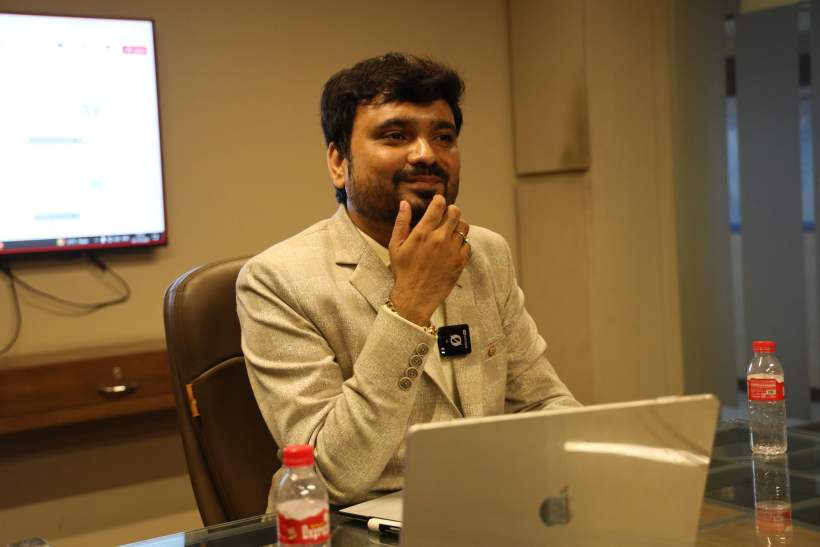
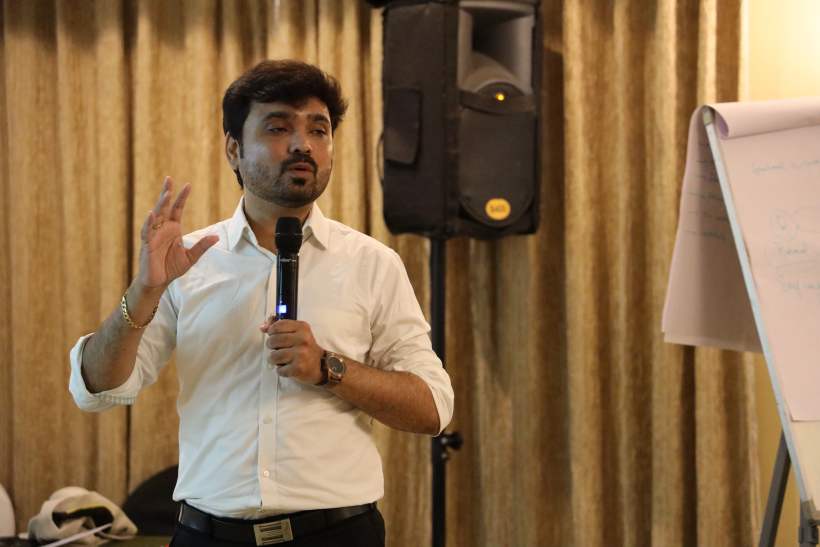
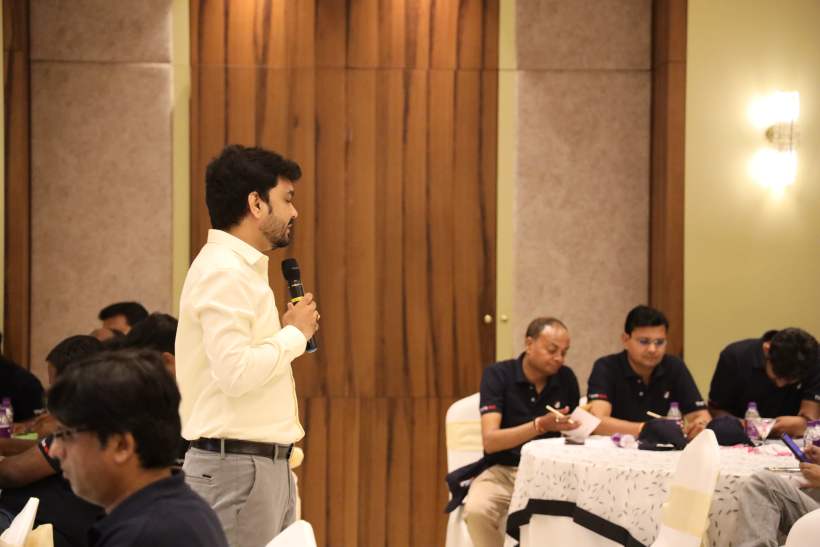

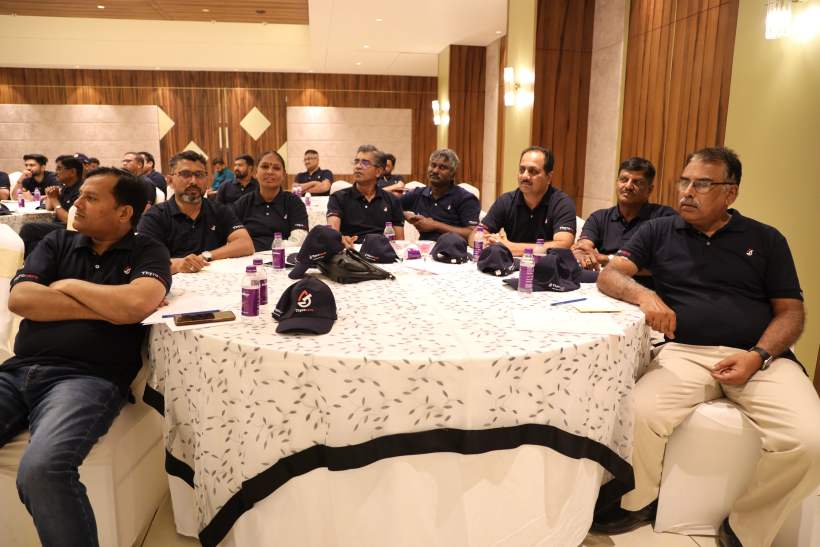
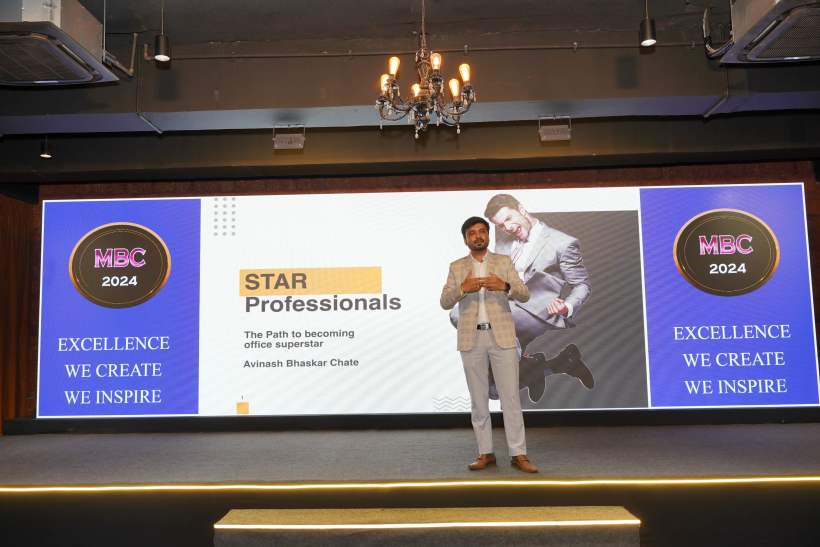
Photographs from Avinash Chate's own sessions in India. Sessions in this market are delivered by the same facilitator, in the same format.
Planning AI training for your UAE team?
Share your name and WhatsApp number and you will get a reply within one business day — usually the same day. Or call directly; most dates are settled on a phone call.
Prefer to talk now? ☎ +91 87936 30001 · WhatsApp · Email
Where This Lands in the UAE
The emirate is not one buyer. DIFC is the country's main financial centre, holding regulated banking, asset-management and insurance firms alongside a large fintech and innovation cluster — an English-language room where the work is contracts, memos, credit files and board papers. DMCC in Jumeirah Lakes Towers runs to tens of thousands of member companies across commodities, trade and technology, many of them founder-led firms scaling past their first fifty staff.
JAFZA and the Jebel Ali corridor are the closest fit. Thousands of trading, logistics and manufacturing businesses there run on supervisors promoted off the floor and admin teams handling shipping documents, customs paperwork and supplier correspondence all day. That work is document work, which is what these tools change — and those teams are heavily South Asian, which is why an English-only session underperforms there. Dubai Internet City and Dubai Media City sit at the other end: technology-native audiences who need the manager track more than the literacy track.
Hospitality and tourism, healthcare groups, retail head offices, contracting and facilities management, and Abu Dhabi's energy and industrial employers repeat the same pattern with different documents. So does Emiratisation: firms above fifty employees are raising the share of UAE nationals in skilled roles on a fixed annual schedule, which puts new hires into teams run by expatriate line managers and makes coaching, feedback and induction a live problem alongside the tooling. Those sit in the Becoming a Star at the Workplace and Leadership Development programmes rather than in this one.
One procurement note worth having early: the UAE currently applies withholding tax at 0 per cent on payments to non-residents, and under the VAT reverse charge a VAT-registered UAE client accounts for the VAT itself, so no UAE VAT registration is needed at this end. Your own finance team should confirm the current position, but it is usually a smaller piece of paperwork than buyers expect.
Frequently Asked Questions
How is an India-based trainer engaged for AI training in Dubai?
The straightforward route is a direct in-company engagement: your own L&D or HR function books the session, your employees attend, and Avinash Chate travels in to deliver it at your office or venue. He is based in Maharashtra and holds no UAE entity, office or licence, so he is engaged the way any visiting specialist facilitator is — contracted by you, hosted by you, working on your premises. Where an organisation prefers to buy through a locally licensed provider, he can also be named as the facilitator under that provider's contract. The international engagement page sets out the same ground for briefs outside India.
What about the visa and the right to work in the UAE?
Paid delivery inside the UAE is not covered by a tourist entry, and the page will not pretend otherwise. The normal route is the mission work permit issued through the Ministry of Human Resources and Emiratisation and sponsored by the UAE host entity, valid for ninety days and extendable by a further ninety. Free zones including JAFZA and the Dubai Development Authority issue them through their own immigration channels. Your PRO or corporate services team files it; processing is typically a matter of a few working days. Avinash Chate travels on whatever documentation you arrange, and the paperwork window is built into the date you agree.
How much lead time do you need for a session in Dubai?
Four to six weeks is comfortable. That covers the permit, the flights, and — more importantly — the part the buyer usually underestimates: collecting the real documents the session will run on. Direct flying time from Mumbai or Pune to Dubai is about three hours and there are several services a day, so travel is rarely the constraint. Two weeks is possible when the permit route is already familiar to your team. Sessions inside Ramadan need earlier planning, because the private-sector working day is shortened by two hours and the agenda has to be rebuilt around it.
Which days of the week do sessions run in the UAE?
Ask your own HR before you fix a date, because the answer is not uniform. The federal government works Monday to Thursday with a half day on Friday and takes Saturday and Sunday off. The private sector is free to set its own week within the statutory hours, and most firms run Monday to Friday — a minority moved to the half-day Friday. What holds almost everywhere is that Friday afternoon is unusable for training and the weekend is Saturday and Sunday, which is the reverse of India. Two-day programmes are therefore scheduled Monday to Thursday wherever possible.
What is the right group size for AI training?
Between fifteen and thirty people in a working session, because everyone needs a screen open and their own document in front of them. Above thirty the room splits into people doing the work and people watching it. A department-wide awareness session can run much larger, up to two or three hundred, but it is a different product — it changes what people believe about these tools rather than what they can do by Thursday. Most organisations end up buying both: one wide session, then working sessions department by department.
Can the session run in Hindi as well as English?
Yes, and in the UAE that is usually the point. Sessions run in English, Hindi and Marathi, delivered by the same person — not by a junior language-matched substitute. For a DIFC or Dubai Internet City audience the session runs in English. For a back-office, warehouse or operations team where Hindi is the working language of the floor, it runs in Hindi with the same framework and the same trainer. Where the room is mixed, the language switches inside the room. See soft skills training in Dubai for how the same principle applies across the rest of the catalogue.
Is this delivered in person or online?
In person is the default, because the value of the session is that people open their own tools and work on their own files while somebody who has done it is standing behind them. Online works for a short awareness session, for a leadership briefing, and for the follow-up review four to six weeks later. A common shape is one in-person block in Dubai, then a virtual check-in once each department has tried to use what it learned. Hybrid, with one room live and other emirates dialling in, is workable but the remote group gets noticeably less.
What does a proposal contain?
A written outline before anything is signed: the objective in your words, the audience and its level, the agenda hour by hour, which departments bring which documents, what participants leave holding, the language, the format, the dates, and the travel and permit assumptions. It also states plainly what the session does not cover — it is not a technical certification, it does not write your AI policy for you, and nothing in it is offered as legal or compliance advice. You get it before the event, and you get a call to argue with it.
What does AI training in Dubai cost?
A quote is built from five things: the format, the number of days, the size and seniority of the audience, the number of departments that need their own working block, and the travel and permit cost of getting the trainer into the country. A half-day awareness session for one office and a two-day programme running four departments through their own documents are scoped differently, and there is no useful single figure covering both. Share your dates, the audience and the outcome you need and you get a specific written quote within one business day, along with the tax position for a non-resident supplier.
Which tools are taught, and what happens to our documents?
The mainstream ones your people can actually get licences for — ChatGPT, Microsoft Copilot, Google Gemini and Claude — taught as a set of capabilities rather than as one vendor's product, because the products keep changing and the skill does not. On confidentiality, the session works on documents you choose and clear beforehand, and a large part of the day is spent on what must never be typed into a public tool and how to anonymise a file and still get a useful answer. The Responsible and Ethical AI at Work programme is the full day on that ground.
Plan Your AI Training in Dubai
To scope it, share the date window, the emirate, which departments are attending and how many people, the language the room actually works in, and the one process you would most like to stop doing by hand. A call follows within one business day, and you get a written outline with the travel and permit assumptions before anything is signed.
Bringing AI into your UAE offices this year?
Dubai, Abu Dhabi and across the Emirates — taught on your own documents, in English, Hindi or Marathi.
Request a UAE Proposal →